
 日本語
日本語Bid History
Auction has expired
Auction Expired because there were no bids|
Auction started
2026/10/04 (Sun) 17:07 |
※ = Auto
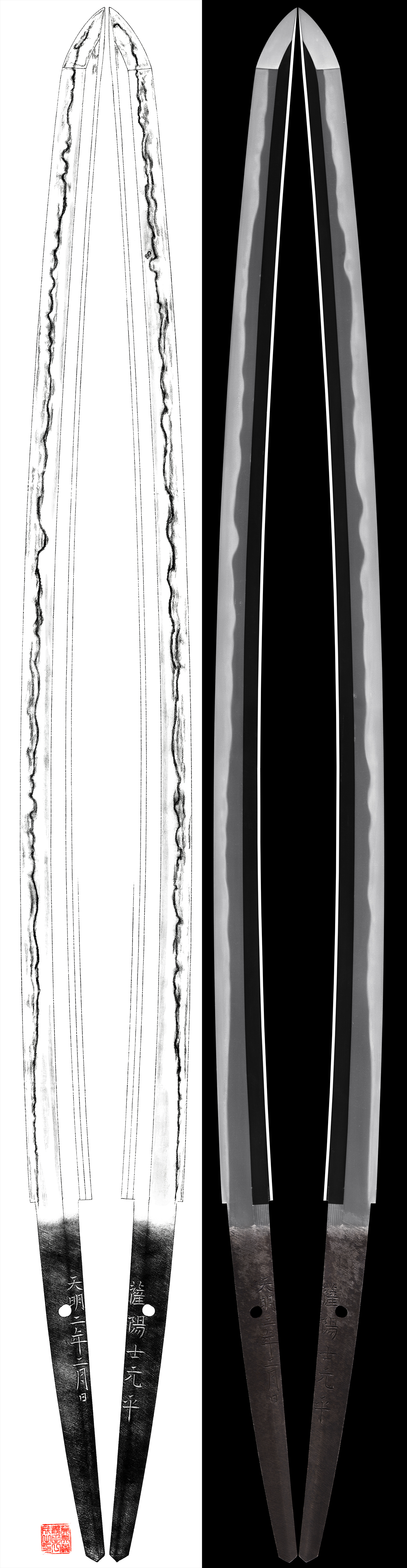
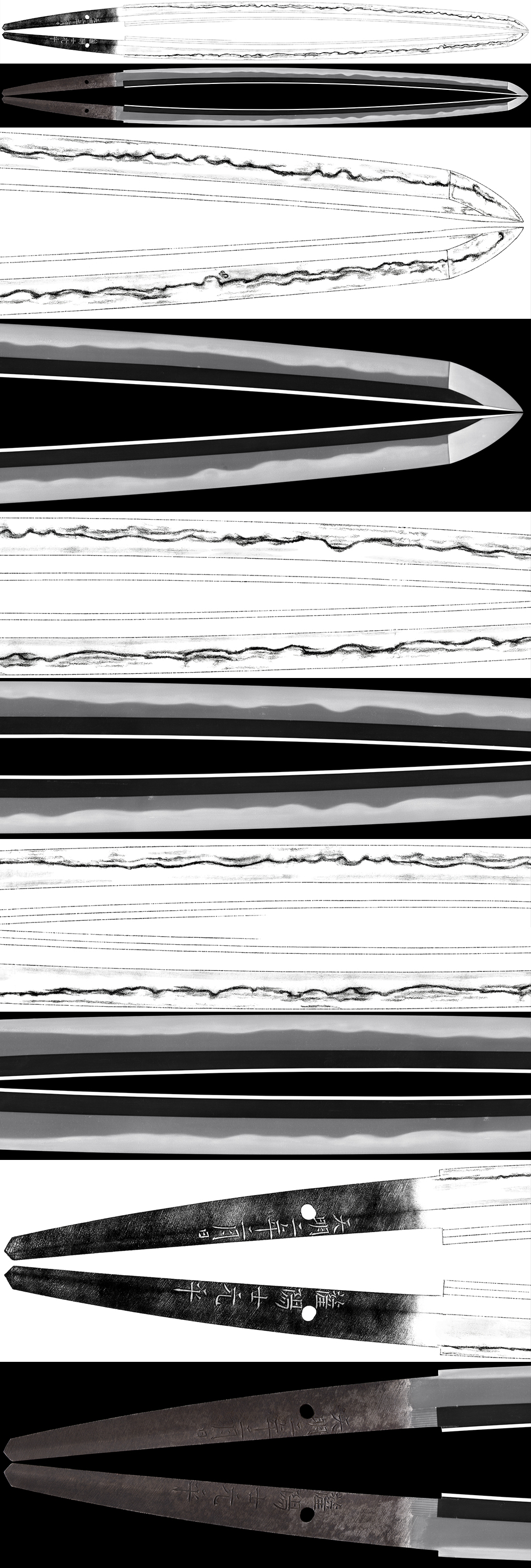
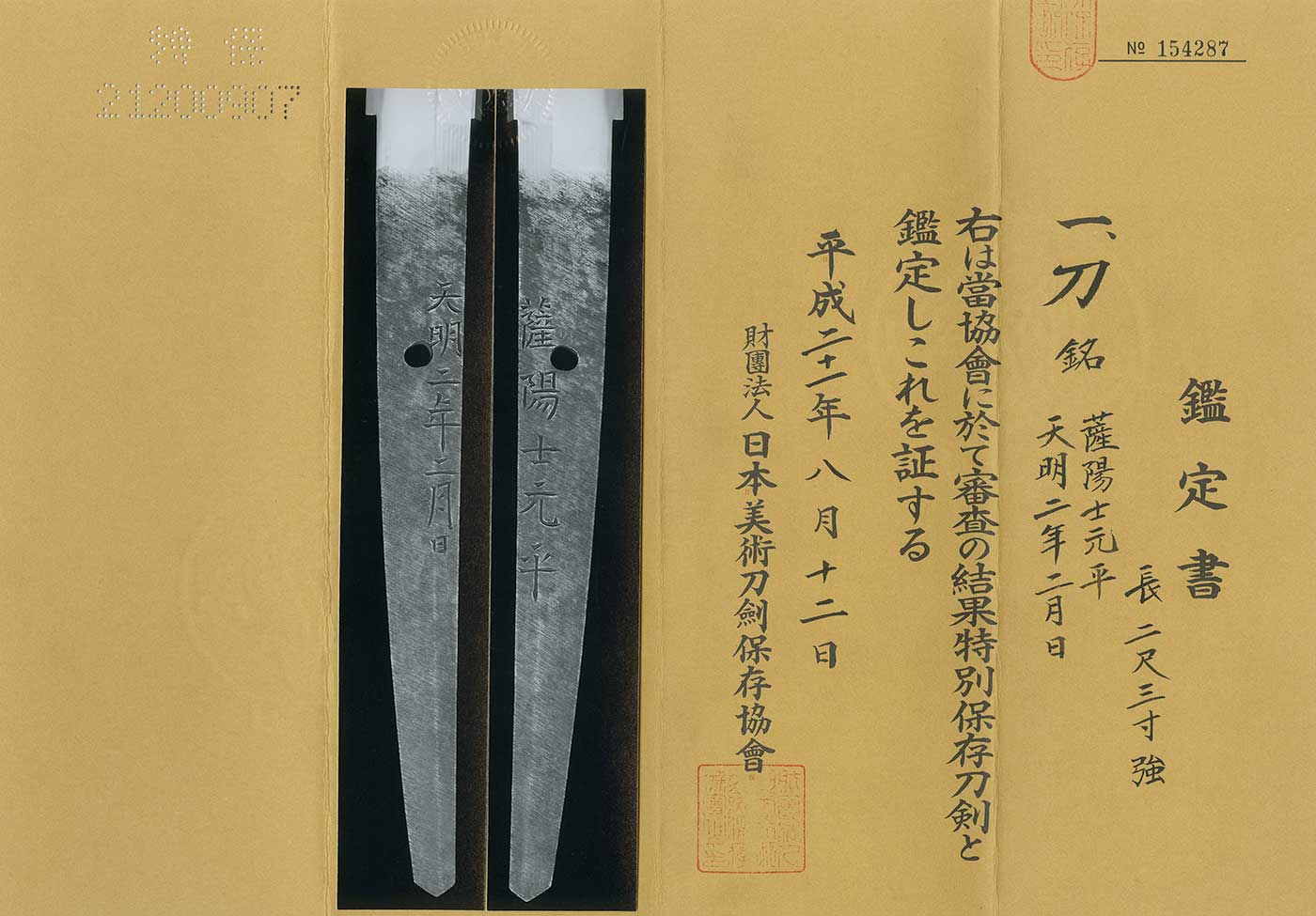
Katana in Shirasaya with Koshirae(NBTHK Tokubetsu Hozon Token)
Signature:
Satsuyoshi Motohira 薩陽士元平
Tenmei 2 nen 2 gatsuhi 天明二年二月日 (Feb1782)
Shinshinto: Jyojyo saku: Satsuma
(We divide 4 sections for each sword as Saijyo saku, Jyojyo saku
Jyo saku and regular saku)
This belongs to Jyojyo saku ranking.
Blade Length: 69.84cm (27.50in)
Curvature: 1.36cm (0.54in)
Mekugi-ana: 1
Motohaba: 3.10cm (1.22in)
Sakihaba: 2.18cm (0.86in)
Kasane: 0.70cm (0.28in)
Weight: 735g
Period: Edo period, around Tenmei, 1782
Shape: carved blade with small kissaki.
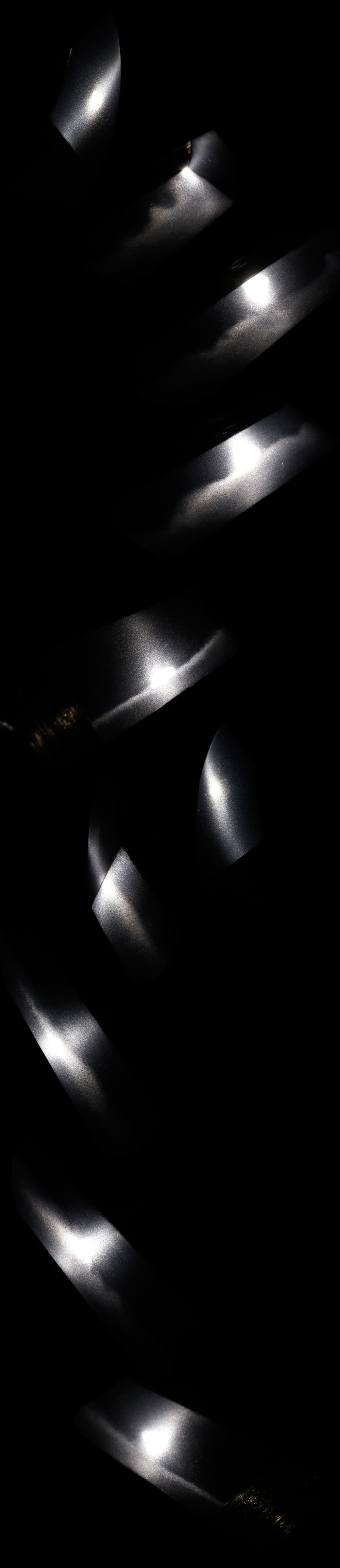
Jigane: packed koitame hada covered with fine jinie
Hamon: Nie based Notare an Gunome with much sunagashi and kinsuji.
Special feature:
Satsuma samurai Motohira was one of the leading swordsmiths of the early Shinshinto period.
He was a swordsmith in the service of the Satsuma domain and learned the art of sword forging from his father, Oku Motonao. After his father’s death in the 6th year of An’ei (1777), Motohira succeeded as head of the family. In December of the 1st year of Kansei (1789), he received the honorary title Yamato no Kami. He passed away in July of the 9th year of Bunsei (1826) at the age of 83.
This sword was made in the 2nd year of Tenmei (1782), when Motohira was 38 years old. Around this time, he became a swordsmith in the service of the Shimazu family.
Koshirae:
Tsuba: circular iron tsuba carved with trees.
Fuchikashira: Shakudo base carved with a crane and reeds.
Menuki : a motif of peony.
From Aoi Art:
Motohira is known for forging well-refined, darkish jigane with prominent chikei. This sword is an excellent example of his work, displaying active chikei in the ji, along with sunagashi and kinsuji within the hamon, giving it the distinctive characteristics of a fine Satsuma sword.
NBTHK Tokubetsu Hozon Certificate
Aoi Art estimation paper : whole Oshigata.
Please note: the price does not include the shipping fees.

Auction Expired
Auction Expired because there were no bids
Auction has expired
Auction Expired because there were no bids|
Auction started
2026/10/04 (Sun) 17:07 |
※ = Auto