
 日本語
日本語Bid History
Auction has expired
Auction Expired because there were no bids|
Auction started
2026/07/25 (Sat) 12:04 |
※ = Auto
Dai Sho :
———————
Dai : Katana in Shirasaya with Koshirae(Important Art Object)*Not Available for Overseas Shipping*
Signature : Mumei (Unsigned) (Den Nagamitsu)
無銘(伝 長光)
(We divide 4 sections for each sword as Saijyo saku, Jyojyo saku
Jyo saku and regular saku)
This blade belongs to Saijyo saku ranking.
Sayagaki by Dr. Kanzan:
Certified as an Important Art Object.
Bizen Kuni Osafune Ju Nagamitsu.
Formerly owned by the Shimazu family, Lords of Satsuma.
Blade Length: 2 shaku 1 sun 8 bu (66.06 cm / 26.01 in).
An auspicious day in the 3rd month of Showa 31 (1956).
Written by Kanzan.
(We divide 4 sections for each sword as Saijyo Saku, Jyojyo Saku, Jyo Saku and Regular Saku).
This blade is ranked as Saijyo Saku among the works attributed to Mumei (Den Nagamitsu).
Habaki: Double gold-foiled habaki.
Blade Length: 65.76 cm (25.89 in).
Curvature: 2.12 cm (0.83 in).
Mekugi Hole: 3.
Width at Base (Motohaba): 3.10 cm (1.22 in).
Width at Yokote: 2.10 cm (0.83 in).
Thickness of rim (Kasane): 0.68 cm (0.27 in).
Sword Weight: 630 g.
Era: Mid-Kamakura period, around 1278.
Shape: O-suriage mumei, with a wide mihaba and deep curvature. Bohi grooves are carved on both sides of the blade.
Jigane: Well-forged ko-itame hada producing a refined steel surface, with prominent utsuri clearly visible.
Hamon: Nioi-deki choji-midare. The pattern becomes less irregular toward the monouchi, and the boshi is midare, returning in an irregular form.
Features: Nagamitsu is traditionally regarded as the son of Mitsutada, the founder of the Osafune school. Compared with other Kamakura-period smiths, a relatively large number of signed works by Nagamitsu survive, displaying consistently high quality and exceptional skill. His workmanship ranges from flamboyant styles reminiscent of Mitsutada to calm suguha. His disciples are said to have included Kagemitsu, Chikakage, and Sanenaga, and some works attributed to Nagamitsu are believed to have been produced by these pupils. This sword has been designated an Important Art Object. Together with its companion wakizashi, it forms a distinguished daisho that has been preserved to the present day. Formerly owned by the Shimazu family, it is an extremely famous example. As a masterpiece attributed to Nagamitsu, the magnificence of its midare hamon is unsurpassed among examples the owner has encountered.
Koshirae: Formerly owned by the Shimazu family.
Tsuba: Shakudo tsuba with an openwork cross design and the Shimazu family crest highlighted in gold.
Fuchikashira: Shakudo carved with the Shimazu family crest and wave motifs, decorated with gold iroe.
Saya (Scabbard): Glossy black lacquered saya.
Menuki: Shakudo carved with the Shimazu family crest and wave motifs, decorated with gold iroe.
Kozuka: Shakudo carved with the Shimazu family crest and wave motifs, decorated with gold iroe.
Kogatana: Signed Hoki no Kami Taira Ason Masayuki.
Kogai: Shakudo carved with the Shimazu family crest and wave motifs, decorated with gold iroe.
———————
Sho : Wakizashi in Shirasaya with Koshirae (NBTHK Tokubetsu Hozon Token)
Signature: Mumei (Unsigned) (Sekishu Naotsuna)
無銘(石州直綱)
(We divide 4 sections for each sword as Saijyo Saku, Jyojyo Saku, Jyo Saku and Regular Saku).
This blade is ranked as Jyojyo Saku among the works attributed to Mumei (Sekishu Naotsuna).
Habaki: Double gold-foiled habaki.
Blade Length: 42.12 cm (16.58 in).
Curvature: 0.91 cm (0.36 in).
Mekugi Hole: 2.
Width at Base (Motohaba): 2.744 cm (1.08 in).
Thickness of rim (Kasane): 0.18 cm (0.07 in).
Sword Weight: 370 g.
Era: Nanbokucho period, around the Kakei era (1387).
Shape: A wakizashi converted from a naginata-style blade, forming the companion sword of this daisho set.
Jigane: Itame hada mixed with mokume and masame.
Hamon: Nie-deki gunome-midare with active kinsuji working within the temper.
Features: Sekishu Naotsuna is said to have continued through several generations from the Kenmu era into the Muromachi period. The first generation is sometimes counted among the Ten Great Disciples of Masamune; however, based on the chronology, it is generally accepted that there was no actual direct connection. This blade possesses an excellent shape and outstanding workmanship.
Koshirae: Formerly owned by the Shimazu family.
Tsuba: Shakudo tsuba with an openwork cross design and the Shimazu family crest highlighted in gold.
Fuchikashira: Shakudo carved with the Shimazu family crest and wave motifs, decorated with gold iroe.
Saya (Scabbard): Glossy black lacquered saya.
Menuki: Shakudo carved with the Shimazu family crest and wave motifs, decorated with gold iroe.
Kozuka: Shakudo carved with the Shimazu family crest and wave motifs, decorated with gold iroe.
Kogatana: Signed Hoki no Kami Taira Ason Masayuki, made at the age of 82.
Aoi Art’s Comment: The katana is an exceptional masterpiece designated as an Important Art Object, with impeccable provenance from the Shimazu family. The wakizashi is likewise an outstanding work, attributed to Sekishu Naotsuna and certified as NBTHK Tokubetsu Hozon Token. The accompanying koshirae is of the highest quality and was formerly owned by the Shimazu family.
———————
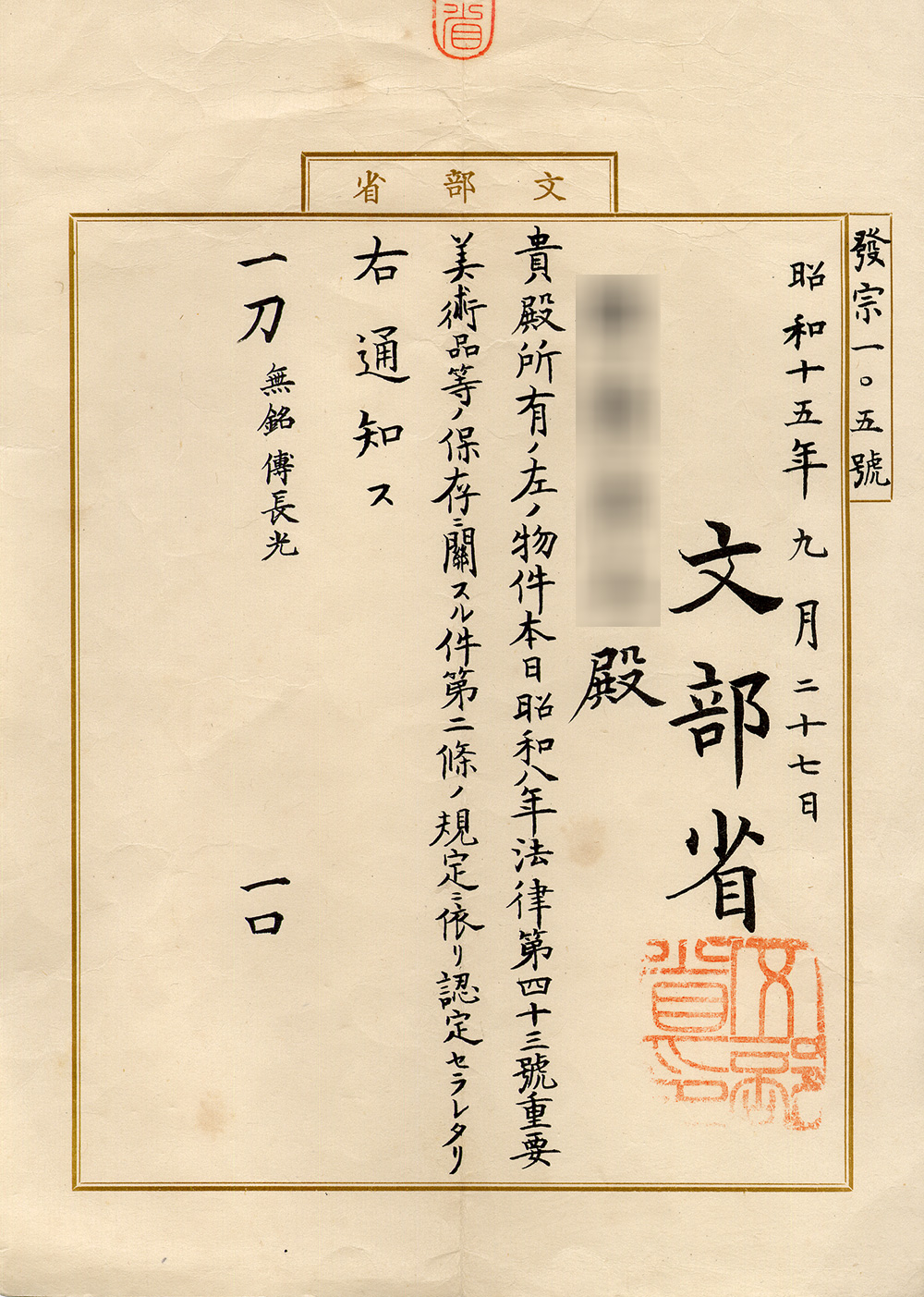
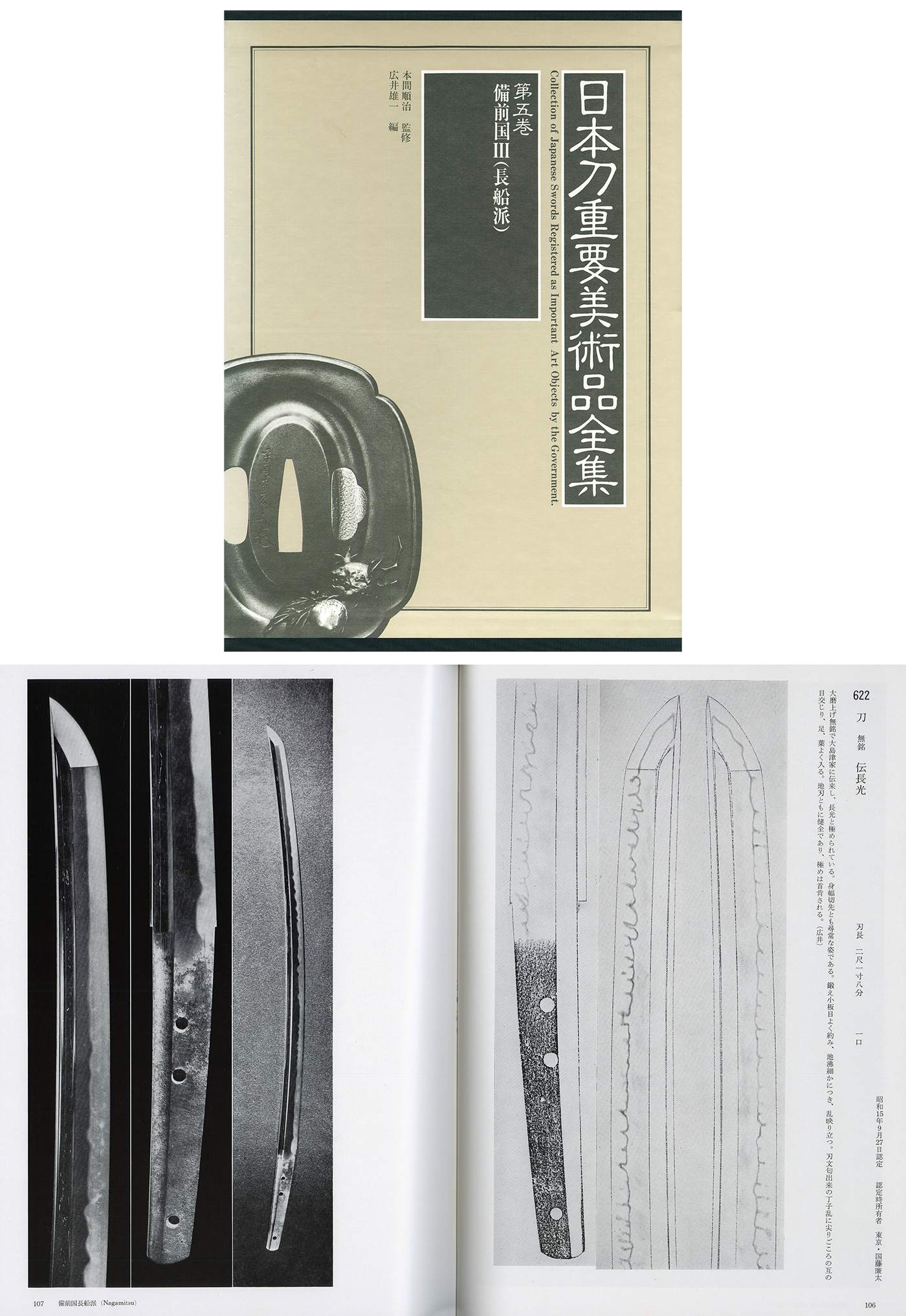
Katana: Important Art Object Certificate (listed in Japanese Sword Important Art Objects, Vol. 5, p. 106).
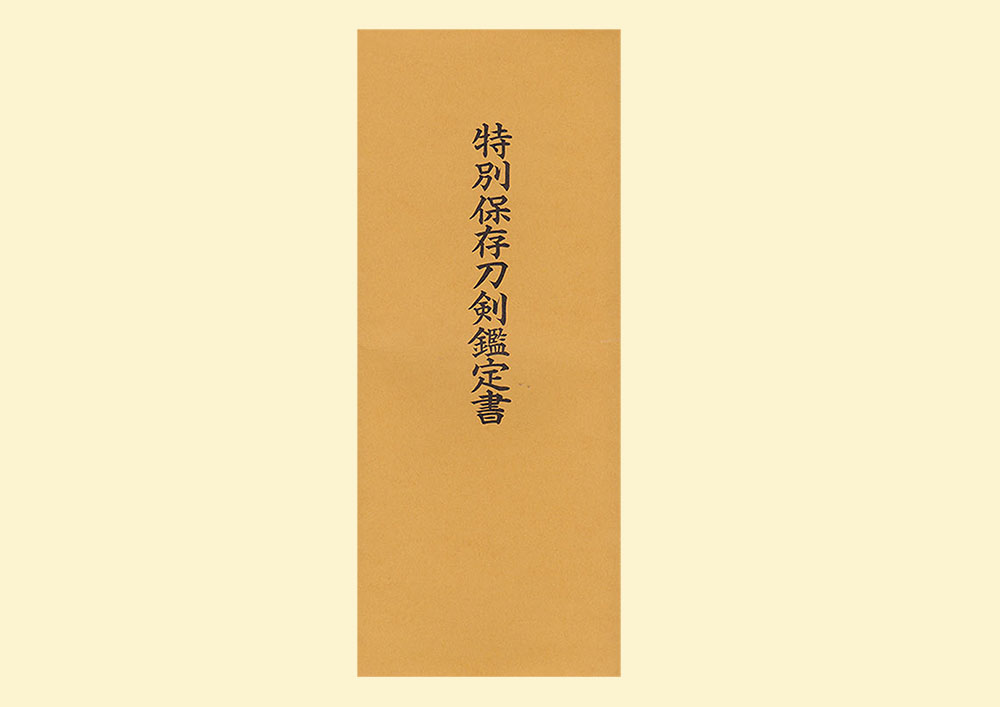
Wakizashi: NBTHK Tokubetsu Hozon Token Certificate (*the paper will be issued later).
AoiArt estimation paper: Whole Oshigata.
Special Note: The long sword (attributed to Nagamitsu) has been designated as an Important Art Object and therefore is not able to be exported overseas.

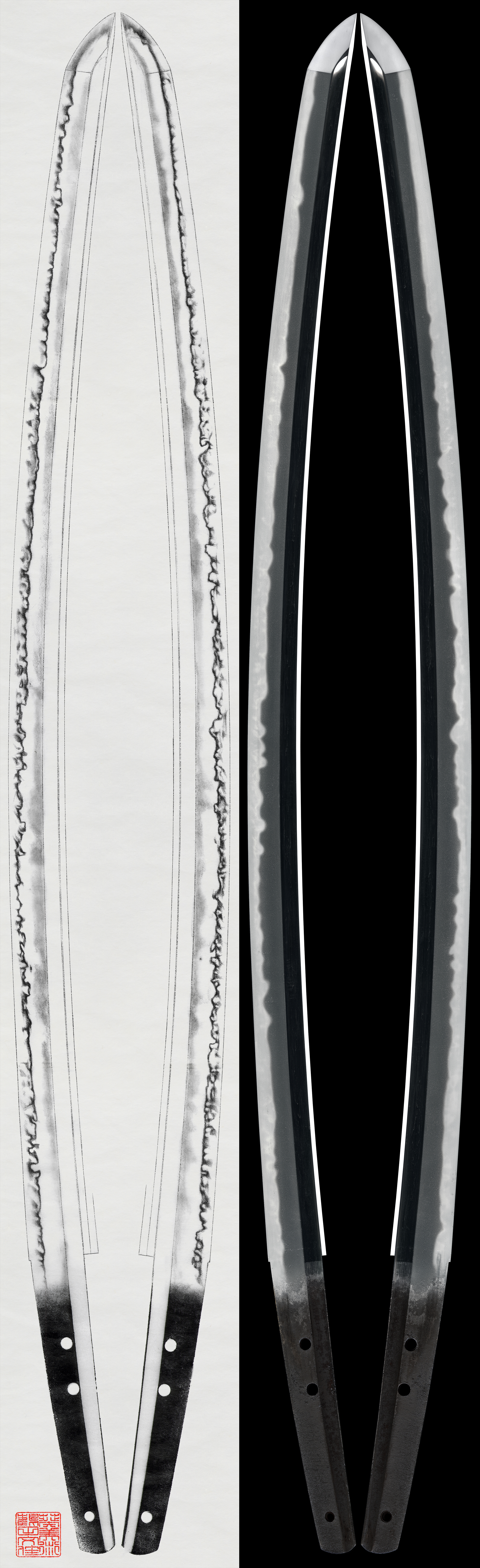




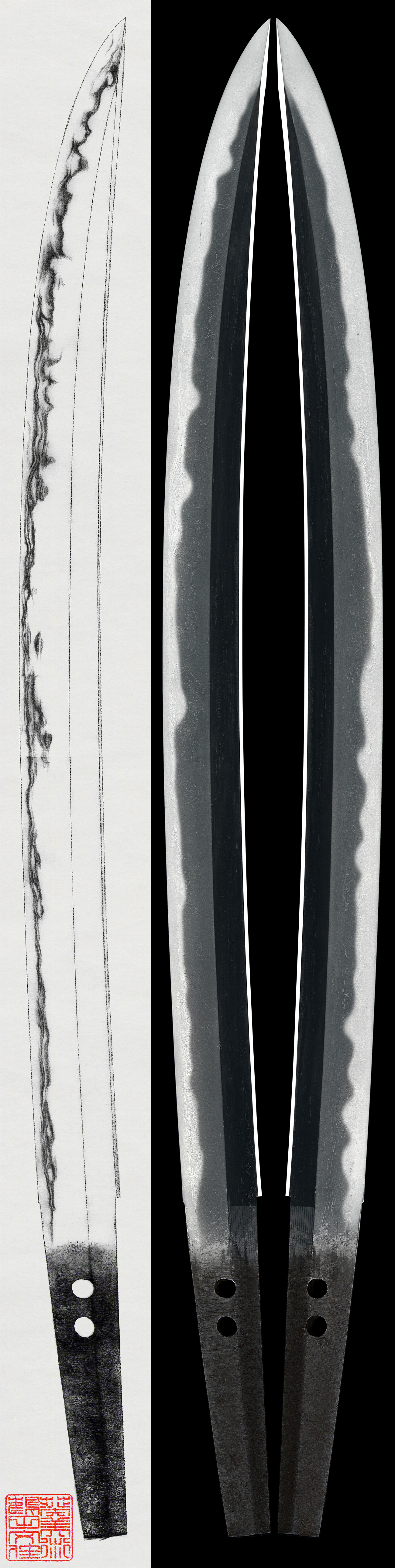



Katana

Wakizashi
Auction Expired
Auction Expired because there were no bids
Auction has expired
Auction Expired because there were no bids|
Auction started
2026/07/25 (Sat) 12:04 |
※ = Auto