
 日本語
日本語Bid History
Auction has expired
Auction Expired because there were no bids|
Auction started
2026/06/19 (Fri) 12:50 |
※ = Auto
Ordering Number: AS26188
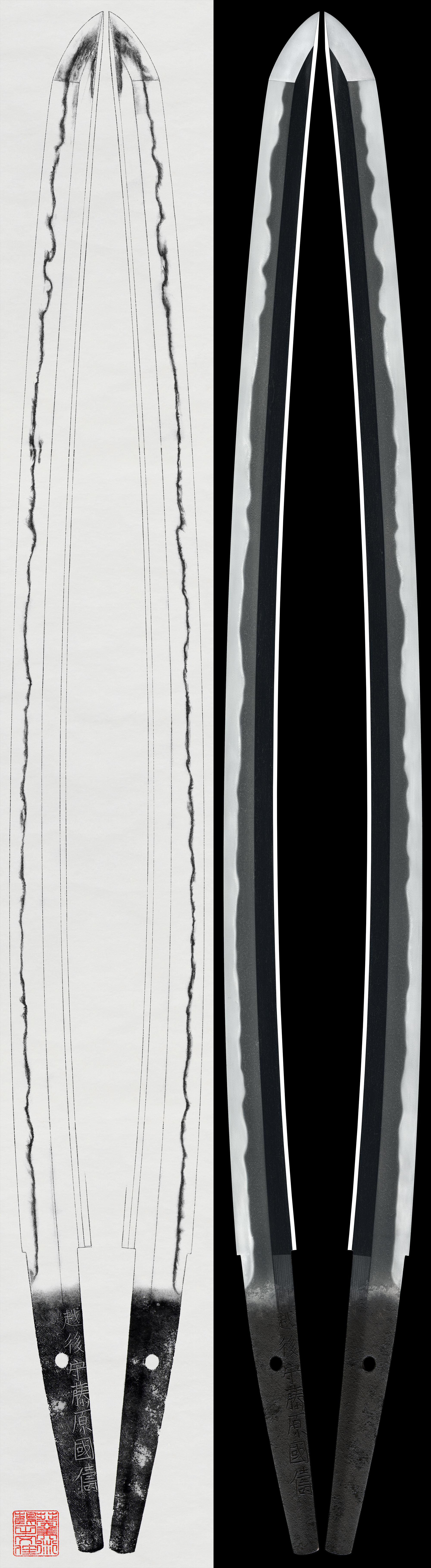
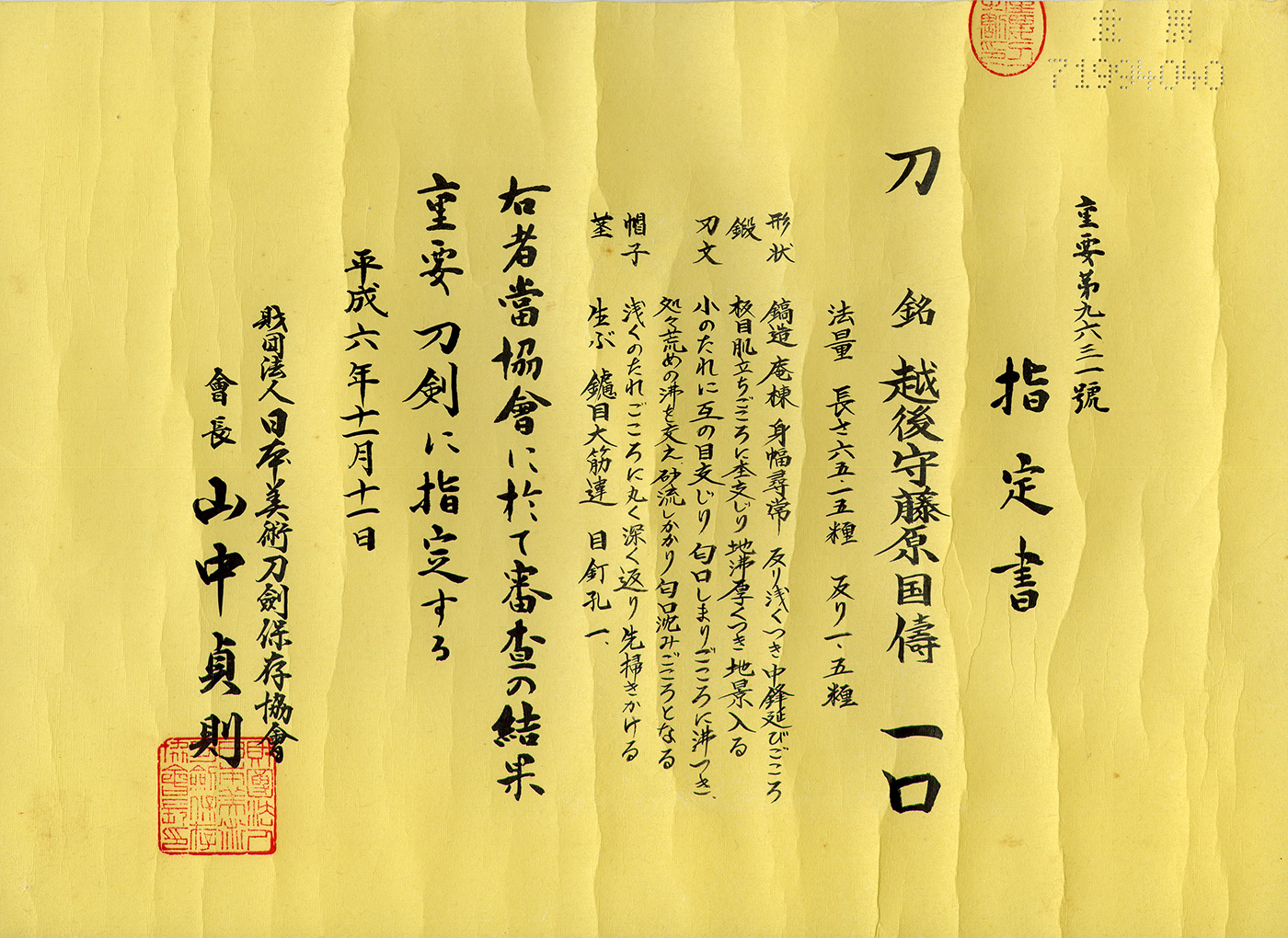
Katana in Shirasaya (40th NBTHK Juyo Token)
Signature: Echigo no Kami Fujiwara Kunitomo
越後守藤原国儔
Shinto: Ryo-Wazamono; Jyojyo-saku: Yamashiro.
(We divide 4 sections for each sword as Saijyo Saku, Jyojyo Saku, Jyo Saku and Regular Saku).
This blade is ranked as Saijyo Saku among the works of Echigo no Kami Fujiwara Kunitomo.
Habaki: Single-layer gold-covered habaki of notably heavy weight.
Blade Length: 65.45 cm (25.77 in).
Curvature: 1.52 cm (0.60 in).
Mekugi Hole: 1.
Width at Base (Motohaba): 3.10 cm (1.22 in).
Width at Yokote: 2.31 cm (0.91 in).
Thickness of rim (Kasane): 0.64 cm (0.25 in).
Sword Weight: 605 g.
Era: Edo period.
Shape: Excellent proportions with substantial width and thickness, deep curvature, and an elongated kissaki.
Jigane: Beautiful steel with a nie-based forging appearance.
Hamon: Nie-deki gunome-midare.
The boshi is irregular, rounded, and turns back gracefully.
Features: Echigo no Kami Fujiwara Kunitomo was a disciple of Hyuga no Kunihiro and later lived in Horikawa, Kyoto, under Kunihiro.
Most of his works are katana and wakizashi.
His jigane is typically ko-mokume, and his hamon tends toward a tightly controlled gunome-midare based on nioi.
This may have been intended to enhance cutting performance.
Although Echigo no Kami Fujiwara Kunitomo is a well-known student of Kunihiro, the number of surviving works is surprisingly small, which makes his blades particularly intriguing.
Historical Background: The Genna era (1615-1624) began after Tokugawa Ieyasu defeated the Toyotomi forces in the Siege of Osaka Summer Campaign, bringing an end to the age of warfare and consolidating the foundations of the Tokugawa Shogunate through policies such as the “One Castle per Province” decree and the Laws for the Military Houses (Buke Shohatto).
The Great Genna Martyrdom refers to the execution of 55 Christians at Nishizaka in Nagasaki in 1622 (Genna 8) by burning and beheading under the orders of Shogun Tokugawa Hidetada.
Although the persecution of Christians occurred throughout Japanese history, this event stands out as the largest mass execution of Christians carried out at one time.
After this incident, the shogunate intensified its suppression of Christianity even further.
The event became widely known both within Japan and overseas through reports by Dutch merchants and Jesuit missionaries, and it remains one of the most famous martyrdom incidents in Japanese history alongside the Martyrdom of the Twenty-Six Saints of Japan.
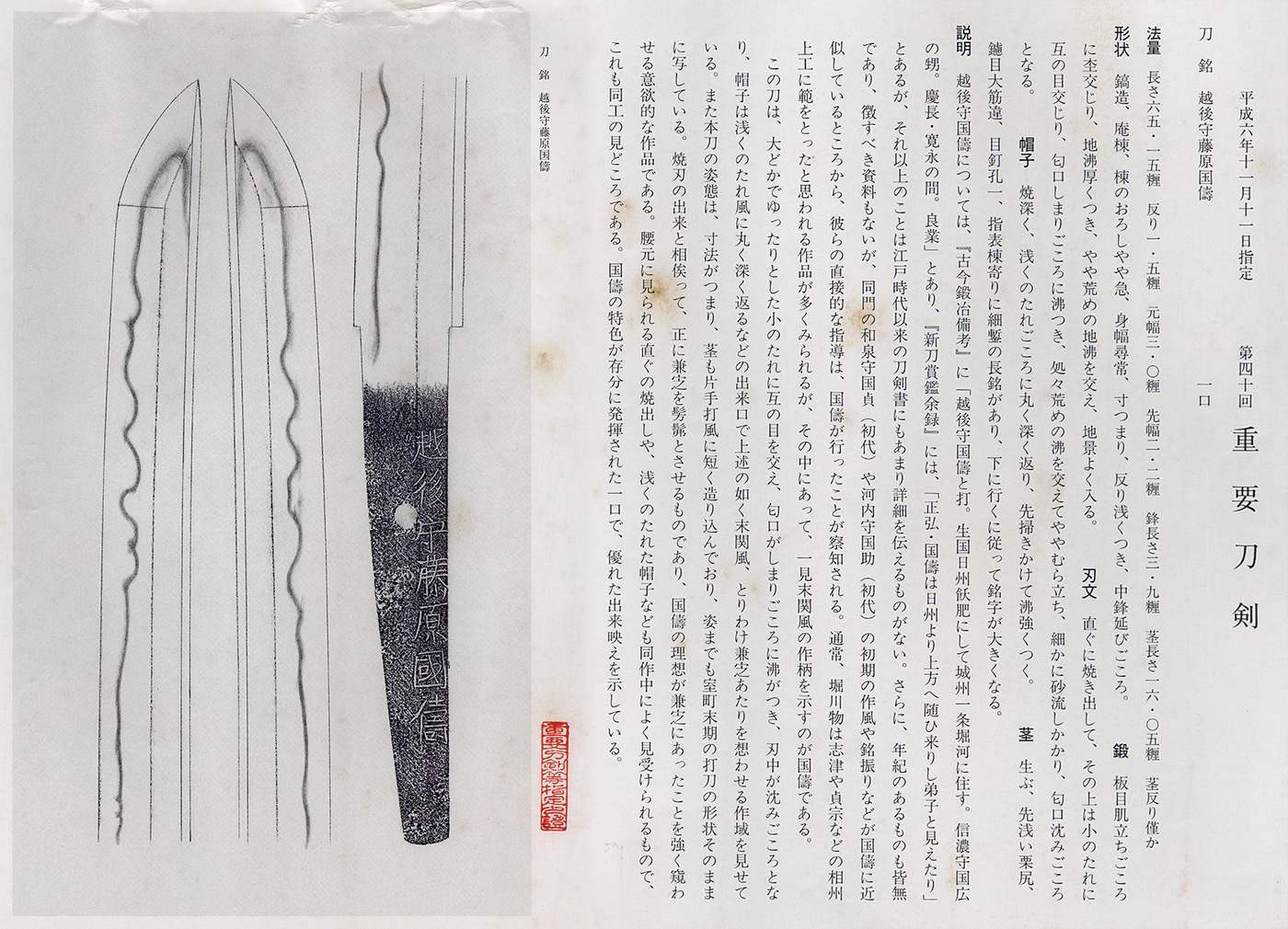
40th NBTHK Juyo Token
AoiArt estimation paper: Whole Oshigata.
Please note: The price does not include the international shipping fees.




Auction Expired
Auction Expired because there were no bids
Auction has expired
Auction Expired because there were no bids|
Auction started
2026/06/19 (Fri) 12:50 |
※ = Auto