
 日本語
Bid History
|
Auction started
2026/11/18 (Wed) 11:20 |
※ = Auto
Katana in Shirasaya (NBTHK Hozon Token) (Consignment Sale)
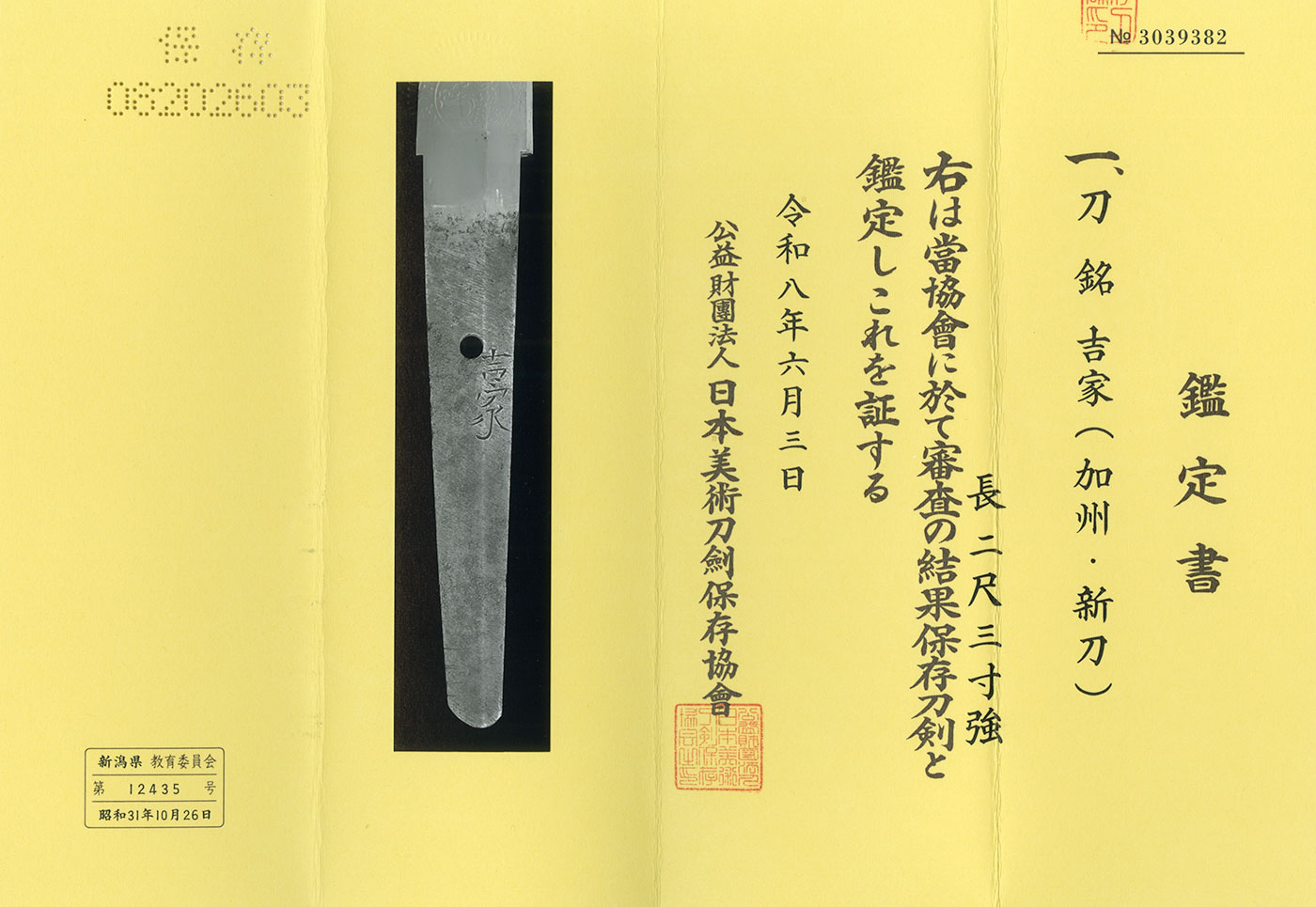
Signature: Yoshiie (Kashu, Shinto).
吉家(加州・新刀)
Shinto: Wazamono: Chu Saku: Kaga Province: Enpo Era
(We divide 4 sections for each sword as Saijyo Saku, Jyojyo Saku, Jyo Saku and Regular Saku).
This blade is ranked as Jyo Saku among the works of Yoshiie.
Habaki: Double copper habaki.
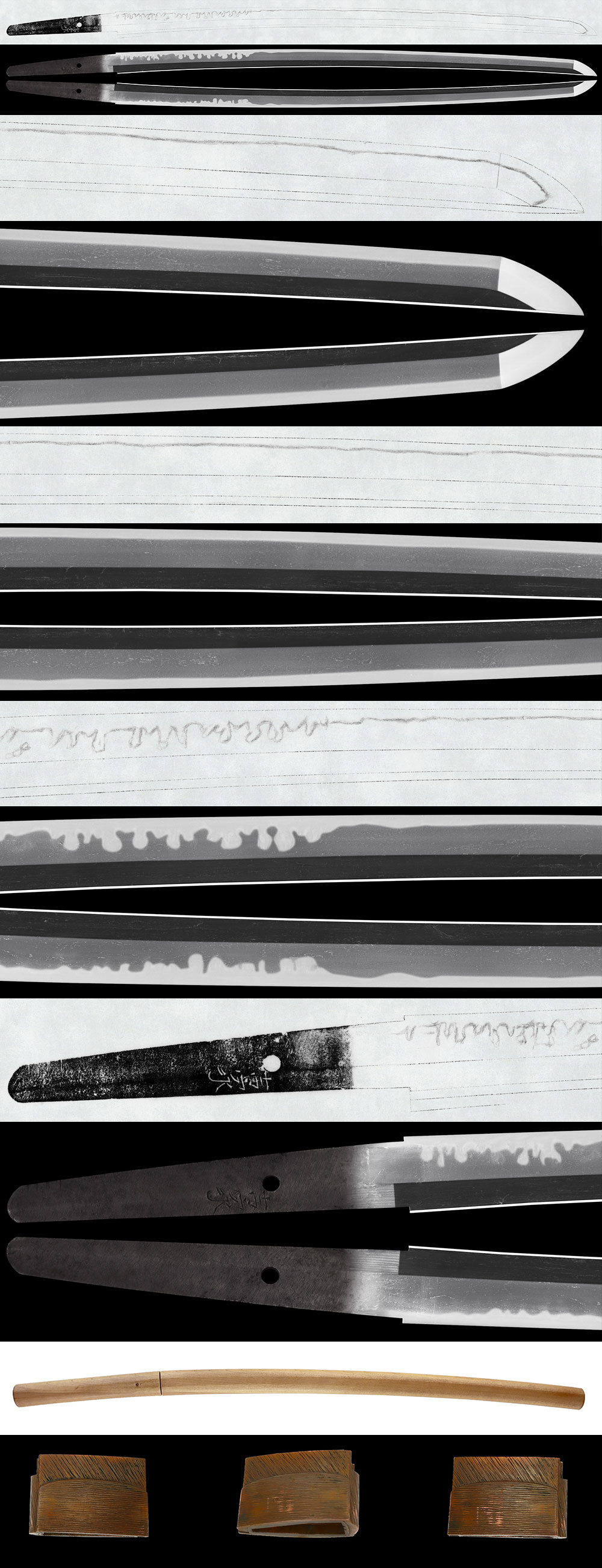
Blade Length: Approximately 69.70 cm (27.44 in).
Curvature: Approximately 1.21 cm (0.48 in).
Mekugi Hole: 1.
Width at Base (Motohaba): 3.18 cm (1.25 in).
Width at Yokote: 2.11 cm (0.83 in).
Thickness of rim (Kasane): 0.72 cm (0.28 in).
Sword Weight: 695 g.
Era: Edo period, around the Enpo era (1673–1681).
Darani School.
Shape: A katana with relatively shallow curvature and an elongated kissaki.
Jigane: Well-forged ko-itame hada with clearly visible grain patterns.
Hamon: Gunome-midare begins at the hamachi and continues along the lower portion of the blade.
From approximately 30 cm (11.81 in) above the hamachi toward the tip, the hamon changes to suguha.
The boshi is rounded and turns back in a ko-maru pattern.
Features: Yoshiie belonged to a lineage of swordsmiths dating back to the middle Muromachi period.
The Darani School is known for its frequent use of pointed gunome (togari-gunome), and many of its works imitate the style of Kanemoto.
The school is also recognized for producing blades with beautiful jigane.
However, this particular katana resembles the workmanship of Sukesada from the Muromachi period.
The hamon begins with gunome-midare near the hamachi and transitions into suguha toward the upper portion of the blade.
This distinctive hamon pattern is frequently seen in the works of Sukesada, suggesting that Yoshiie may have intentionally modeled this blade after Sukesada’s style.
Historical Background: During the Enpo era (1673–1681) of the Edo period, Japan experienced a significant period of transition from the rule of the 4th Tokugawa Shogun, Tokugawa Ietsuna, to that of the 5th Shogun, Tokugawa Tsunayoshi.
This period was marked by numerous important events, including major earthquakes, severe famines, and the emergence of new economic and cultural developments that transformed Japanese society.
Tokugawa Tsunayoshi Becomes the 5th Shogun: Tokugawa Tsunayoshi succeeded to the position of the 5th Tokugawa Shogun in 1680.
Although he later became famous for the Shorui Awaremi no Rei (Edicts on Compassion for Living Things), during the early years of his administration he promoted a transition from military-centered governance, known as Budan Seiji, toward Bunchi Seiji, a form of civil administration emphasizing scholarship, education, and proper etiquette.
The Establishment of Mitsui’s Drapery Business: Mitsui Takatoshi opened a kimono and textile shop in Nihonbashi, Edo, which later developed into the Mitsukoshi department store.
He introduced an innovative business model known as Genkin Kakene Nashi, meaning cash payment at fixed prices without bargaining.
This revolutionary retail approach proved extremely successful and attracted large numbers of customers.
NBTHK Hozon Token.
AoiArt estimation paper: Whole Oshigata.
Overseas shipping is charged separately.




Starting bid: ¥400,000
|
Auction started
2026/11/18 (Wed) 11:20 |
※ = Auto