
 日本語
Bid History
|
Auction started
2026/11/17 (Tue) 14:10 |
※ = Auto
Wakizashi in Shirasaya with Koshirae (NBTHK Tokubetsu Hozon Token) (Consignment Sale)
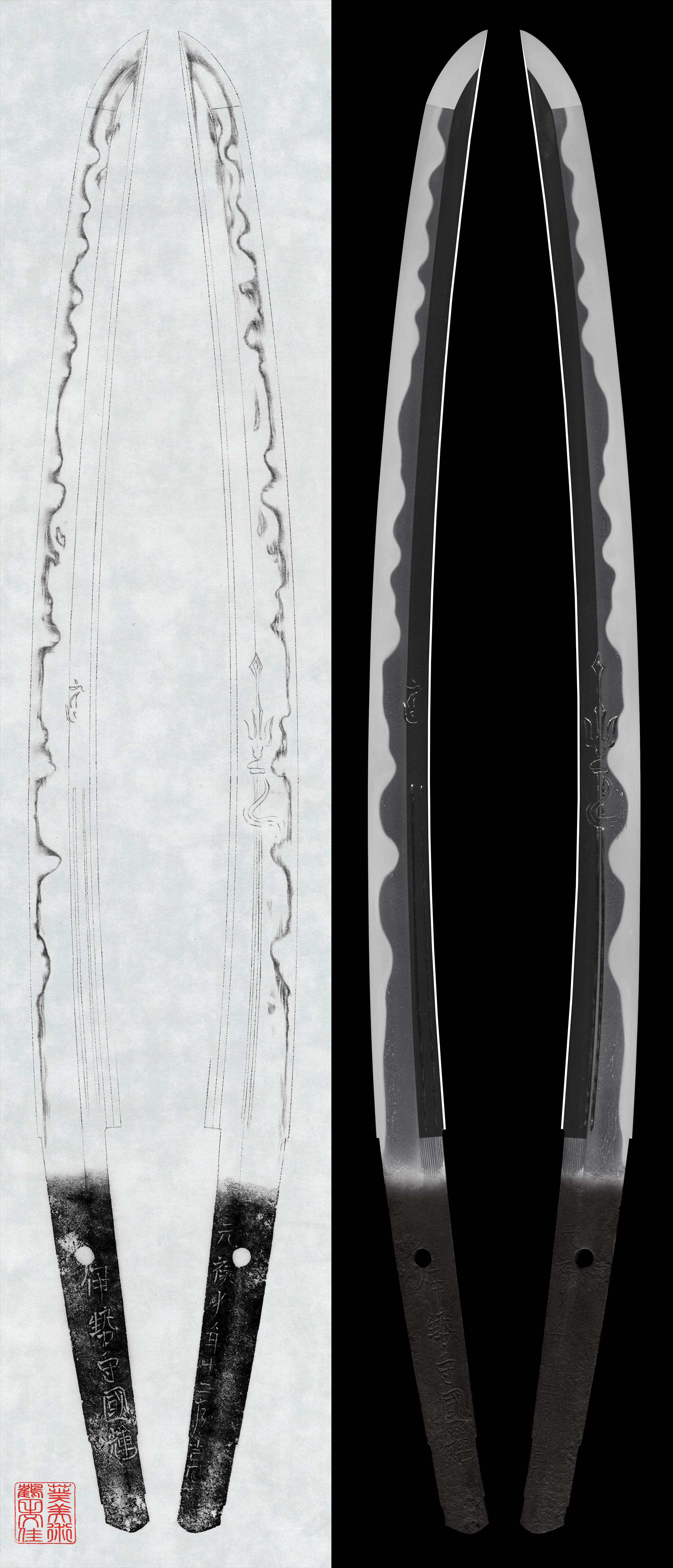
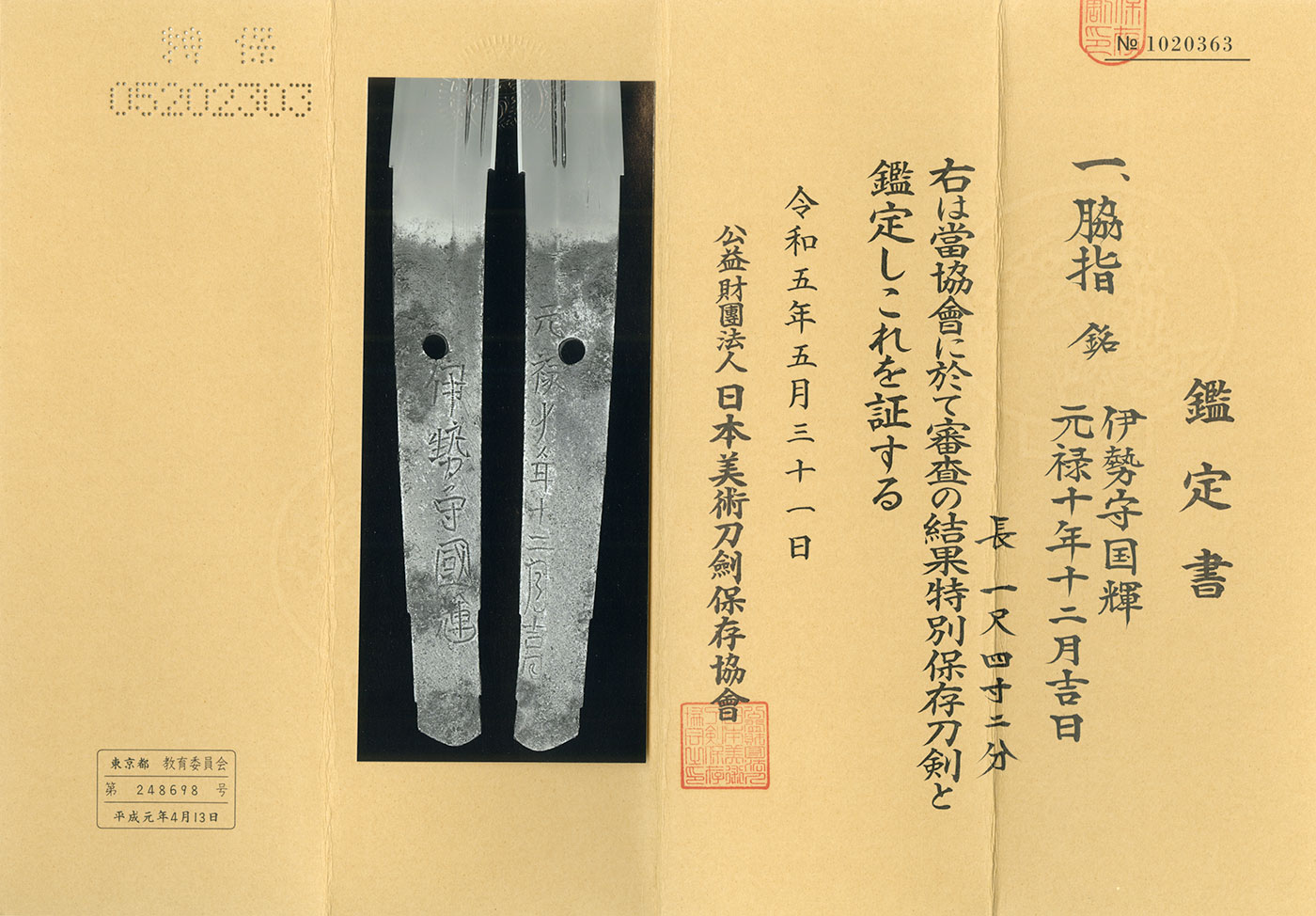
Signature: Ise no Kami Kuniteru.
Dated an auspicious day in December 1697.
伊勢守国輝
元禄十年十二月吉日
Shinto: Wazamono: Jyo Saku: Settsu Province
(We divide 4 sections for each sword as Saijyo Saku, Jyojyo Saku, Jyo Saku and Regular Saku).
This blade is ranked as Jyojyo Saku among the works of Ise no Kami Kuniteru.
Habaki: Single gold iroe habaki.
Blade Length: 42.9 cm (16.89 in).
Curvature: 1.3 cm (0.51 in).
Mekugi Hole: 1.
Width at Base (Motohaba): 2.82 cm (1.11 in).
Width at Yokote: 1.98 cm (0.78 in).
Thickness of rim (Kasane): 0.51 cm (0.20 in).
Sword Weight: 370 g.
Era: Edo period, around the Genroku era (1688–1704).
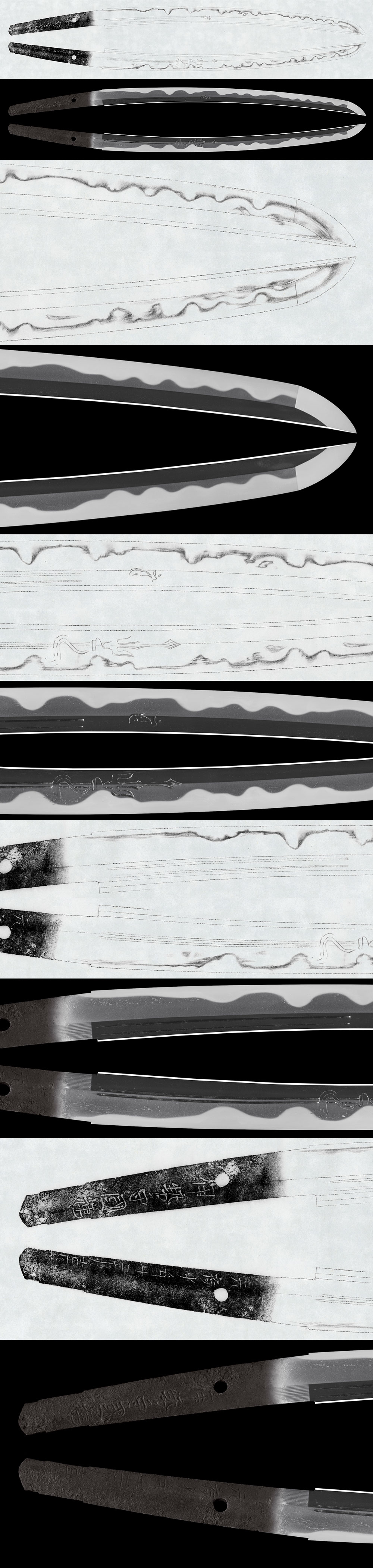
Shape: The blade features futasuji-hi (double grooves) and bonji (Sanskrit characters), while one side is carved with a suken (straight sword) and a yari (spear).
Jigane: Beautifully refined and well-forged ko-itame hada.
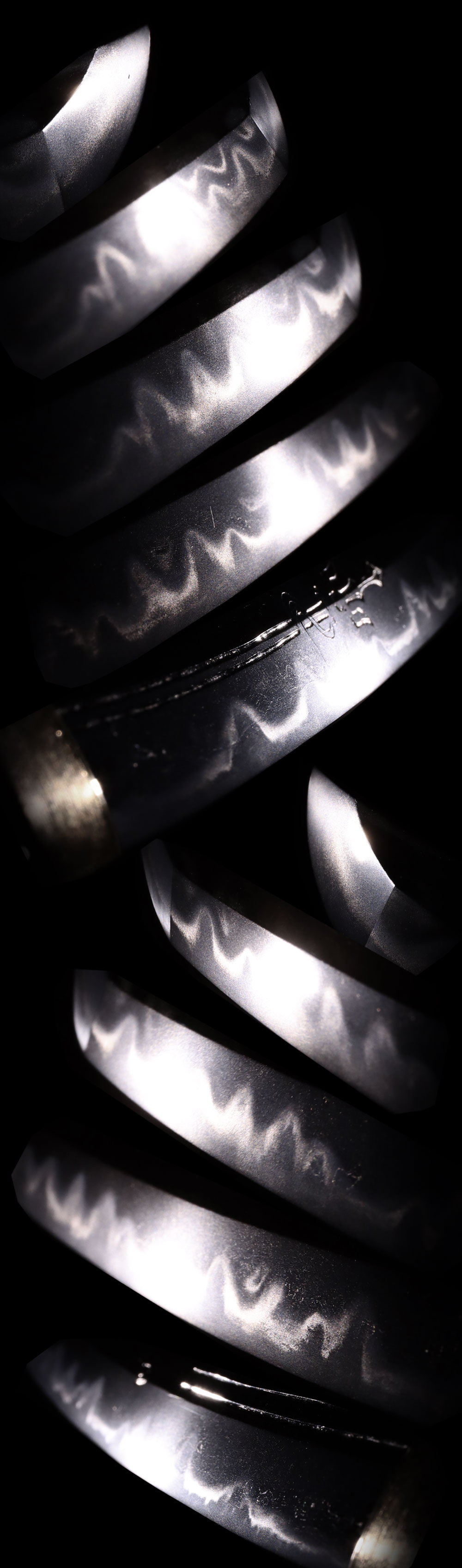
Hamon: Ko-nie-deki gunome-midare with a deep nioiguchi.
Features: This wakizashi features a distinctive gohei-shaped nakago and bears the signature of Kobayashi Ise no Kami Kuniteru.
He is said to have been the fourth son of the 1st Generation Kawachi no Kami Kunisuke and the younger brother of the 2nd Generation Kunisuke.
In 1671, he received the honorary title of Ise Daijo, and the following year, he was promoted to Ise no Kami.
He also studied under Inoue Shinkai, whose influence can be seen in his workmanship, particularly in the deeply formed nioiguchi of his hamon.
Koshirae:
Tsuba: Round iron tsuba featuring openwork carvings.
The rim is fitted with a shakudo fukurin.
Fuchikashira: Shakudo nanako fittings carved with water surface and omodaka (arrowhead plant) motifs, decorated with gold, silver, and copper iroe.
Saya (Scabbard): Red lacquered saya with a carved surface.
Menuki: Carved with folding fan and flower motifs, decorated with gold iroe.
Historical Background:
Death of a Senior Retainer of the Choshu Domain (1698): Mori Motokatsu, the 4th head of the Asa Mori family and a senior hereditary retainer of the Choshu Domain, passed away on January 14, 1698 (December 3, 1697, according to the Japanese lunar calendar).
The Sword Attack at Edo Castle (April 21, 1701): On April 21, 1701, Asano Takumi no Kami Naganori, the lord of the Ako Domain, attacked Kira Kozuke no Suke Yoshihisa, a senior official responsible for court ceremonies, in the Matsu no O-roka (Great Pine Corridor) of Edo Castle.
Kira sustained minor injuries, but drawing a sword inside Edo Castle was strictly prohibited.
As a result, Asano was ordered to commit seppuku (ritual suicide) that same day, and his domain was confiscated.
The Raid on Kira’s Residence (January 30, 1703): In the early hours of January 30, 1703, 47 former retainers of the Ako Domain, led by Oishi Kuranosuke, attacked Kira’s residence in Honjo, Edo (present-day Ryogoku, Sumida Ward, Tokyo).
After a fierce battle, they killed Kira Kozuke no Suke and carried his severed head to Sengakuji Temple in Takanawa, where their former lord, Asano Naganori, was buried.
They placed Kira’s head before their lord’s grave as an offering.
The Fate of the Ako Ronin (March 20, 1703): The Tokugawa shogunate faced a difficult decision regarding the actions of the ronin.
Public opinion was divided between those who praised their actions as an expression of loyalty to their lord and those who regarded the raid as an unlawful act of collective murder.
Ultimately, the 5th Tokugawa Shogun, Tokugawa Tsunayoshi, ordered the ronin to commit seppuku, allowing them to die with the honor traditionally accorded to samurai.
On March 20, 1703, 46 of the ronin committed seppuku.
The 47th participant, Terasaka Kichiemon, had disappeared after the raid and was not among those executed.
The Cause of Asano’s Attack: The precise reason why Asano Naganori attacked Kira remains uncertain, and several theories have been proposed.
Some accounts suggest that Kira mistreated Asano or demanded bribes while instructing him in his duties as a host responsible for receiving imperial envoys.
Other theories suggest that Asano’s personal temperament or an underlying medical condition may have contributed to the incident.
However, no definitive explanation has been established.
NBTHK Tokubetsu Hozon Token.
AoiArt estimation paper: Whole Oshigata.
Please note: the price does not include the shipping fees.



Starting bid: ¥600,000
|
Auction started
2026/11/17 (Tue) 14:10 |
※ = Auto