
 日本語
Bid History
|
Auction started
2026/11/15 (Sun) 10:14 |
※ = Auto
Wakizashi in Shirasaya (NBTHK Hozon Token)
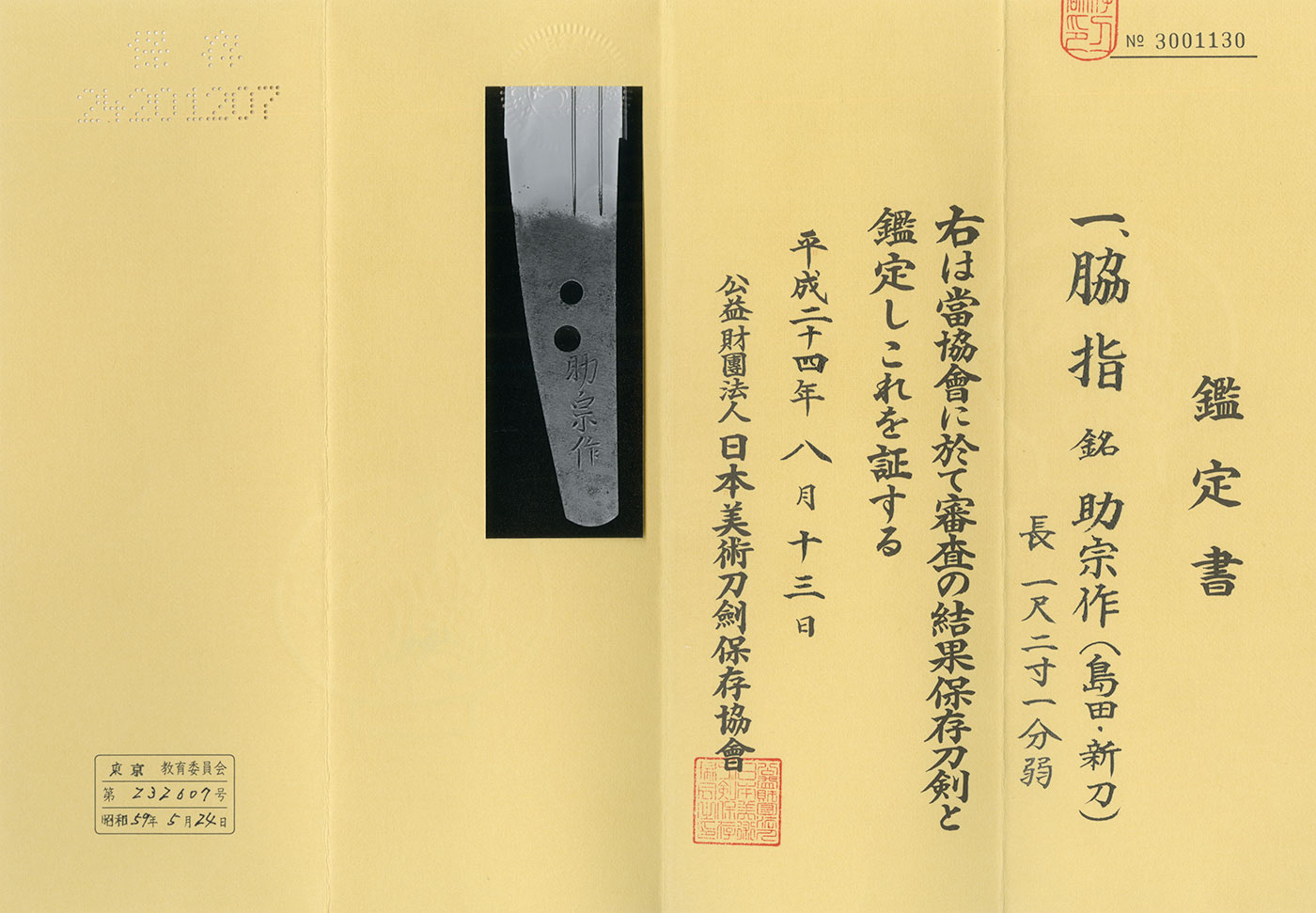
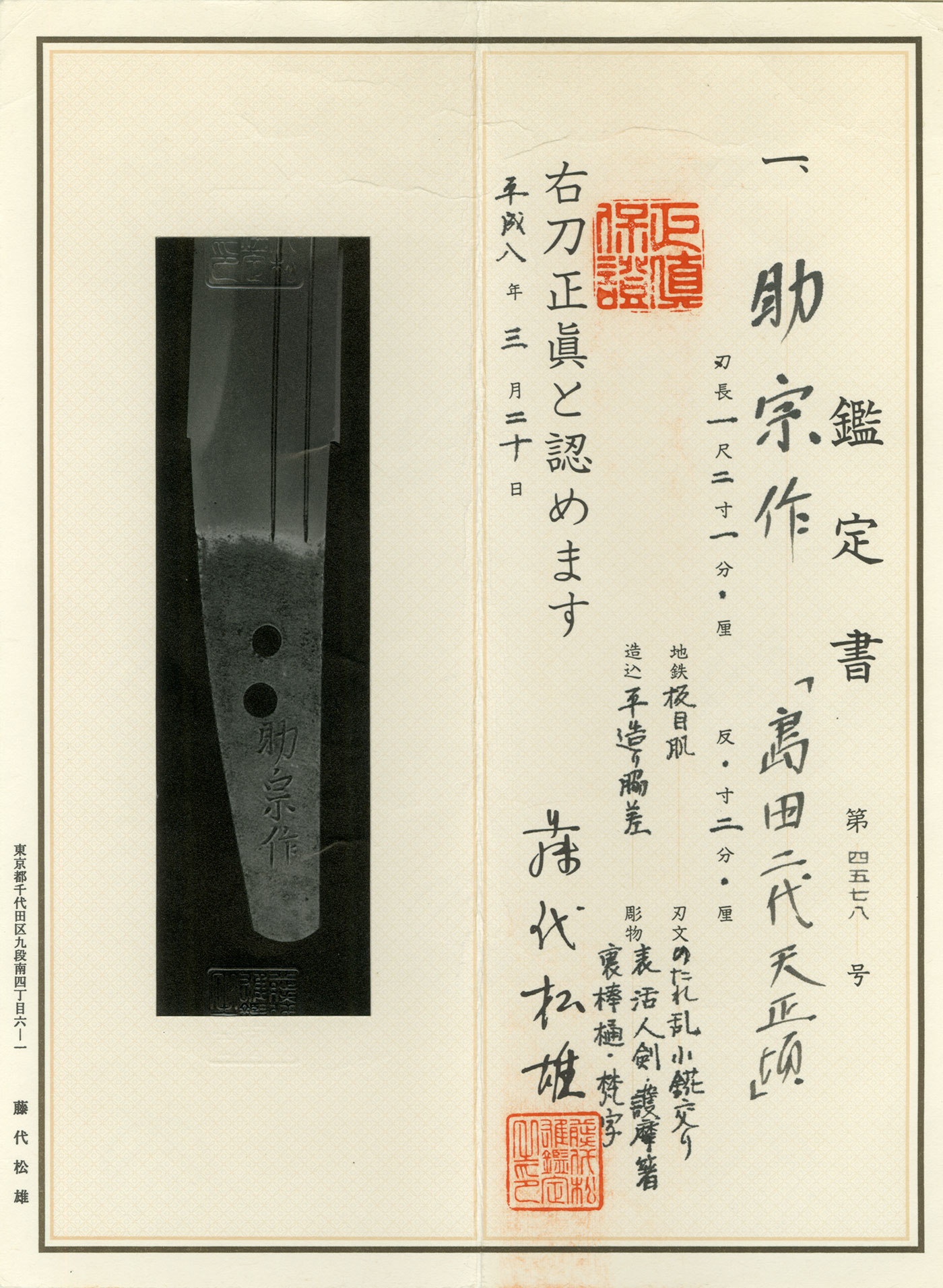
Signature: Sukemune Saku (Shimada School, Shinto)
助宗作(島田・新刀)
(We divide 4 sections for each sword as Saijyo Saku, Jyojyo Saku, Jyo Saku and Regular Saku).
This blade is ranked as Jyojyo Saku among the works of Sukemune.
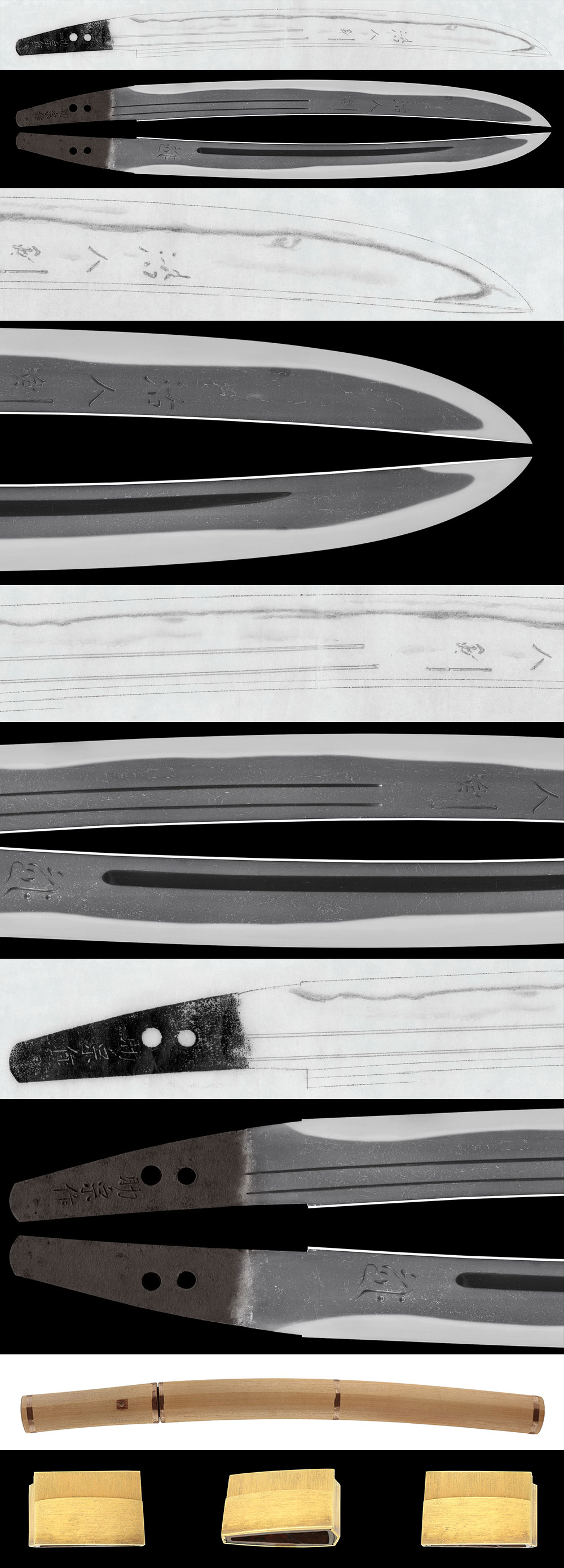
Habaki: Double gold-foiled habaki.
Blade Length: 36.7 cm (14.45 in).
Curvature: 0.6 cm (0.24 in).
Mekugi Hole: 2.
Width at Base (Motohaba): 3.31 cm (1.30 in).
Thickness of rim (Kasane): 0.55 cm (0.22 in).
Sword Weight: 315 g.
Era: Early Edo period.
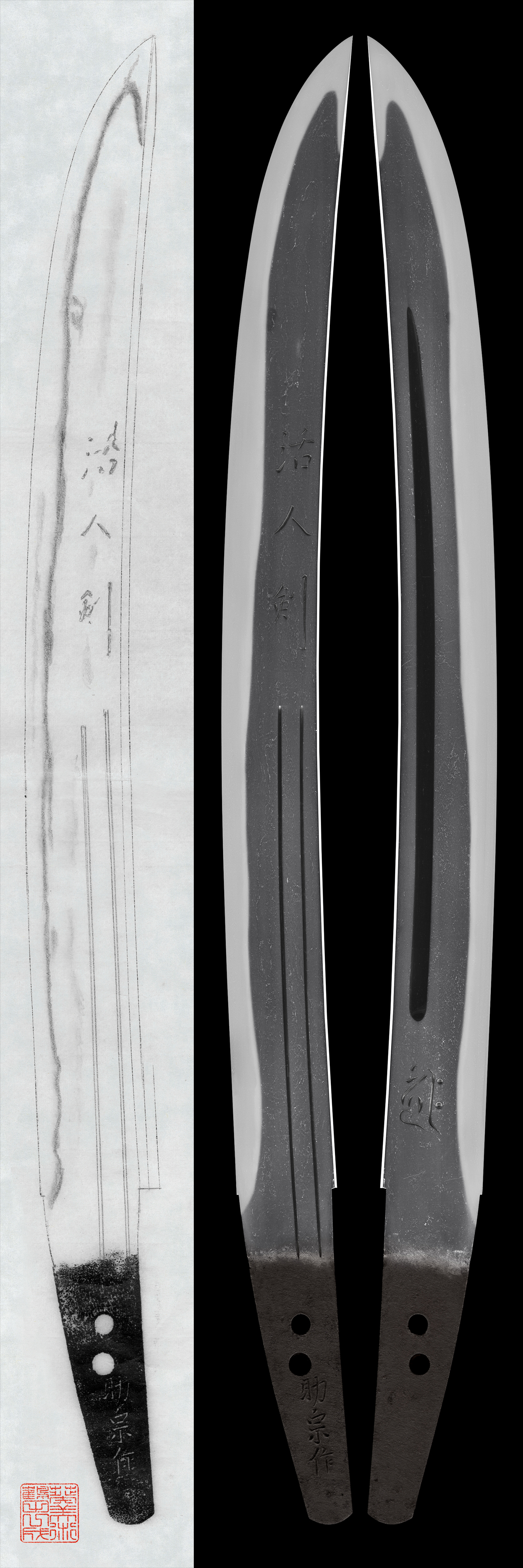
Shape: A wakizashi with a wide mihaba and noticeable saki-zori (curvature toward the tip).
The omote (front) side features futasuji-hi (double grooves) and a carving of the characters “Katsujinken” (活人剣).
The ura (reverse) side features a bonji (Sanskrit character) carved beneath a wide bo-hi.
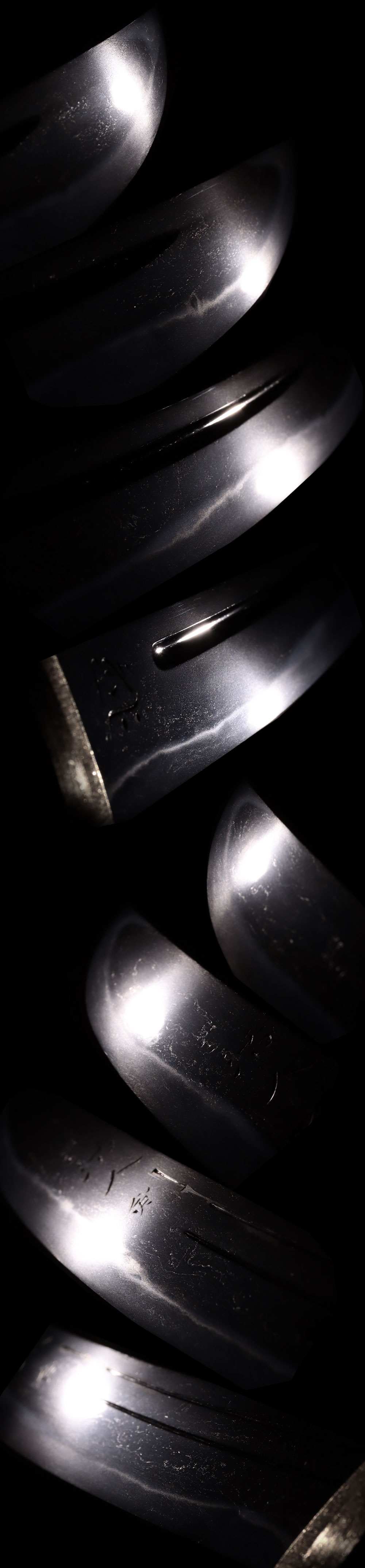
Jigane: Beautifully refined and well-forged ko-itame hada with visible shirake-utsuri.
Hamon: Suguha mixed with notare.
The boshi forms a ko-maru (small rounded tip) with a turnback.
Features: Sukemune was a swordsmith of the Shimada school, a swordmaking tradition that existed from the Koto period.
According to the appraisal by the Japanese Sword Museum, this particular blade has been attributed to Sukemune of the Shinto period.
This wakizashi is in healthy condition and features a gently flowing hamon, along with a carving of the characters “Katsujinken” (活人剣) on the blade.
Katsujinken, meaning “Life-Giving Sword,” is a philosophical concept that regards the sword, traditionally a weapon used to take lives, as a means of preserving, protecting, and sustaining life.
The concept originally derives from the teachings and Zen expressions of the Rinzai school of Chinese Buddhism.
It later had a significant influence on Japanese swordsmanship and the philosophy of Bushido.
NBTHK Hozon Token.
Fujishiro kanteisho.
AoiArt estimation paper: Whole Oshigata.


Starting bid: ¥350,000
|
Auction started
2026/11/15 (Sun) 10:14 |
※ = Auto