
 日本語
Bid History
|
Auction started
2026/10/21 (Wed) 11:23 |
※ = Auto
Order No.: AS26553
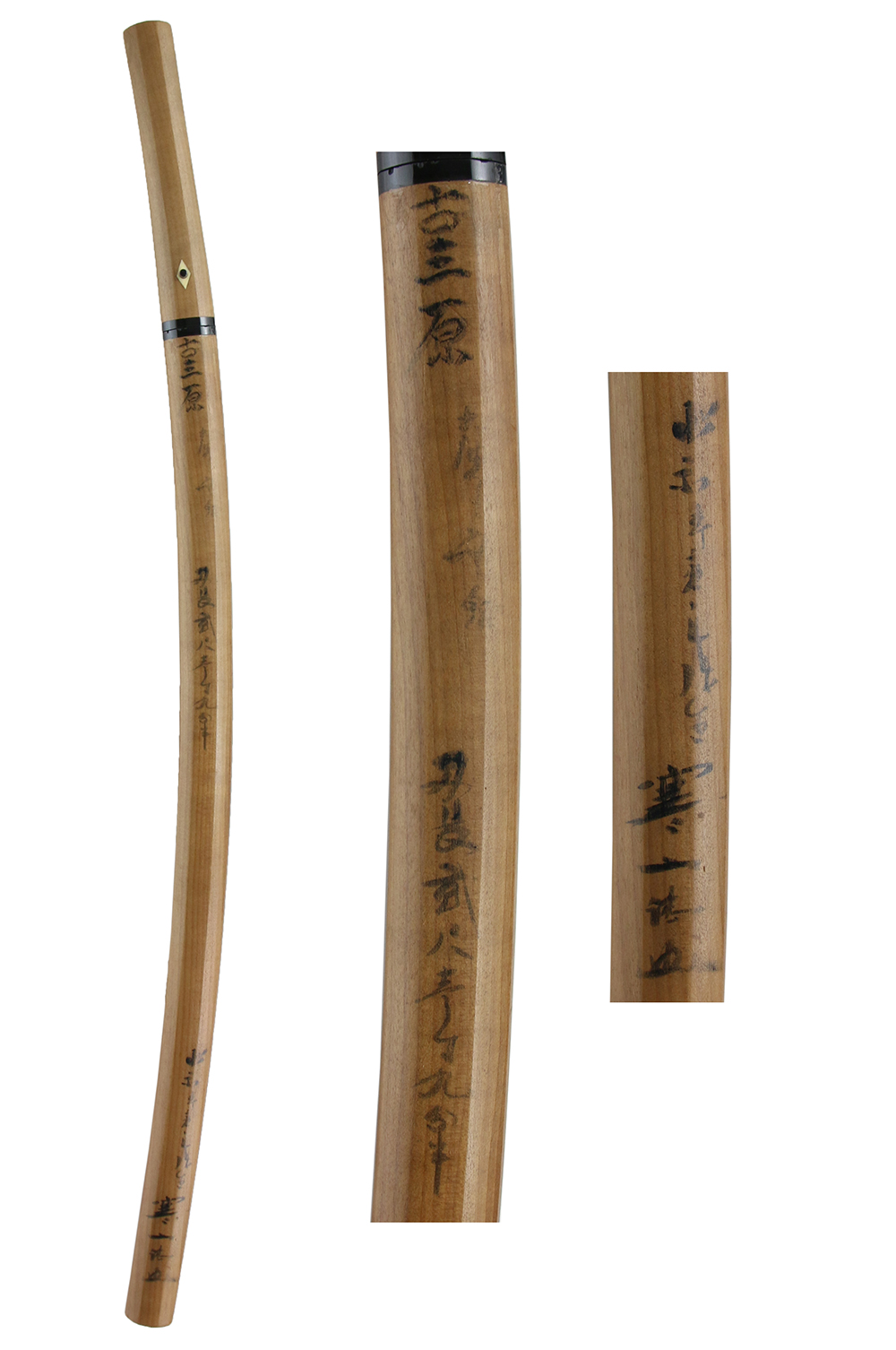
Katana: In Shirasaya, with Koshirae (Tokubetsu Hozon Token)
Signature: Mumei (Ko-Mihara)
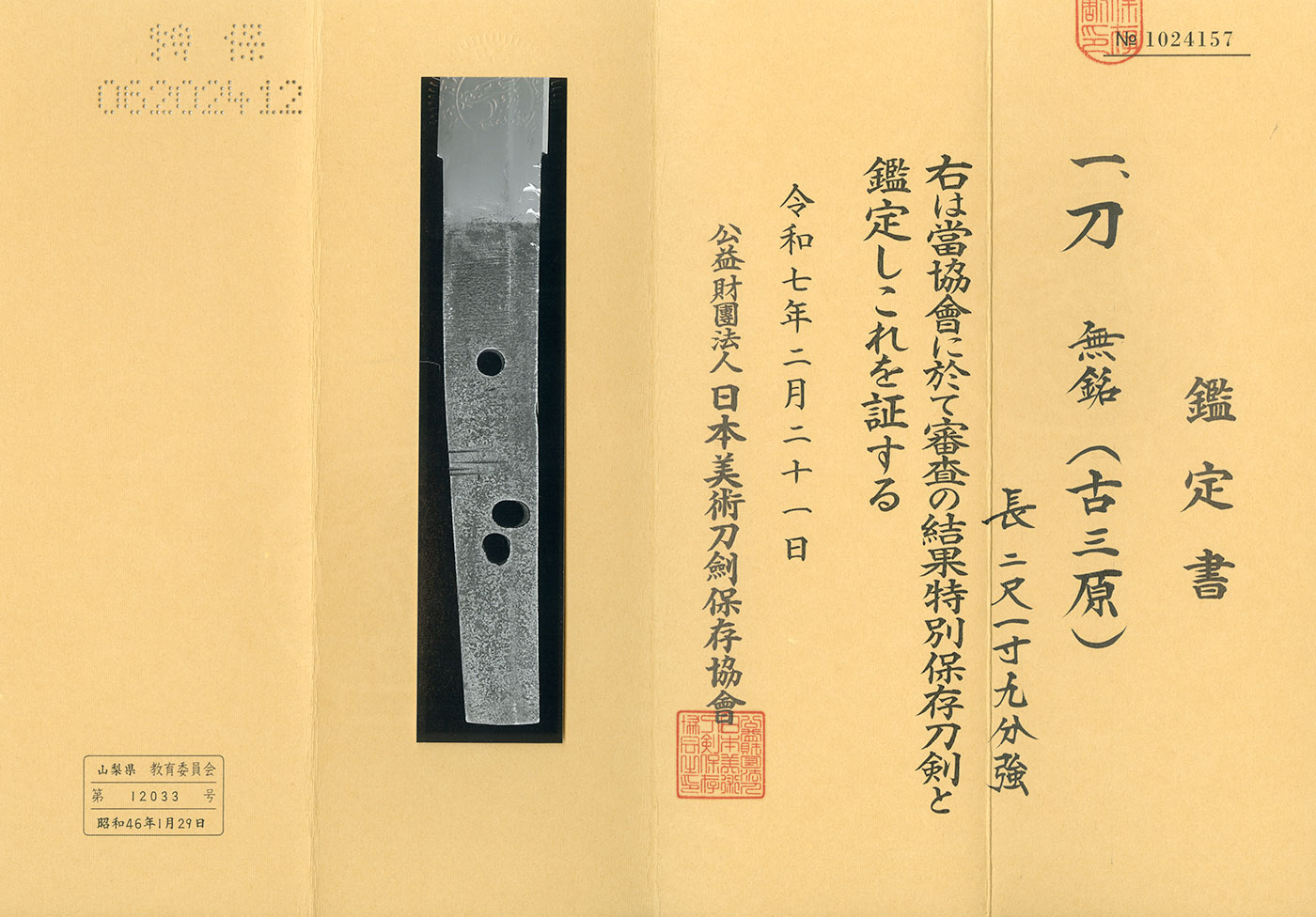
無銘(古三原)
Sayagaki: Ko-Mihara, O-suriage Mumei, Kanzan-shi
We classify swordsmiths’ works into four levels based on their quality: Saijo Saku (Highest Grade), Jojo Saku (Excellent Grade), Jo Saku (High Grade), and Futsu Saku (Regular Grade).
This sword is ranked as Jo Saku (High Grade) among works attributed to Mumei (Ko-Mihara).
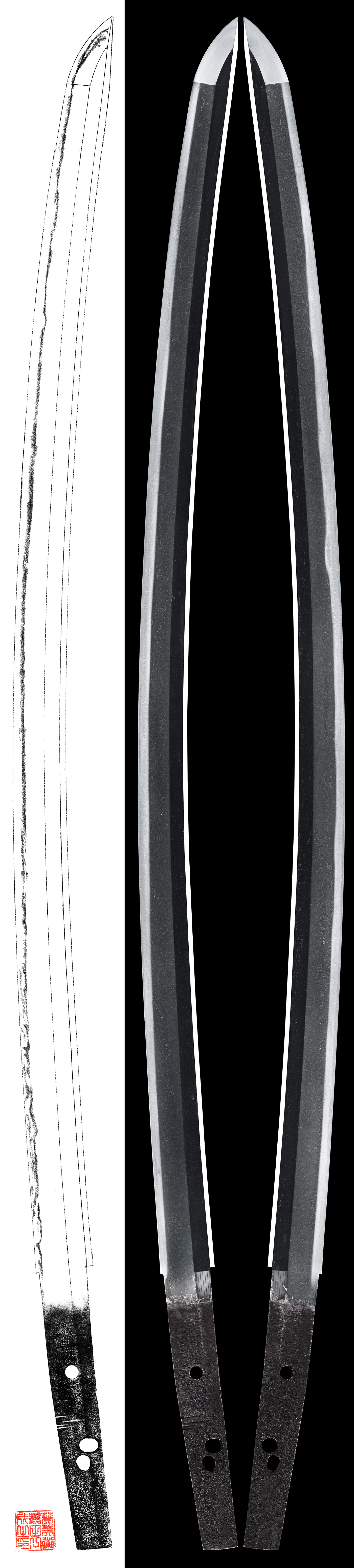
Blade Length: 67.4 cm
Sori: 2.8 cm
Mekugi-ana: 3
Motohaba: 2.78 cm
Sakihaba: 2.14 cm
Kasane: 0.67 cm
Period: Late Kamakura to Early Nanbokucho Period
Shape:The blade is O-suriage Mumei (greatly shortened and unsigned), with standard width and thickness, deep curvature, and an elongated kissaki, giving it an elegant and well-balanced shape.
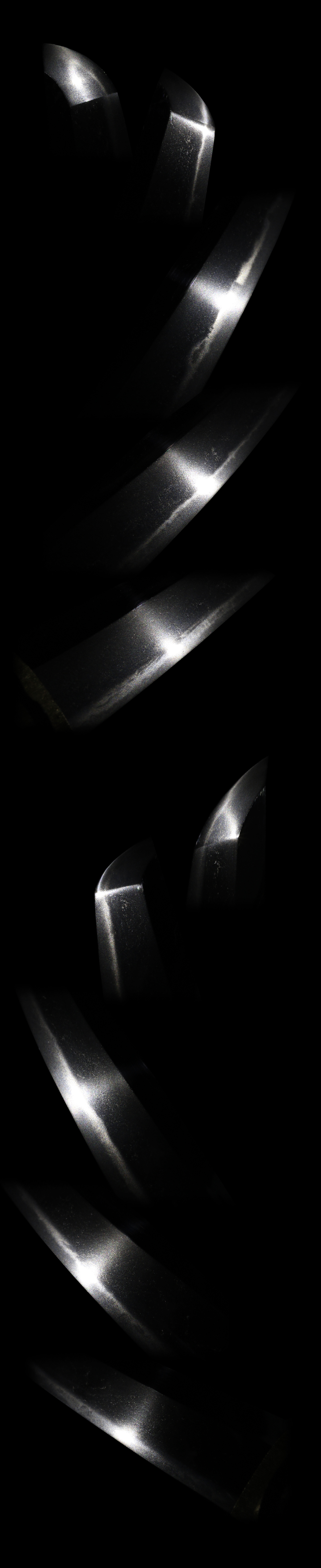
Jigane:The well-forged itame-hada features ji-nie mixed with mokume-hada. Chikei appears in places, creating a refined and attractive steel texture.
Hamon:Nie-deki suguha mixed with small gunome-midare. Ko-ashi and yo can be seen within the hamon. The boshi shows nijuba (double temper lines), with a slightly hakikake appearance toward the tip.
Special Features:
The Mihara school was a group of swordsmiths based in Bingo Province. The school originated in the late Kamakura period and flourished until the end of the Muromachi period. Works produced from the late Kamakura through the Nanbokucho period are collectively referred to as Ko-Mihara (Old Mihara), while those made during the Muromachi period are known as Sue-Mihara (Late Mihara).
Bingo Province contained many estates belonging to influential temples in the Kinai region, including Toji Temple and Rengeoin. It is believed that the Yamato characteristics found in the workmanship of the Mihara school developed through cultural and technical exchanges with these central regions.
Throughout its history, the Mihara school displayed a strong influence from the Yamato tradition. Its hamon is primarily suguha, occasionally mixed with slight irregularities, while the jigane generally consists of itame-hada with a tendency toward flowing grain patterns.
Compared with swords produced in Yamato Province itself, Mihara works generally exhibit less prominent nie in both the jigane and hamon. The jigane often shows shirake-utsuri, with noticeable mokume-hada mixed into the itame-hada, creating a somewhat pronounced grain pattern. Other characteristic features include a relatively tight nioiguchi and a generally subdued boshi.
At first glance, this particular sword resembles the workmanship of the Aoe school of neighboring Bitchu Province. The jigane is especially attractive, displaying a distinctive texture reminiscent of chirimen-hada (crepe-like grain). This is a highly appealing sword with beautiful and characteristic steel.
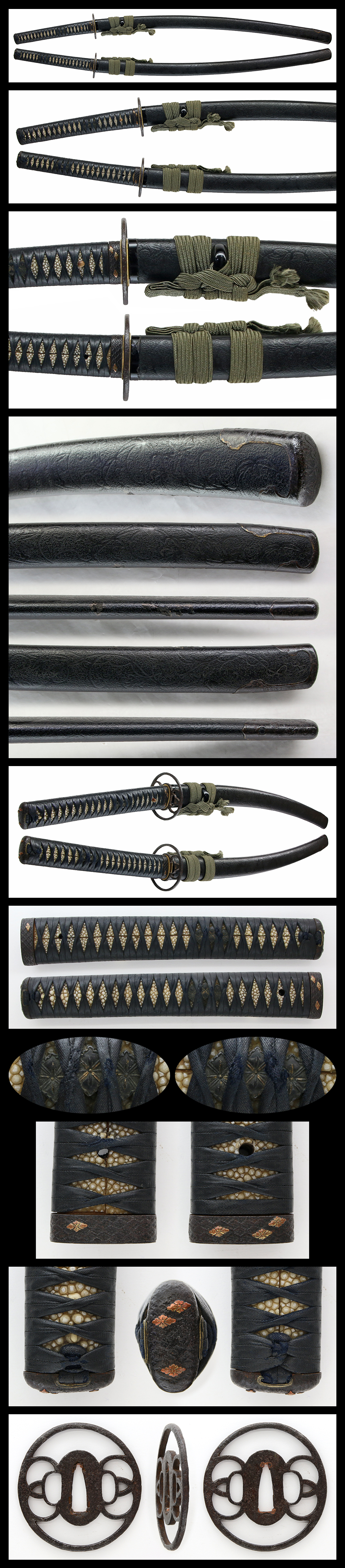
Koshirae:
Tsuba: A round openwork tsuba decorated with carved patterns.
Fuchikashira: Iron fittings carved with diamond-shaped patterns and inlaid with family crests in copper.
Saya: Black ishime-ji lacquered scabbard.
Menuki: Shakudo fittings with family crests carved in high relief and decorated with gold accents.
NBTHK Tokubetsu Hozon Token Certificate
Aoi Art Estimation Paper
Full-Length Oshigata
Please note: The price does not include the international shipping fees.


Starting bid: ¥850,000
|
Auction started
2026/10/21 (Wed) 11:23 |
※ = Auto