
 日本語
日本語Bid History
|
Auction started
2026/10/18 (Sun) 16:33 |
※ = Auto
Ordering Number: AS25648
Daisho Set: in Shirasaya with Koshirae
——————————-
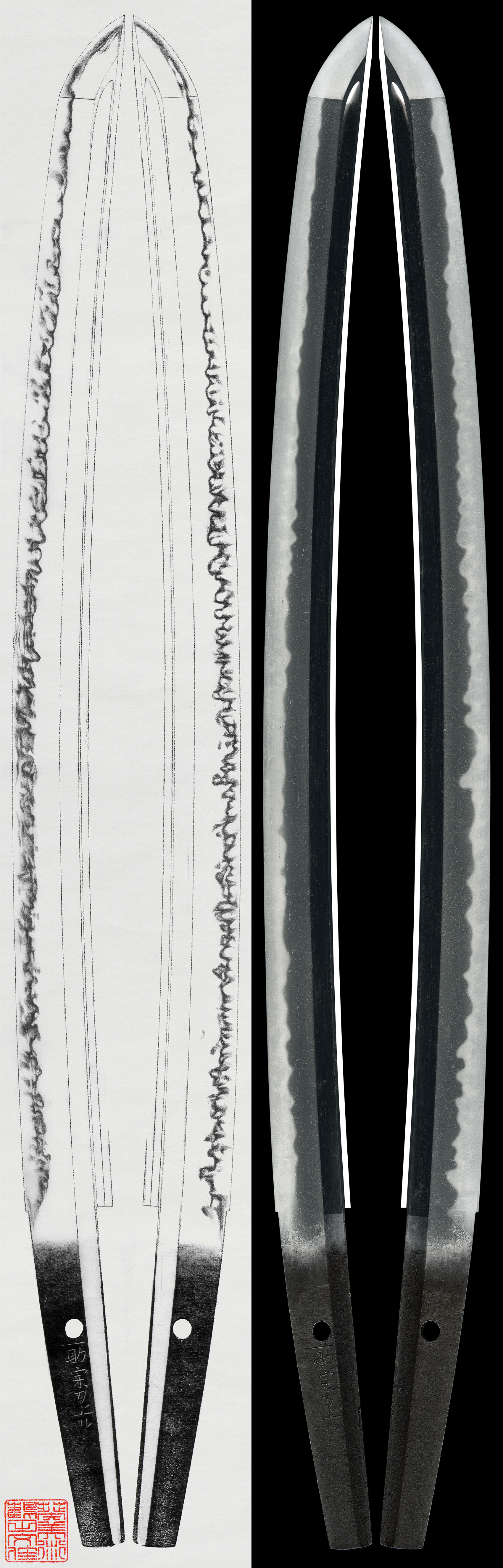
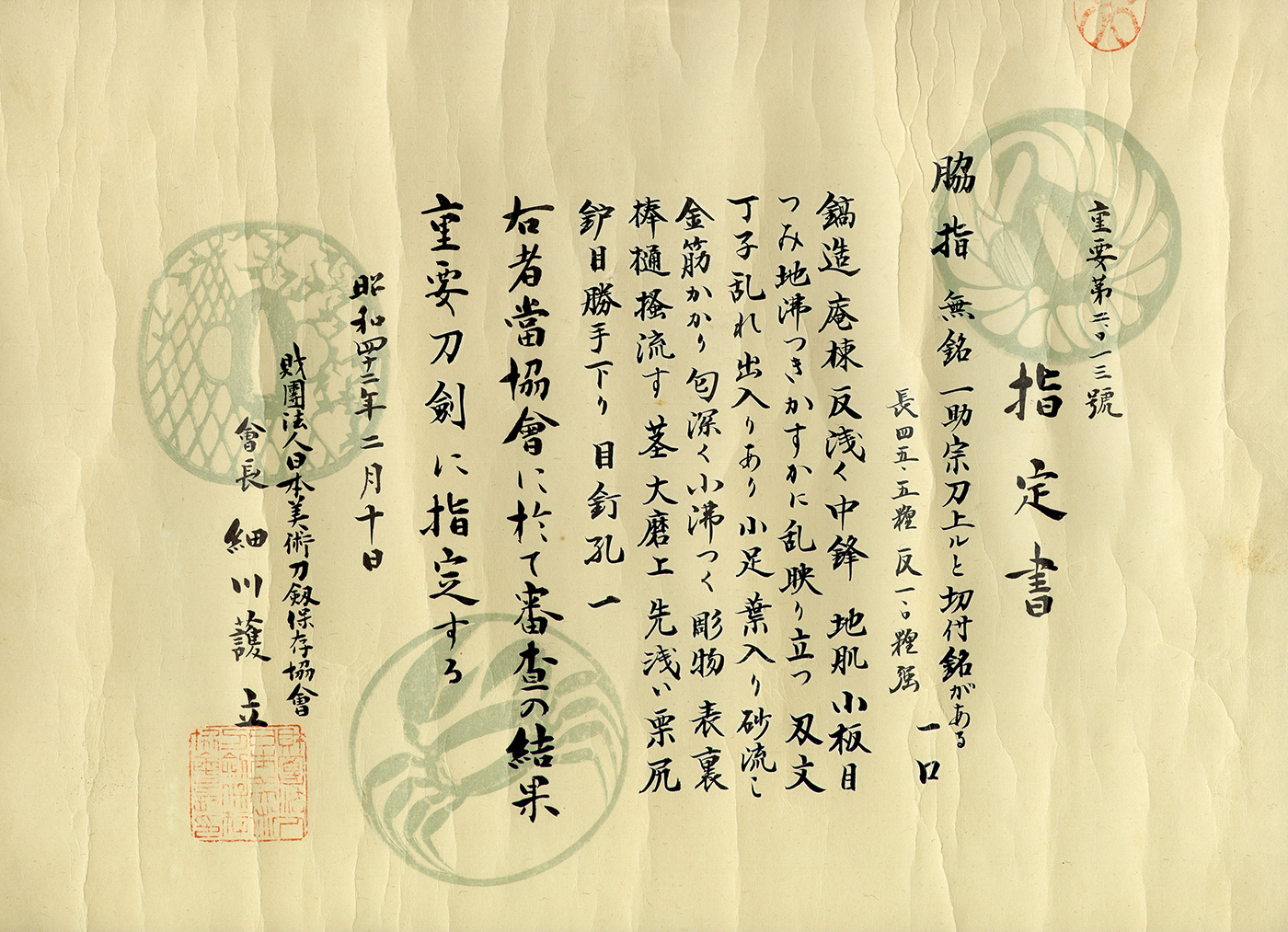
Sho(Wakizashi): (the 15th Juyo Token)
Inscription(Kiritsuke Mei): 一 助宗刀上ル(Ichimonji school)
We divide works in to Saijo Saku, Jyojyo Saku, Jyo Saku,and Regular Saku.
This piece is ranked as Saijo Saku for Mumei(Ichimonji).
Habaki: gold plated double habaki
Blade Length: 45.6cm (17.95in)
Curvature: 1.0cm (0.39in)
Mekugi-ana: 1
Motohaba: 2.83cm (1.11in)
Sakihaba: 2.15cm (0.85in)
Kasane: 0.50cm (0.20in)
Weight: 380g
Era: mid Kamakura period, circa 13th century
Shape: Suriage Mumei blade with shallow curvature
Jigane: fine koitame hada with jinie and Midare utsuri.
Hamon: Chohi midare with soft nioikuchi mixed with Ashi, yo and kinsuji.
Features:
The Fukuoka Ichimonji school is a lineage of swordsmiths generally regarded as having been founded by Norimune. Sukemune was his son, although this particular blade is believed to date from the mid-Kamakura period, somewhat later than Sukemune’s time. The hamon is intricate and flamboyant, featuring a deeply defined nioiguchi with abundant ashi and yo throughout, creating a magnificent and visually captivating appearance.
——————————-
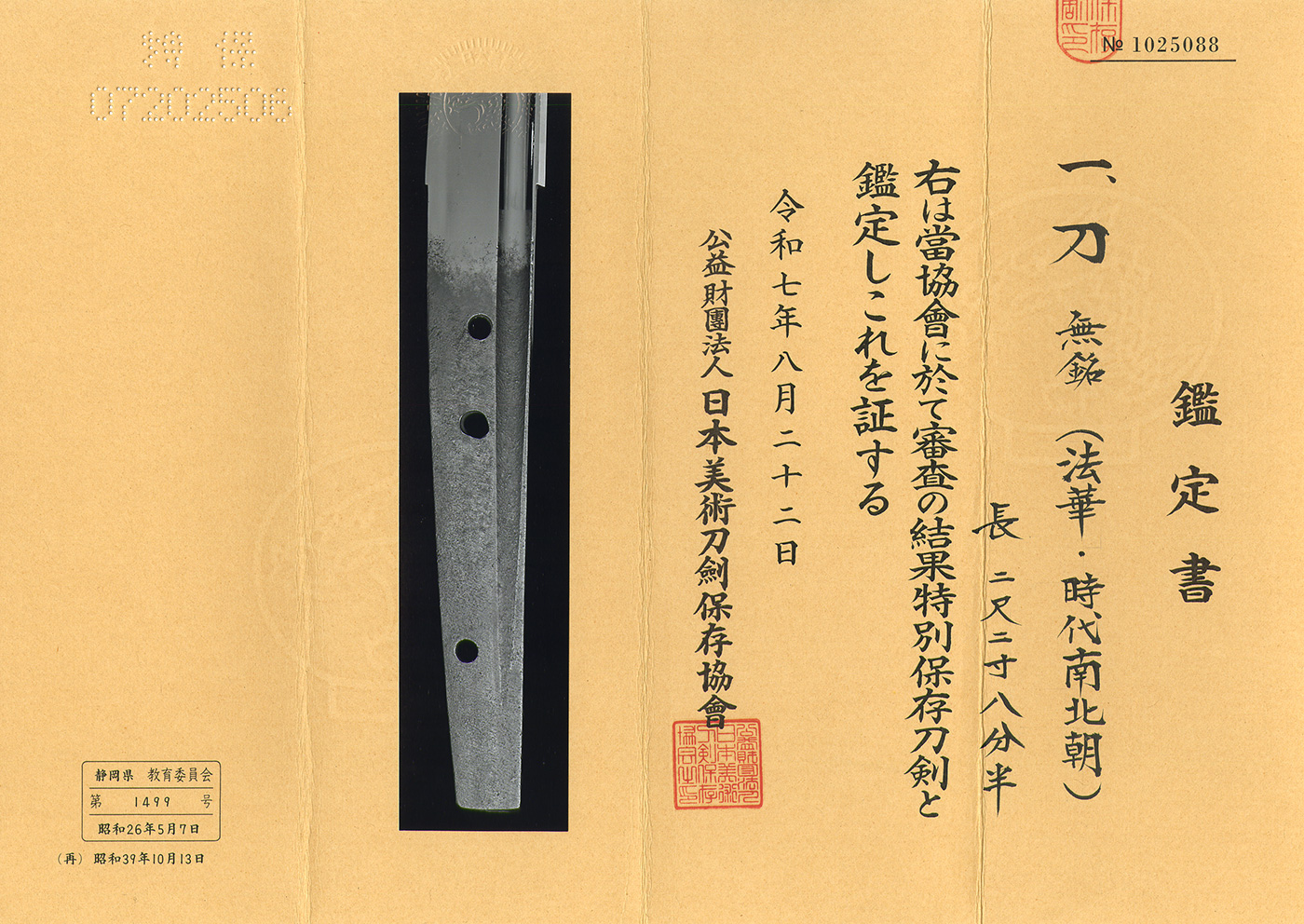
Dai(Large): Katana: (NBTHK Tokubetsu Hozon Token)
Inscription: Mumei(Unsigned), judged as Hokke 法華 from Nanbokucho Period.
We divide works in to Saijo Saku, Jyojyo Saku, Jyo Saku,and Regular Saku.
This piece is ranked as Jyojyo Saku for Mumei().
Habaki: gold-plated single habaki
Blade Length: 69.3cm (27.28in)
Curvature: 1.4cm (0.55in)
Mekugi-ana: 3
Motohaba: 3.12cm (1.23in)
Sakihaba: 2.34cm (0.92in)
Kasane: 0.59cm (0.23in)
Blade Weight: 640g
Era: Nanbokucho period, 14th century
Shape: slightly wide and thin blade with little long kissaki with Suriage. Bohi is carved on the both sides.
Jigane: Itame and Mokume with chikei and whitish utsuri.
Hamon: Konie base suguha mixed with short ashi and kinsuji.
Features:
The Bingo Hokke school was a group of swordsmiths based in Bingo Province, traditionally believed to have originated in the late Kamakura period when Kokubunji Sukekuni moved from Bizen Province to Fukuyama. The school flourished mainly from the Nanbokucho through the Muromachi period.
Their works display characteristics of the Yamato tradition, particularly in the suguha hamon with areas of hotsure (frayed temper lines). The prominent grain patterns in the jigane further contribute to the classical and elegant appearance of their blades.
——————————-
Koshirae:
Saya: Black saya with makie paiting of Shishi dogs and peony.
Tsuba(Daisho): silver base carved with Shishi and peony.
Fuchikashira(Daisho): Shakudo nanako base carved with Shishi and peony.
Menuki(daisho): a motif of Shishi dogs.
Kozuka(sho): Shakudo nanako base carved with shishi dogs and peony. come along with kogatana.
From Aoi-Art :
The koshirae is a splendid and elegant work, with its designs unified by a consistent motif of peonies and Shishi (lions). The combination of peonies and Shishi is a traditional Japanese motif originating from Buddhist legends.
——————————-
NBTHK the 15th Juyo Certificate (Wakizashi)
NBTHK Tokubetsu Hozon Token(Katana)
Aoi-Art estimation Paper
whole Oshigata
——————————
Please note: the price does not include the shipping fees.




Dai(Katana)




Starting bid: ¥4,750,000
|
Auction started
2026/10/18 (Sun) 16:33 |
※ = Auto