
 日本語
日本語Bid History
|
Auction started
2026/07/03 (Fri) 09:50 |
※ = Auto
Ordering Number: AS26267
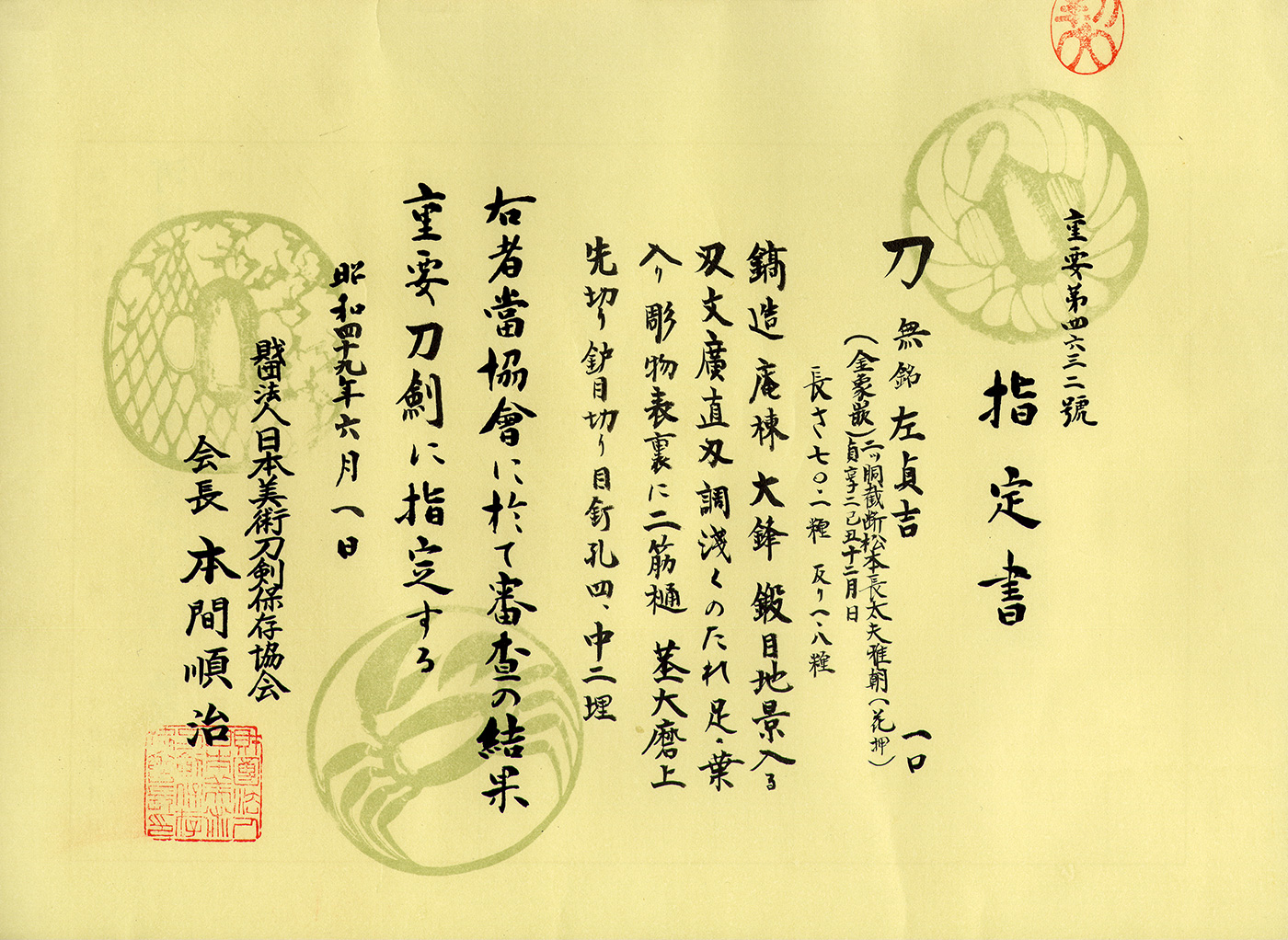
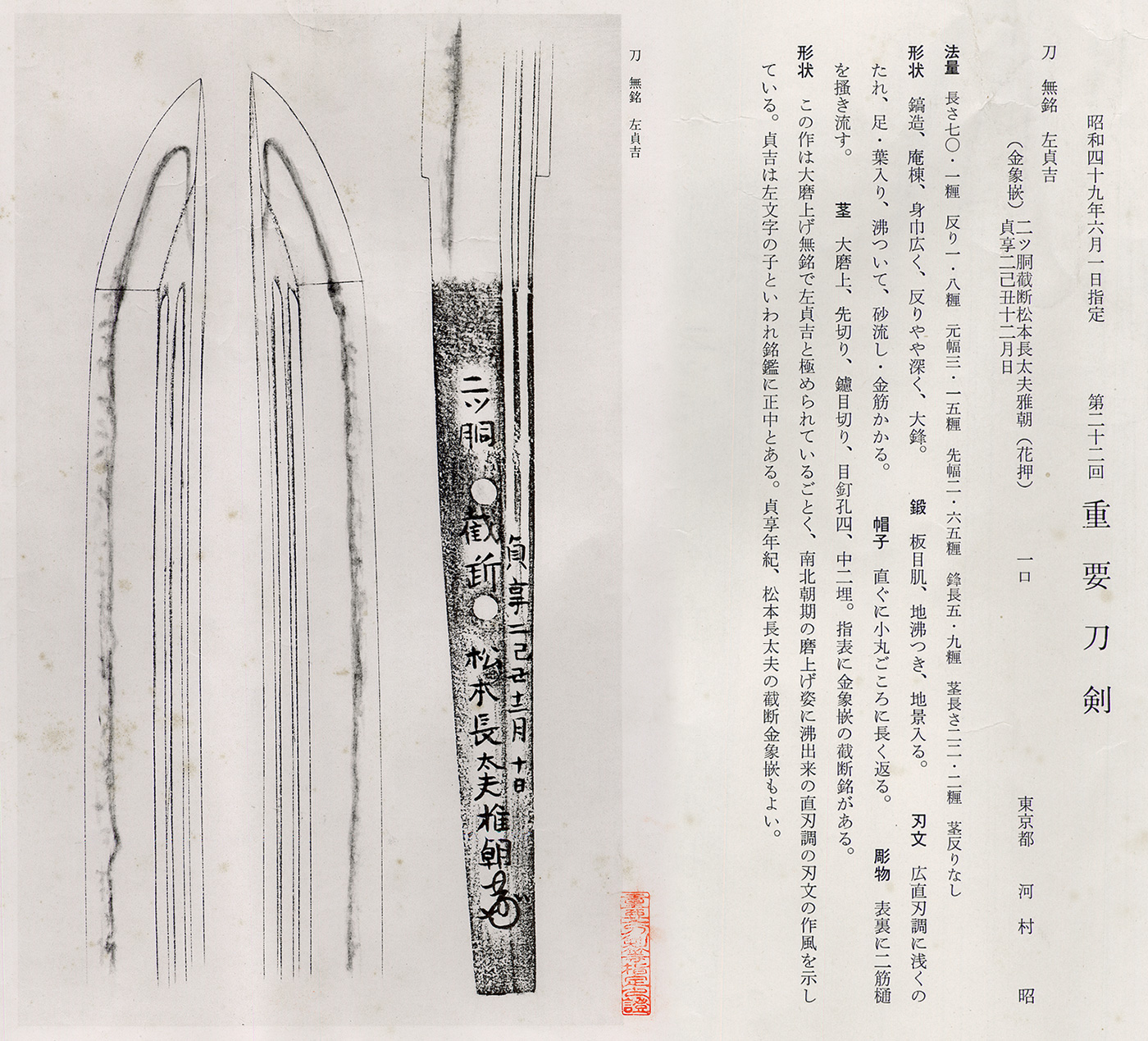
Katana in Shirasaya (22nd NBTHK Juyo Token)
Signature: Mumei (Unsigned) (Sa Sadayoshi)
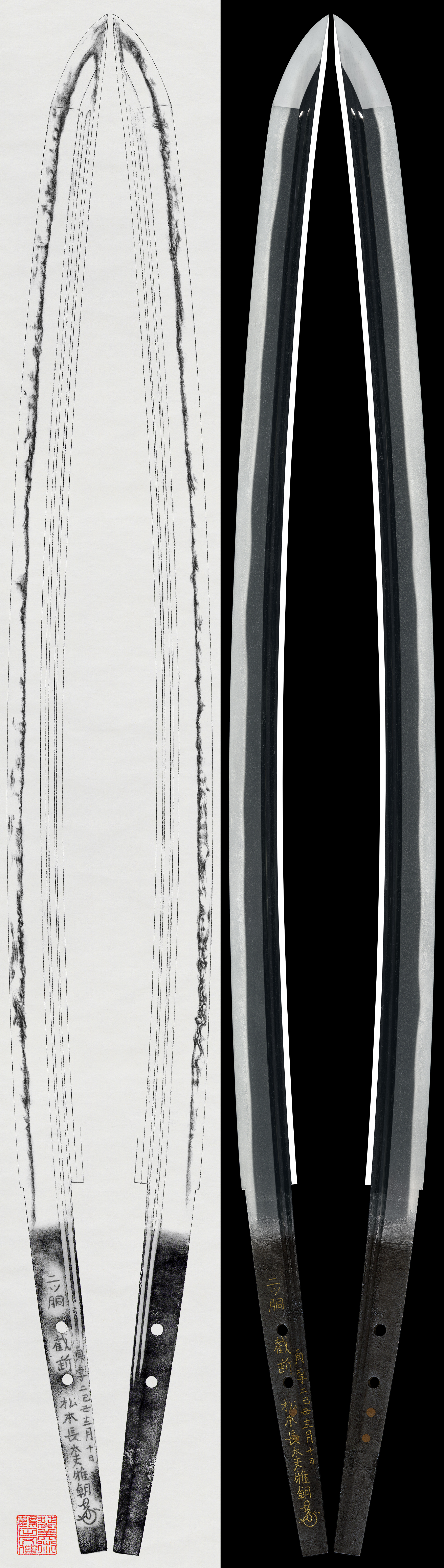
(Gold Inlaid Inscription) Futatsu-do Cutting Test by Matsumoto Chodayu Masatomo (kao)
Dated December, Jokyo 2, Year of the Earth Ox (1685)
無銘(左貞吉)
(金象嵌)二ツ胴裁断松本長太夫雅朝(花押)
貞享二己丑十二月日
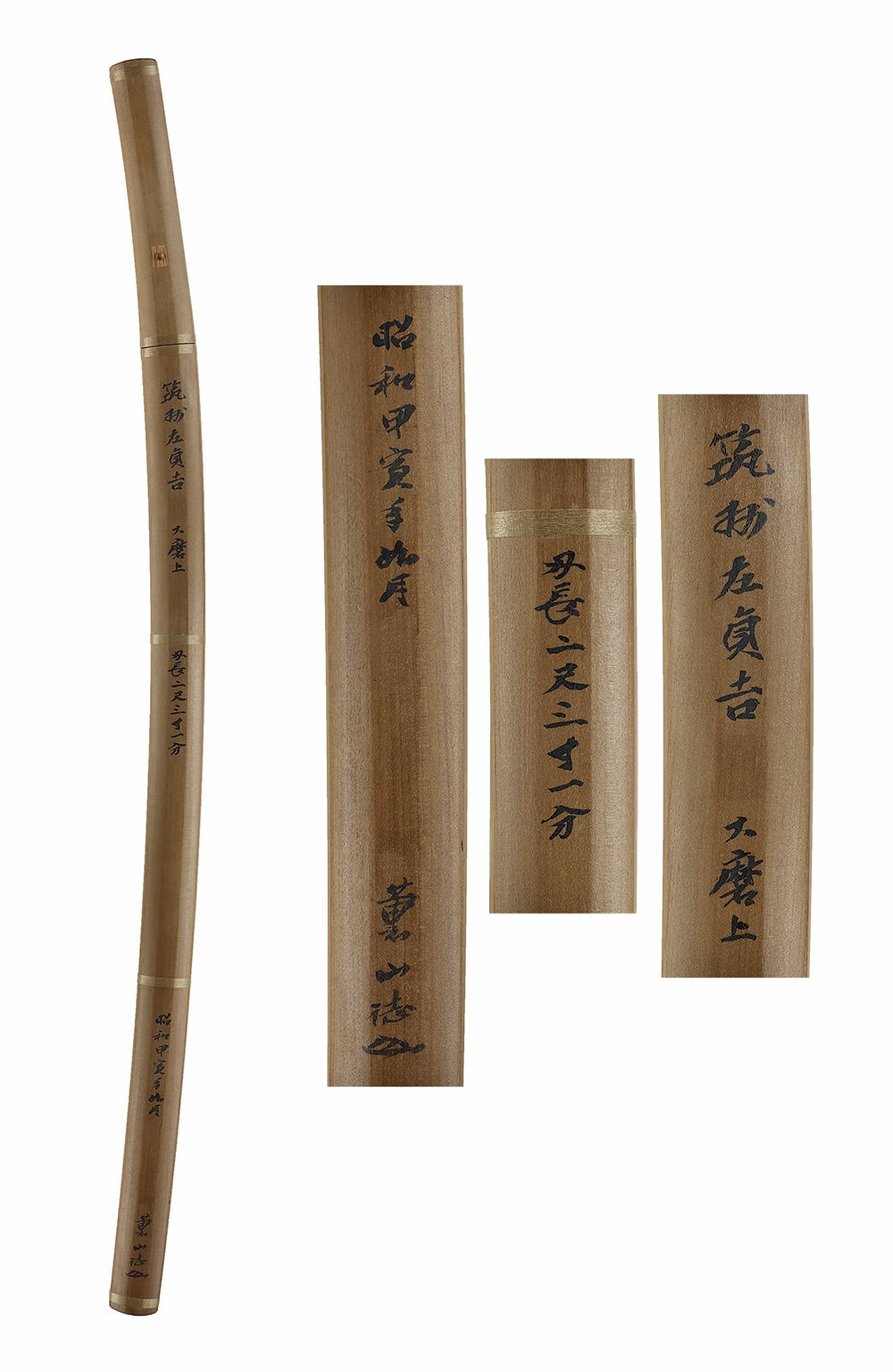
Sayagaki: Chikushu Sa Sadayoshi. O-suriage.
Blade Length: 2 shaku 3 sun 1 bu.
February, Showa Kinoe-Tora (1974).
Kozan (kao).
Chukoto: Chikuzen: Jyojyo-saku: Around the Shohei era (1346-1370).
(We divide 4 sections for each sword as Saijyo Saku, Jyojyo Saku, Jyo Saku and Regular Saku).
This blade is ranked as Saijyo Saku among works attributed to Mumei (Sa Sadayoshi).
Habaki: Single-layer gold-covered habaki.
Blade Length: 70.0 cm (27.56 in).
Curvature: 1.55 cm (0.61 in).
Mekugi Hole: 4 (2 plugged).
Width at Base (Motohaba): 3.28 cm (1.29 in).
Width at Yokote: 2.75 cm (1.08 in).
Thickness of rim (Kasane): 0.62 cm (0.24 in).
Sword Weight: 880 g.
Era: Nanbokucho period, around the Shohei era (1346-1370).
Shape: Although suriage, the blade retains a wide mihaba and broad kissaki with excellent proportions.
Double grooves (futasuji-hi) are carved on both sides.
Jigane: Well-forged ko-itame hada producing a bright and refined steel surface.
Chikei are highly active, mixed with mokume, and prominent utsuri is clearly visible.
Hamon: Nioi-deki, primarily suguha with active ashi and yo.
The boshi returns in a rounded notare style.
Features: Sa Sadayoshi was a disciple of the great Sa (Samonji).
Departing significantly from the conventional style of many Kyushu smiths, he established a distinctive workmanship characterized by bright and brilliant jigane and hamon enriched with chikei and kinsuji.
The Sa school produced many accomplished swordsmiths, including Yasuyoshi, the son of Sa, as well as Yukihiro, Yoshisada, Kunihiro, Hiroyuki, Hiroyasu, and Sadayuki.
Collectively known as Sue-Sa, these smiths faithfully inherited the style of their master and were all active during the Nanbokucho period.
A Nanbokucho-period sword with a truncated signature (setsudan-mei) is a rare and highly desirable piece. Featuring a magnificent extended kissaki (o-kissaki) and an imposing overall appearance, this is an outstanding work that we highly recommend.
Historical Background: During the Shohei era of the Nanbokucho period, Japan was in the midst of the conflict between the Muromachi Shogunate established by Ashikaga Takauji and the Southern Court under Emperor Go-Murakami.
This was a turbulent era in which the Southern Court changed its era name from Koko to Shohei, while the Northern Court adopted the era name Jowa, reflecting the continuing division of the imperial line and the prolonged civil conflict.
22nd NBTHK Juyo Token
AoiArt estimation paper: Whole Oshigata.
Please note: The price does not include the international shipping fees.



Starting bid: ¥5,500,000
|
Auction started
2026/07/03 (Fri) 09:50 |
※ = Auto