
 日本語
日本語Bid History
Auction has expired
Auction Expired because there were no bids|
Auction started
2026/06/23 (Tue) 10:57 |
※ = Auto
Ordering Number: AS26225
Katana in Shirasaya (12th Session Juyo Token)
Signature: Mumei (Unsigned) (Hatakeda Sanemori)
無銘(畠田真守)
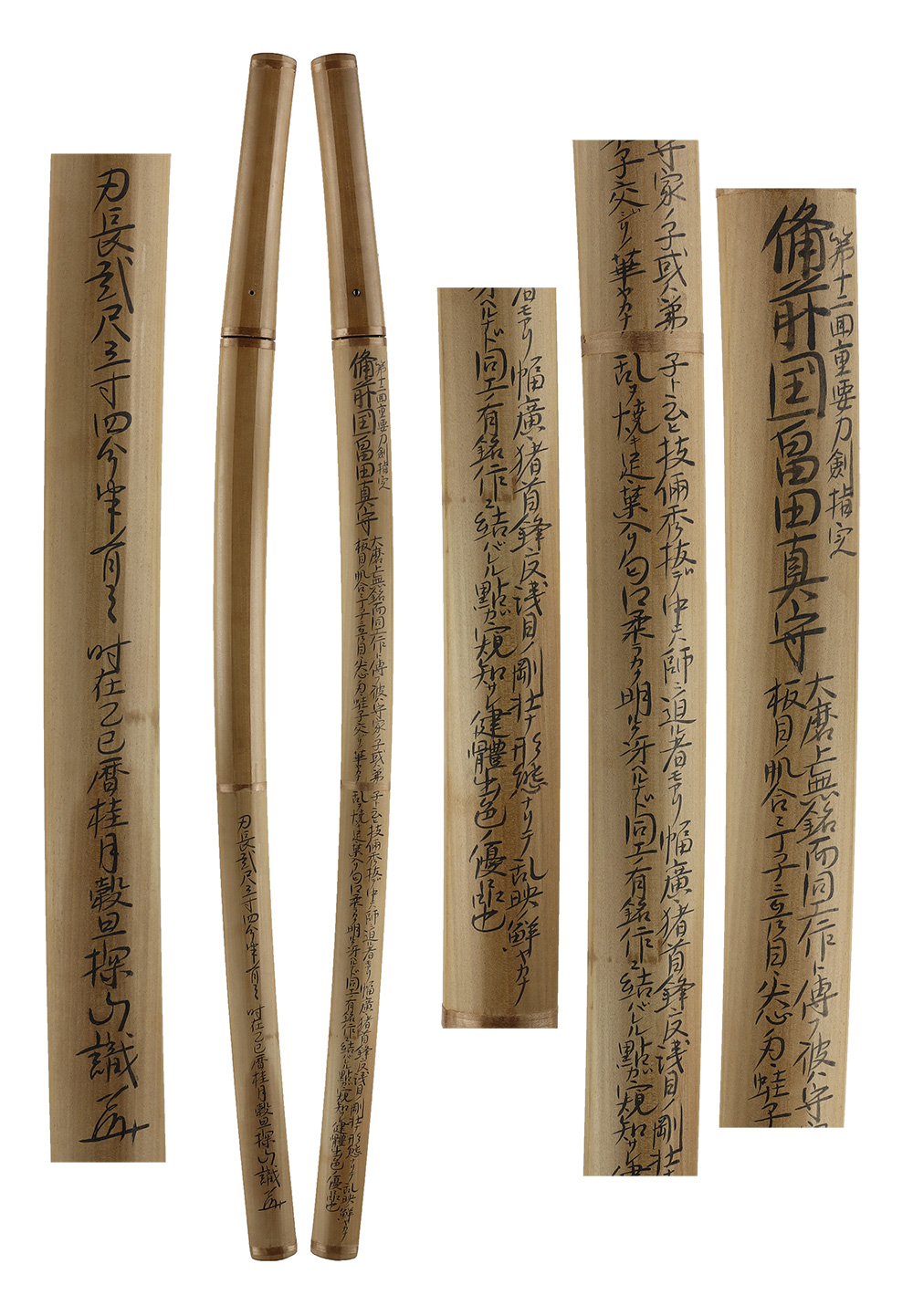
Sayagaki: Written by Mr.Tanobe.
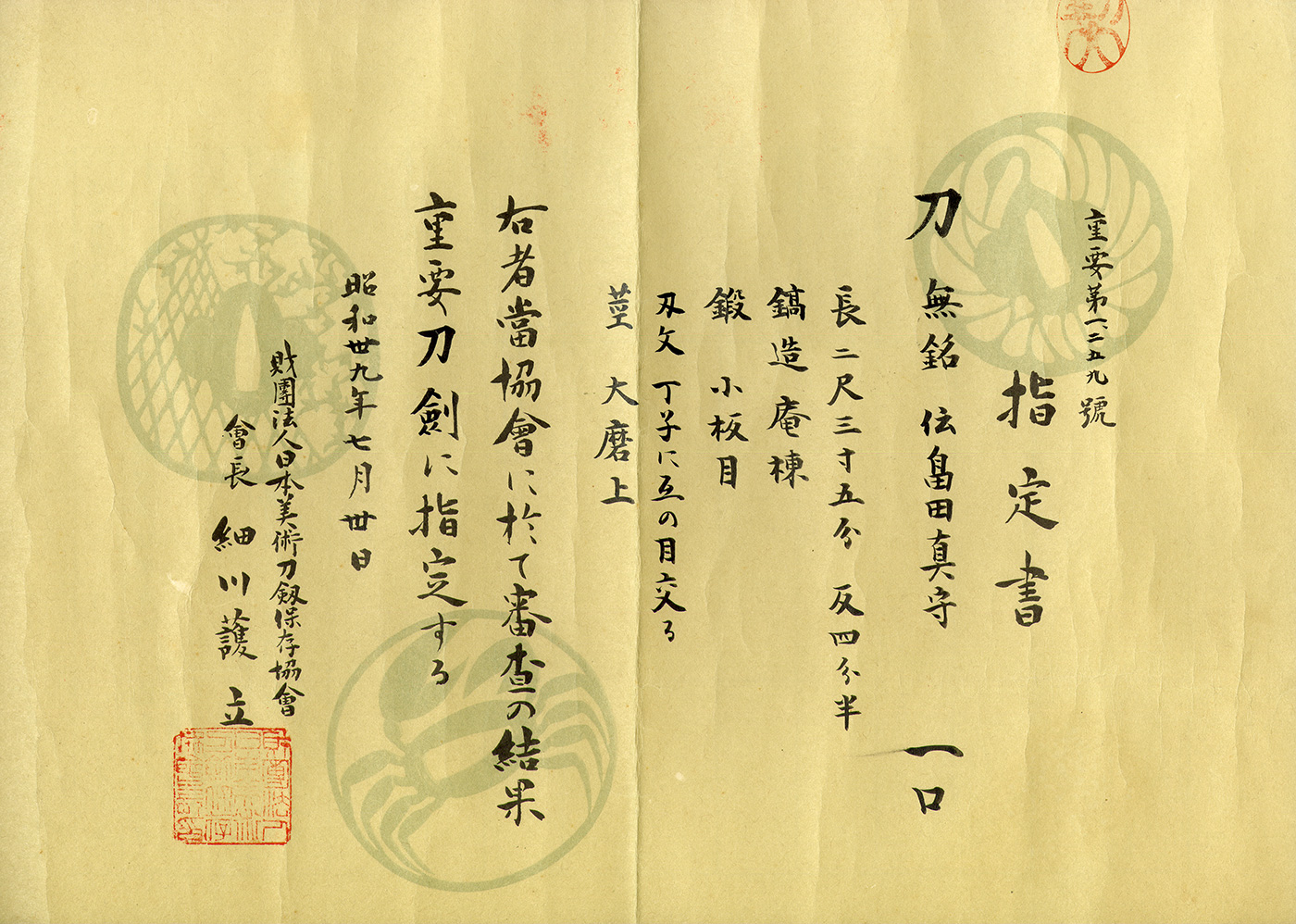
Designated Juyo Token at the 12th Session.
Hatakeda Sanemori of Bizen Province.
Although greatly suriage and unsigned, it is regarded as a work by the same smith.
He is said to have been either a son or a disciple of Moriie, and his skill was outstanding, with some works approaching the level of his master.
The blade displays a powerful form with wide mihaba, ikubi-kissaki, and relatively shallow curvature.
The vivid midare-utsuri, the texture of the itame-hada, and the flamboyant hamon consisting of choji mixed with gunome, pointed elements, and kawazu-no-ko characteristics are notable features.
The active ashi and yo, together with the soft, bright, and clear nioiguchi, closely connect this blade to the signed works of the same smith.
An exceptionally healthy and outstanding superior work.
Blade Length: 2 shaku 4 sun 5 bu.
Written on an auspicious day in September of the Tsuchinoto-Mi year.
Tanzan (kao).
Koto: Jyojyo-saku: Bizen: Shoo era (1288-1293).
(We divide 4 sections for each sword as Saijyo Saku, Jyojyo Saku, Jyo Saku and Regular Saku).
This blade is ranked as Saijyo Saku among works attributed to Mumei (Hatakeda Sanemori).
Habaki: Double-layer gold-covered habaki.
Blade Length: 71.2 cm (28.03 in).
Curvature: 1.2 cm (0.47 in).
Mekugi Hole: 2.
Width at Base (Motohaba): 3.13 cm (1.23 in).
Width at Yokote: 2.19 cm (0.86 in).
Thickness of rim (Kasane): 0.69 cm (0.27 in).
Sword Weight: 835 g.
Era: Mid-Kamakura period, around 1288.
Shape: A well-proportioned katana with wide mihaba and substantial kasane.
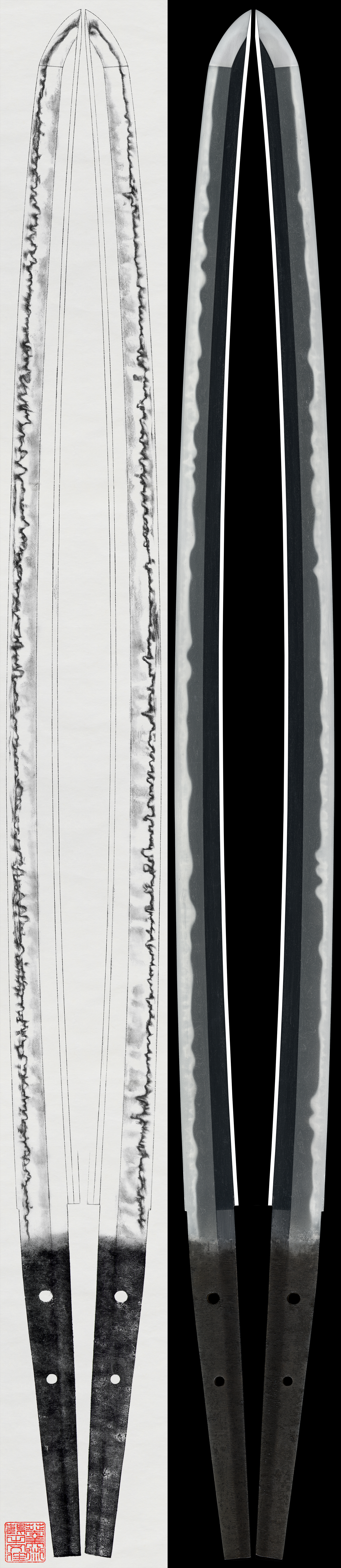
Jigane: Well-forged ko-itame hada producing a clear and refined steel surface.
Hamon: Long kinsuji appear on both sides of the blade, accompanied by fine sunagashi and additional kinsuji activities.
Prominent utsuri is also visible.
Features: Hatakeda Sanemori was a swordsmith active in Bizen Province during the middle Kamakura period, around the Shoo era (1288-1293).
He was the son of Hatakeda Moriie and was commonly known as Yajiro.
His workmanship closely resembles that of Moriie.
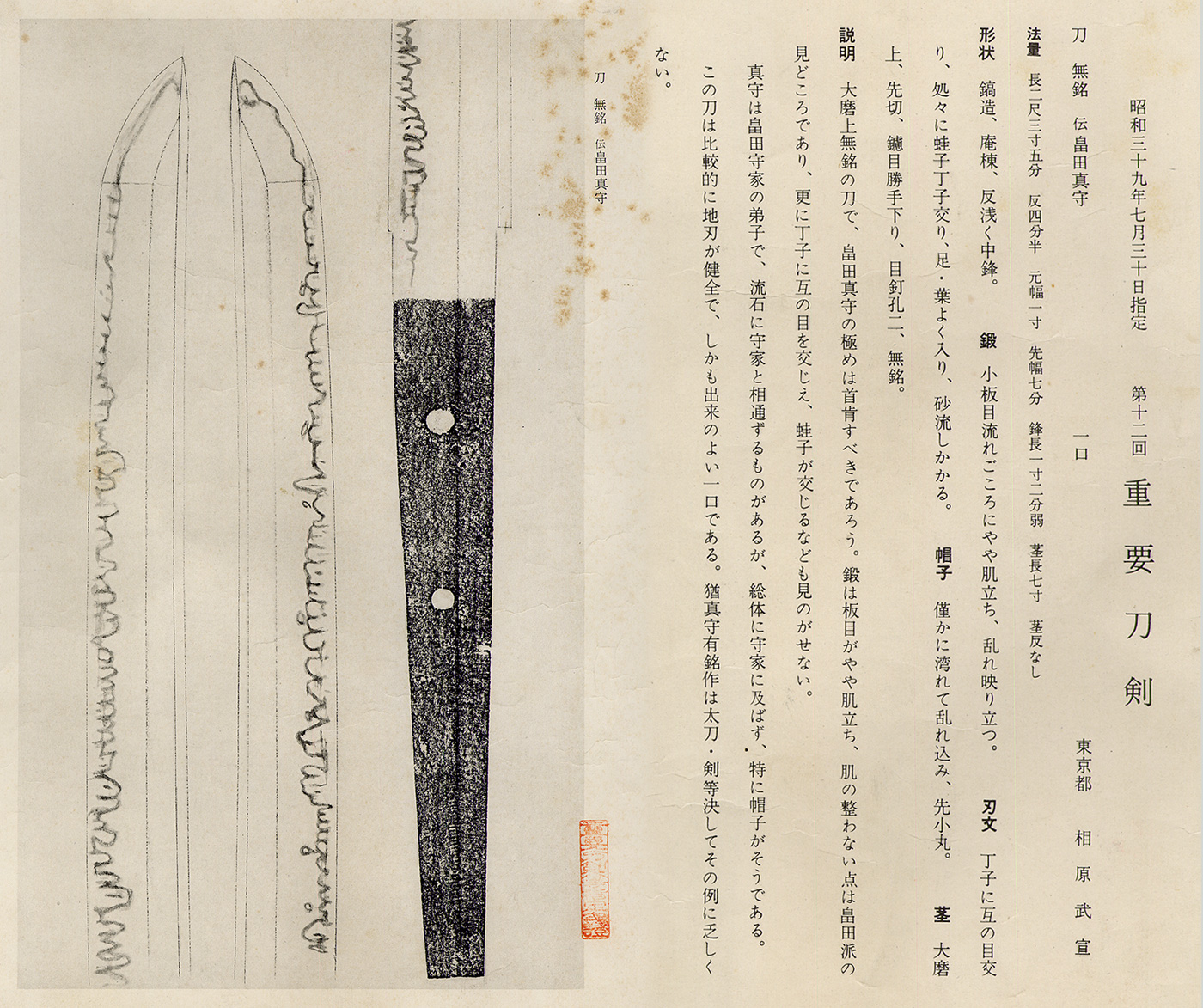
Excerpt from the Juyo Token Zufu:
This blade is an o-suriage mumei katana, and the attribution to Hatakeda Sanemori is considered appropriate.
The somewhat standing itame-hada is a notable characteristic of the Hatakeda school.
The hamon combines choji and gunome elements and includes kawazu-no-ko features, all of which deserve close attention.
The blade remains in relatively healthy condition, with excellent jigane and hamon.
Although it does not quite equal the works of Moriie overall, particularly in the boshi, it is nevertheless a highly accomplished and finely made example.
Juyo Token (12th Session).
AoiArt estimation paper: Whole Oshigata.
Please note: The price does not include the international shipping fees.



Auction Expired
Auction Expired because there were no bids
Auction has expired
Auction Expired because there were no bids|
Auction started
2026/06/23 (Tue) 10:57 |
※ = Auto