
 日本語
日本語Bid History
Auction has expired
Auction Expired because there were no bids|
Auction started
2026/04/21 (Tue) 13:28 |
※ = Auto
Ordering Number: AS26050
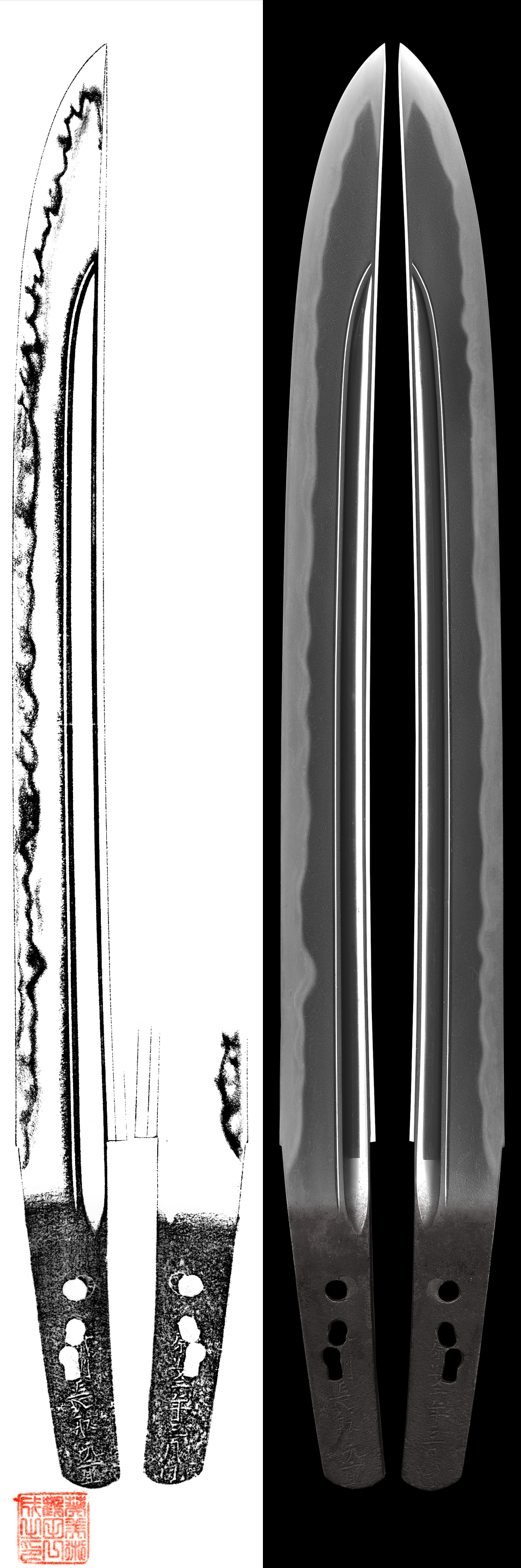
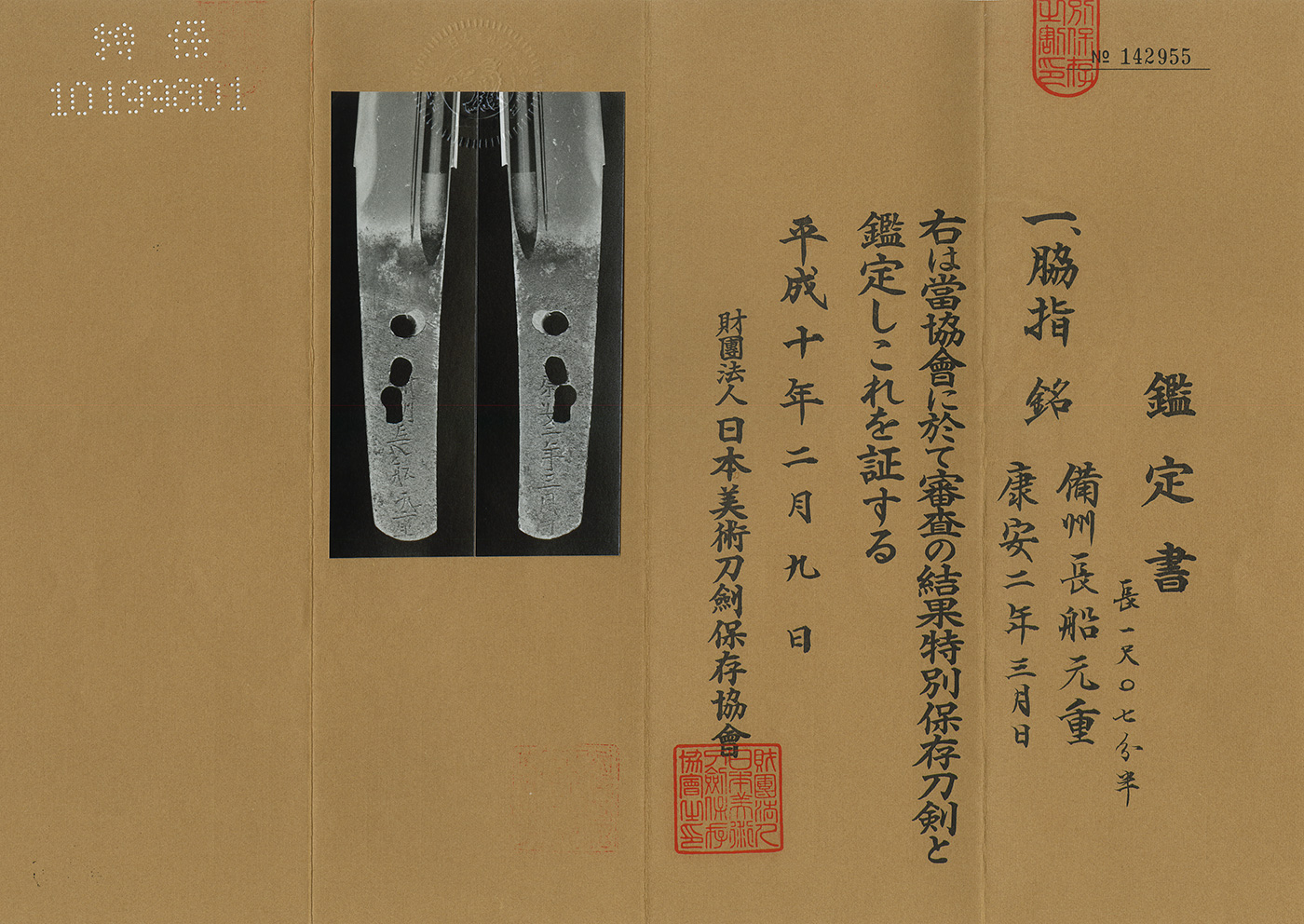
Sun-nobi Tanto in Shirasaya (NBTHK Tokubetsu Hozon Token).
Signature: Bishu Osafune Motoshige.
Dated: March, Koan 2 (1362).
Chuko-to, Jyojyo Saku, Saijo O Wazamono, Bizen.
(We divide 4 sections for each sword as Saijyo Saku, Jyojyo Saku, Jyo Saku and Regular Saku).
This work is ranked as Jyojyo Saku for Bishu Osafune Motoshige.
Blade Length: 32.6 cm (12.83 in).
Curvature: 0.2 cm (0.08 in).
Mekugi Hole: 3.
Width at Base (Motohaba): 2.78 cm (1.09 in).
Thickness (Kasane): 0.49 cm (0.19 in).
Era: Nanbokucho period, Koan 2 (1362).
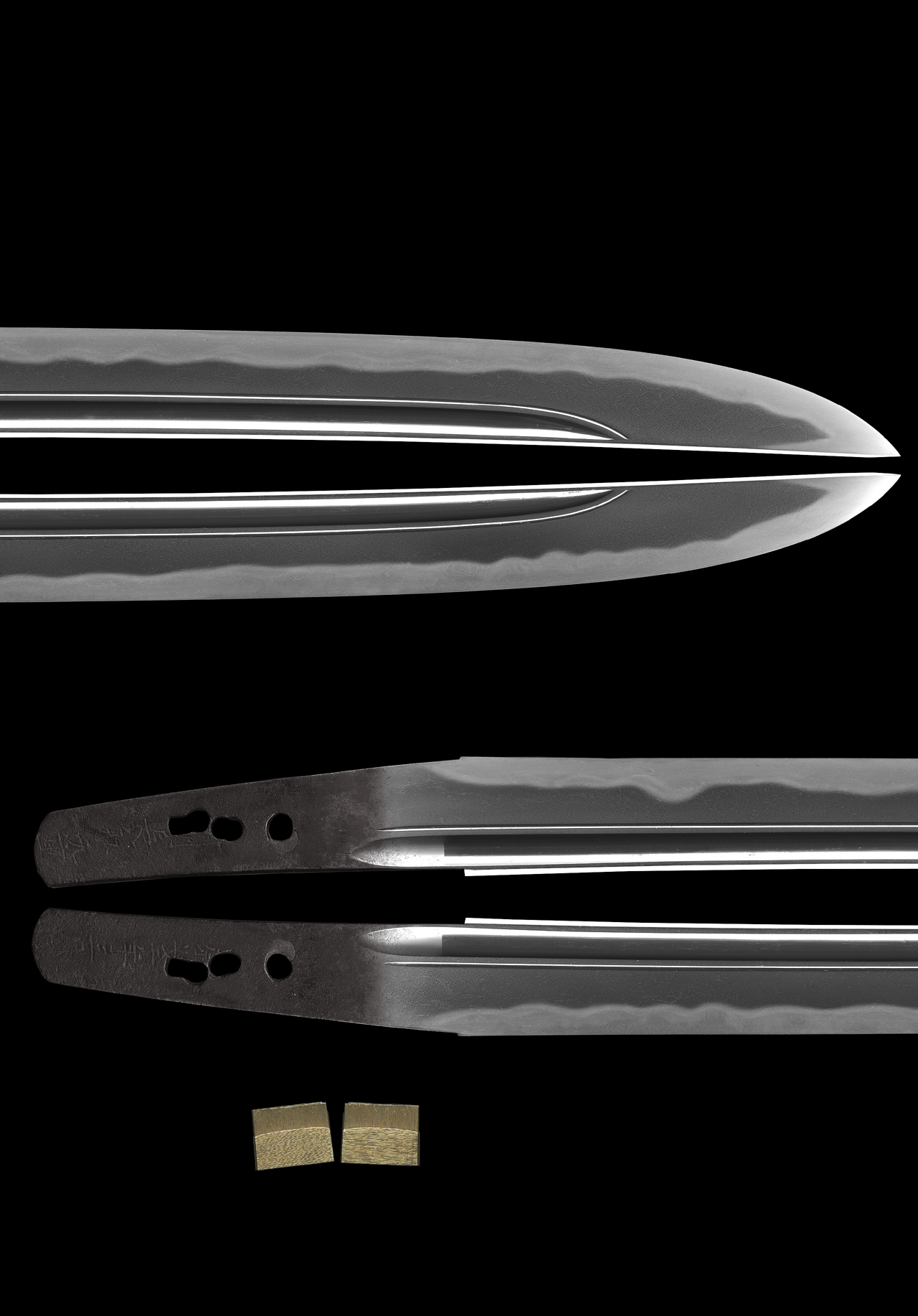
Shape: Slightly wide mihaba with standard kasane, hira-zukuri sun-nobi tanto, with bohi and soehi carved on both sides.
Jigane: Itame hada well forged, somewhat standing out, with ji-nie attached and chikei appearing.
Utsuri appears on the ji.
There is a portion approximately 4 cm from the hamachi on the omote side that appears to be an inlaid repair (umegane).
Hamon: Ko-nie-deki with deep nioiguchi in gunome-midare, with active ashi within the ha.
Features: The dated works of Osafune Motoshige range from the late Kamakura period, with the earliest dated example from Showa 5 (1316), followed by Kareki, and extending into the Nanbokucho period such as Joji.
According to old records, his style resembles that of Kagemitsu, Kanemitsu, or Bitchu Aoe works.
He is considered a side-line smith of the Osafune school, and the Muromachi-period “Shinkan Hiden Sho” describes his jigane as “sometimes clear hada like Bitchu tachi,” and “dark ji color with ji-hada, showing excellent forging skill.”
Indeed, his itame mixed with flowing hada and ji-nie differs somewhat from the refined texture of the main Osafune line, often showing a subdued taste reminiscent of Aoe works.
This piece is a valuable signed work of Motoshige, also retaining an ura-mei, making it extremely rare.
Although there are slightly standing hada areas and what appears to be an umegane about 4 cm from the hamachi on the omote side, the beauty of the jigane is outstanding, and the hamon is also excellent.
It has passed NBTHK Tokubetsu Hozon Token and is highly recommended.
Historical Background: In Koan 1 (1361), Hosokawa Kiyouji and Kusunoki Masanori advanced into Kyoto and temporarily occupied the city.
NBTHK Tokubetsu Hozon Token.
Aoi Art estimation paper: Whole Oshigata.
Please note: The price does not include the international shipping fees.



Auction Expired
Auction Expired because there were no bids
Auction has expired
Auction Expired because there were no bids|
Auction started
2026/04/21 (Tue) 13:28 |
※ = Auto