

Bid History
|
mrtierney50
2026/07/28 (Tue) 10:48 |
¥1,200,000 |
|
Auction started
2026/07/28 (Tue) 10:33 |
|
※ = Auto
Ordering number:AS26096
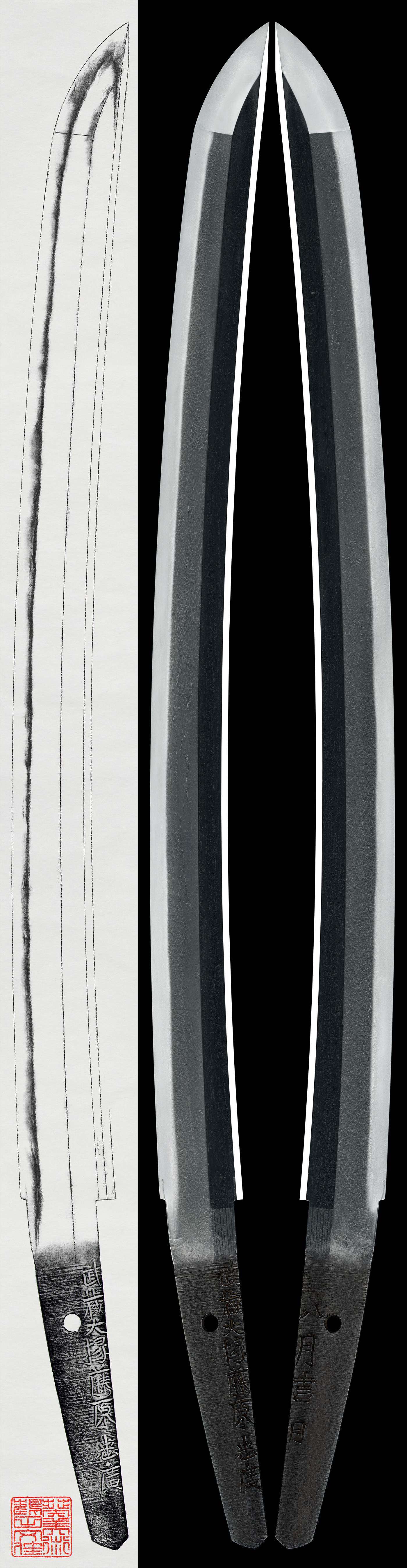
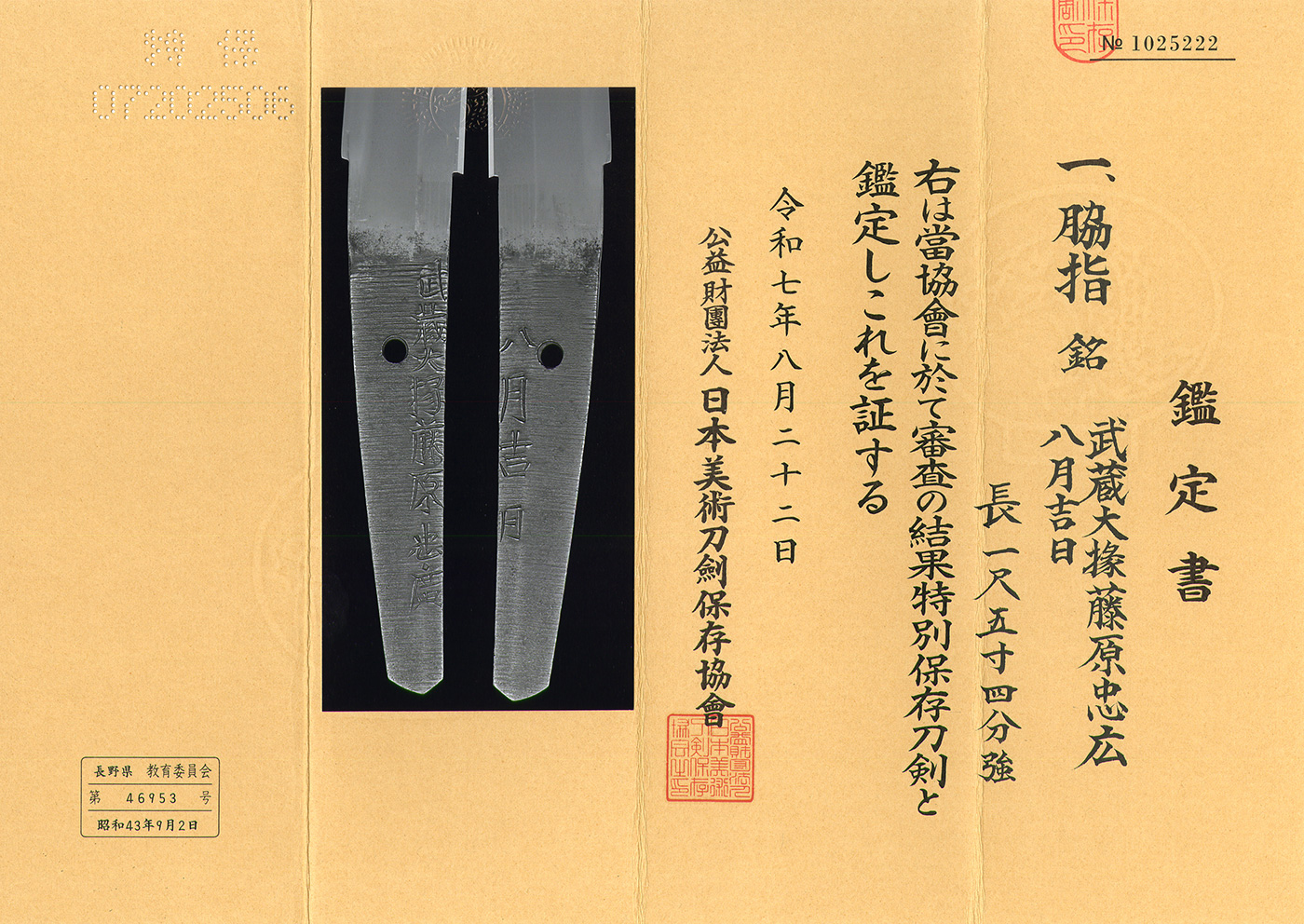
Wakizashi in Shirasaya: Musashi Daijo Fujiwara Tadahiro, 1st generation Tadayoshi (Saijyo Saku)(NBTHK Tokubetsu Hozon Token).
A lucky day in August.
武蔵大掾藤原忠広(初代忠吉・最上作)
八月吉日
Shinto: Saijyo O Wazamono: Saijyo Saku: Hizen.
(We divide 4 sections for each sword as Saijyo Saku, Jyojyo Saku, Jyo Saku and Regular Saku).
This work is ranked as Saijyo Saku as Tadayoshi.
Polished.
Habaki: Edo period, around the Kan’ei era (1624–1644), at the age of 55.
Blade Length: 46.8 cm (18.43 in).
Curvature (Sori): 1.0 cm (0.39 in).
Mekugi-ana: 1.
Width at Base (Motohaba): 3.21 cm (1.26 in).
Width at Tip (Sakihaba): 2.57 cm (1.01 in).
Thickness (Kasane): 0.58 cm (0.23 in).
Sword Weight: 440 g.
Era: Edo period, Kan’ei era (1624–1644).
Shape: Wide mihaba, thick kasane, with an extended kissaki, forming a well-proportioned shape.
Jigane: Fine ko-itame hada, well-forged, displaying the beautiful Hizen jigane.
Hamon: Ko-itame-like activity with a deep nioiguchi, and the edge has a soft appearance like torn hosho paper.
Features: The first generation Tadayoshi signed with 5 characters “Tadayoshi,” and also “Hizen no Kuni Ju Nin Tadayoshi Saku.”
Musashi Daijo Fujiwara Tadahiro, Hizen no Kuni Ju Fujiwara Tadahiro (the first dot in the character “Hiro” is diamond-shaped; in the second generation Omi Daijo Fujiwara Tadahiro, this diamond-shaped first dot disappears).
The ura inscription states “A lucky day in August,” indicating that this wakizashi was made during the heat of summer.
Aoi Art’s Comment: Hizen Tadayoshi, also called Hashimoto Shinzaemon, lived in Nagase in Hizen.
He went to Kyoto in Keicho 1 (1596) and studied under Umetada Myoju, returned in Keicho 3 (1598), and later lived in the castle town of Saga.
In the Genna era, and in Kan’ei 1 (1624) upon receiving the title of Musashi Daijo, he changed his signature to Tadahiro.
He was designated Saijyo O Wazamono, and the Nabeshima domain sold such swords both domestically and for export.
The method of producing Hizen jigane was kept as a closely guarded secret and preserved carefully until the end of the Edo period.
Aoi Art guarantee.
Whole Oshigata: Tsuruta Kazunari.
NBTHK Tokubetsu Hozon
Please note: The price does not include the international shipping fees.
Current bid: ¥1,200,000
|
mrtierney50
2026/07/28 (Tue) 10:48 |
¥1,200,000 |
|
Auction started
2026/07/28 (Tue) 10:33 |
|
※ = Auto