
 日本語
日本語Bid History
|
Auction started
2026/07/10 (Fri) 09:51 |
※ = Auto
Ordering Number: AS26321 (Consignment Sale)
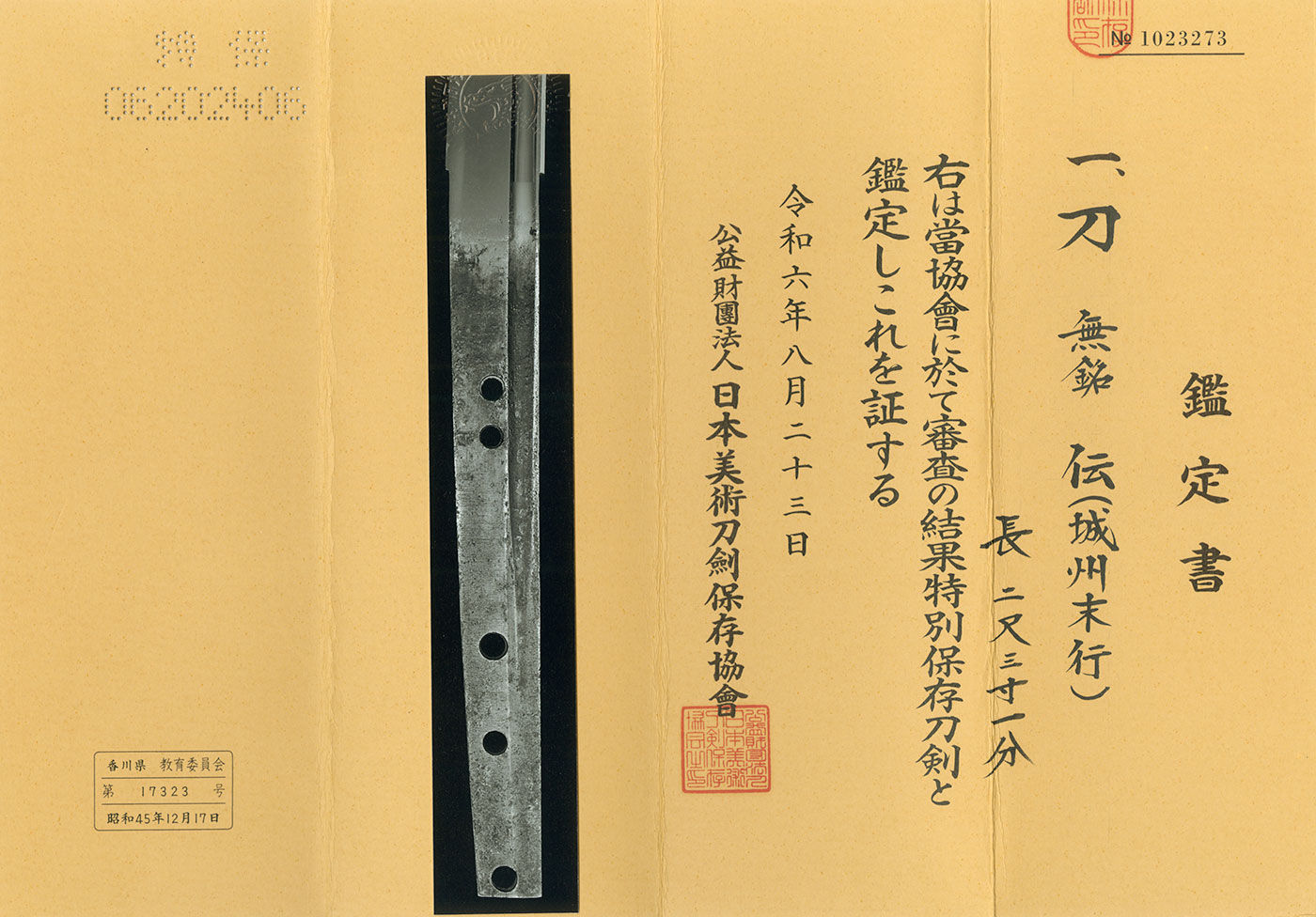
Katana in Shirasaya (NBTHK Tokubetsu Hozon Token)
Signature: Mumei (Unsigned) (Den Joshu Sueyuki)
無銘(伝 城州末行)
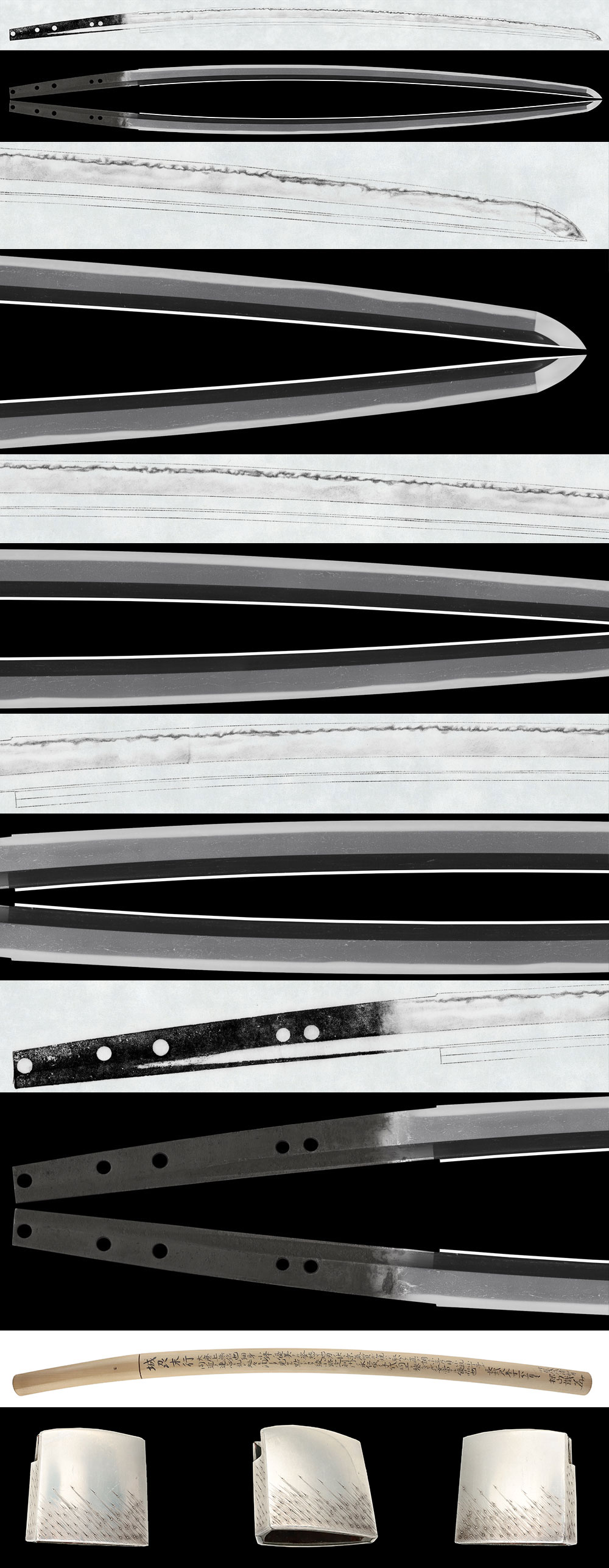
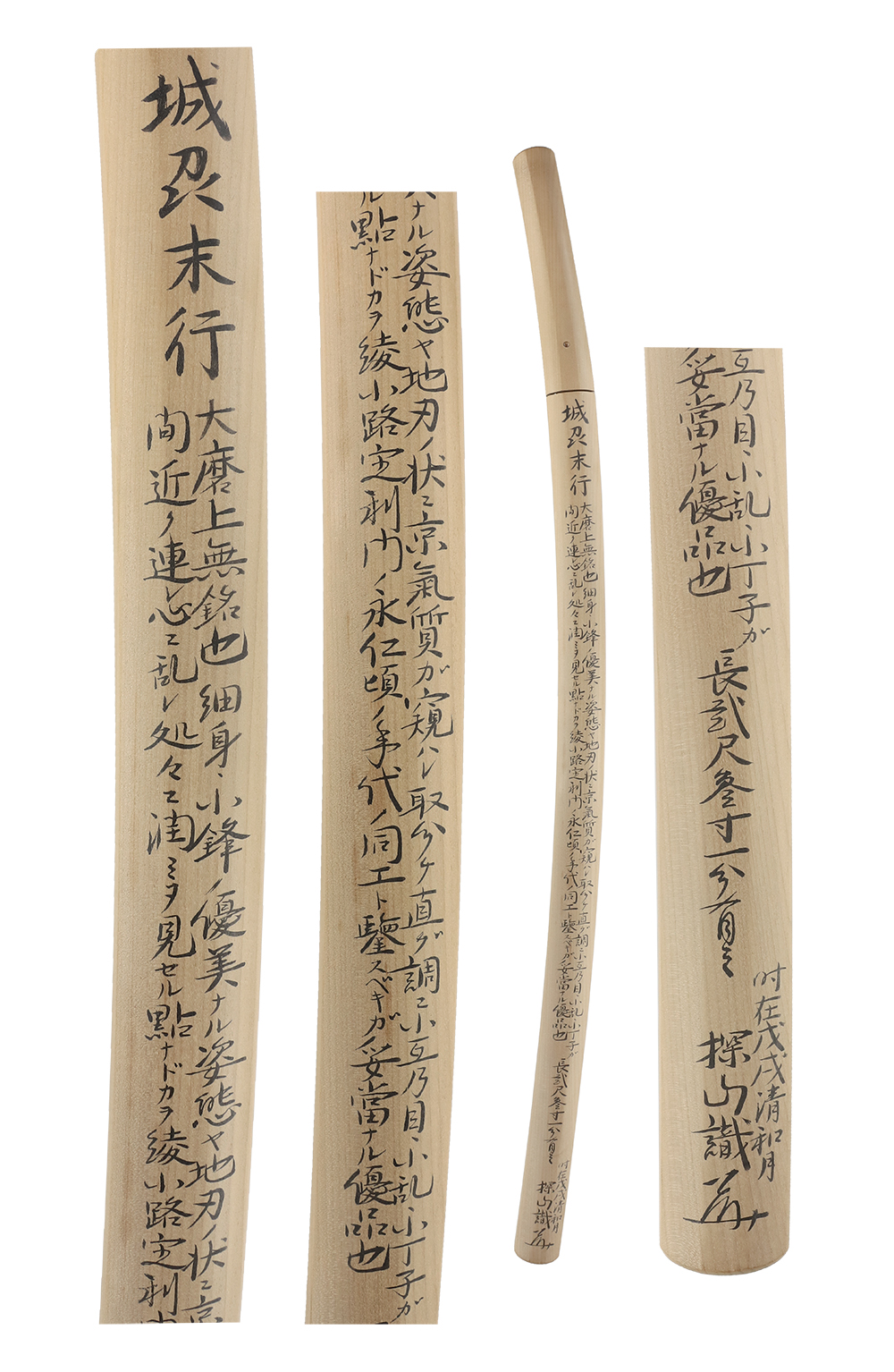
Sayagaki : Written by Mr. Tanobe
Joshu Sueyuki. O-suriage, mumei.
Its slender, graceful shape with a small kissaki, together with the condition of the jigane and hamon, clearly reflects the refined character of Kyoto workmanship. In particular, the predominantly suguha-based hamon, interspersed with closely connected ko-gunome and ko-choji, together with occasional softened areas, suggests that it should reasonably be regarded as the work of a smith of the Sadatoshi lineage of the Ayanokoji School, dating to around the Einin era. An excellent work.
Blade Length: 2 shaku 3 sun 6 bu.
Written by Tanzan (kao) in the Seiwa month of the Tsuchinoe-Inu year.
(We divide 4 sections for each sword as Saijyo Saku, Jyojyo Saku, Jyo Saku and Regular Saku).
This blade is ranked as Jyojyo Saku among works attributed to Mumei (Den Joshu Sueyuki).
Habaki: Single-layer silver habaki.
Blade Length: 70.2 cm (27.64 in).
Curvature: 1.7 cm (0.67 in).
Mekugi Hole: 5.
Width at Base (Motohaba): 2.62 cm (1.03 in).
Width at Yokote: 1.60 cm (0.63 in).
Thickness of rim (Kasane): 0.69 cm (0.27 in).
Sword Weight: 630 g.
Era: Mid-Kamakura period, around Einin 1 (1293).
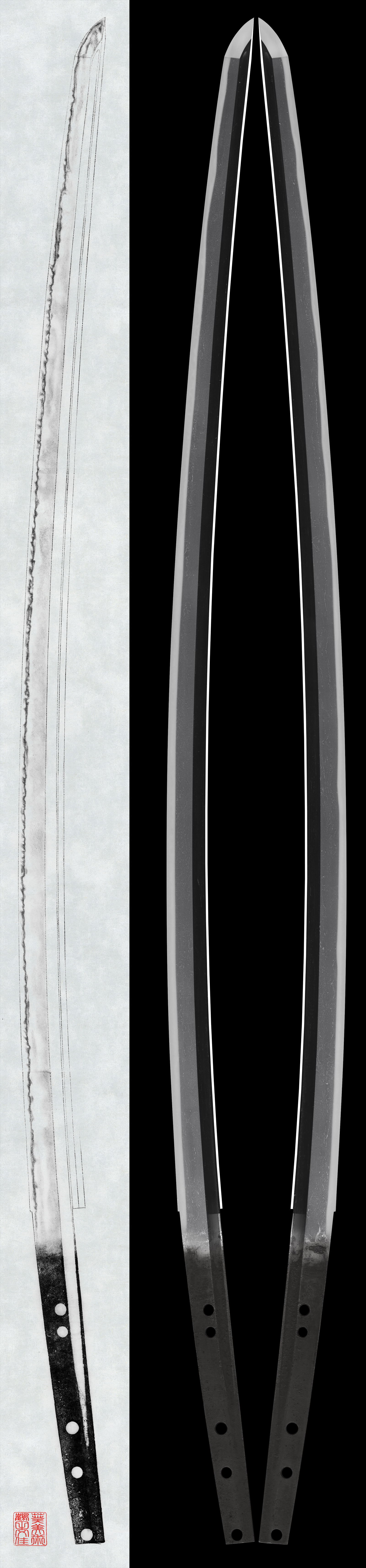
Shape: A katana of standard mihaba and kasane, carved with bohi on both sides. It has a slightly elongated kissaki and graceful proportions with elegant curvature.
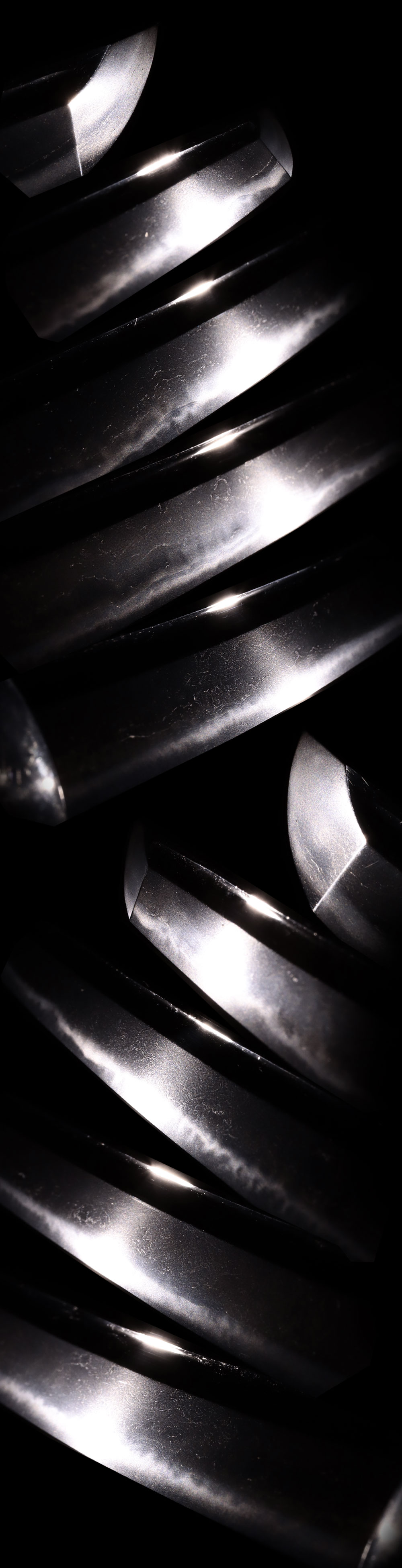
Jigane: Well-forged ko-itame hada with prominent utsuri.
Hamon: Nioi-deki, primarily suguha with active ko-ashi. The hamon has a slightly softened appearance.
Features: Joshu Sueyuki is said to have been a disciple of Sadatoshi of the Ayanokoji tradition. This blade displays a suguha-based hamon with well-defined ko-ashi, and the boshi remains completely intact. Forged approximately 733 years ago, it is deeply moving and remarkable that, despite the passage of more than seven centuries, the blade has been preserved in such beautifully polished condition.
Historical Background: Around 1293 (Shoo 6 / Einin 1), during the Kamakura Shogunate, two major historical events took place. Hojo Sadatoki, the shikken (regent), eliminated the powerful retainer Taira no Yoritsuna in the Heizenmon Incident. In the same period, the Great Kamakura Earthquake of the Einin era struck, with an estimated magnitude of 7 to 8 centered in Sagami Bay. The disaster caused extensive destruction in Kamakura, collapsing and burning numerous temples, including Kencho-ji, as well as many residences. The death toll is said to have exceeded 20,000.
NBTHK Tokubetsu Hozon Token.
AoiArt estimation paper: Whole Oshigata.


Starting bid: ¥1,100,000
|
Auction started
2026/07/10 (Fri) 09:51 |
※ = Auto