
 日本語
日本語Bid History
Auction has expired
Auction Expired because there were no bids|
Auction started
2026/05/01 (Fri) 11:29 |
※ = Auto
Ordering Number: AS26121.
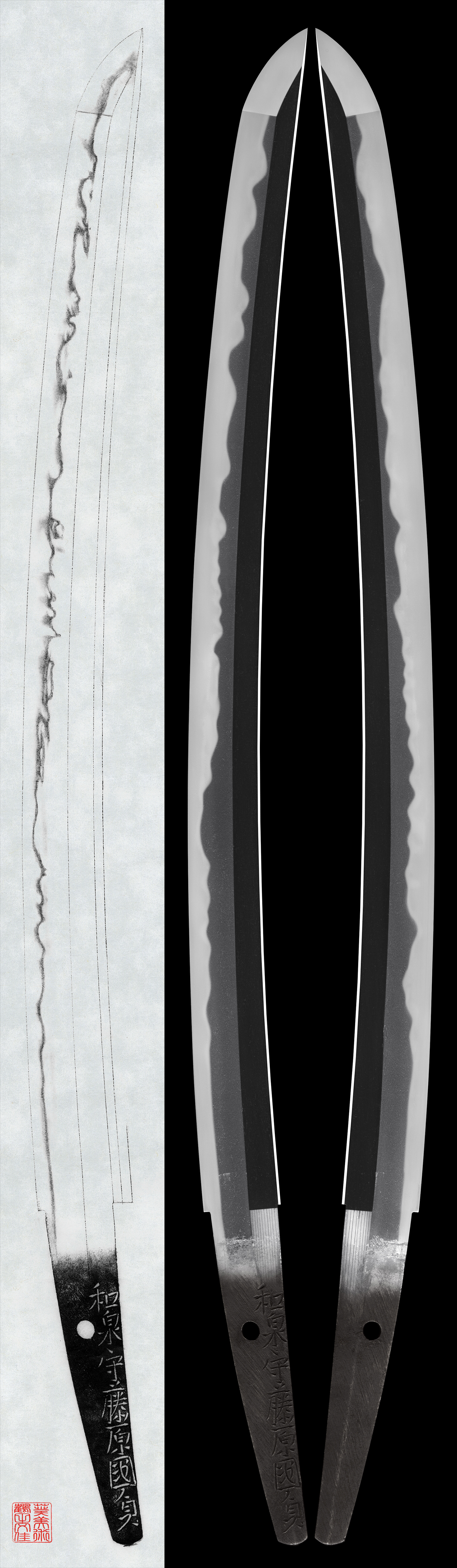
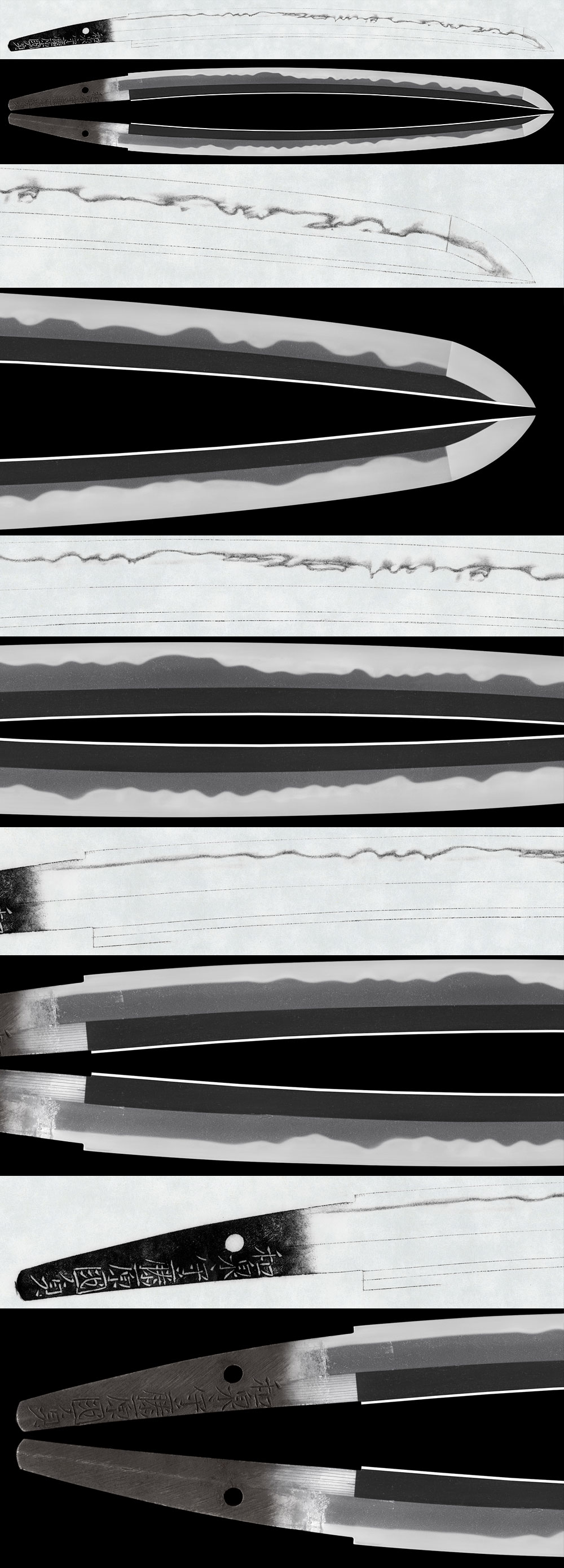
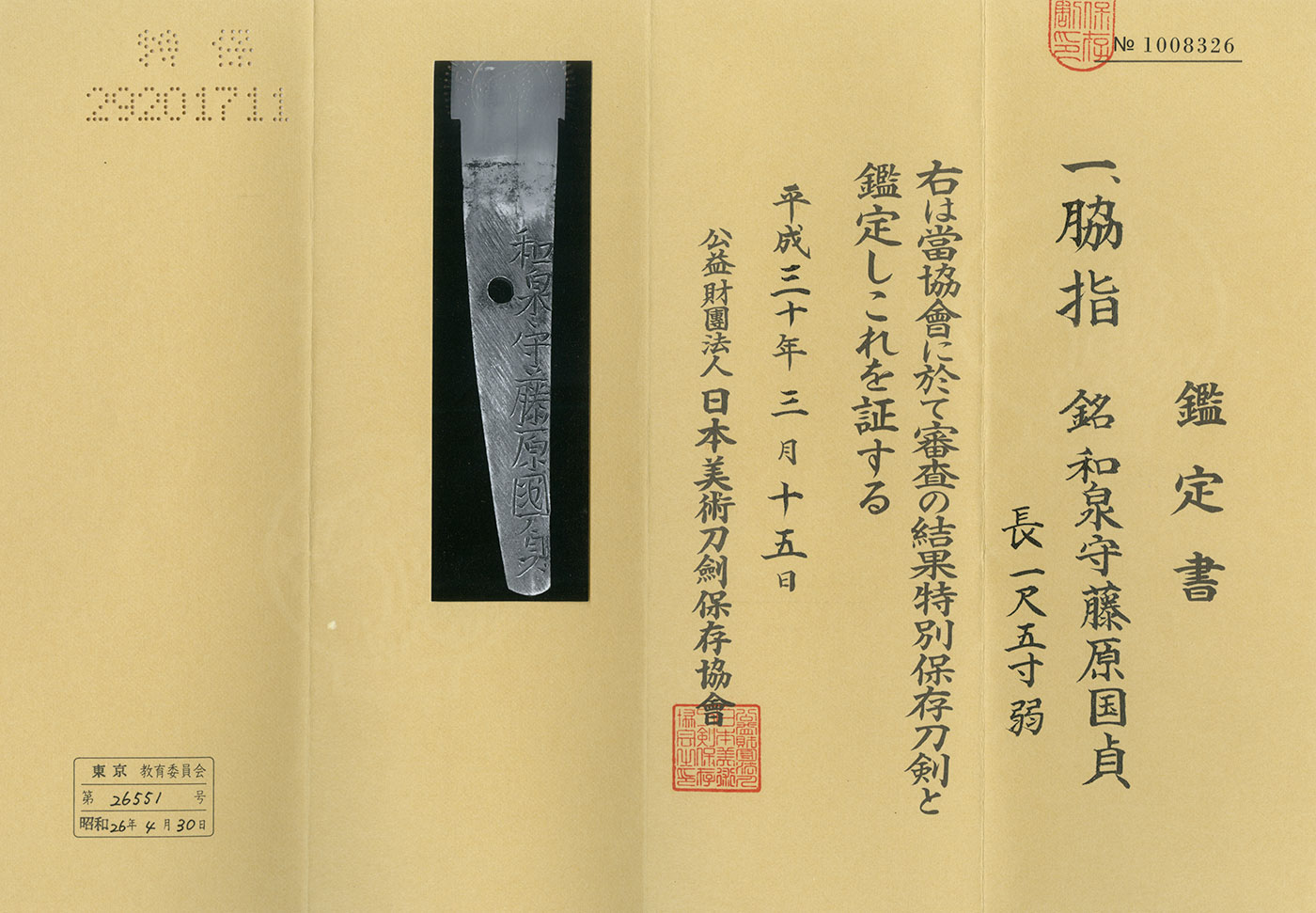
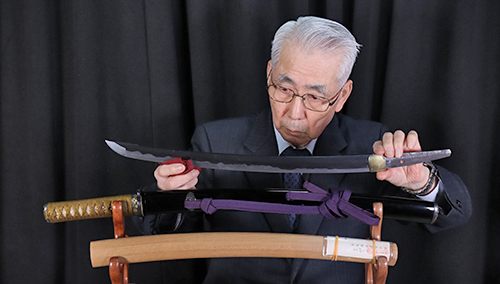
Wakizashi in Shirasaya with Koshirae (NBTHK Tokubetsu Hozon Token).
Signature: Izumi no Kami Fujiwara Kunisada.
和泉守藤原国貞
Shinto: Around Kanei era (1624–1644): O-Wazamono: Jyojyo Saku: Settsu.
(We divide 4 sections for each sword as Saijyo Saku, Jyojyo Saku, Jyo Saku and Regular Saku).
This work is ranked as Jyojyo Saku for Izumi no Kami Fujiwara Kunisada.
Habaki: Copper base with gold-colored decoration.
Blade Length: 45.3 cm (17.83 in).
Curvature: 1.21 cm (0.48 in).
Mekugi Hole: 1.
Width at Base (Motohaba): 3.10 cm (1.22 in).
Thickness of rim (Kasane): 0.69 cm (0.27 in).
Sword Weight: 525 g.
Era: Edo period, around Kanbun (1661–1673).
Shape: Wide mihaba, thick kasane, deep curvature, and a slightly extended kissaki.
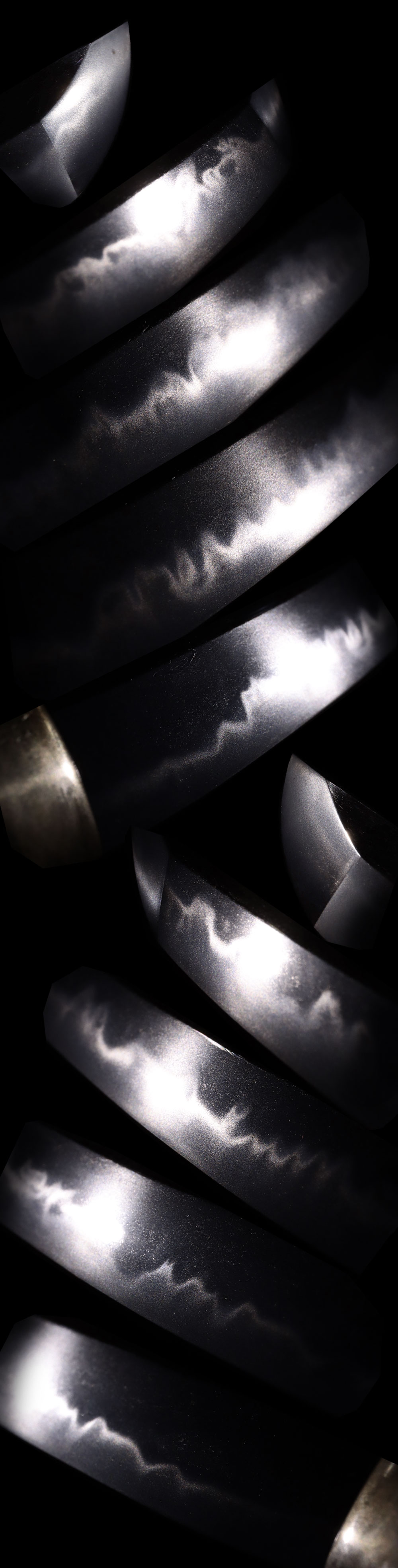
Jigane: Well-forged ko-itame hada with finely refined texture, producing excellent jigane.
Hamon: Nie-deki suguha that later develops into large gunome midare, showing rich variation. The boshi is midare-komi.
Features: This is a powerful work from the early period of Izumi no Kami Fujiwara Kunisada. He studied under Kunimoto. In his later years, due to old age, the second-generation Kunisada began producing works imitating his signature, which came to be known as “Shinkai Kunisada.” Eventually he became known as Shinkai and is regarded as one of the most famous swordsmiths.
Koshirae:
Tsuba: Mokko-shaped shakudo tsuba with raised rim and gold design.
Fuchikashira: Kojiri: Shakudo base with plum blossom design in gold.
Saya (Scabbard): Black roiro-nuri saya.
Kojiri: Shakudo nanako ground with plum blossom design in gold.
Menuki: High-relief plum blossom design.
NBTHK Tokubetsu Hozon Token.
AoiArt estimation paper: Whole Oshigata.
Please note: the price does not include the shipping fees.



Auction Expired
Auction Expired because there were no bids
Auction has expired
Auction Expired because there were no bids|
Auction started
2026/05/01 (Fri) 11:29 |
※ = Auto