
 日本語
日本語Bid History
|
Auction started
2026/04/12 (Sun) 13:48 |
※ = Auto
Wakizashi in Shirasaya (NBTHK Tokubetsu Hozon Token)
Inscription:
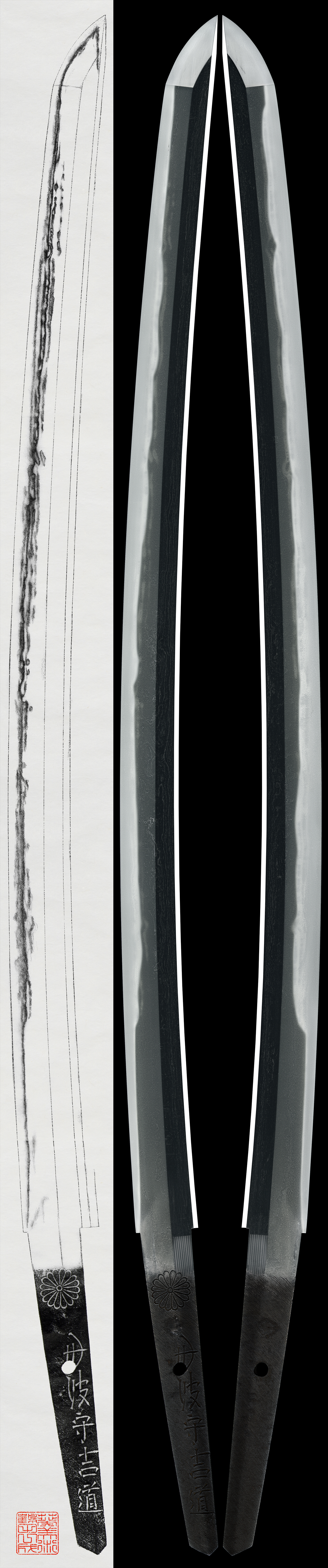
(Chrysanthemum crest) Tanba no Kami Yoshimichi 丹波守吉道 (Kyoto 4th generation 京四代)
(We divide 4 sections for each sword as Saijyo Saku, Jyojyo Saku, Jyo Saku and Regular Saku).
This work is ranked as Jyojyo Saku among works of Tanba no Kami Yoshimichi.
Habaki: Solid copper single-layer.
Blade Length: 58.48 cm (23.02 in)
Curvature: 1.36 cm (0.54 in)
Mekugi Hole: 1
Width at Base (Motohaba): 3.0 cm (1.18 in)
Width at Tip: 2.0 cm (0.79 in)
Thickness (Kasane): 0.75 cm (0.30 in)
Sword Weight: 590 g
Era: the early to mid Edo period, late 17th century
Shape: wide blade with slight curvature.
Jigane: Ko-itame mixed with Mokume, with strong Masame in shinogi-ji.
Hamon: Ko-nie based Hamon called Sudare-ba(reed blind like hamon), Sunagashi and Tobiyaki link together and runs in a striped.
Features:
Shinto: Wazamono: Chu-jo Saku: Yamashiro.
The first-generation Tanba no Kami Yoshimichi was the third son of Kanemichi, the founder of the Mishina school, and moved to Kyoto together with his father and brothers. From the second generation onward, the lineage split between Osaka and Kyoto, with the Kyoto Tanba branch characteristically engraving a chrysanthemum crest on the tang.
For generations, they are known for forging a distinctive striped hamon called “Sudare-ba,” in which sunagashi and tobiyaki appear running parallel to the edge.
The Kyoto fourth-generation Tanba no Kami Yoshimichi, who is regarded as the maker of this work, is said to have received the title of Tanba no Kami around Kanbun 12 (1672) and remained active until around the Genroku era.
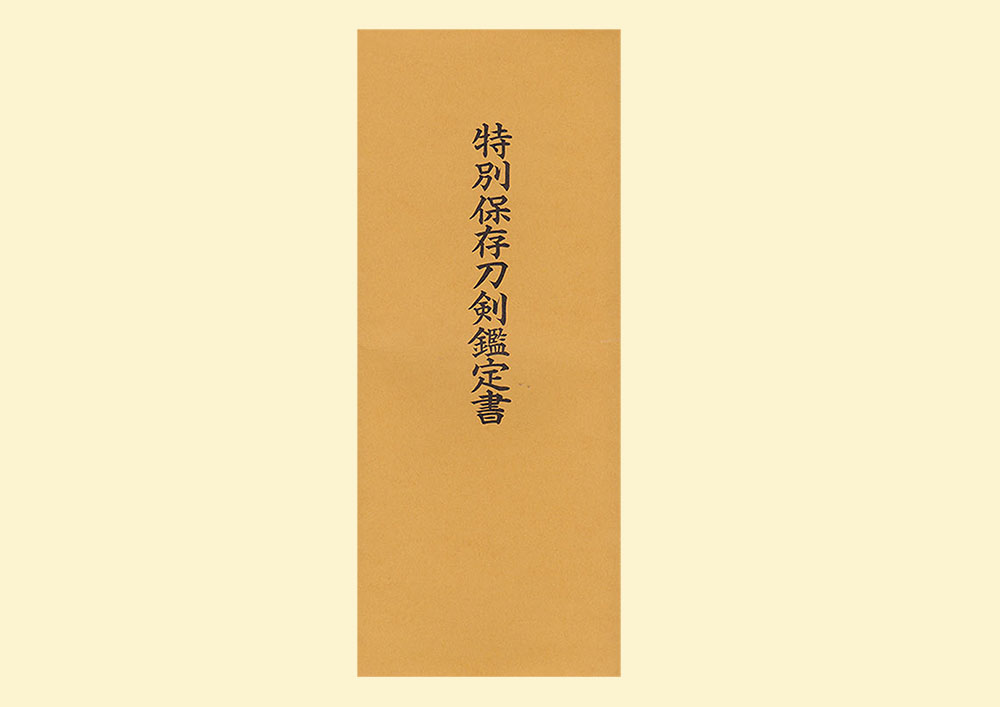
NBTHK Tokubetsu Hozon Certificate (to be issued in late May)
AoiArt estimation paper: Whole Oshigata
Please note: The price does not include the international shipping fees.




Starting bid: ¥350,000
|
Auction started
2026/04/12 (Sun) 13:48 |
※ = Auto