
 日本語
日本語Bid History
|
Auction started
2026/04/05 (Sun) 12:20 |
※ = Auto
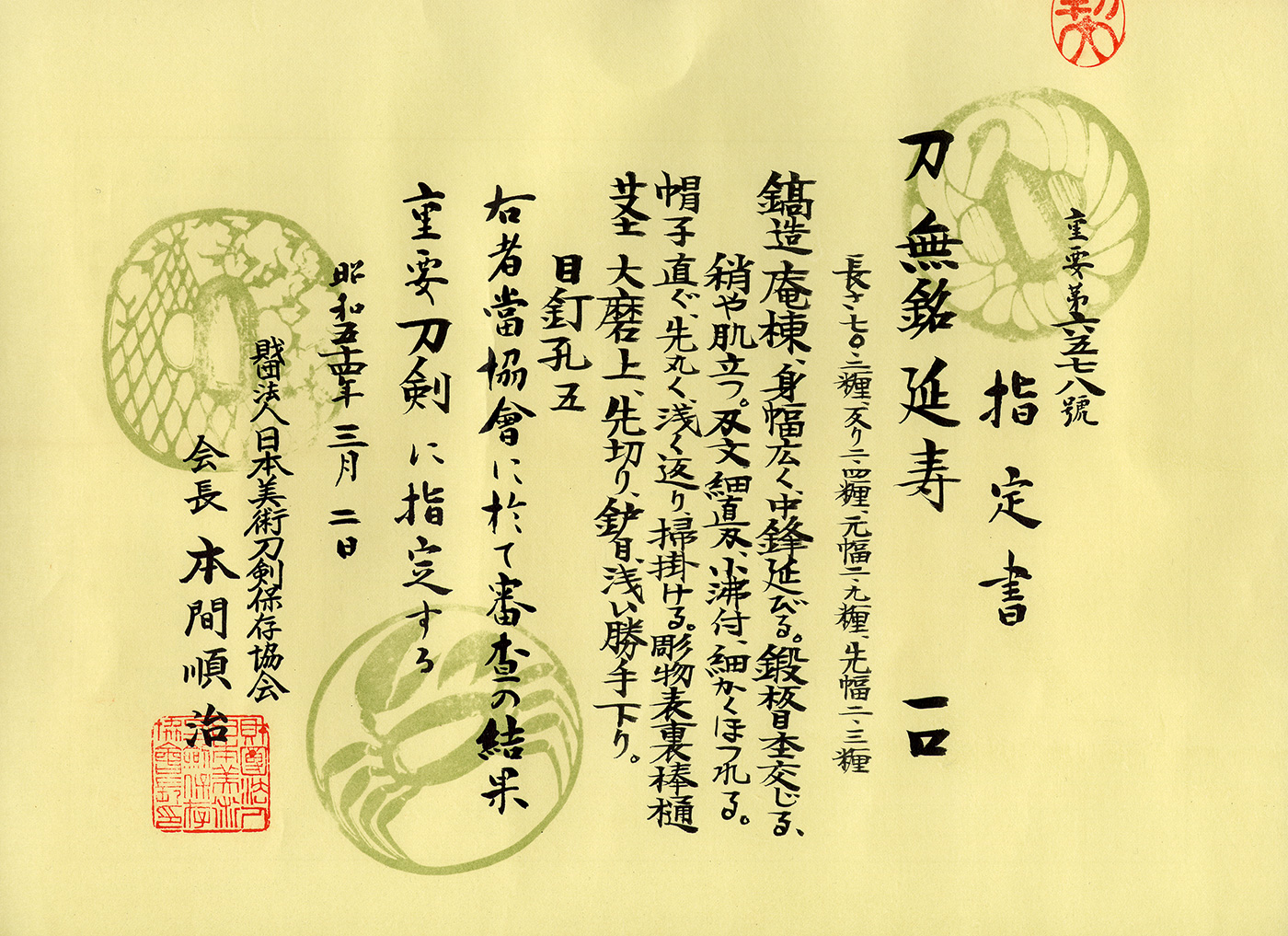
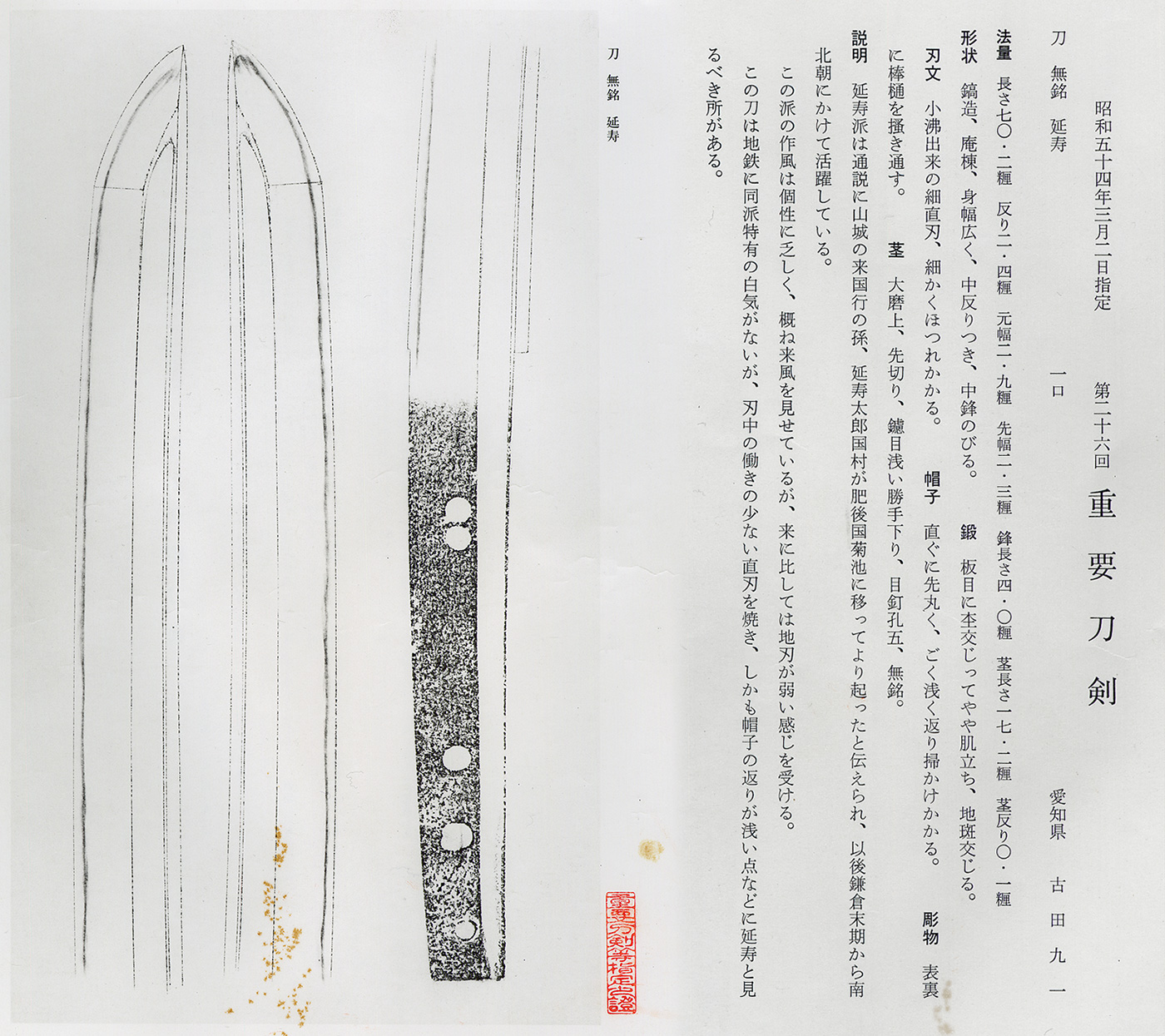
Katana: in Shirasaya(the 26th NBTHK Juyo Token)
Inscription: Mumei(Unsigned)(judged as Enju 延寿)
We divide works into Saijo Saku, Jyojyo Saku, Jyo Saku,and Regular Saku.
This piece is ranked as Jyojyo Saku for Mumei(Enju school).
Habaki: gold plated double habaki
Blade Length: 70.2 cm (27.64 in)
Curvature: 2.2 cm (0.87 in)
Mekugi-ana: 3*
Motohaba: 3.04 cm (1.20 in)
Sakihaba: 2.35 cm (0.93 in)
Kasane: 0.64 cm (0.25 in)
Blade Weight: 675 g
Era: the late Kamakura period to the Nanbokucho period
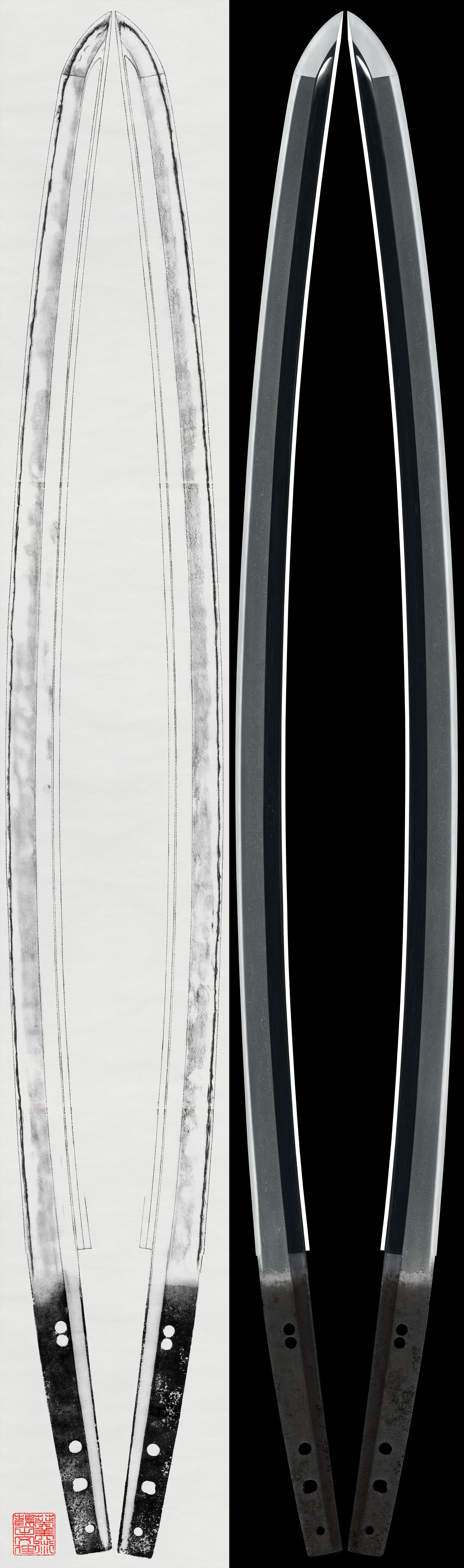
Shape: wide and robust blade with Bohi carving.
Jigane: Intense Itame and Mokume wiht visible grain patterns.
Hamon: Ko-nie base thin Suguha with tight Nioikuchi with some Hotsure.
Features:
The Higo no Kuni Enju School is said to have been founded by Enju Taro Kunimura, who is traditionally considered a grandson of Rai Kuniyuki. The school was active in Higo Province from the late Kamakura period through the Nanbokuchō period.
The workmanship of this school generally resembles that of the Rai school, featuring a jihada with flowing masame mixed in and showing a whitish utsuri. A distinguishing point, however, is that the hamon tends to be more subdued, with calmer activity.
This piece displays a robust shape typical of the late Kamakura to Nanbokuchō period, along with a prominent jigane featuring a standing, large-patterned texture. Notably, the whitish utsuri characteristic of Enju works is not observed. The hamon is a typical Enju-style suguha, with activities such as slight fraying (hotsure) visible within the temper line.
NBTHK 26th Juyo Certificate
Aoi-Art estimation Paper
whole Oshigata
Please note: the price does not include the shipping fees.


Starting bid: ¥3,500,000
|
Auction started
2026/04/05 (Sun) 12:20 |
※ = Auto