
 日本語
日本語Bid History
|
Auction started
2026/03/22 (Sun) 16:51 |
※ = Auto
Daisho set: in Shirasaya with Koshirae
——————————————
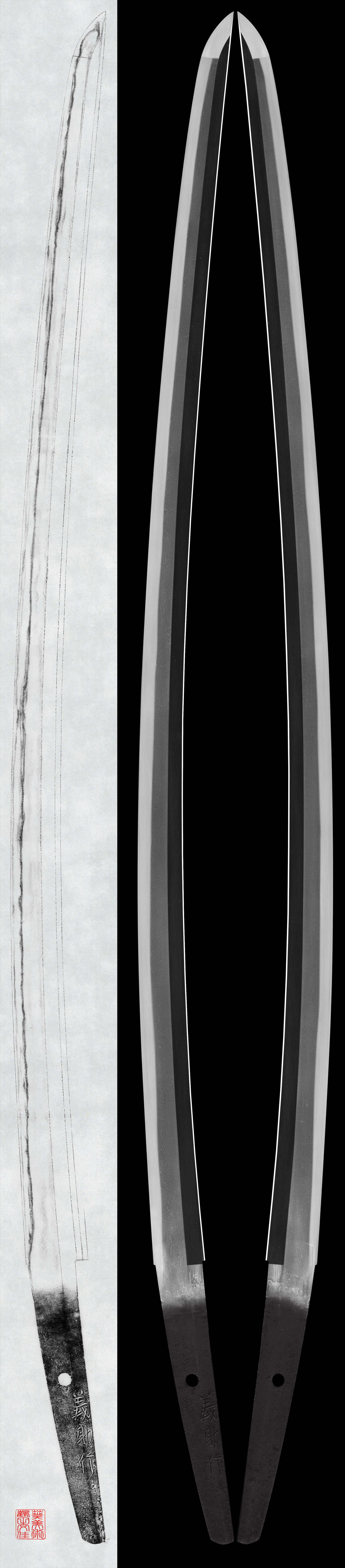
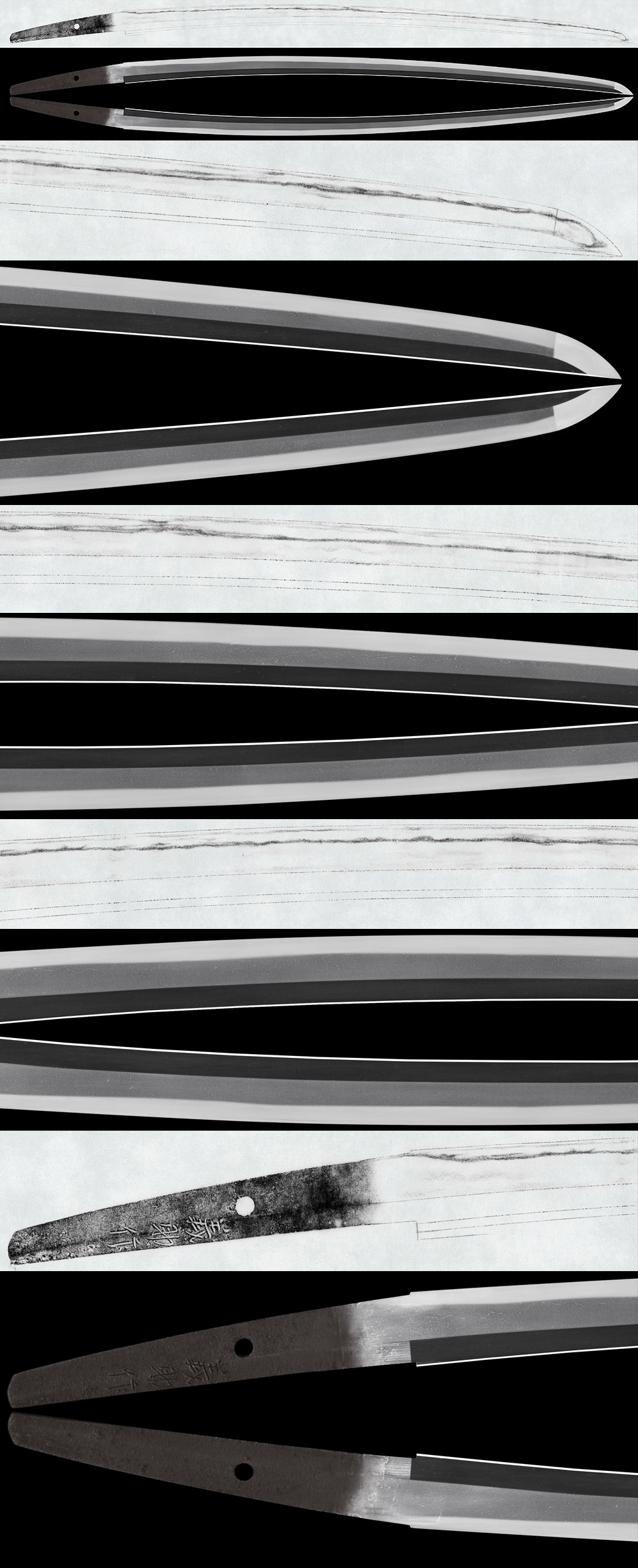
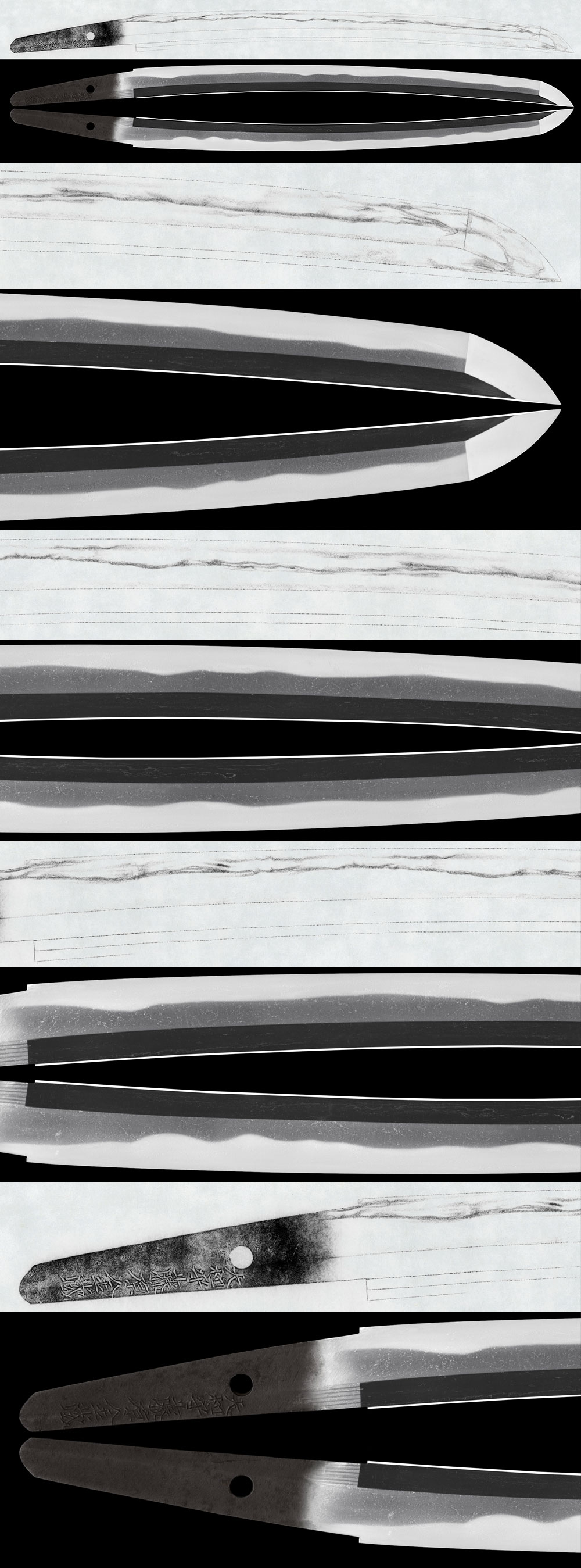
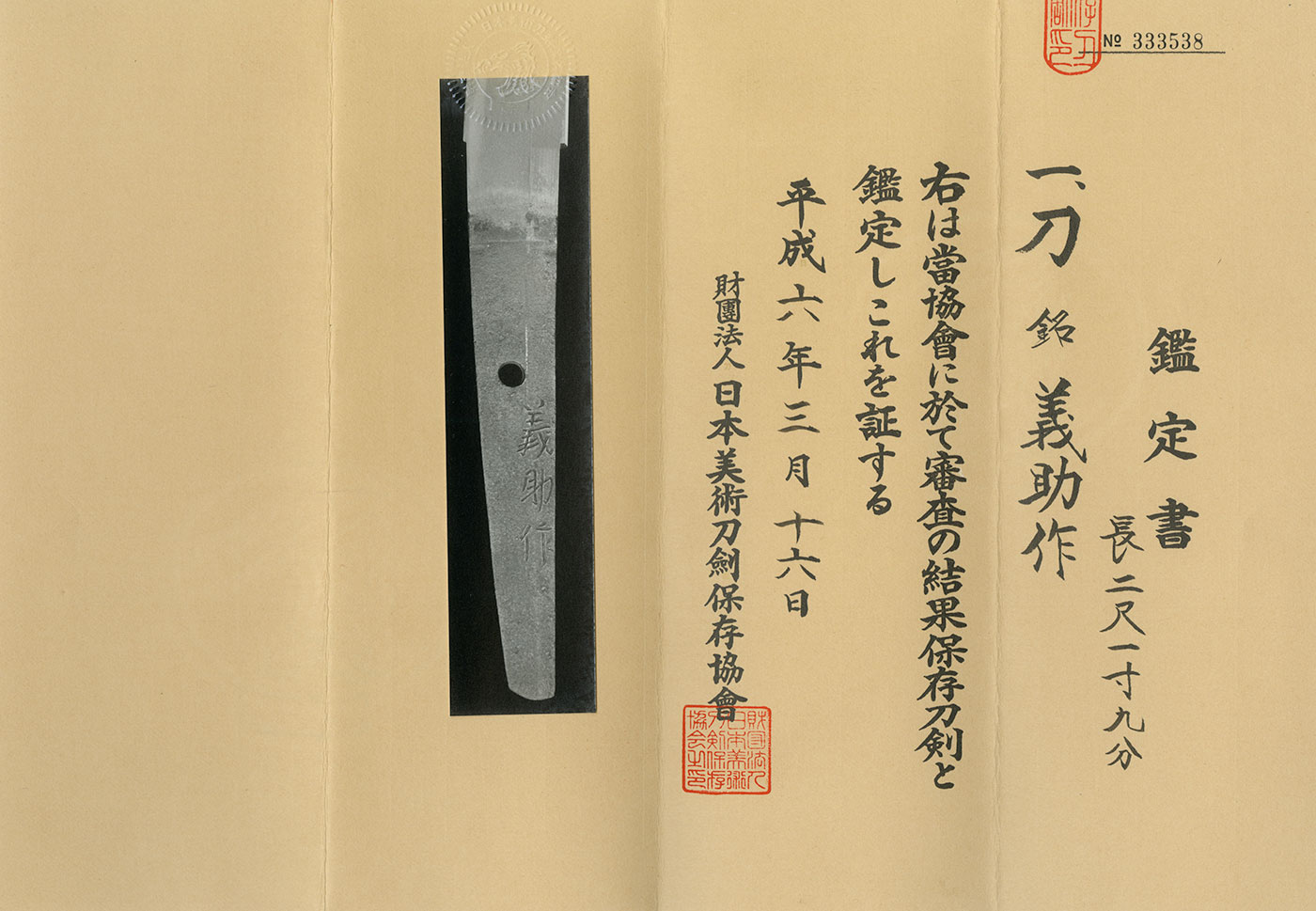
Dai(large): Katana: (NBTHK Hozon Token)
Inscription: Yoshisuke Saku 義助作
We divide works in to Saijo Saku, Jyojyo Saku, Jyo Saku,and Regular Saku.
This piece is ranked as Jyo Saku for Yoshisuke.
Habaki: silver single habaki
Blade length: 66.5 cm (26.18 in)
Sori: 1.85 cm (0.73 in)
Mekugi: 1
Width at the hamachi: 2.74 cm (1.08 in)
Width at the Kissaki: 1.48 cm (0.58 in)
Kasane: 0.55 cm (0.22 in)
Blade Weight: 505g
Era: the late Muromachi period, circa late 16th century
Shape: slightly thin blade with deep curvature, tapering toward the tip.
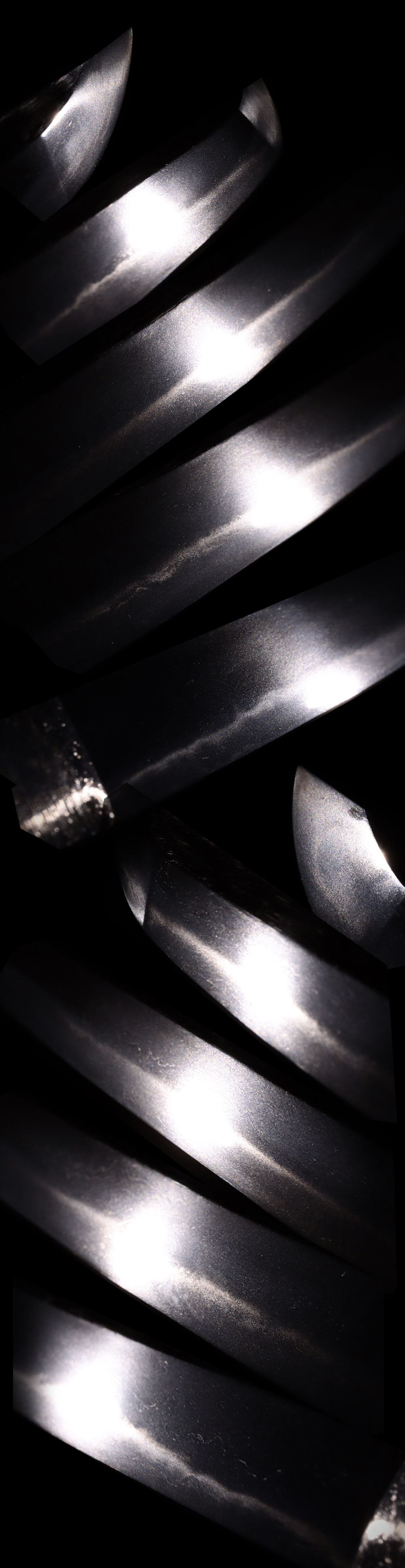
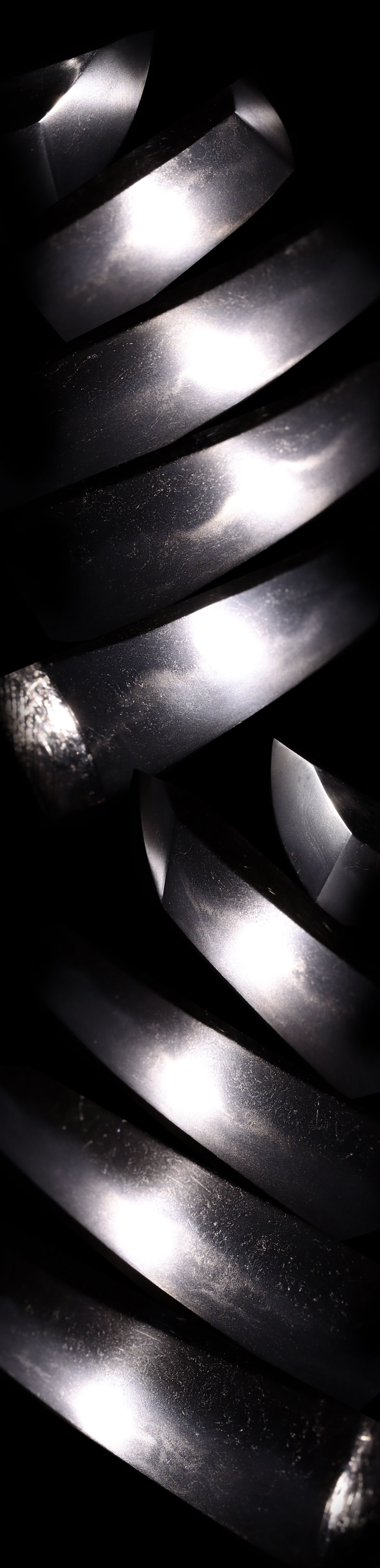
Jigane: packed Ko-itame hada with much Jinie and Chikei.
Hamon: Ko-nie base Suguha and Notare with Sunagashi and doubled hamon.
Features:
The Shimada school was a group of swordsmiths active in Suruga Province from the mid-Muromachi period. Among them, Yoshisuke is regarded as a one of the most highly skilled smith. Due to the geographical location of Suruga, their work shows strong influence from the Sue-Sōshū style and mixture of other style. There were several generations of smiths bearing the name Yoshisuke, and in particular, the 4th-generation Yoshisuke is known as the maker of one of the Three Great Spears of Japan, “Otegine.”
————————-
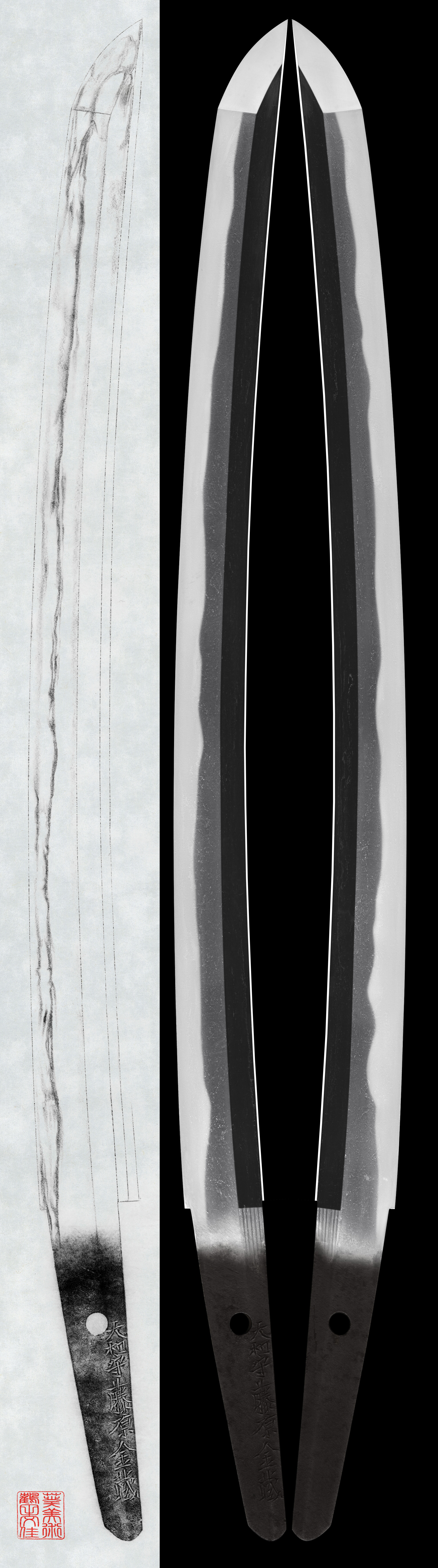
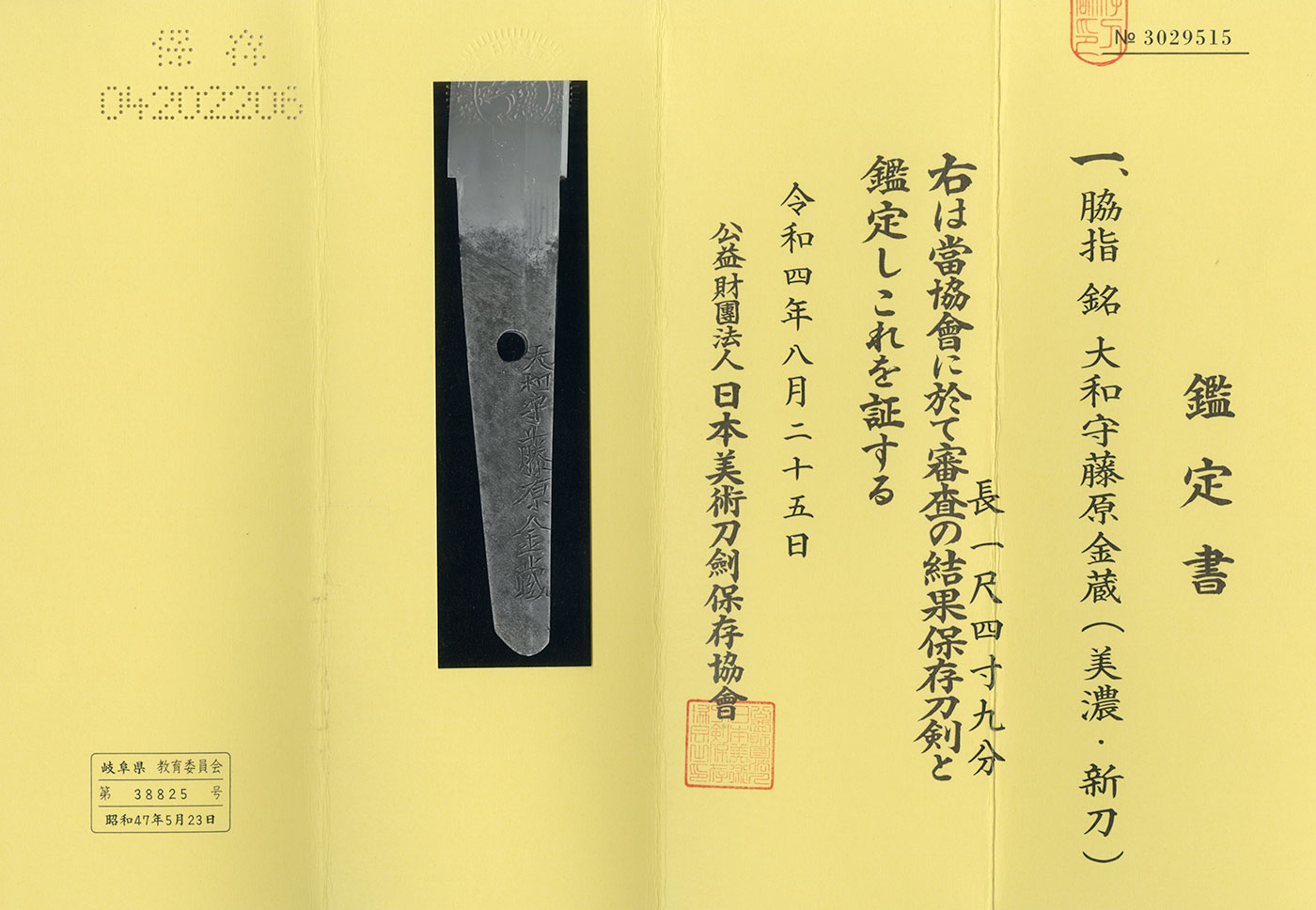
Sho: Wakizashi(NBTHK Hozon Token)
Inscription:
Yamato Kami Fujiwara Kanekura (Mino province, Shinto)
大和守藤原金蔵
(We divide 4 sections for each sword as Saijyo saku, Jyojyo saku Jyo saku and regular saku)
This sword belongs to Jyo saku ranking.
Habaki: Silver single Habaki
Blade length: 45.2 cm (17.79 in)
Sori: 1.1 cm (0.43 in)
Mekugi: 1
Width at the hamachi: 3.19 cm (1.25 in)
Width at the Kissaki: 2.41 cm (0.94 in)
Kasane: 0.7 cm (0.27 in)
The weight of the sword: 510 grams
Era: the early Edo period
Shape: wide, thick and thick robust blade.
Hamon: Niedeki Notare with rough Nie.
Features:
Shinto: Chu saku: Mino
Yamato Kami Fujiwara Kanekura was swordsmith active in Mino province in the early Edo period. The
From Aoi Art:
Most Mino works have strong Jigane with sinking Hamon and tend to be very sharp. Shizu and Kaneuji are the ancestors of them. We truly recommend this to you. A low-contrast hamon shows a characteristic of Mino Swords
Koshirae:
Daisho Tsuba: rounded iron tsuba with openwork carving of tadpole.
Fuchikashira: carving of ears.
Menuki: motif is unknown.
NBTHK Hozon Token certificates
Aoi Art estimation paper: whole Oshigata
Please note: the price does not include the shipping fees.


Starting bid: ¥985,000
|
Auction started
2026/03/22 (Sun) 16:51 |
※ = Auto