
 日本語
日本語Bid History
|
Auction started
2026/03/21 (Sat) 14:44 |
※ = Auto
Ordering Number: AS25427.
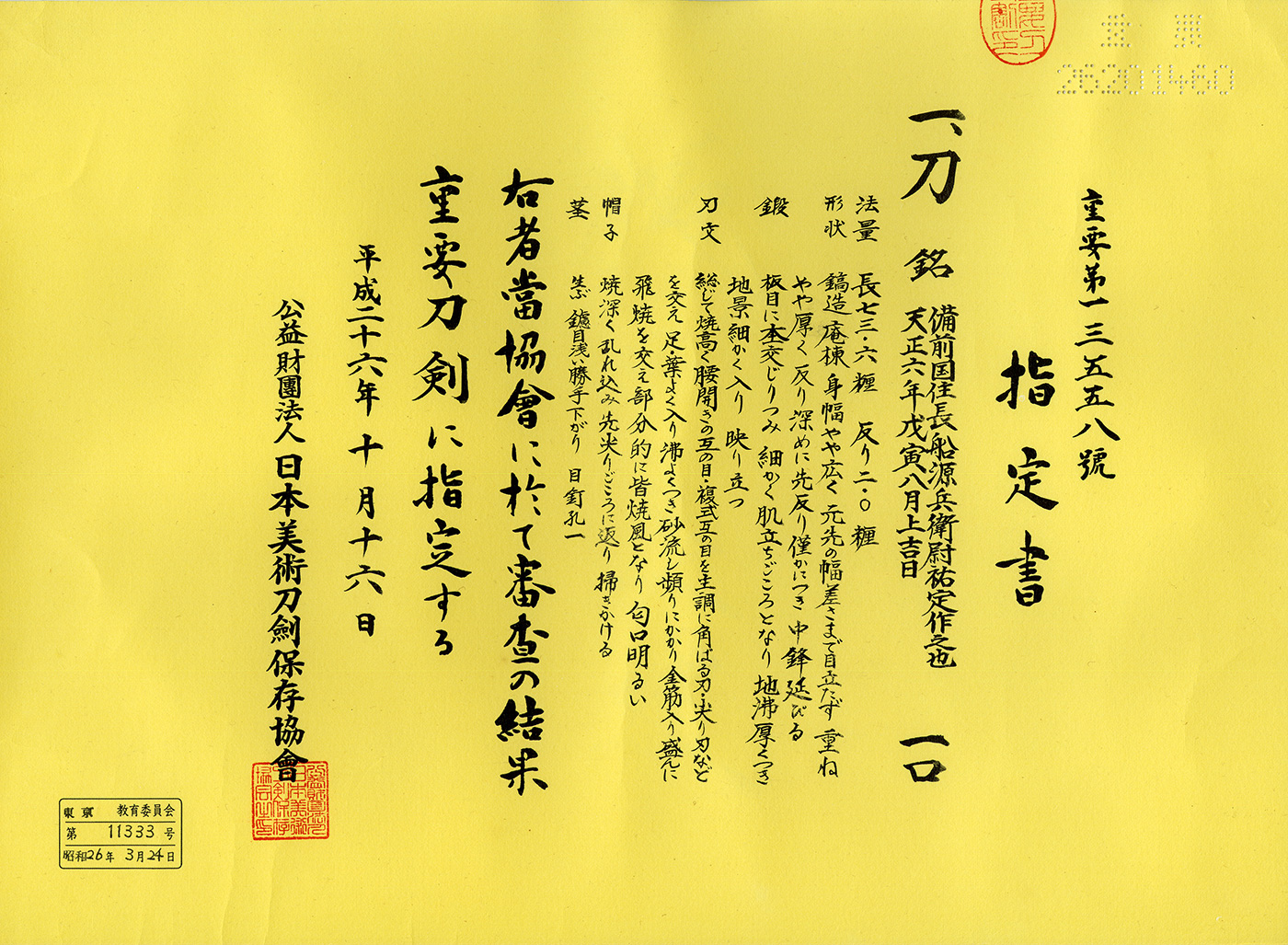
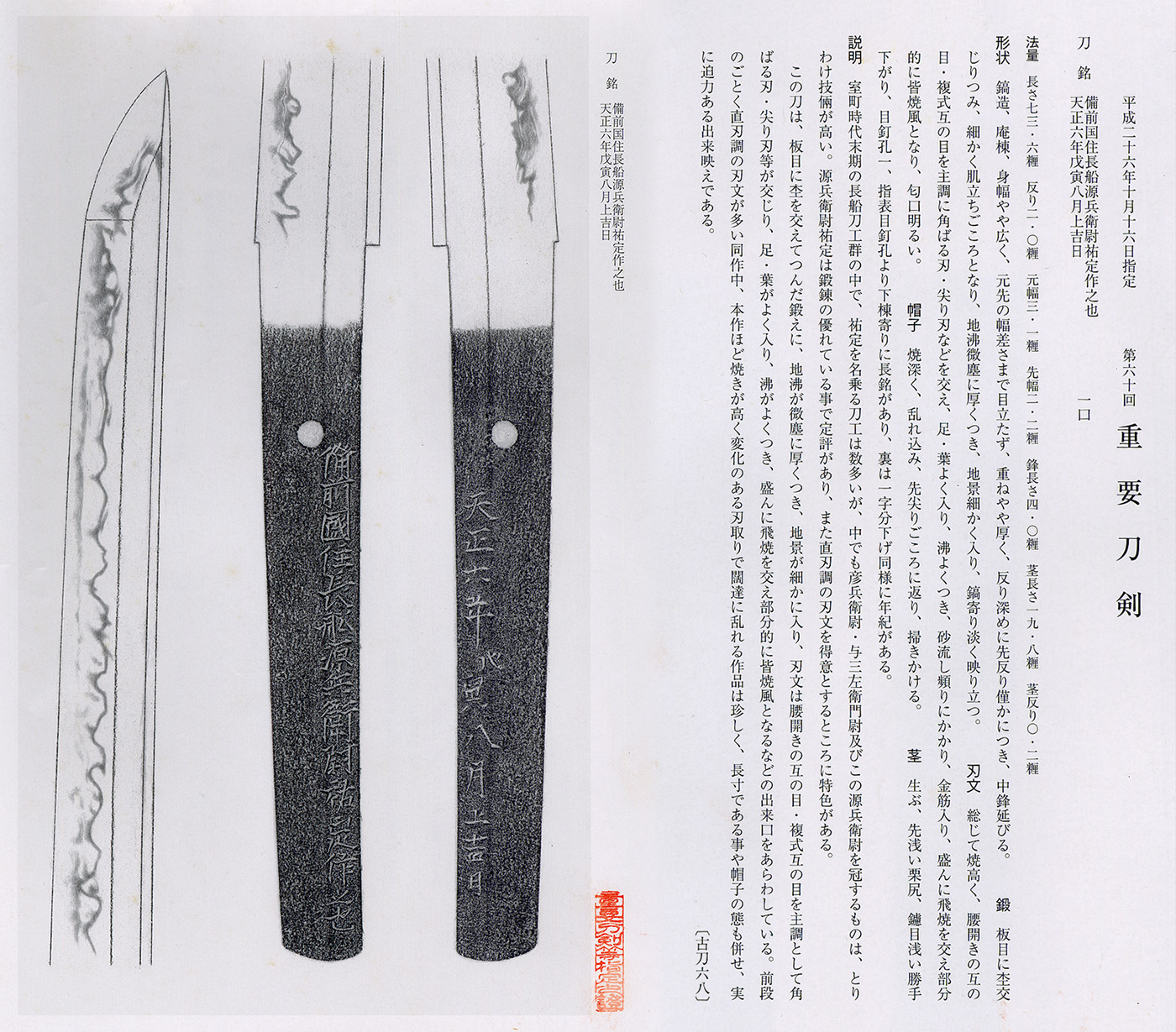
Katana in Shirasaya (60th Juyo Token).
Signature: Bizen Koku Ju Osafune Genbei no Jo Sukesada Saku Kore.
A lucky day in August, Tensho 6 (1578).
備前国住長船源兵衛尉祐定作之也
天正六年戌寅八月吉日
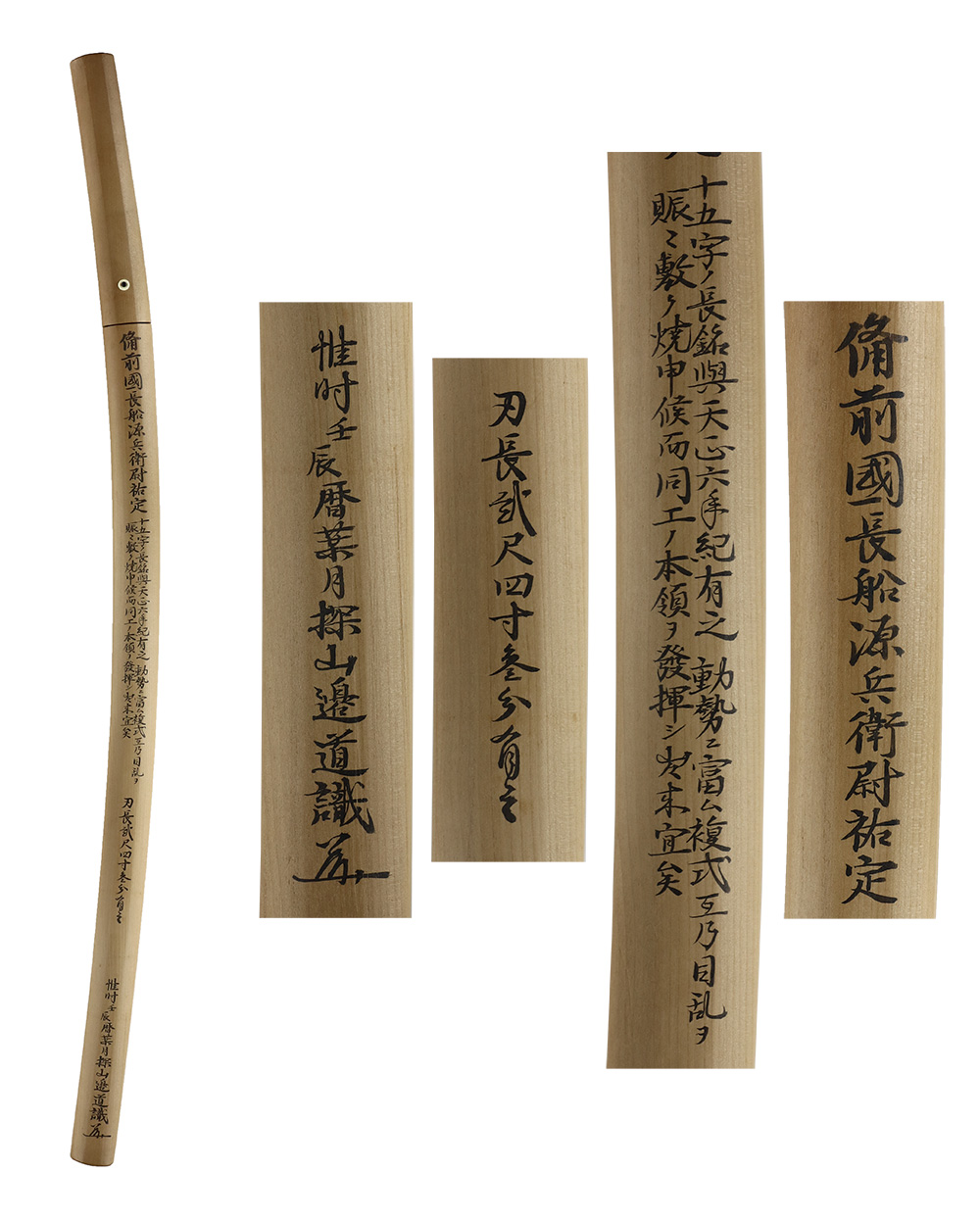
Sayagaki: written by Mr.Tanobe.
Bizen Koku Osafune Genbei no Jo Sukesada.
With a long 15-character signature and dated Tensho 6.
A lively double choji-midare is abundantly applied.
The yakiba is well executed, fully demonstrating the smith’s true ability, and the workmanship is excellent.
Written by Tanzan Hen Do (kao), August of the year of Mizunoe-Tatsu.
(We divide 4 sections for each sword as Saijyo Saku, Jyojyo Saku, Jyo Saku and Regular Saku).
This work is ranked as Saijyo Saku for Bizen no Kuni Ju Osafune Genbei no Jo Sukesada.
Habaki: Gold-plated double habaki.
Blade Length: 73.6 cm (28.98 in).
Curvature: 1.97 cm (0.78 in).
Mekugi Hole: 1.
Width at Base (Motohaba): 3.20 cm (1.26 in).
Width at Yokote: 2.19 cm (0.86 in).
Thickness of rim (Kasane): 0.70 cm (0.28 in).
Sword Weight: 825 g.
Shape: Wide mihaba with solid kasane, bearing a long inscription “Bizen no Kuni Ju Osafune Genbei no Jo Sukesada Saku Kore / A lucky day in August, Tensho 6 (1578)”.
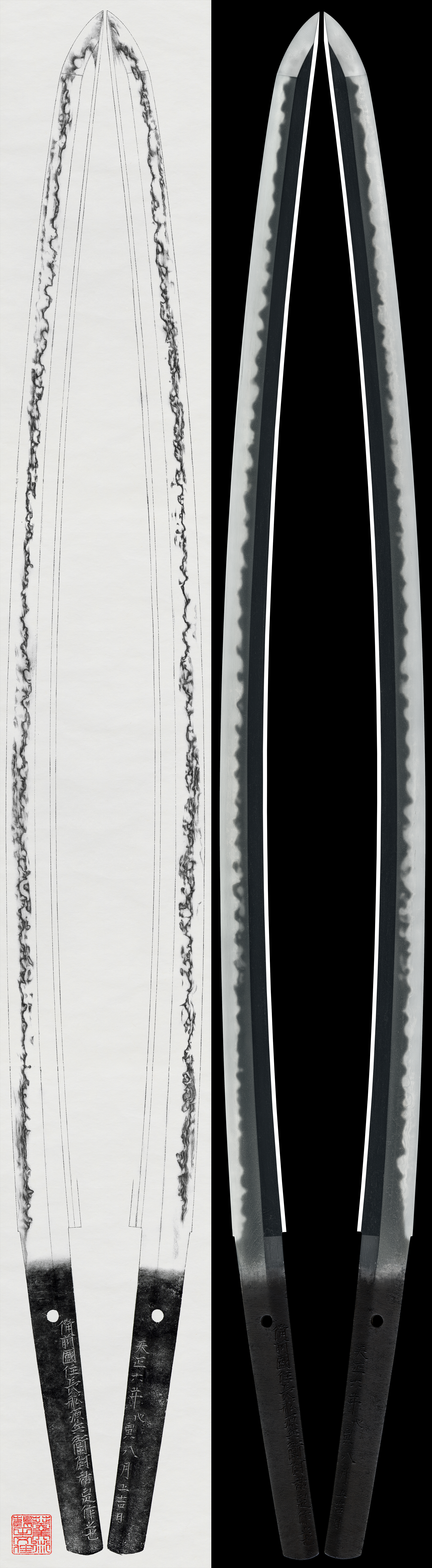
Jigane: Well-forged ko-itame hada, forming a refined steel with utsuri appearing.
Hamon: Nie-deki, with choji-midare, becoming more vigorous toward the upper area, with an intensely midare boshi.
Upon close inspection, sunagashi and kinsuji are active.
Features: Genbei no Jo Sukesada was the son of Yosazaemon Sukesada and produced swords for the Uragami clan, lords of Tenjinyama Castle.
Although the Sukesada school represents Sue-Bizen and produced many mass-made swords, works like this bearing a secular name and date were commissioned by powerful warlords, made carefully with high-quality steel, and exhibit especially high skill.
Aoi Art’s Comment: The choji-midare continues, becoming large and intensely midare near the kissaki, with the boshi also showing vigorous midare.
Kinsuji works well within the hamon, and the overall workmanship is excellent with dynamic activity.
In the late Muromachi period, renowned smiths such as Genbei no Jo Sukesada and Yosazaemon Sukesada produced swords for daimyo.
Such notable works were naturally owned by daimyo or high-ranking samurai.
This piece was likely carefully preserved as a daimyo-registered item.
Given the excellent condition of the nakago, it is considered a sword once owned by a daimyo.
Historical Background: Tensho 6 (1578) corresponds to the Azuchi-Momoyama period, a year of major upheaval across Japan as Oda Nobunaga advanced unification.
Key events include the death of Uesugi Kenshin and the ensuing Otate no Ran in Echigo, the defeat of Otomo Sorin at the Battle of Mimigawa, and the rebellion of Araki Murashige.
In March, Uesugi Kenshin’s sudden death led to a succession conflict between Uesugi Kagekatsu and Uesugi Kagetora.
Nobunaga’s most beloved woman is said to have been his consort Ikoma Kitsuno (Kyuan Keisho), who bore him heirs including Nobutada and Nobukatsu, as well as his daughter Tokuhime.
She was admired for her beauty and gentleness but is said to have died young due to complications after childbirth.
60th Juyo Token.
AoiArt estimation paper: Whole Oshigata
Shipping fee is not included in the price.



Starting bid: ¥9,000,000
|
Auction started
2026/03/21 (Sat) 14:44 |
※ = Auto