
 日本語
日本語Bid History
Auction has expired
Auction Expired because there were no bids|
Auction started
2026/03/18 (Wed) 10:25 |
※ = Auto
Ordering number: AS26013
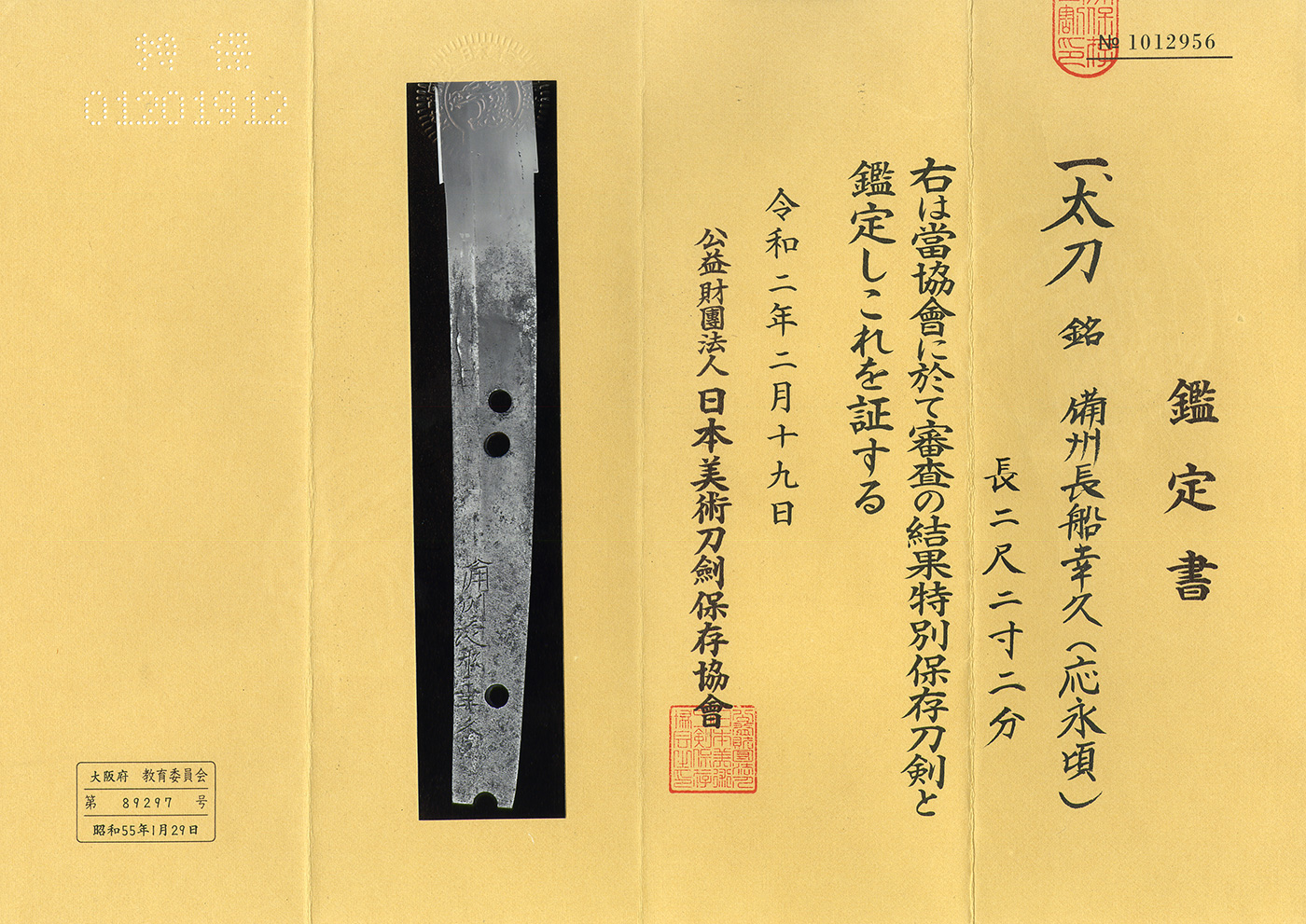
Tachi in Shirasaya, with Koshirae (NBTHK Tokubetsu Hozon Token)
Signature: Bishu Osafune Yukihisa
備州長船幸久
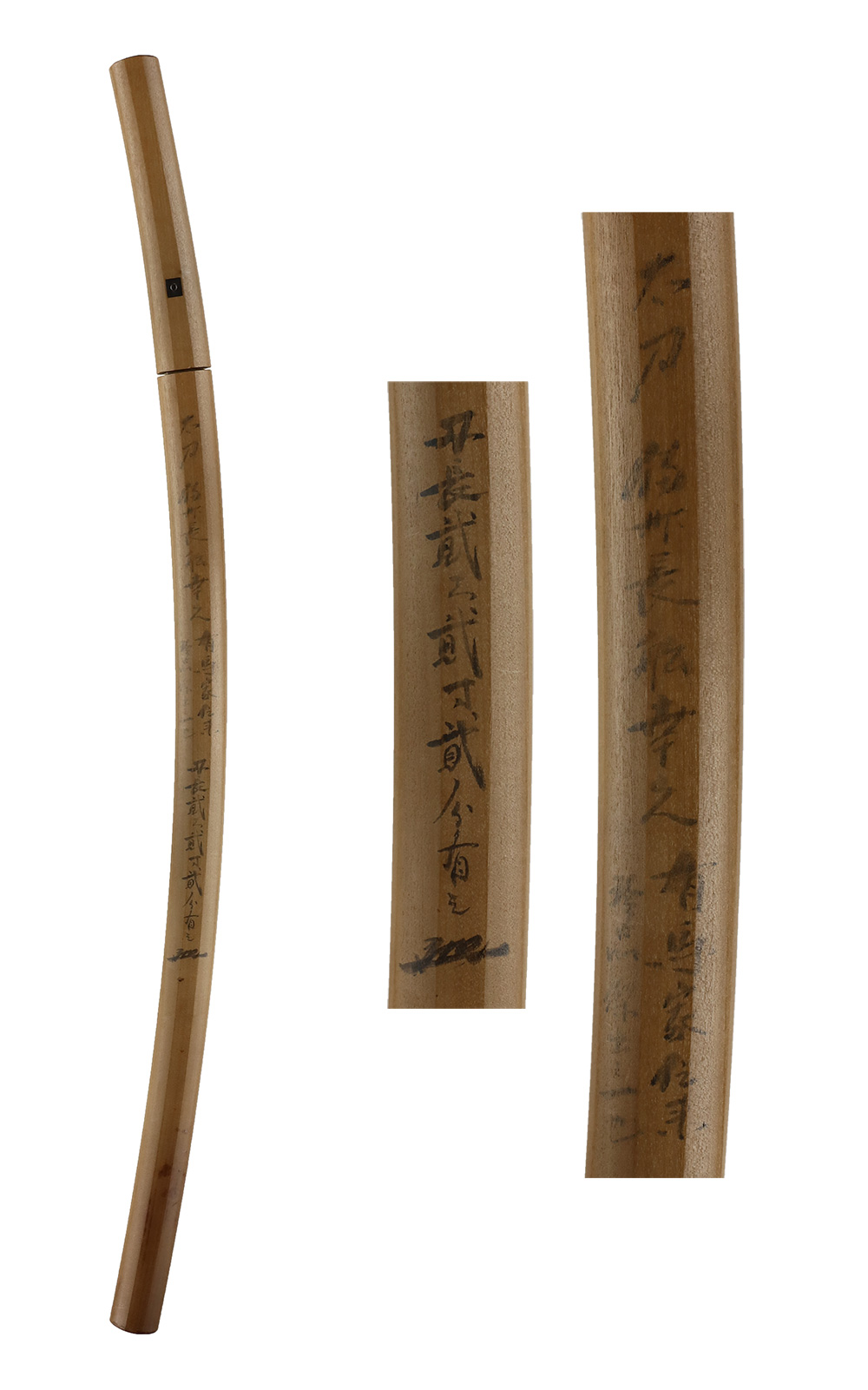
Sayagaki: Tachi Bishu Osafune Yukihisa
Handed down in the Arima family
Blade Length: 67.3 cm (26.50 in)
(We divide 4 sections for each sword as Saijyo Saku, Jyojyo Saku, Jyo Saku and Regular Saku).
This work is ranked as Jyojyo Saku for Bishu Osafune Yukihisa.
Habaki: Gold-plated single layer
Blade Length: 67.2 cm (26.46 in)
Curvature: 2.6 cm (1.02 in)
Mekugi Hole: 3
Width at Base (Motohaba): 2.67 cm (1.05 in)
Width at Tip (Sakihaba): 1.65 cm (0.65 in)
Thickness of rim (Kasane): 0.56 cm (0.22 in)
Sword Weight: 500 g
Era: Muromachi period, around Oei era (1394–1428)
Shape: A gracefully shaped tachi with deep curvature and a suriage tang.
Jigane: Well-forged ko-itame hada with utsuri, showing a beautiful jigane.
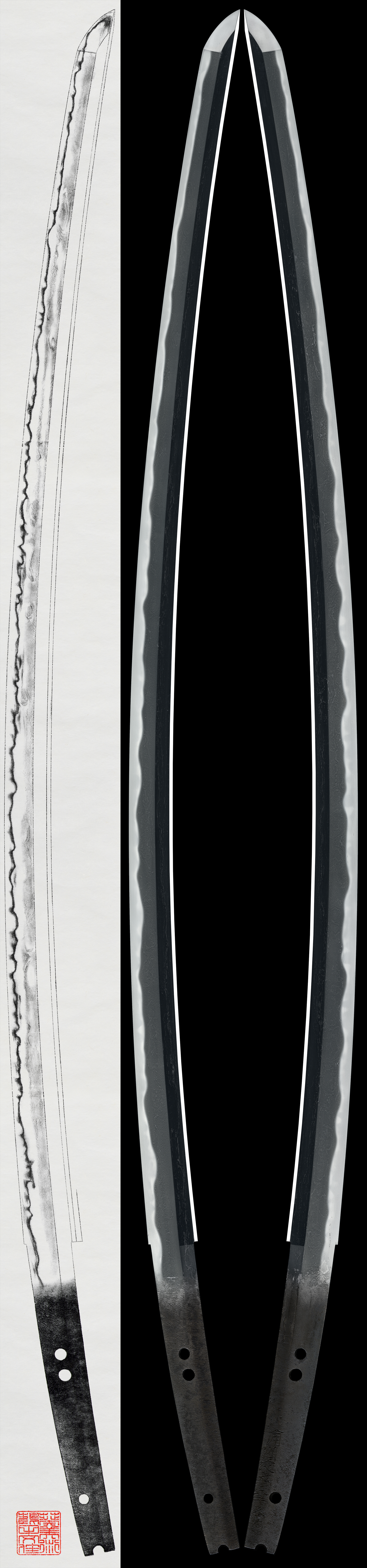
Hamon: Gunome and choji-midare. The boshi is constricted and turns back in a round shape.
Features: Bishu Osafune Yukihisa was a Bizen swordsmith active around the Oei era of the Muromachi period.
Signed works are few in number and highly valuable as reference materials.
This piece is accompanied by an उत्कृष्ट tachi koshirae.
The koshirae is considered to have been made in the late Edo period.
Many koshirae of this style were produced after the Meiji period.
Although they appear similar, this piece is of a different and superior quality.
Koshirae: Tachi koshirae
Aoi Art’s Comment: The koshirae of this work bears the Hidari Mitsudomoe family crest.
It is an Edo period tachi koshirae.
The Hidari Mitsudomoe crest is applied throughout the piece.
It is considered a prestigious work handed down in the Arima family.
There are more than 60 instances of the Hidari Mitsudomoe crest, evoking the brilliance of the period.
The sayagaki indicates it was formerly owned by the Arima family, lords of Kurume in Chikuzen Province.
This is a work that should be carefully preserved.
Recently, historically valuable pieces like this have become increasingly scarce.
It is highly recommended to preserve this piece with great care.
Historical Background: During the Muromachi period, famous structures such as Rokuon-ji (Kinkaku-ji, the Golden Pavilion) and Jisho-ji (Ginkaku-ji, the Silver Pavilion) were built.
At the same time, events such as the Onin War and the rise of gekokujo (the overthrow of superiors by subordinates) occurred.
There are various theories regarding the periodization, but it is generally considered to span from 1392, when the Northern and Southern Courts were unified, to 1573, when Ashikaga Yoshiaki was expelled by Oda Nobunaga.
NBTHK Tokubetsu Hozon Token
AoiArt estimation paper: Whole Oshigata
Please note: the price does not include the shipping fees.





Auction Expired
Auction Expired because there were no bids
Auction has expired
Auction Expired because there were no bids|
Auction started
2026/03/18 (Wed) 10:25 |
※ = Auto