Description
Ordering Number: AS25816
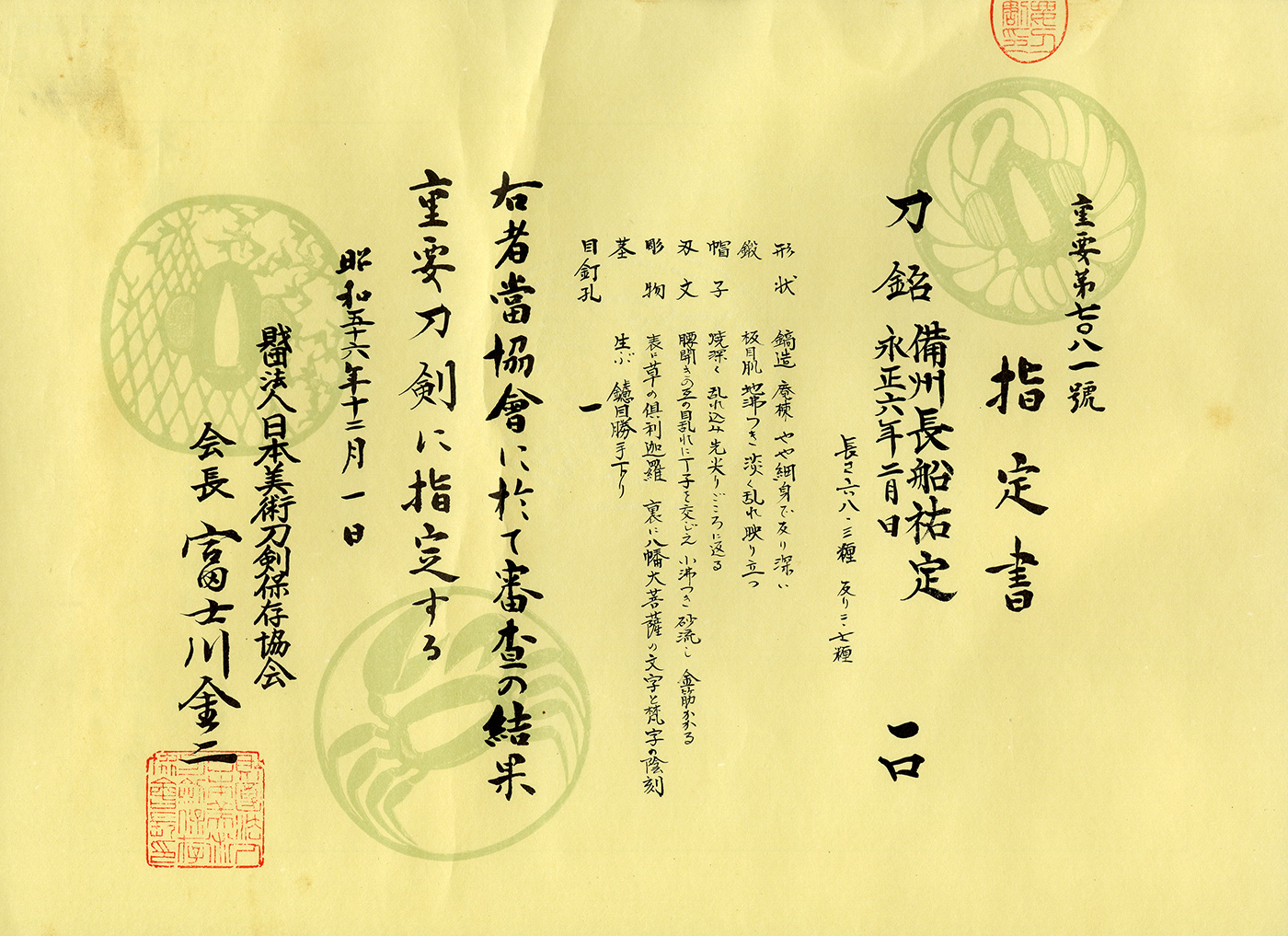
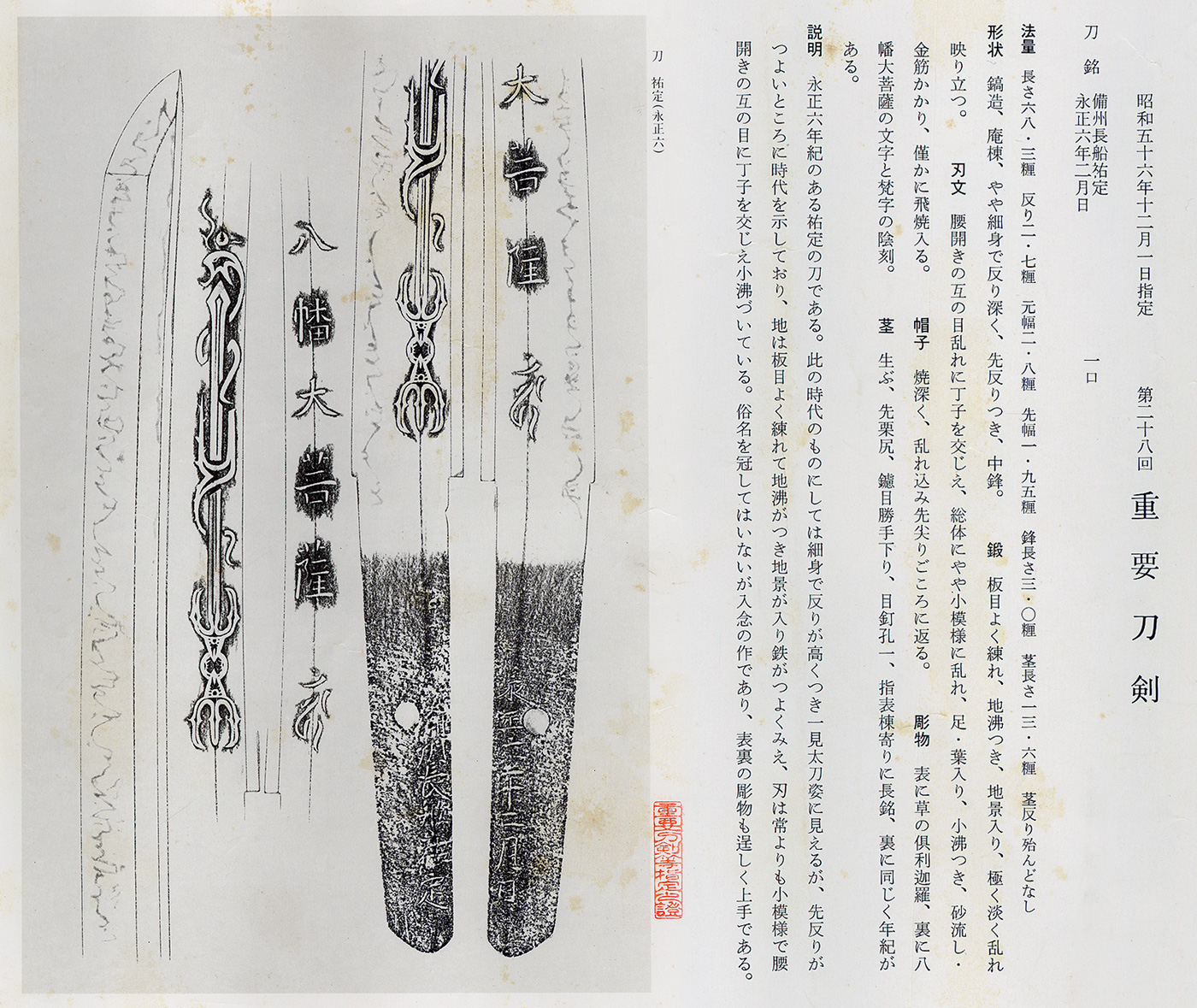
Katana in Shirasaya with Koshirae (28th Juyo Token)
Signature: Bishu Osafune Sukesada (Hikobei no Jo Sukesada)
A day in February, Eisho 6 (1509)
備州長船祐定(彦兵衛尉祐定)
永正六年二月日
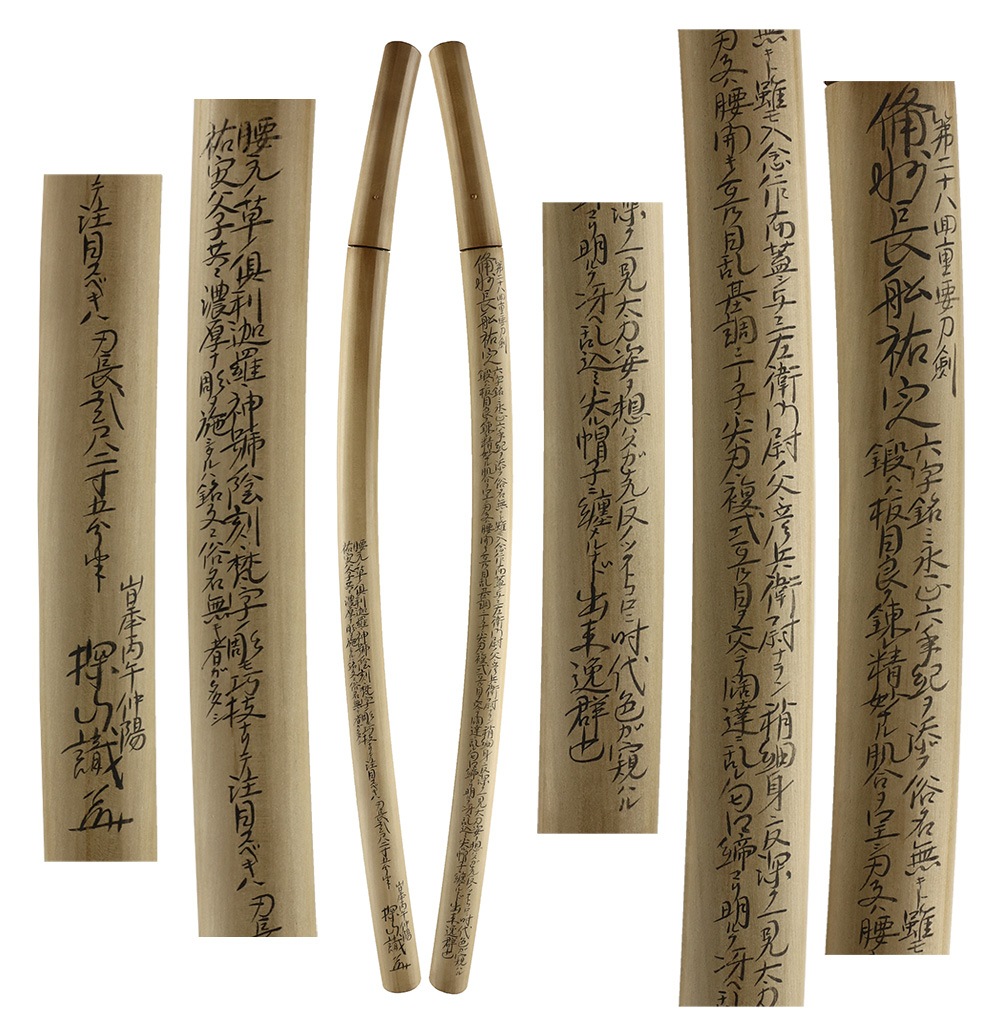
Sayagaki: Tanobe Sensei.
28th Juyo Token, Bizen Osafune Sukesada.
This work bears the sixth-generation style signature and dates to the Eisho 6 (1509) period.
Although it lacks a secular name, it is a carefully made work.
It is probably by Hikobei no Jo, the father of Yosazaemon no Jo.
The blade is slender with deep curvature, giving at first glance the impression of a tachi-style shape, though the curvature toward the tip reveals characteristics of the period.
The forging shows well-refined itame and presents a delicate and exquisite surface texture.
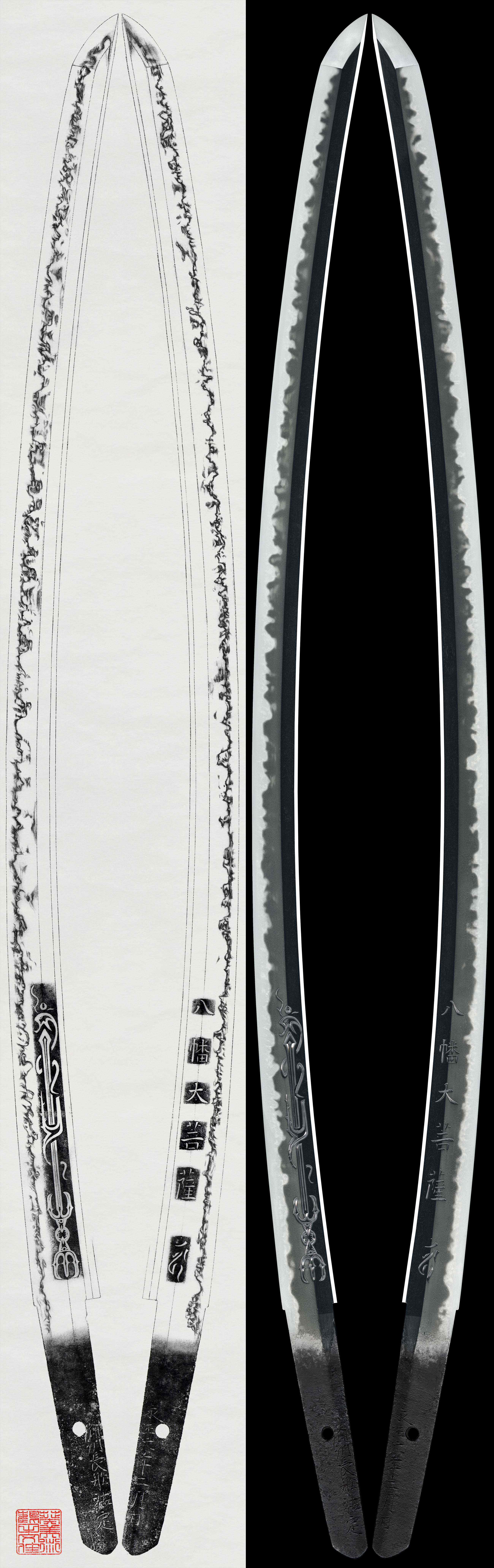
The hamon is based on koshi-biraki gunome midare, mixed with choji, pointed temper, and double gunome, creating a lively pattern.
The nioiguchi is tight, bright, and clear, and the boshi forms a pointed midare-komi style, making this an outstanding work.
At the base there are carvings of a grass-style Kurikara dragon and incised sacred characters, along with bonji carvings.
These carvings are skillfully executed.
It is noteworthy that many inscriptions with deep carvings among the Sukesada father and son works do not include secular names.
Blade Length: 2 shaku 2 sun 5 bu han.
Written by Tanzan (kao).
(We divide 4 sections for each sword as Saijyo Saku, Jyojyo Saku, Jyo Saku and Regular Saku).
This work is ranked as Saijyo Saku (highest grade) among works by Bishu Osafune Sukesada.
Habaki: Gold foiled double habaki.
Blade Length: 68.3 cm (26.89 in).
Curvature: 2.8 cm (1.10 in).
Mekugi Hole: 1.
Width at Base (Motohaba): 3.0 cm (1.18 in).
Width at Yokote: 2.1 cm (0.83 in).
Thickness of rim (Kasane): 0.54 cm (0.21 in).
Sword Weight: 615 g.
Era: A day in February, Eisho 6 (1509).
Shape: A katana made for one-handed use.
On the front side are carvings of a tokko (vajra) and a grass-style dragon, and on the reverse side the inscription “Hachiman Daibosatsu” and bonji characters are carved.
The blade has deep curvature and an extended kissaki, giving it an excellent overall shape.
Jigane: The jigane is tightly forged, with utsuri appearing, resulting in a very refined steel surface.
Hamon: Nioi-deki with a magnificent choji midare.
Features: As you may know, inscriptions including a secular name began from the period of Hikobei Sukesada onward, and it is believed that such names did not exist before this time.
Please particularly note these carvings.
Furthermore, the finely detailed midare hamon, the utsuri, and the dynamic midare-komi boshi together form a truly remarkable temper pattern.
These points are described in detail by Tanobe Sensei on both sides of the sayagaki.
Tanobe Sensei identifies the smith in the sayagaki as Hikobei Sukesada, the father of Yosaemon Sukesada.
Aoi Art’s Comment: This is a magnificent work with splendid choji midare and a boshi that turns dynamically into midare-komi.
Blades that show utsuri and also feature such superb carvings on both sides are extremely rare.
It is likely that this is a top-class work produced on special order for a daimyo.
28th Juyo Token.
AoiArt estimation paper: Whole Oshigata
Please note: The price does not include the international shipping fees.


 日本語
日本語