
 日本語
日本語Bid History
|
Auction started
2026/02/21 (Sat) 12:05 |
※ = Auto
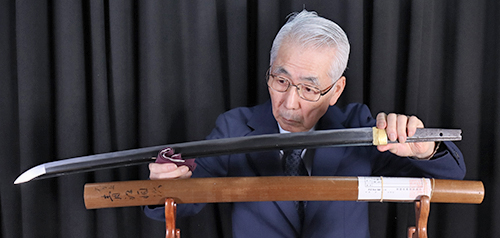
Katana in Shirasaya (the 70th NBTHK Juyo Token)
Signature: Mumei(Unsigned) (Aoe 青江)
(We divide 4 sections for each sword as Saijyo Saku, Jyojyo Saku, Jyo Saku and Regular Saku).
This sword is ranked as Saijyo Saku for Mumei(Unsigned) (Aoe).
Habaki: Double Gold Habaki.
Blade Length: 65.1 cm (25.63 in)
Curvature: 1.1 cm (0.43 in)
Mekugi Hole: 2
Width at Base (Motohaba): 3.32 cm (1.31 in)
Width at Yokote (Sakihaba): 2.62 cm (1.03 in)
Thickness (Kasane): 0.69 cm (0.27 in)
Sword Weight: 785 g
Era: Nanbokucho period (1336–1392)
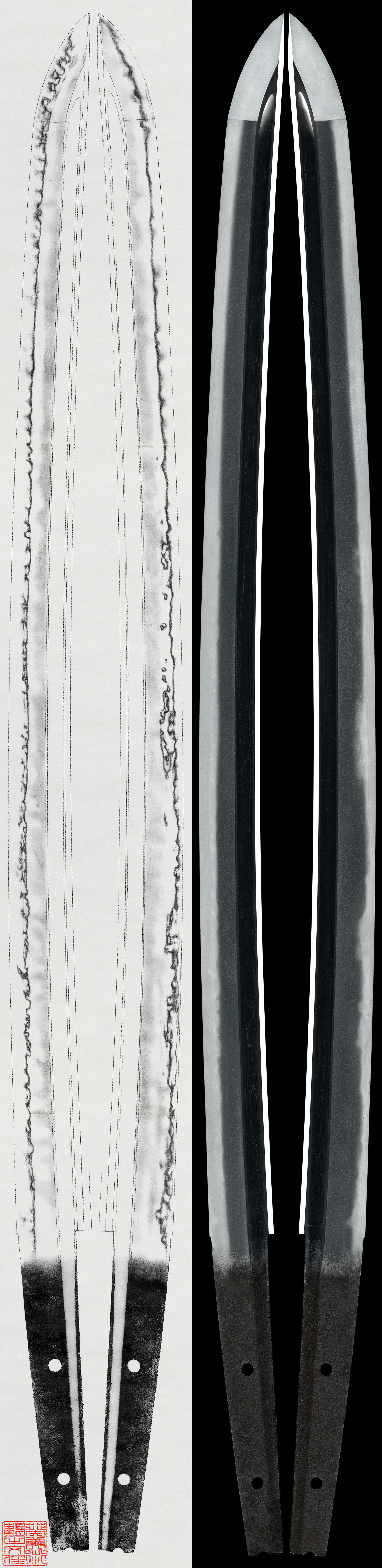
Shape: wide, and thick blade with big kissaki.
Jigane: packed Koitame with Mokume with much Jinie and Chikei with Utsuri.
Hamon: Nioi-deki Gunomemidare with much Ashi and Yo.
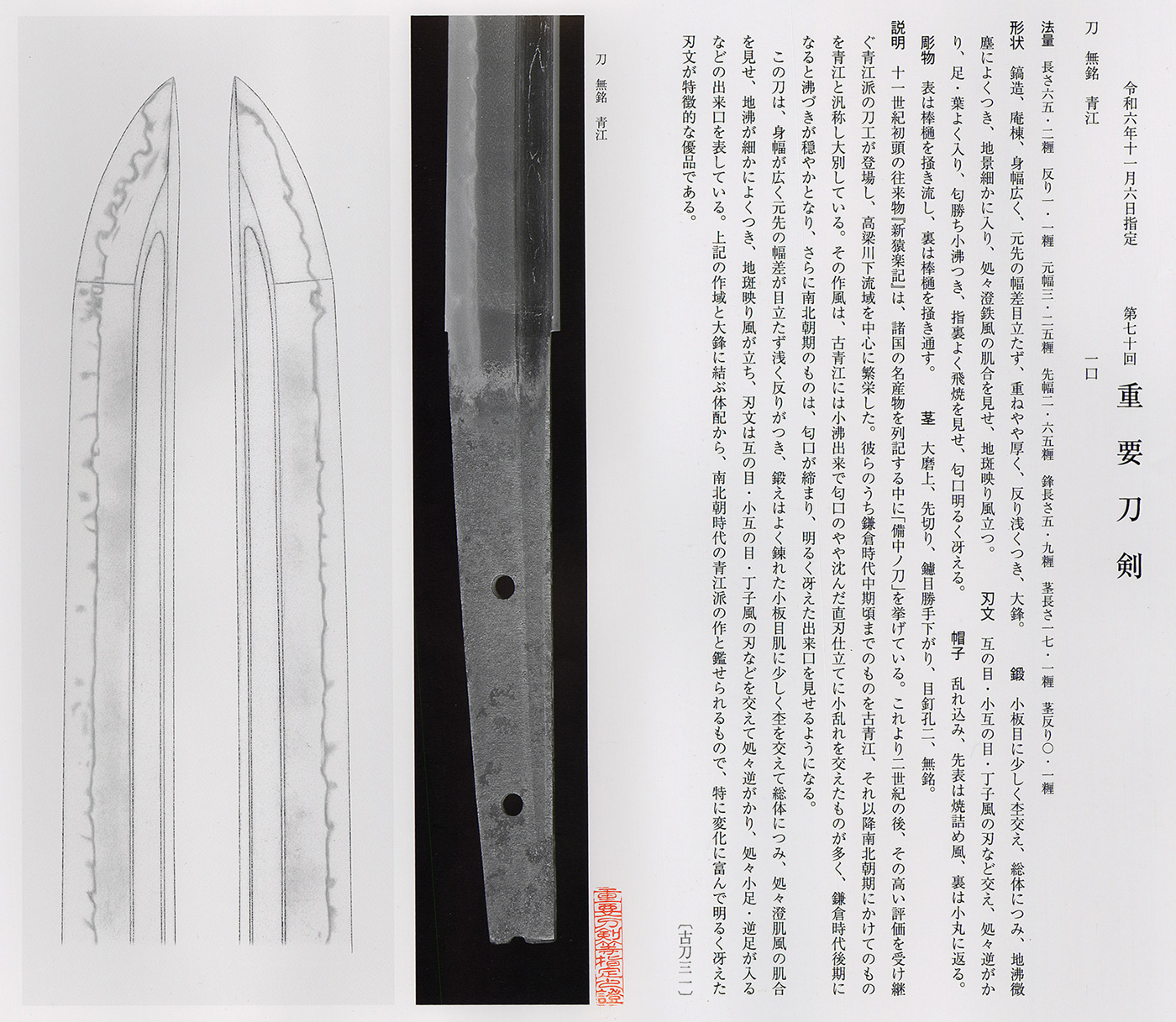
Features: Among the works of the Aoe school, which flourished in Bitchū Province from the Kamakura period through the Nanbokuchō period, those dating to around the mid-Kamakura period are referred to as Ko-Aoe. Blades from the Kamakura period are often ko-niedeki with suguha hamon, whereas in the Nanbokuchō period the hamon becomes brighter and clearer in nioi-deki, frequently showing suguha with saka-ashi or compositions featuring sakasa-chōji.
This blade displays a packed jigane patterns with the characteristic ji-fu utsuri associated with Aoe. The hamon is a nioi-deki turbulent hamon, clearly demonstrating the typical features of Nanbokuchō-period Aoe work. It is in healthy condition and of excellent quality.
Although somewhat shorter in length, it has a solid and powerful form that does not feel short, making it a highly impressive piece.
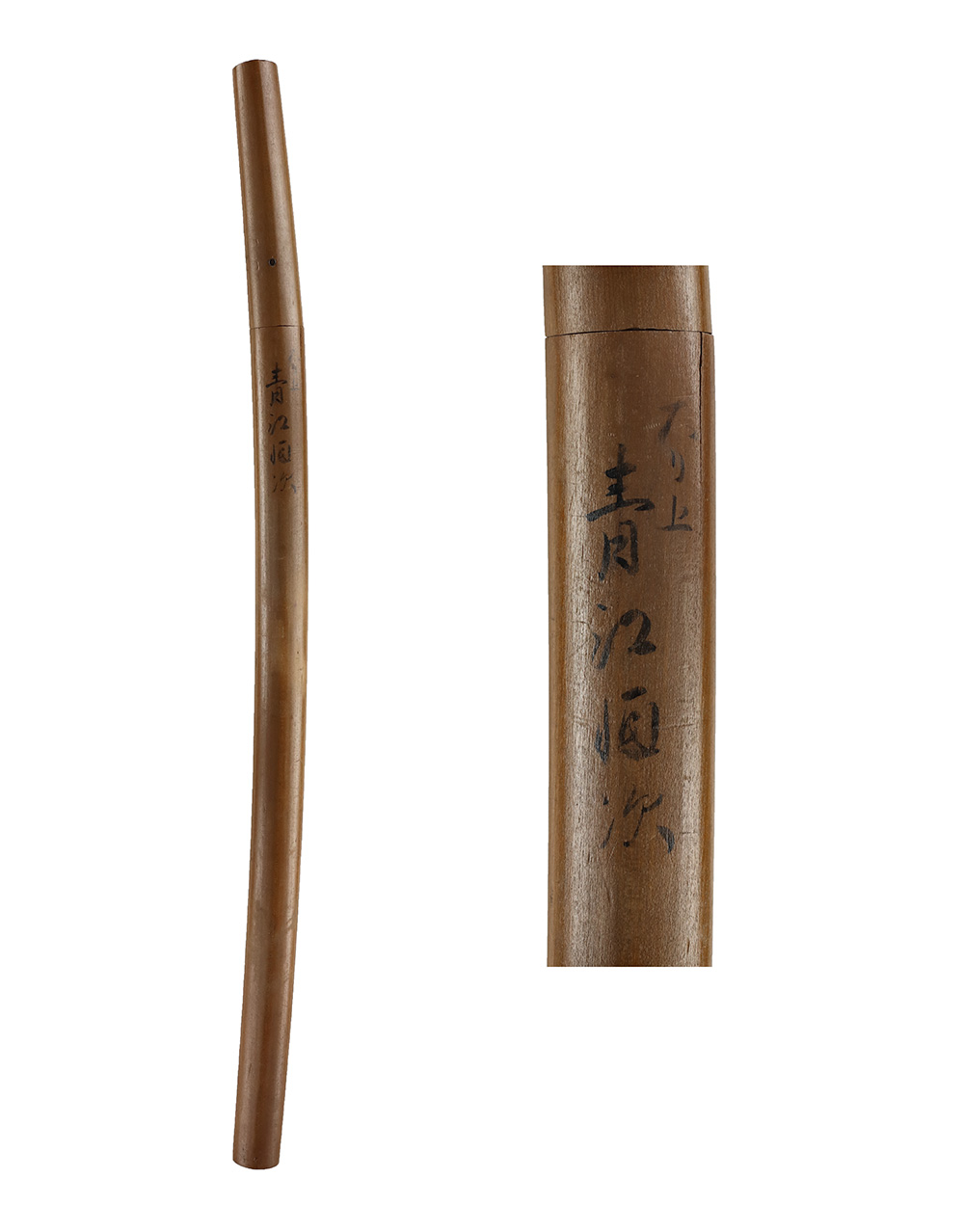
It is accompanied by a sayagaki, though its provenance is unknown.
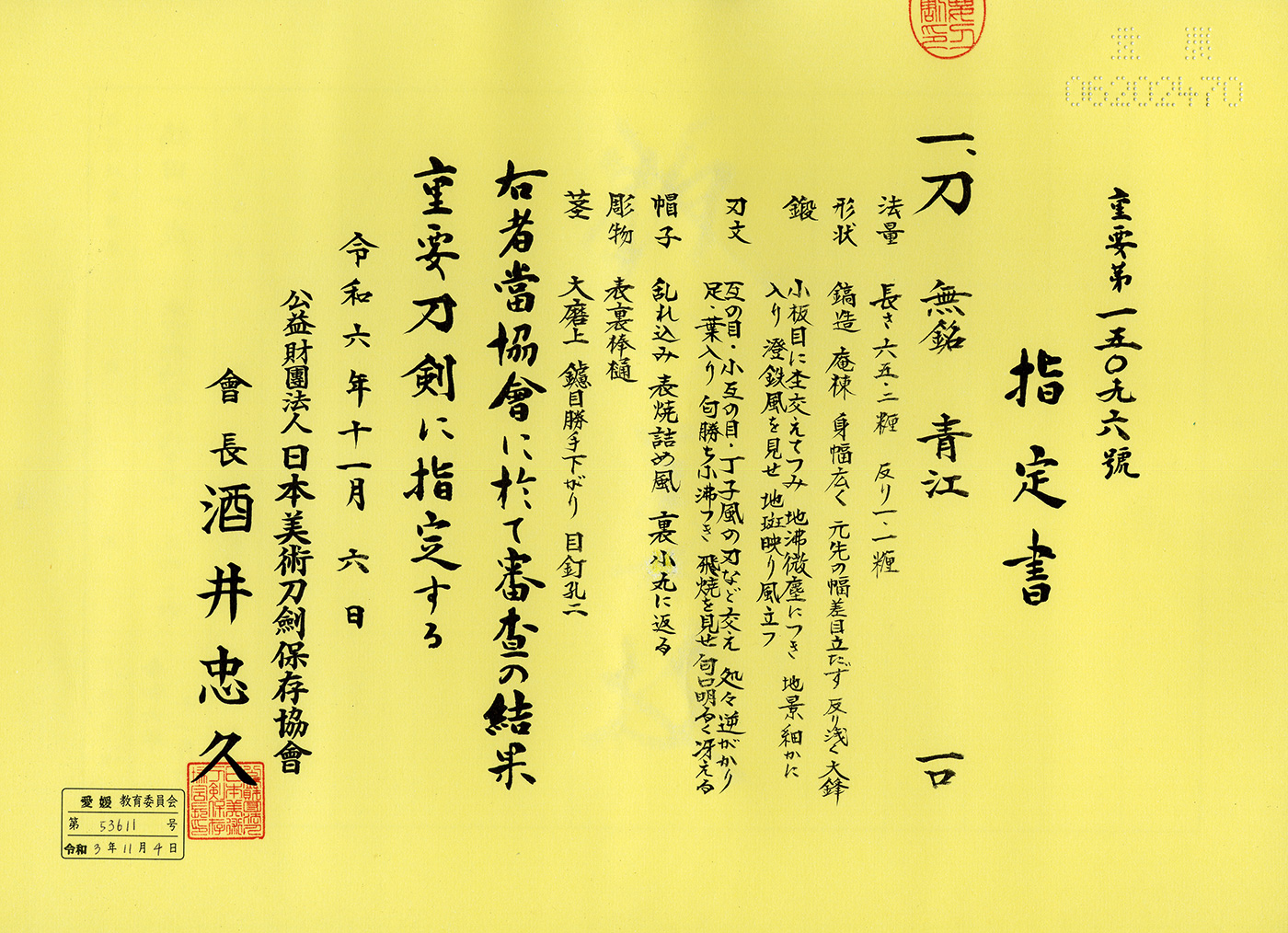
The 70th NBTHK Juyo Certificate
AoiArt estimation paper: Whole Oshigata
Please note: The price does not include the international shipping fees.


Starting bid: ¥3,650,000
|
Auction started
2026/02/21 (Sat) 12:05 |
※ = Auto