Bid History
|
Auction started
2026/02/15 (Sun) 12:58 |
※ = Auto
Wakizashi in Shirasaya (NBTHK Tokubetsu Hozon Token)
Inscription:
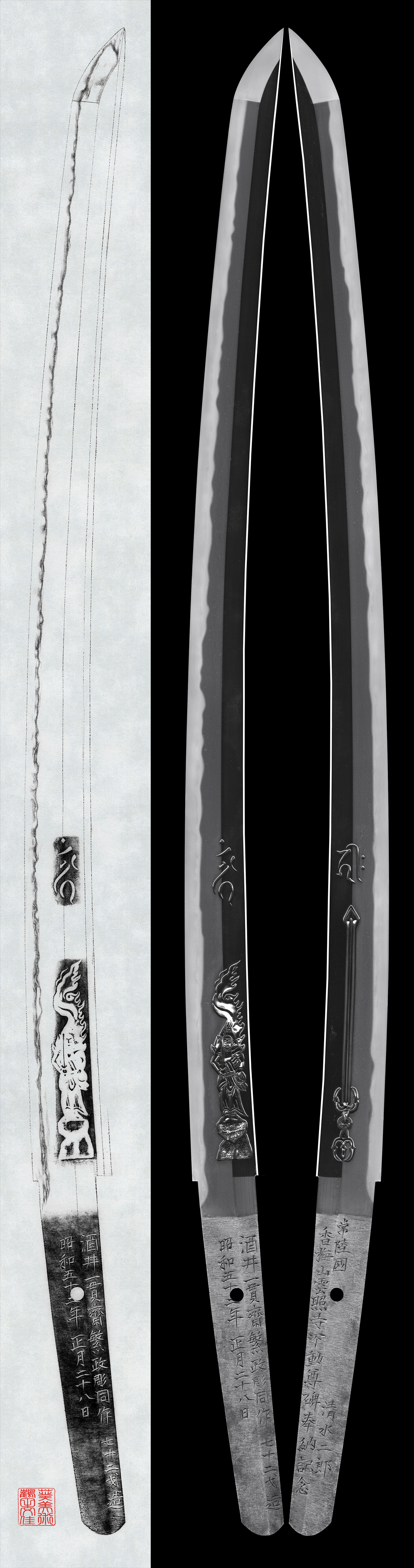
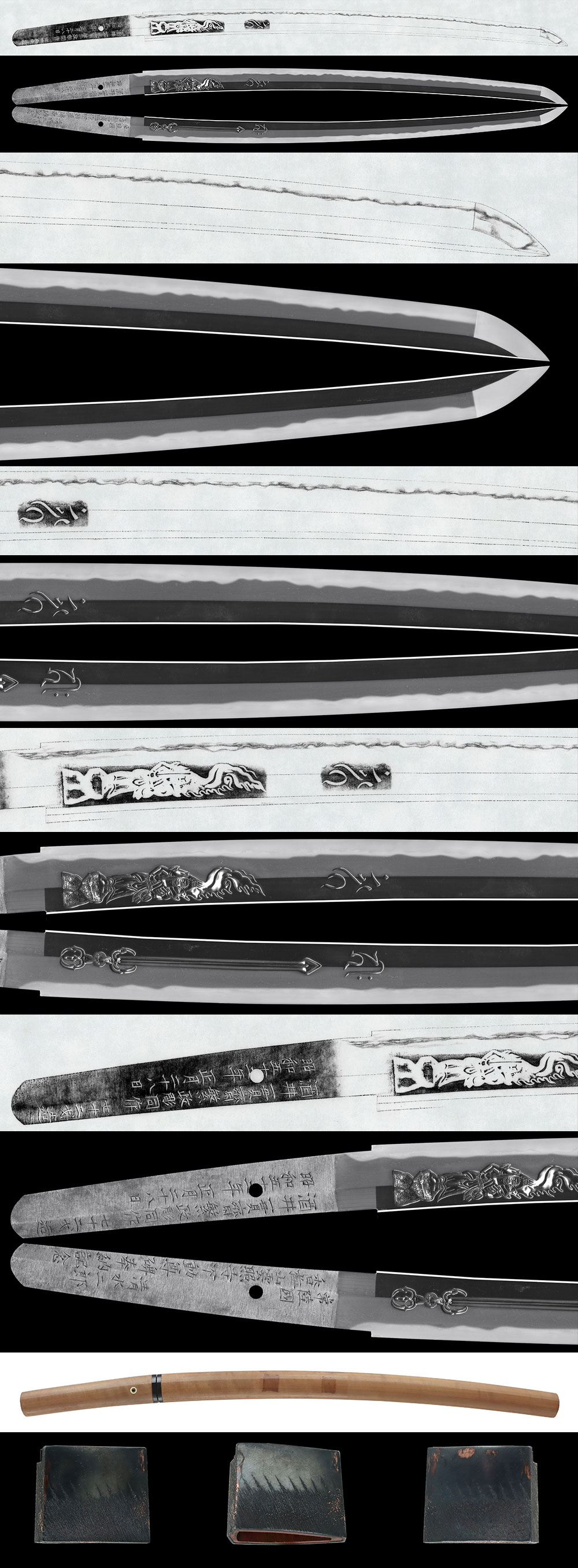
酒井一貫斎繁政彫同作七十三才造
昭和五十二年正月二十八日
常陸国清水二郎 香梅山雲照寺不動尊奉納記念
translation:
Sakai Ikkan-sai Shigemasa, carved and made by himself at the age of seventy-three in January 28, Shōwa 52 (1977)
Commemorating the dedication to Fudō Myōō of Kōbaisan Unshō-ji Temple, Shimizu Jirō of Hitachi Province
We divide works in to Saijo Saku, Jyojyo Saku, Jyo Saku,and Regular Saku.
This piece is ranked as Jyojyo Saku for Sakai Ikkansai Shigemasa.
Habaki: Shakudo-colored single habaki
Blade Length: 54.7 cm (21.54 in)
Curvature: 1.2 cm (0.47 in)
Mekugi Hole: 1
Width at Base (Motohaba): 3.11 cm (1.22 in)
Width at Tip (Sakihaba): 2.03 cm (0.80 in)
Thickness (Kasane): 0.64 cm (0.25 in)
Sword Weight: 620 g
Era: modern times
Shape: slightly wide blade with sharp kisski with carvings of Kaen-Bosatsu, Bonji, Suken( a sword), Dokko and Bon-ji.
Jigane: Itame with Masame
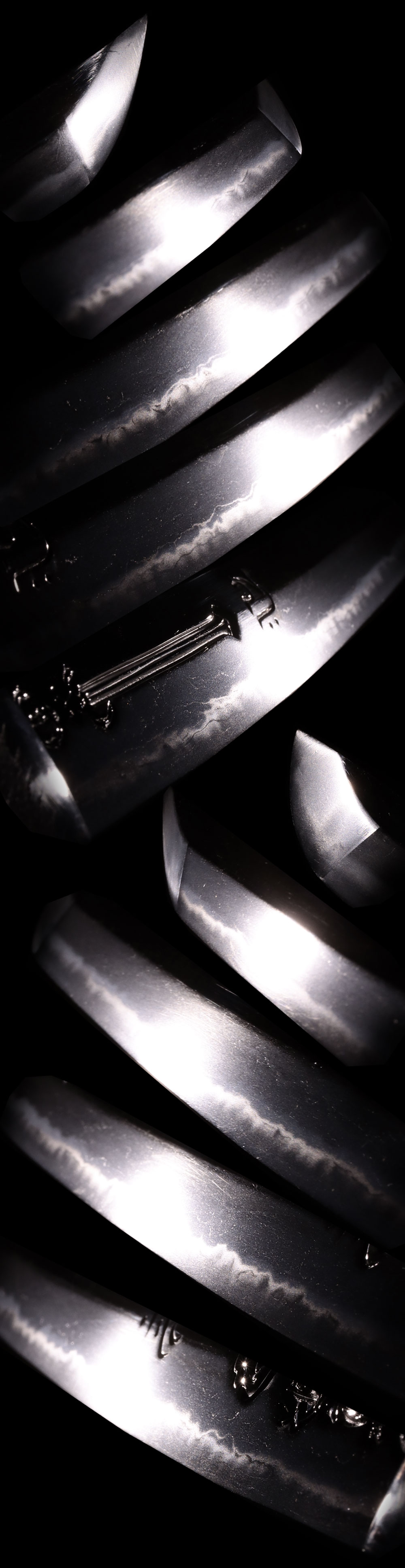
Hamon: A shallow gunome-midare with abundant kinsuji activity, accompanied by sunagashi. The boshi turns back with a midare-komi form.
Features: Shigemasa was born in Shizuoka Prefecture in 1905. He studied Bizen swordsmanship for a long time under Kasama Shigetsugu, and changed his swordsmith name to Shigemasa receiving the character for “Shige” from Shigetsugu.
After that, he became an independent swordsmith and forged swords at the Yasukuni Shrine as an authorized swordsmith for the army and the navy.
After the war, he changed the kanji for his name from Masa(正) to Masa(政). He worked vigorously and produced many excellent works and was certified as Mukansa swordsmith. He passed away in 1996.
This work was created to commemorate its dedication to Fudō Myōō at Kōbaisan Unshō-ji Temple, and it is a powerful piece distinguished by the abundant kinsuji running through the hamon.
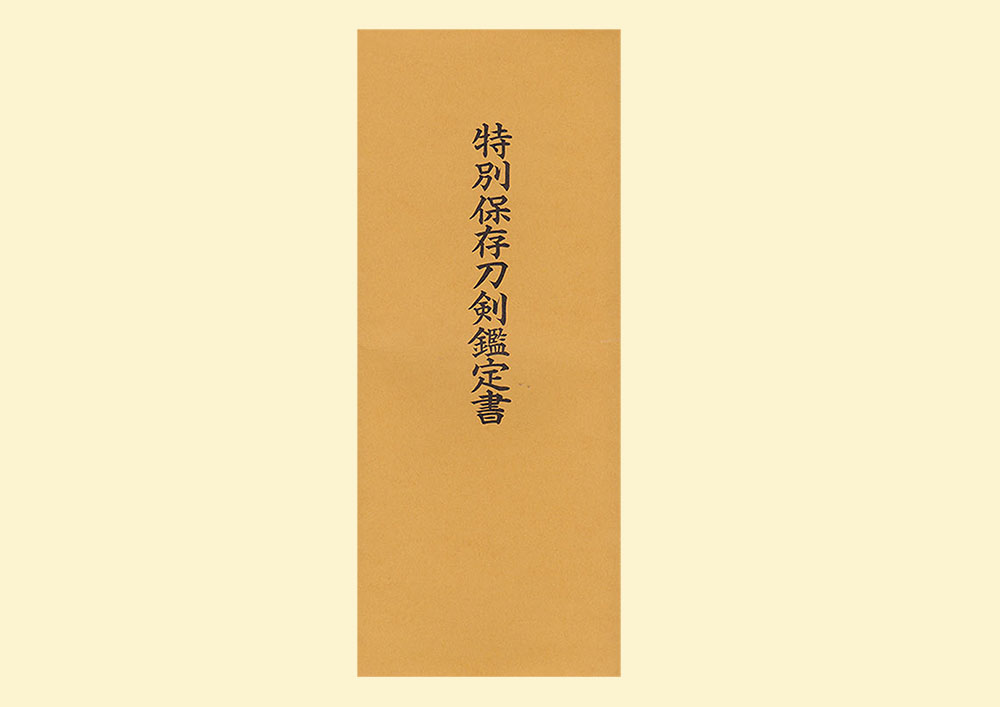
NBTHK Tokubetsu Hozon Certificate (to be issued in Mach)
Aoi-Art estimation Paper
whole Oshigata
Starting bid: ¥850,000
|
Auction started
2026/02/15 (Sun) 12:58 |
※ = Auto