
 日本語
日本語Bid History
|
Auction started
2026/02/10 (Tue) 15:06 |
※ = Auto
Order Number: AF25622
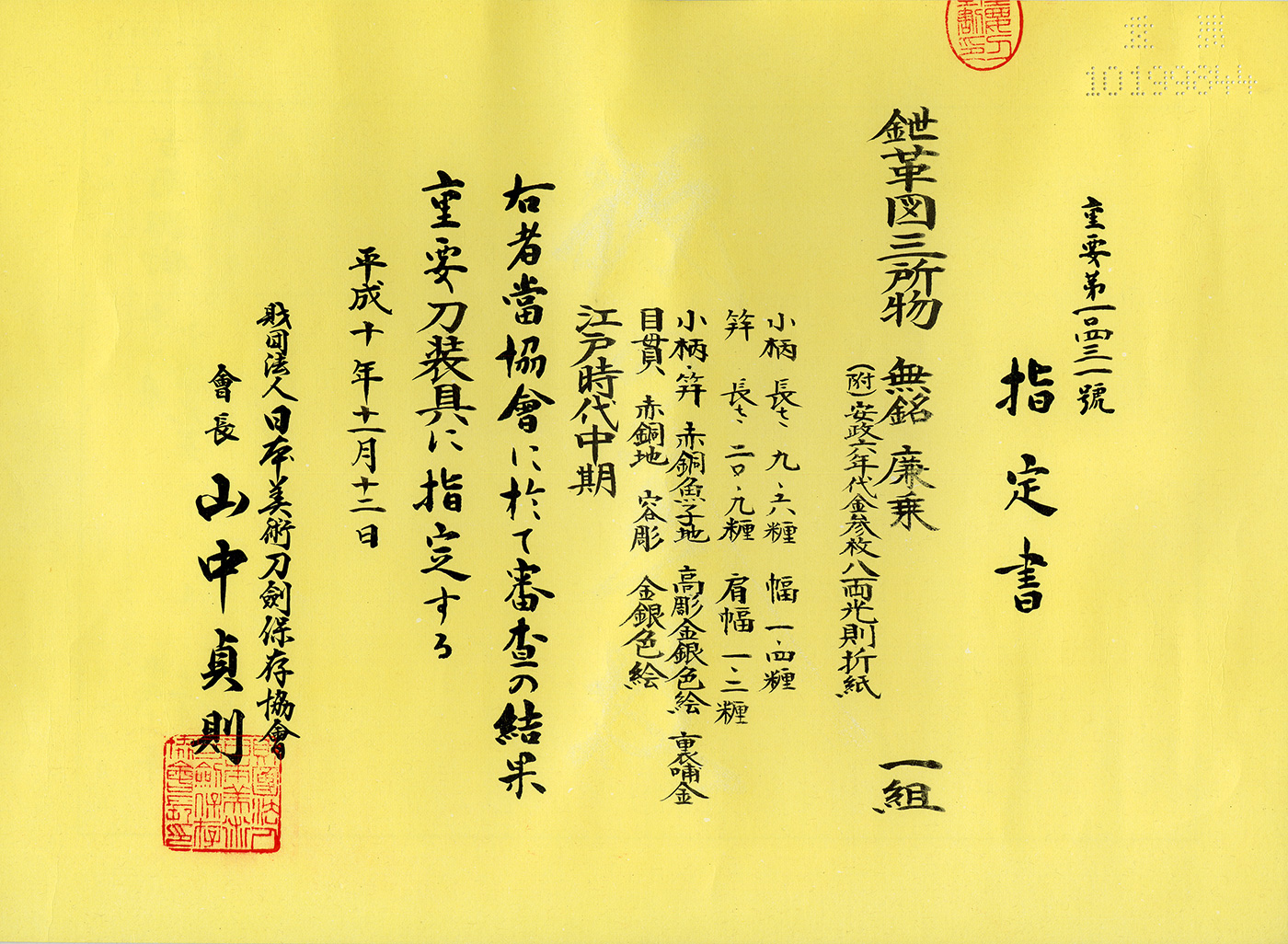
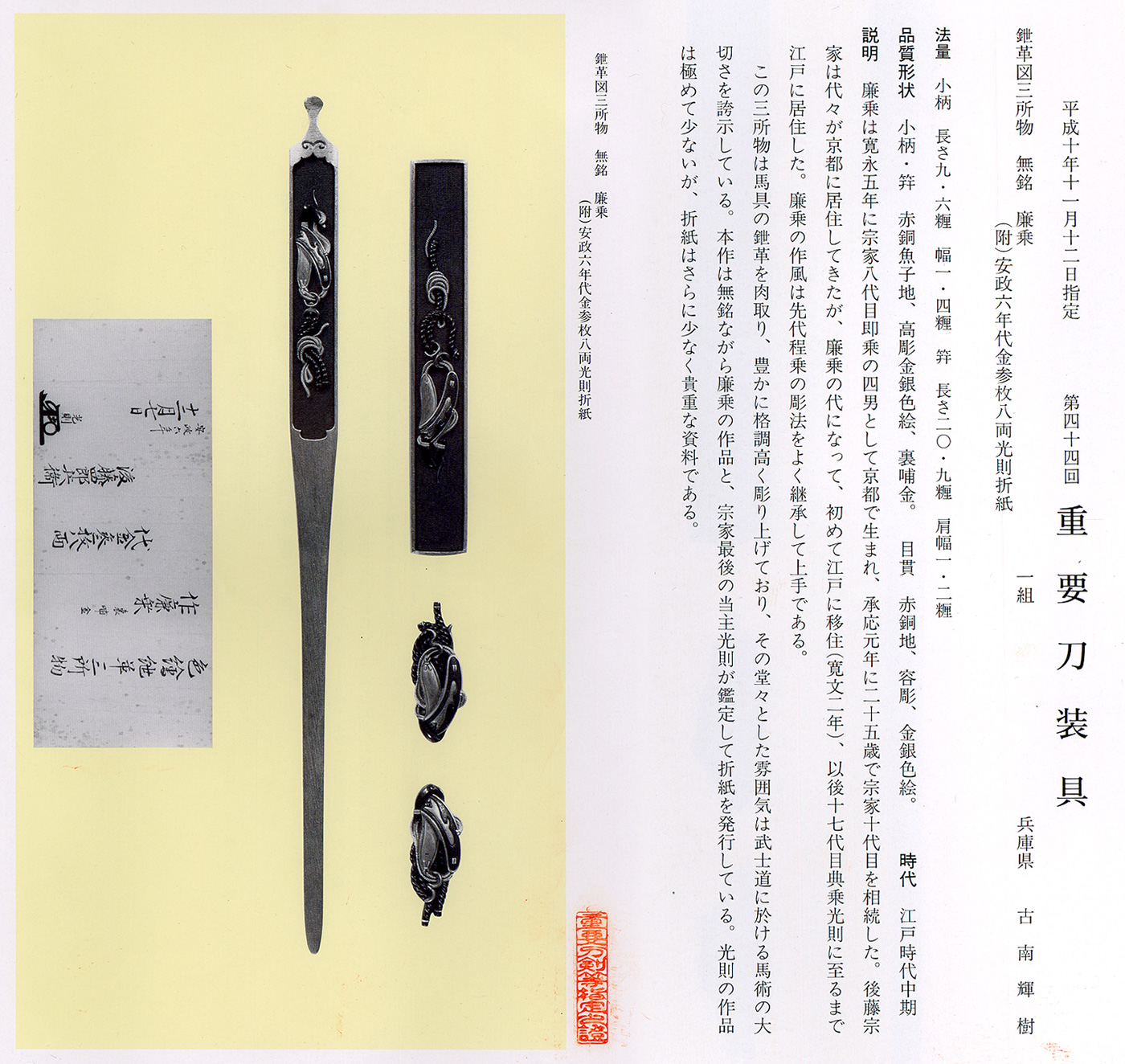
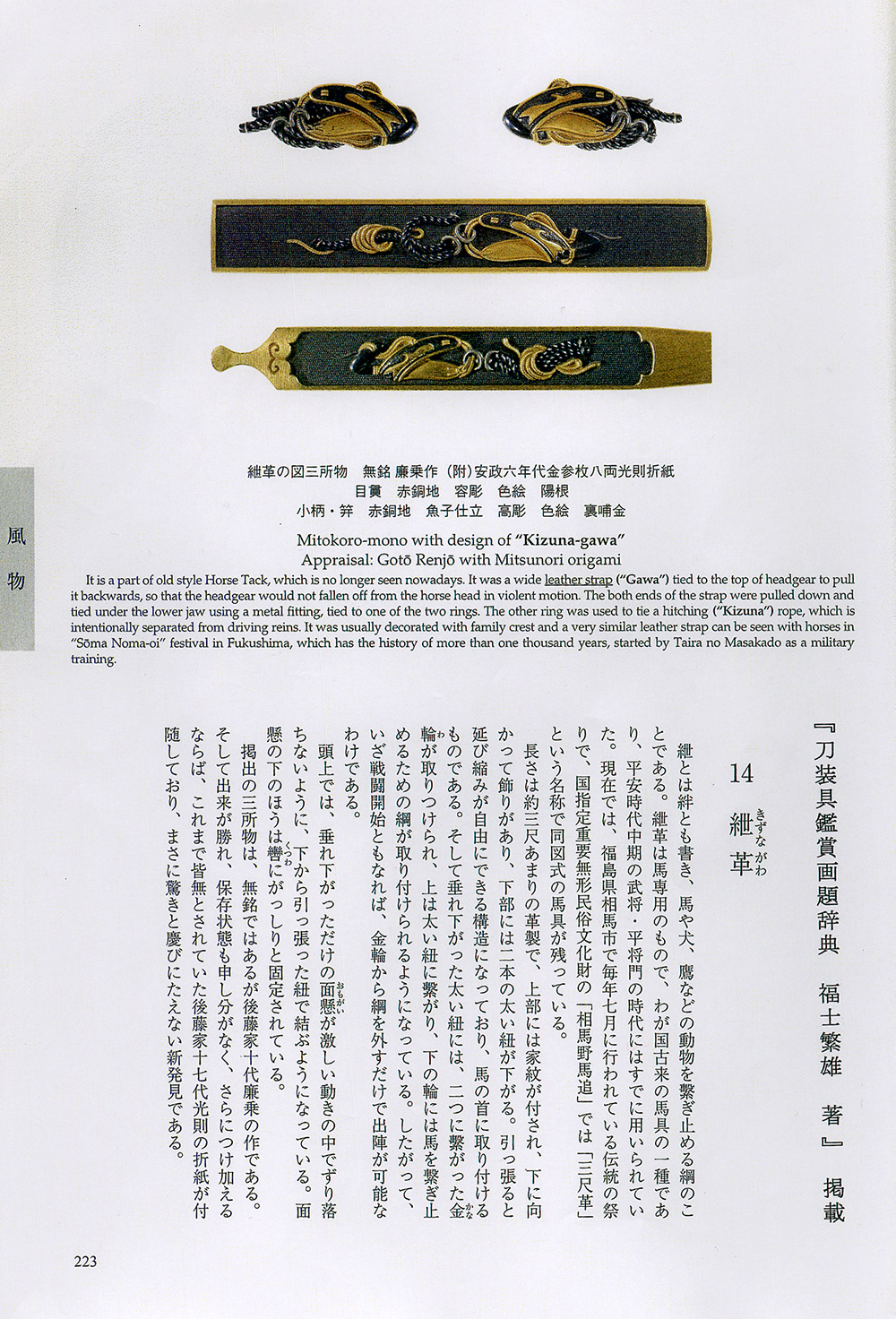
Set of Tosogu (Kōgai, Kozuka, Menuki): Kizukawa Motif (44th Juyo Tosogu)
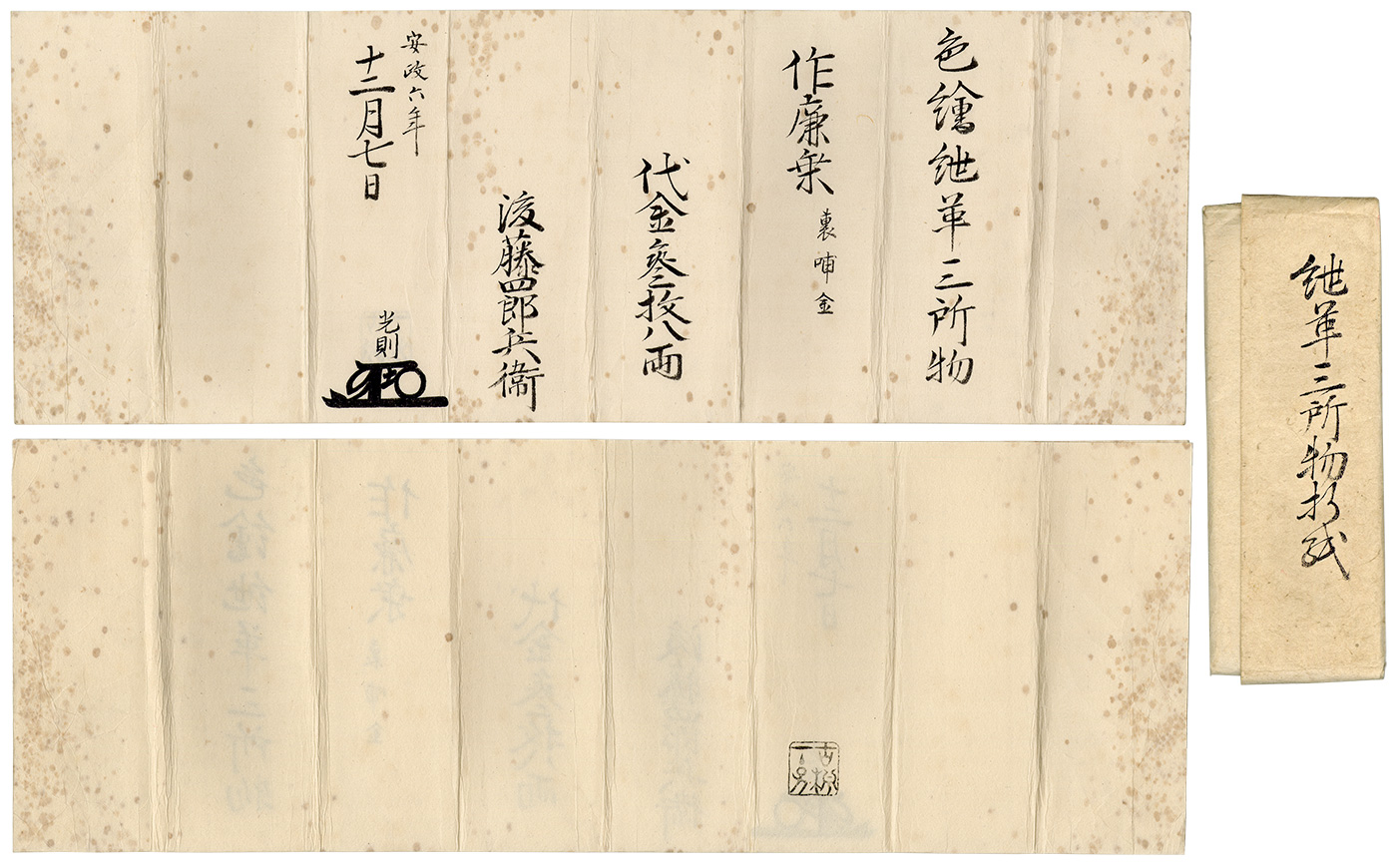
With Origami (Ansei 6, Appraised by Mitsunori, value: 3 Mai 8 Ryō)
Signature: Mumei (Unsigned – Attributed to Renjō
無銘(廉乗)
Dimensions:
Kōgai: 21.0 cm x 12.1 cm (8.27 in x 4.76 in)
Kozuka: 9.63 cm x 1.44 cm (3.79 in x 0.57 in)
Menuki:
1: 3.45 cm x 1.33 cm (1.36 in x 0.52 in)
2: 3.47 cm x 1.32 cm (1.37 in x 0.52 in)
Era: Edo Period
Features:Kōgai & Kozuka: Made of shakudō nanako-ji (surface), decorated with high-relief carving (takabori) and gold-silver inlay depicting kizukawa (horse harness leather straps).
Menuki: Carved and inlaid with gold and silver, featuring the same motif (kizukawa) on a shakudō base using katakiribori carving.
Description:
Renjō was born in Kyoto in 1628 (Kanei 5), the fourth son of Sōjō VIII. At the age of 25 in 1652 (Jōō 1), he succeeded as the 10th head of the Gotō main family. While the Gotō family had traditionally lived in Kyoto, during Renjō’s time (Kanbun 2), the family moved to Edo, where they remained until the 17th head, Tenjō Mitsunori.
Renjō’s work is a faithful continuation of his predecessors’ style and is known for its excellence.
This mitokoromono set features the kizukawa motif carved in full form and executed in a stately and elegant manner. It emphasizes the importance of equestrian arts in the code of the samurai (bushidō).
Although unsigned, this set is attributed to Renjō by the final Gotō head, Mitsunori, who issued a certificate (origami) for it. Works by Mitsunori are extremely rare, and his origami certificates are even rarer and valuable as historical documents.
Comes in a paulownia box
Includes appraisal certificate by Aoi Art
NBTHK Juyo Tōsōgu (44th)
Origami certificate included

Starting bid: ¥2,800,000
|
Auction started
2026/02/10 (Tue) 15:06 |
※ = Auto