
 日本語
日本語Bid History
Auction has expired
Auction Expired because there were no bids|
Auction started
2026/01/30 (Fri) 10:05 |
※ = Auto
Ordering Number: AS25668
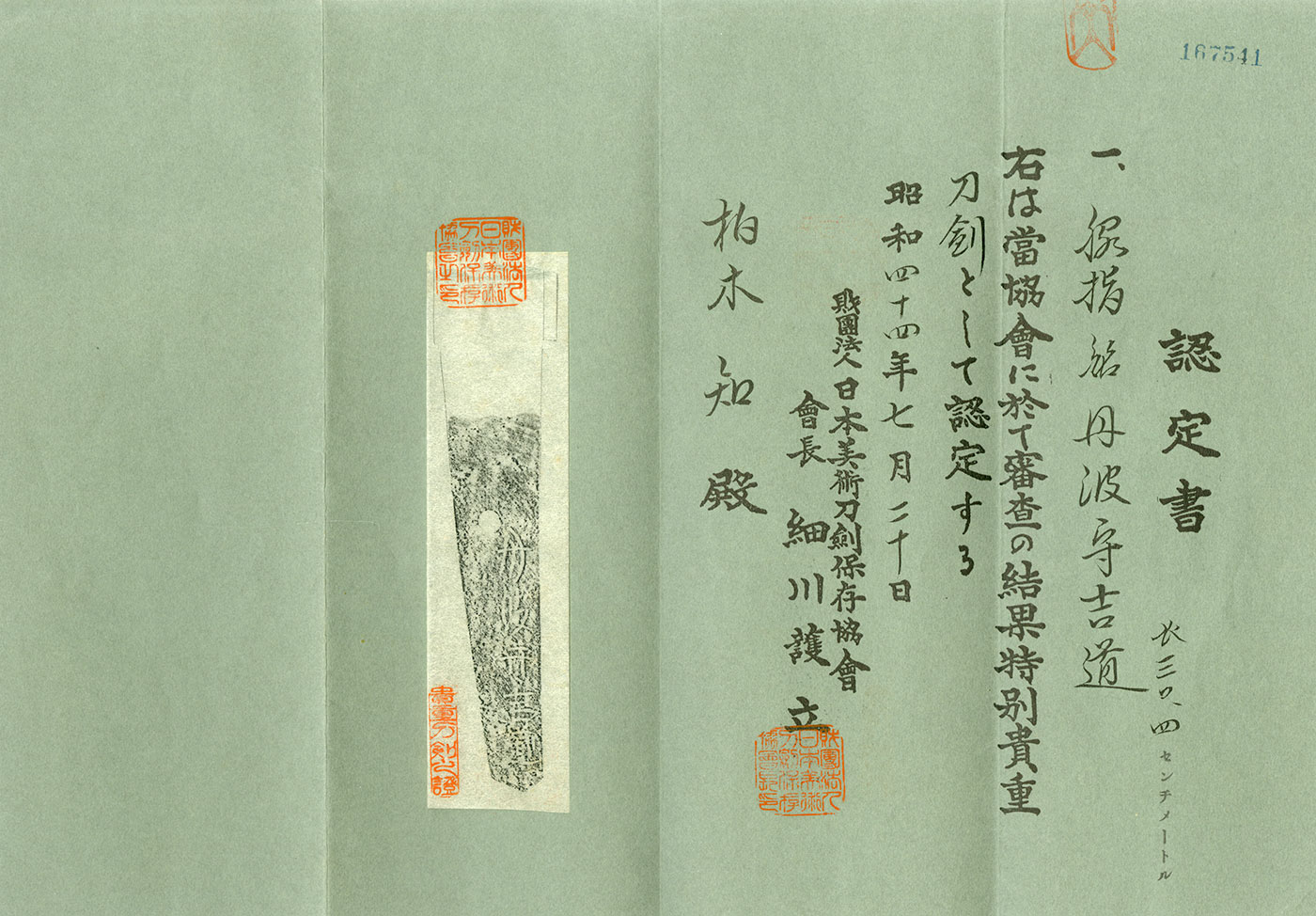
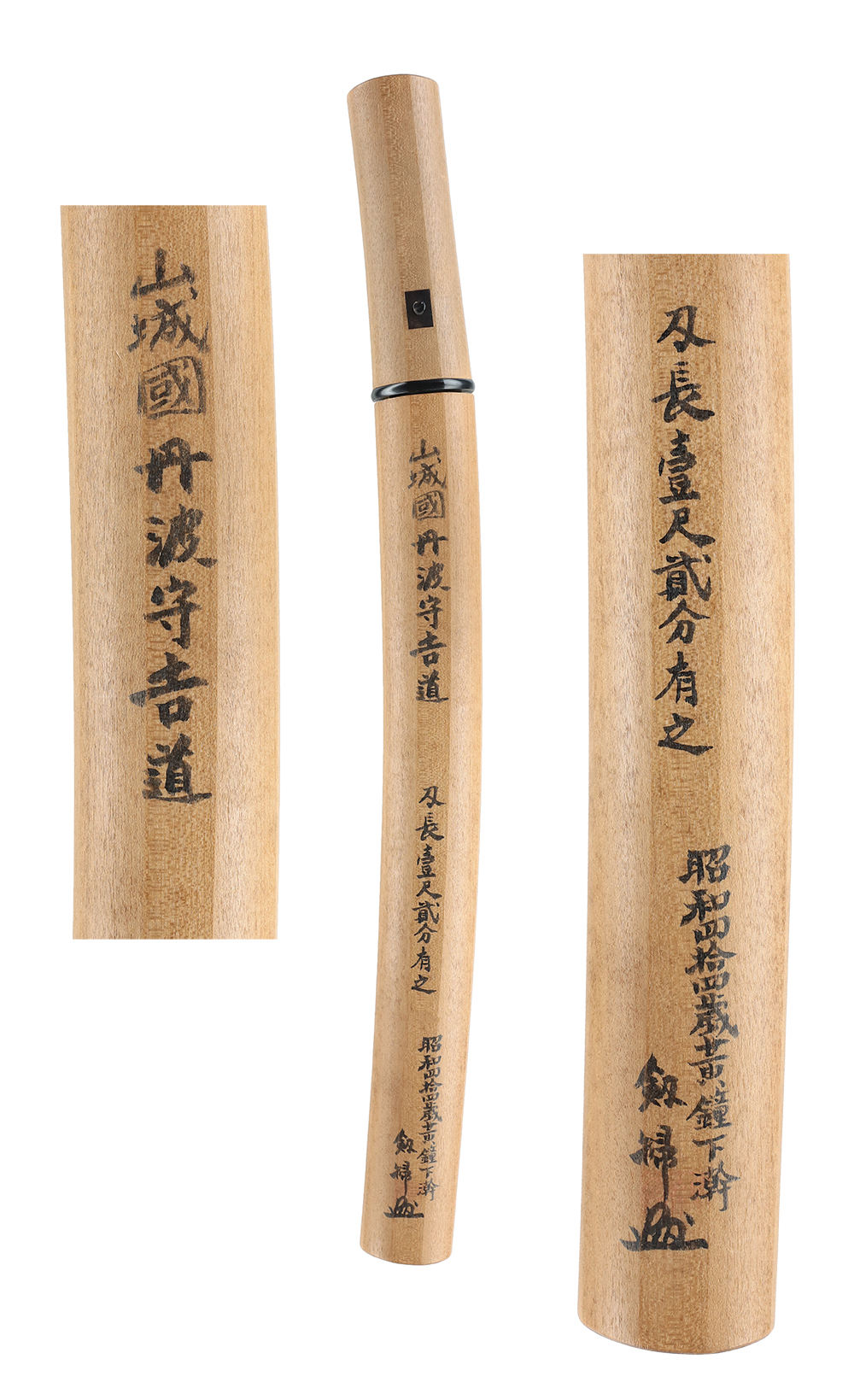
Wakizashi in Shirasaya(NBTHK Tokubetsu Hozon Token)
Signature: Tanba no Kami Yoshimichi (Osaka, 3rd Generation)
丹羽守吉道(大阪三代)
We divide 4 sections for each sword as Saijyo Saku, Jyojyo Saku, Jyo Saku and Regular Saku.
This work is ranked as Jyojyo Saku for Tanba no Kami Yoshimichi (3rd Gen, Osaka).
Habaki: Gold-plated double
Blade Length: 30.2 cm (11.89 in)
Curvature: 0.7 cm (0.28 in)
Mekugi Hole: 1
Width at Base (Motohaba): 3.05 cm (1.20 in)
Thickness of rim (Kasane): 0.59 cm (0.23 in)
Sword Weight: 270 g
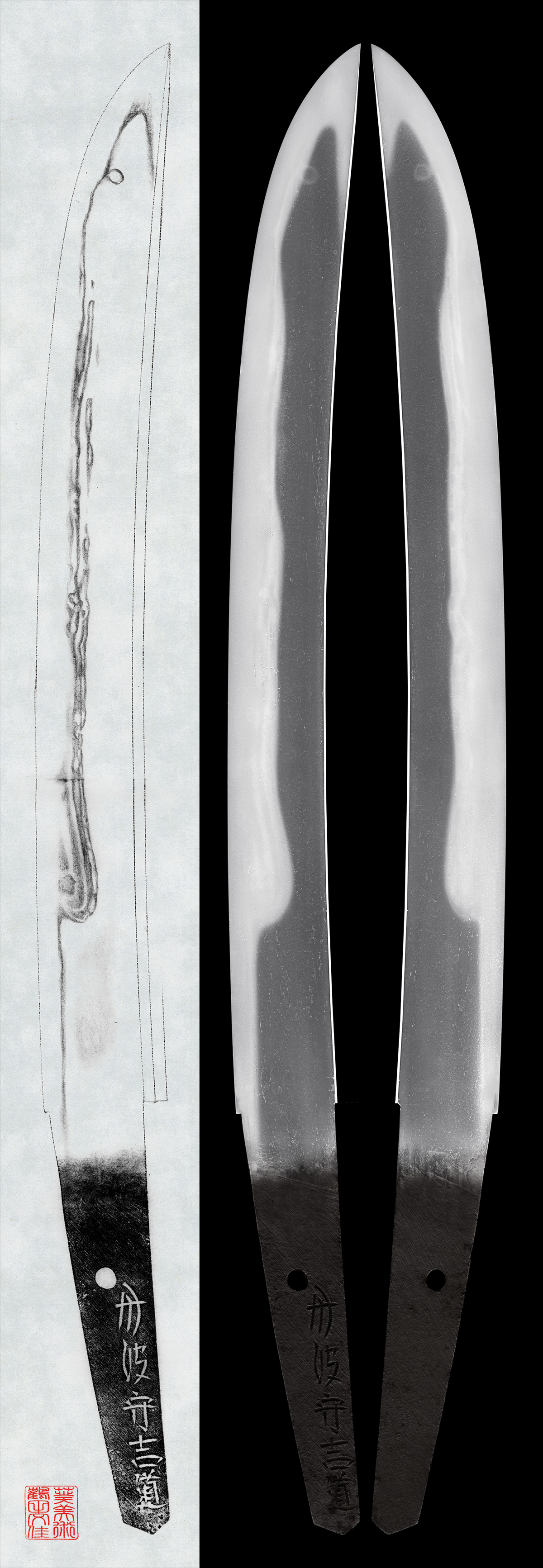
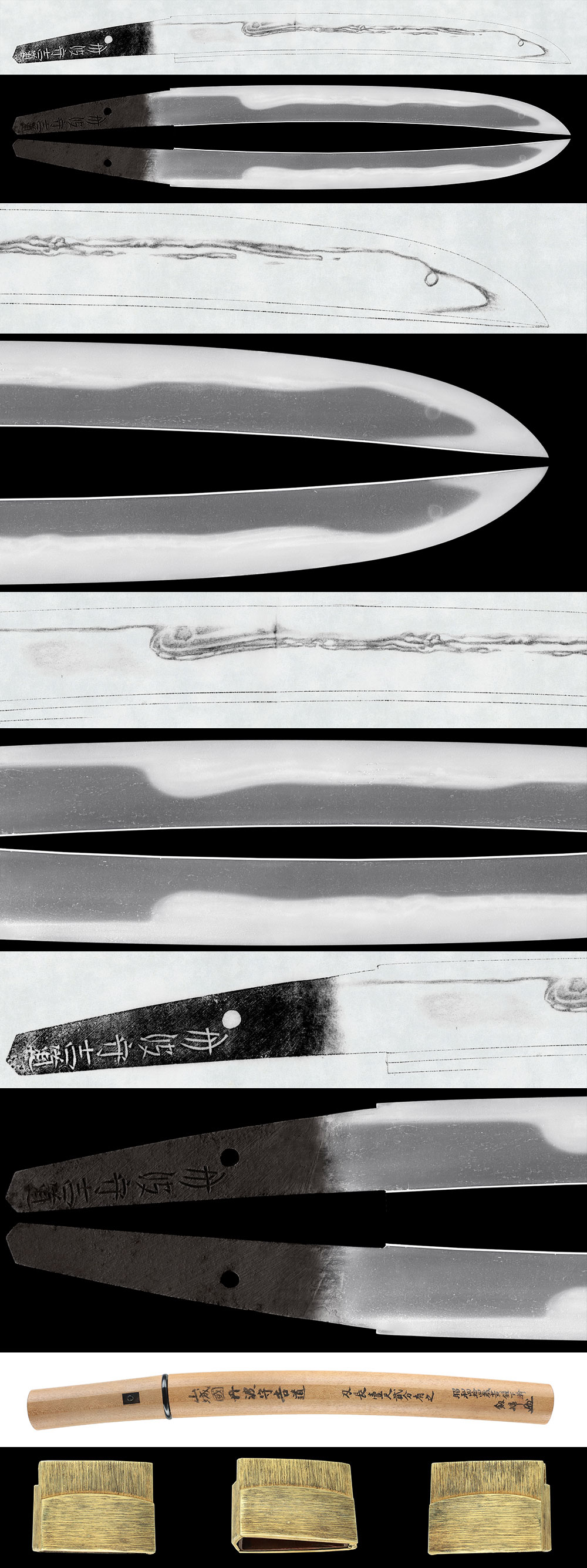
Shape: The blade has a wide body with a noticeable sori near the tip.
Jigane: Well-forged ko-itame hada with visible grain pattern.
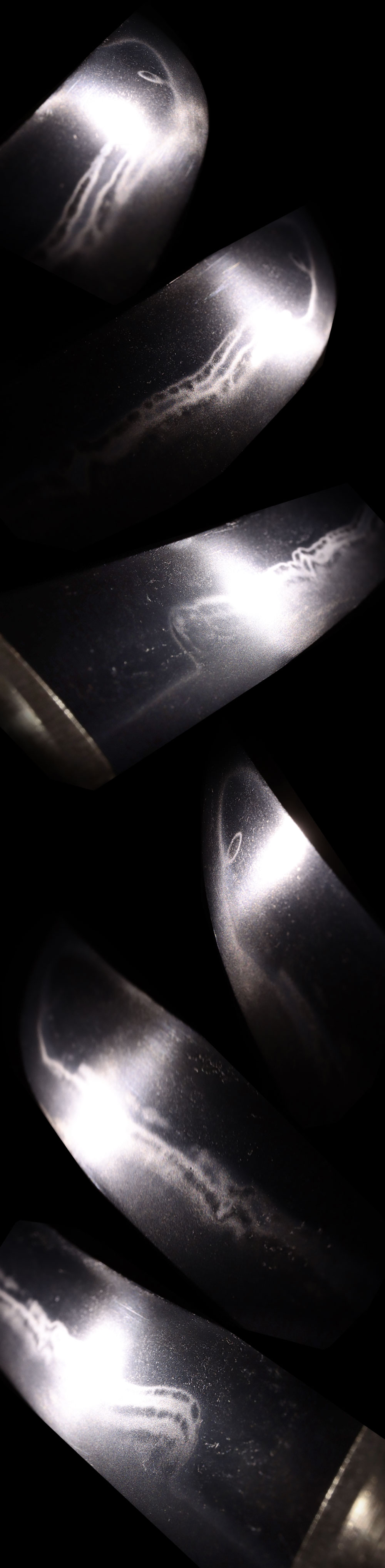
Hamon: The hamon starts as suguha near the hamachi and transitions into a typical sudareba (bamboo blind pattern).
Features: Tanba no Kami Yoshimichi originated in Kyoto and later branched into Osaka, resulting in two distinct schools: Kyoto Tanba and Osaka Tanba.
The sudareba hamon was first developed by the Kyoto 1st Generation and later adopted by both Kyoto and Osaka lines.
Osaka Tanba Yoshimichi often produced well-ordered sudareba, which appears to have been highly popular at the time.
This particular blade features circular patterns within the hamon at both sides near the boshi—a characteristic technique often used by the 3rd Generation Osaka Yoshimichi.
If these round marks are present, the blade can be confidently attributed to the 3rd Generation.
However, please note that not all works with such traits are listed in the Shinto Taikan, so caution is advised.
Aoi Art’s Comment: During this period, the popularity of Japanese swords declined, making them harder to sell.
To adapt, smiths began innovating to attract more interest—introducing gold inlays, dotōba (wavelike hamon), deep nioiguchi, sudareba, and masame-hada, among other features.
Such decorative and distinctive styles helped the sword evolve into an object of appreciation rather than just a weapon.
This shift coincided with the Genroku era, a time when merchant culture flourished.
As Jōruri theater, Kabuki, and other cultural arts thrived, samurai culture began to wane.
It is likely that sudareba became a favored style in both Osaka and Kyoto during this cultural transformation.
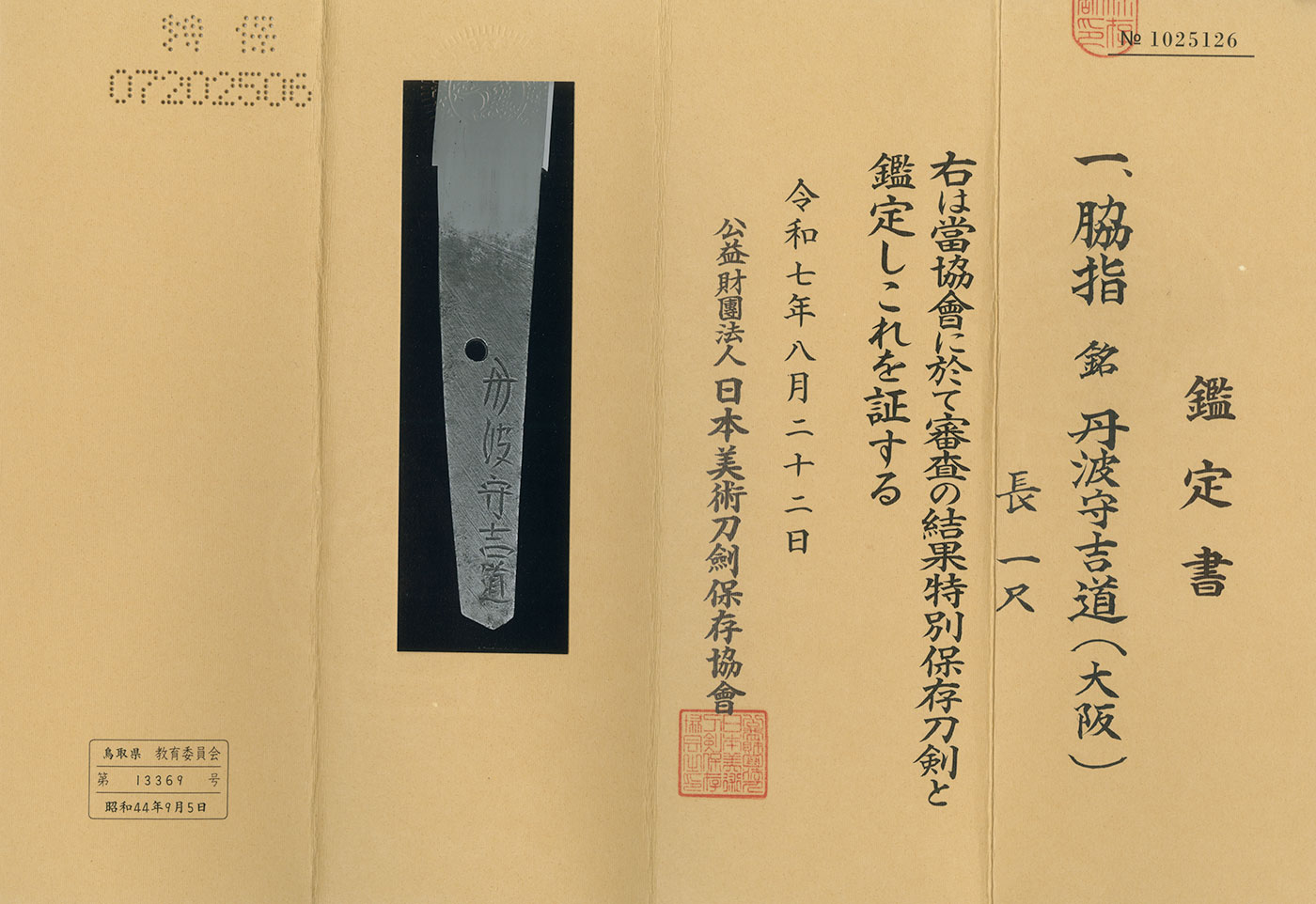
NBTHK Tokubetsu Hozon Token
Aoi Art estimation paper
Whole Oshigata
*Shipping fee is not included in the price.

Auction Expired
Auction Expired because there were no bids
Auction has expired
Auction Expired because there were no bids|
Auction started
2026/01/30 (Fri) 10:05 |
※ = Auto