
 日本語
日本語Bid History
Auction has expired
Auction Expired because there were no bids|
Auction started
2025/12/20 (Sat) 10:39 |
※ = Auto
Ordering number:AS24392
Wakizashi: Shirasaya with Koshirae (NBTHK Hozon Token)
Signature: Oshu Aizu Ju Masanaga (3rd generation)
奥州会津住政長(3代)
Shinto: Jyo Saku: Mutsu
We divide 4 sections for each sword as Saijyo Saku, Jyojyo Saku, Jyo Saku and Regular Saku.
This work is ranked as Jyo Saku.
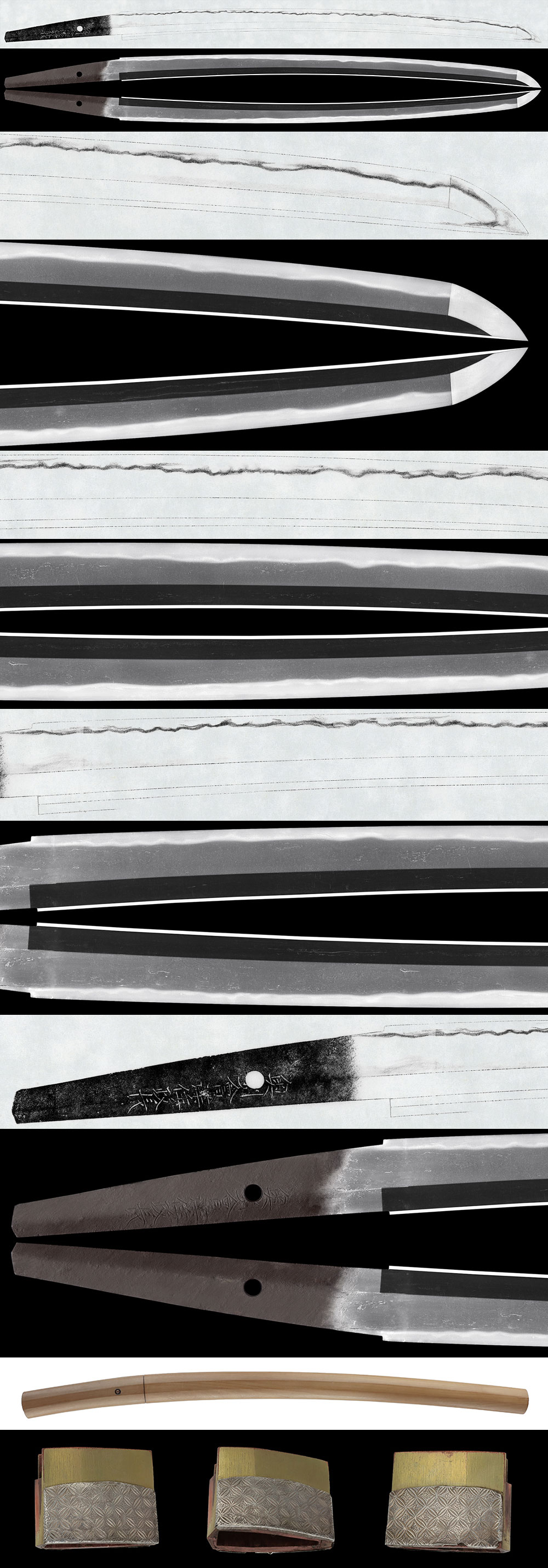
Habaki: Double-layered gold/silver-covered habaki
Blade Length: 54.5 cm (21.46 in)
Curvature: 1.2 cm (0.47 in)
Mekugi Hole: 1
Width at Base (Motohaba): 3.06 cm (1.20 in)
Width at Tip (Sakihaba): 2.07 cm (0.81 in)
Thickness of rim (Kasane): 0.69 cm (0.27 in)
Sword Weight: 550 g
Era: Edo period, Shotoku era (1711)
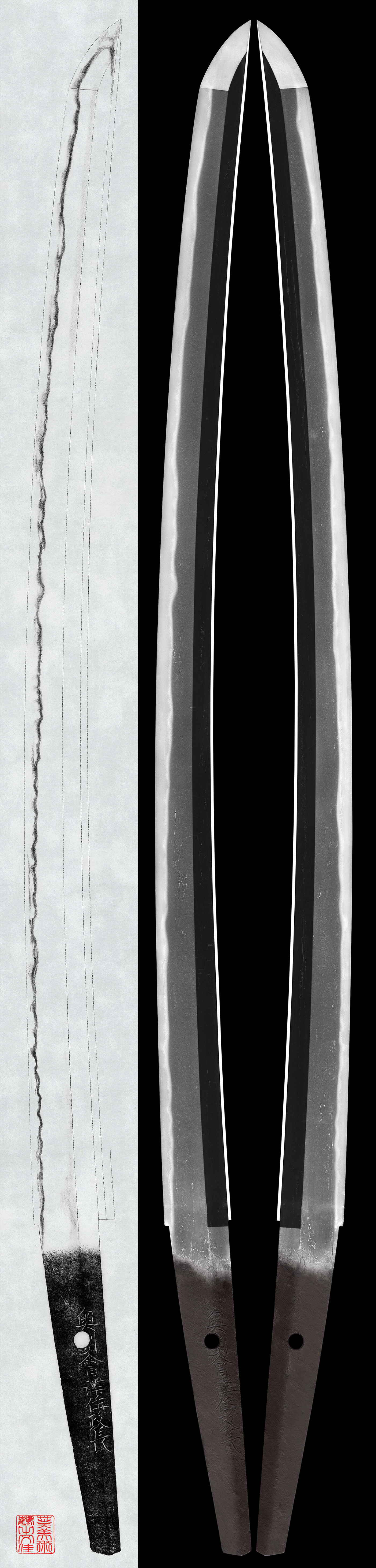
Shape: The blade is wide with a strong thickness and slightly deep curvature, forming a robust work with an extended kissaki.
Although there is a forged area on the upper part of the tang (nakago) on the left side, the overall impression is dignified and solid.
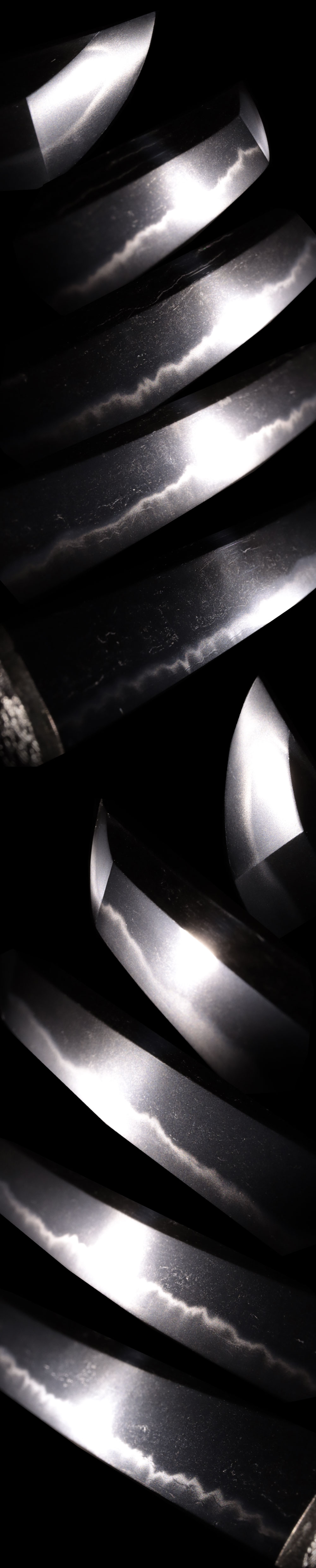
Jigane: Ko-itame hada is well forged, with ji-nie attached, and the grain pattern is clearly visible and beautiful.
Hamon: The hamon is made in nie-deki, beginning with gunome-midare from the hamachi, featuring sunagashi and kinsuji within the ha.
It turns back boldly and beautifully toward the boshi.
Features:
Oshu Aizu Ju Masanaga was the 3rd generation, commonly known as Toshiro.
He passed away in 1726.
During a time when demand for swords was declining, he focused on creating beautiful works.
As a result, this piece also features a beautiful hamon with kinsuji and sunagashi.
Koshirae:
Tsuba: Shakudo nanako ground with a high-relief carving of a raptor, decorated with gold inlay.
Menuki: Carving of dragonflies.
Fuchi: Iron base with a plant motif and gold iroe.
Kashira: Horn.
Saya (Scabbard): Red and black lacquered saya.
Aoi Art’s Comment: This work has a bright nioiguchi and features striking kinsuji and sunagashi.
It is a wide and solid blade for its length, with beautifully flowing masame-hada jigane.
As a mid-Edo period piece, it reflects the era when swordsmiths dedicated themselves to producing beautiful works.
Historical Background: The year 1711, during the Shotoku era, falls in the mid-Edo period.
During this time, demand for swords declined, and swordsmiths sought to improve their craftsmanship through elegant hamon and elaborate carvings.
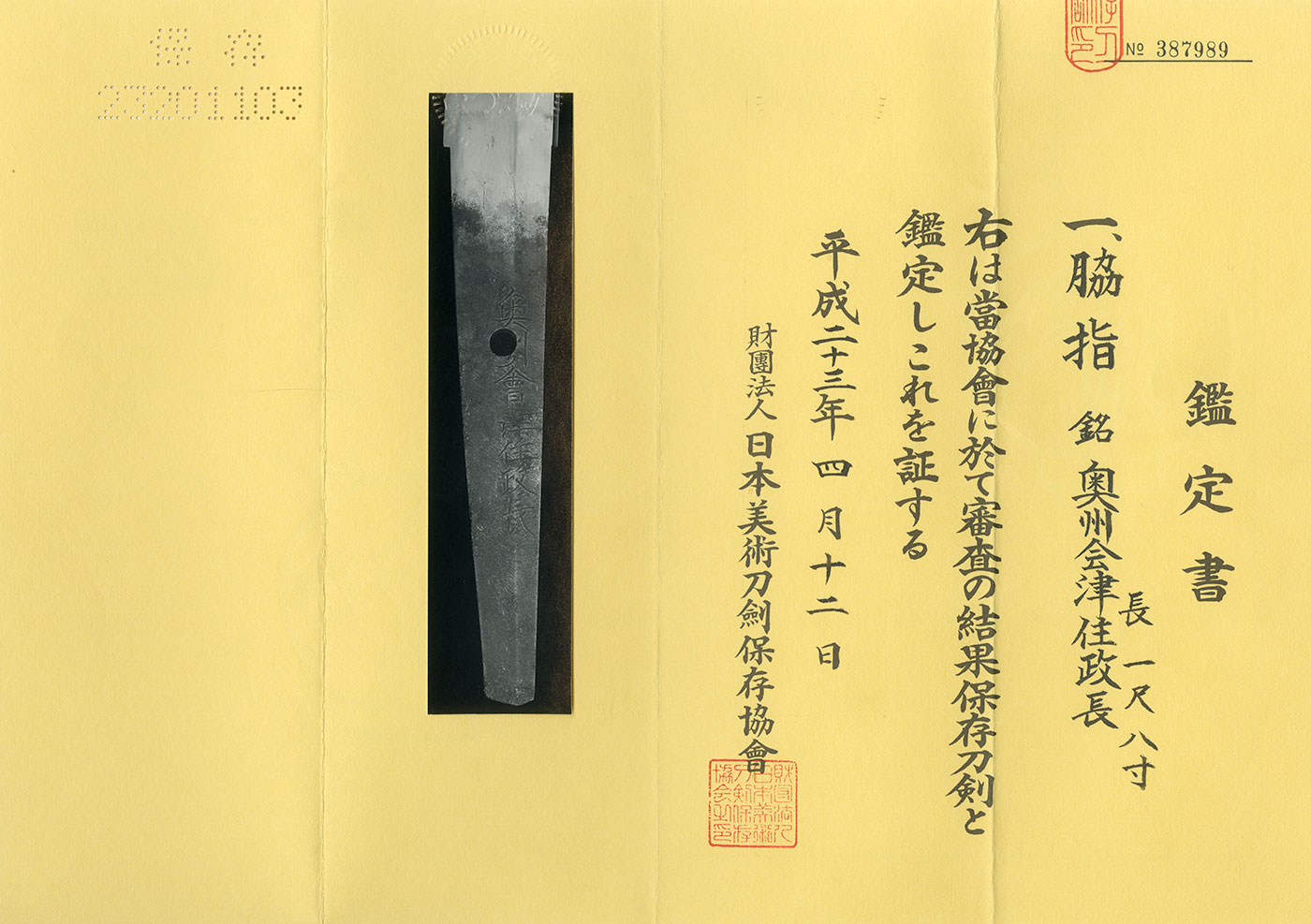
NBTHK Hozon Token
Aoi Art estimation paper
Whole Oshigata
Please note: the price does not include the shipping fees.



Auction Expired
Auction Expired because there were no bids
Auction has expired
Auction Expired because there were no bids|
Auction started
2025/12/20 (Sat) 10:39 |
※ = Auto