
 日本語
日本語Bid History
Auction has expired
Auction Expired because there were no bids|
Auction started
2025/12/10 (Wed) 11:13 |
※ = Auto
Katana in Shirasaya with Koshirae (NBTHK Tokubetsu Hozon Token) (NBTHK Tokubetsu Kicho Token)
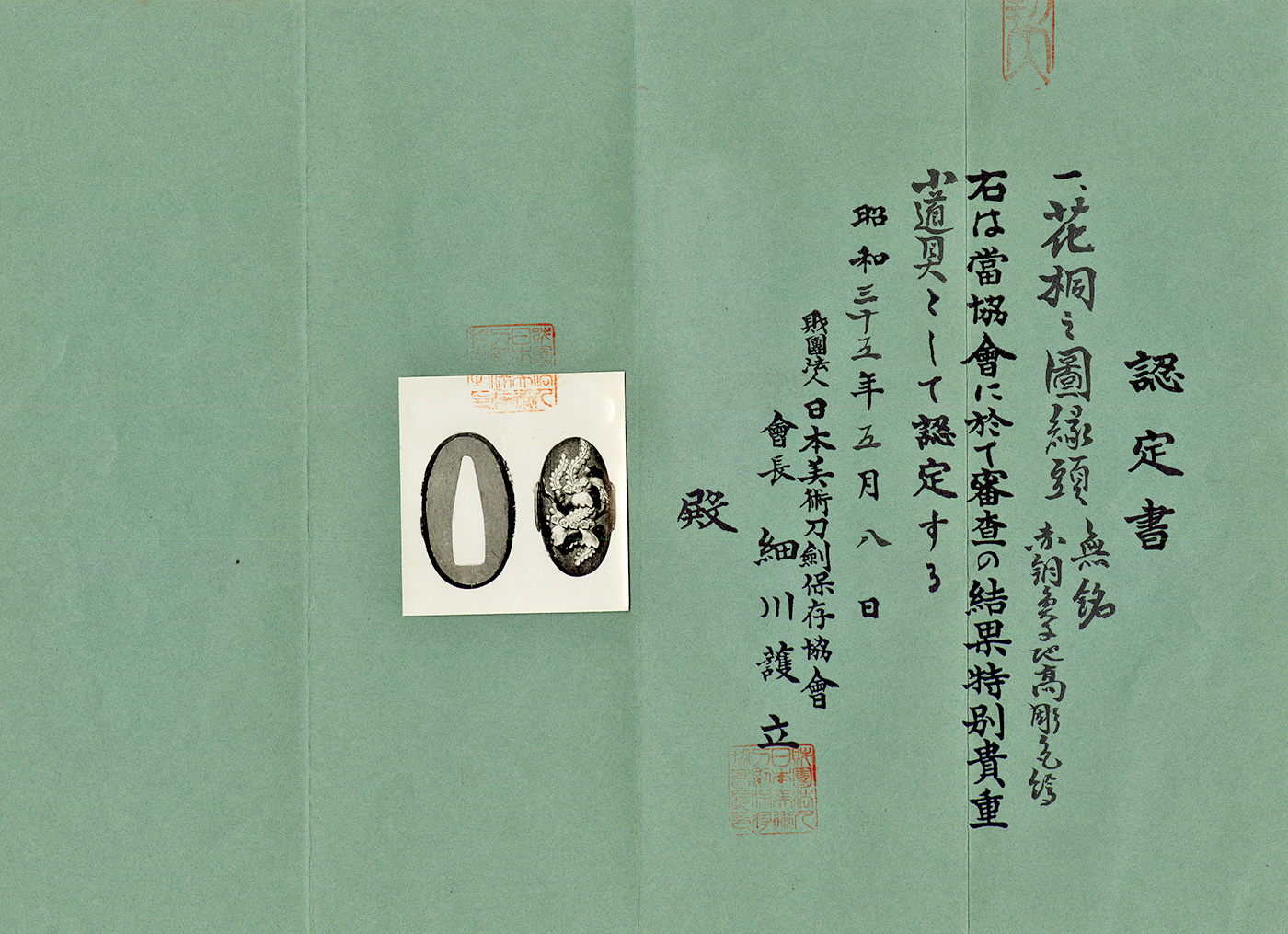
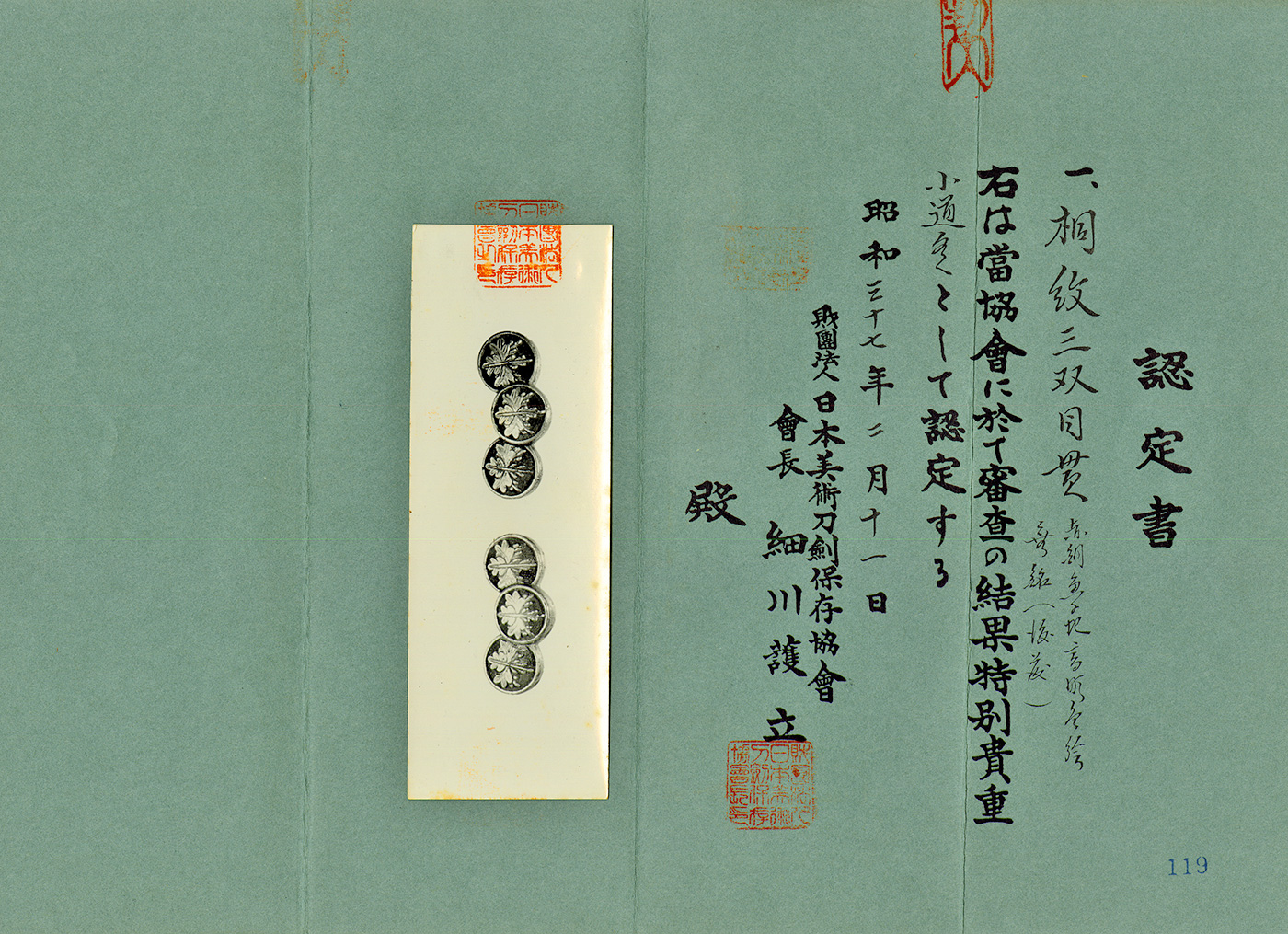
Koshirae: (NBTHK Tokubetsu Kicho Kodogu), Tsuba Fuchikashira and Menuki: (NBTHK Tokubetsu Kicho Kodogu)
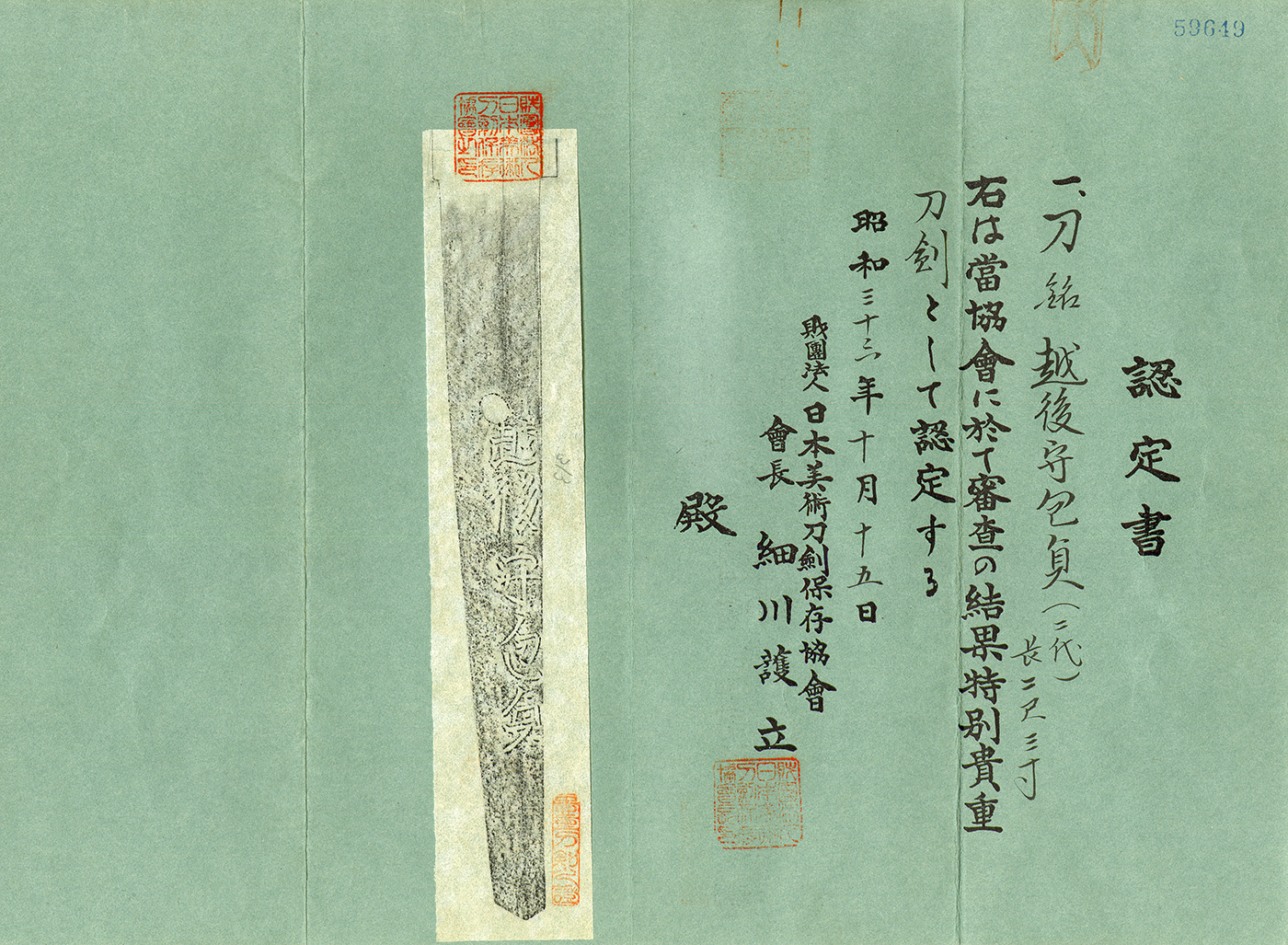
Signature: Echigo Kami Kanesada 越後守包貞
We divide 4 sections for each sword as Saijyo Saku, Jyojyo Saku, Jyo Saku and Regular Saku.
This piece is ranked as Jyojyo Saku among the works of Echigo no Kami Kanesada.
Habaki: Silver foiled single Habaki.
Blade Length: 69.8 cm (27.48 in).
Curvature: 1.0 cm (0.39 in).
Mekugi Hole: 1.
Width at Base (Motohaba): 3.14 cm (1.24 in).
Width at Tip (Sakihaba): 2.10 cm (0.83 in).
Thickness of rim (Kasane): 0.74 cm (0.29 in).
Sword Weight: 710 grams.
Shape: The blade has standard width and thickness, with a slightly deeper curvature and an extended kissaki, resulting in a well-balanced shape.
Jigane: The steel has ji-nie and is well-forged.
Hamon: Starts with a straight hamon from the hamachi, then transitions into gunome-midare. The nioiguchi is deep, and the blade shows a refined jigane. The boshi turns back in a round shape. From the hamachi, the straight hamon continues, with a deep nioiguchi, indicating a well-made piece.
Features: Echigo no Kami Kanesada imitated the style of the second-generation Sukehira, producing gunome-midare.
While Sukehira’s hamon features gentle notare-midare, Kanesada’s works are somewhat more vigorous, often showing deep nioiguchi and sunagashi within the blade.
Koshirae: (NBTHK Tokubetsu Kicho Kodogu)
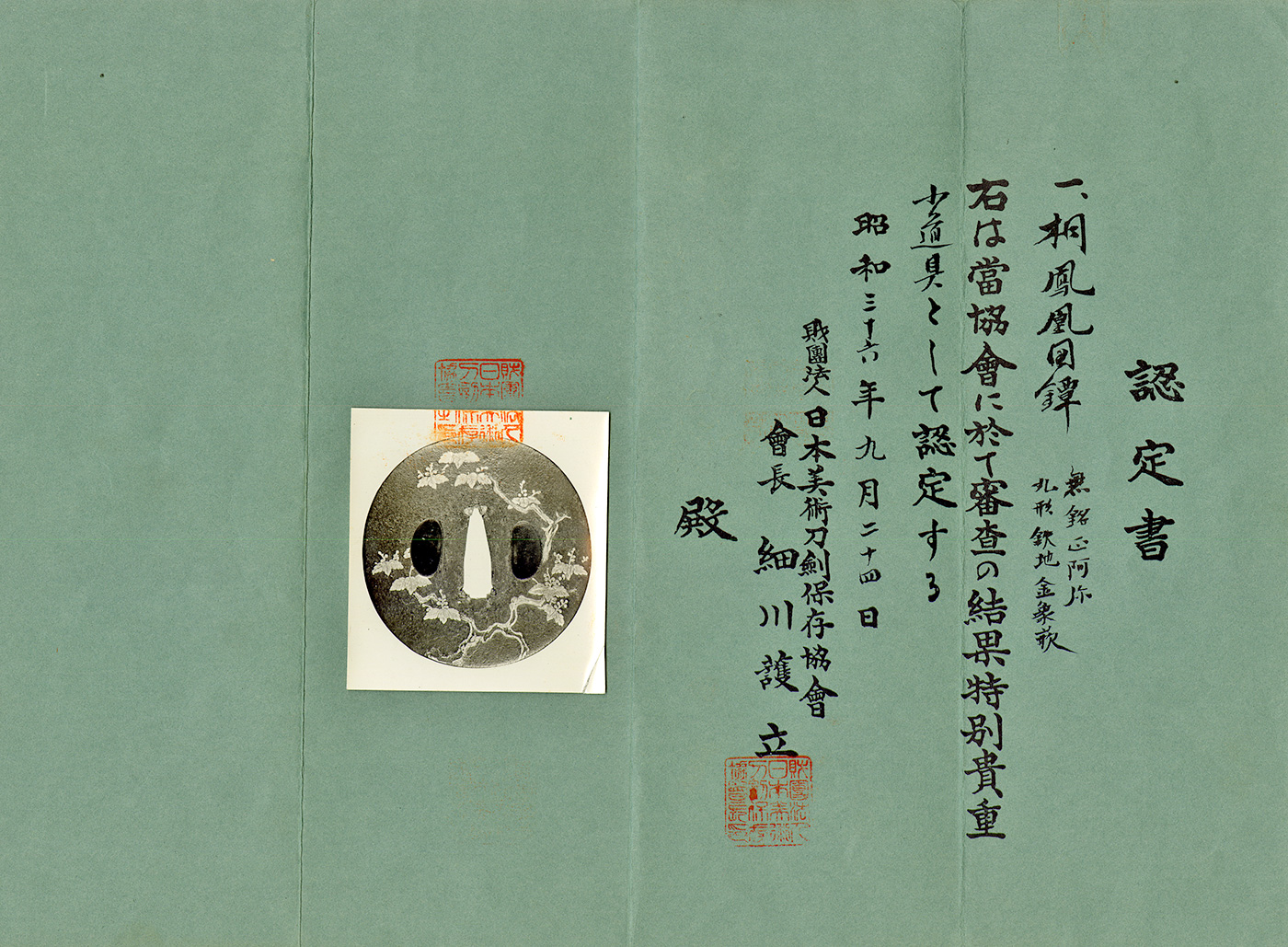
Tsuba: Round iron tsuba with engraved paulownia crest, decorated with gold and silver inlay.
Unsigned (Shoami) (NBTHK Tokubetsu Kicho Kodogu)
Fuchikashira: Shakudo nanako ground with engraved paulownia crest, decorated with gold inlay.
Unsigned (NBTHK Tokubetsu Kicho Kodogu)
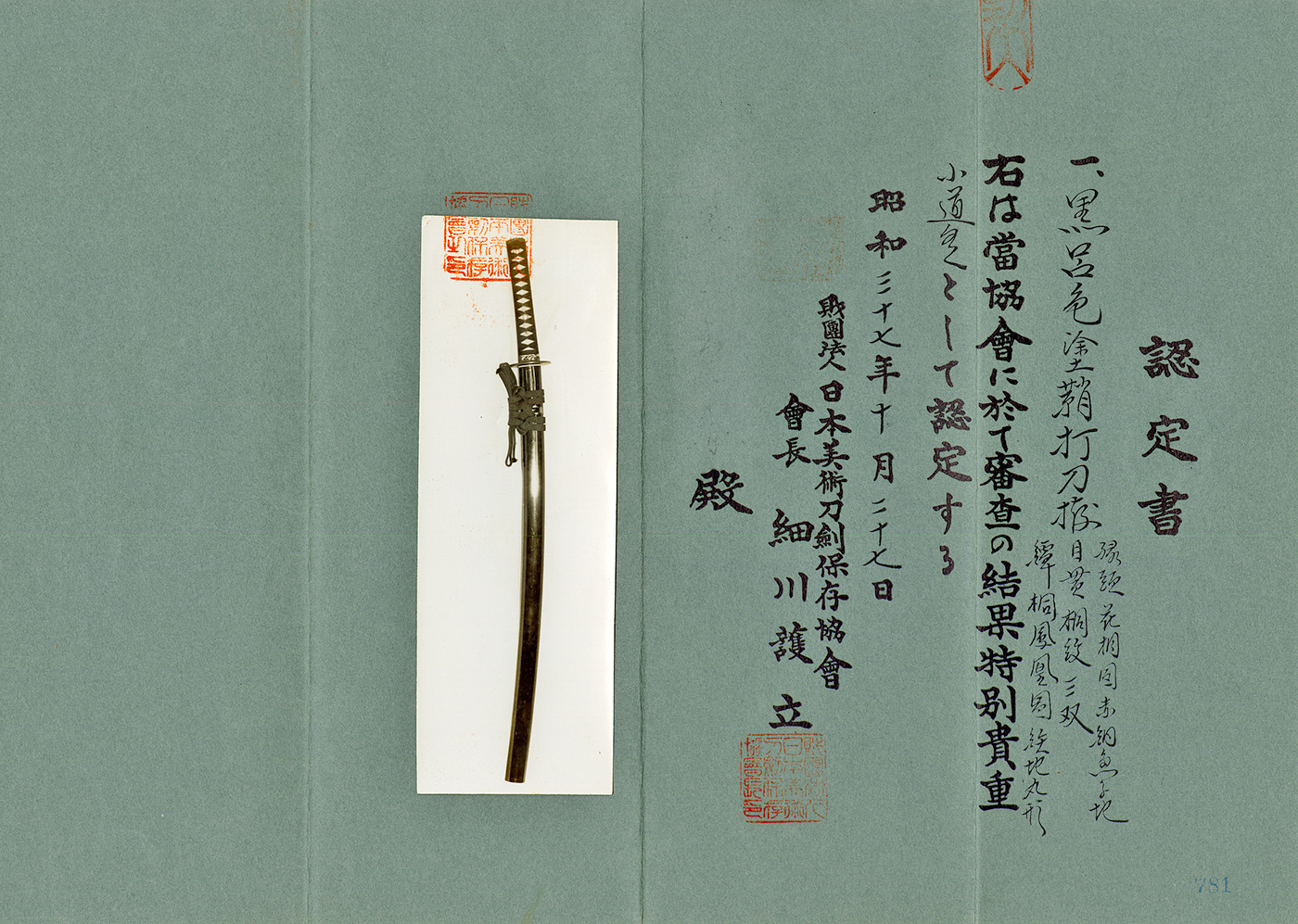
Saya (Scabbard): Black lacquer saya.
Menuki: Shakudo with engraved paulownia crest, decorated with gold inlay. Unsigned (Goto) (NBTHK Tokubetsu Kicho Kodogu)
Aoi Art’s Comment: This is a robust piece featuring a deep nioiguchi and a clear notare-midare hamon.
Similar works were also produced by Tsuda Echizen no Kami Sukehira.
Historical Background: During the Edo period, sword production declined significantly.
Samurai took on the role of regular officials, attending and leaving the castle in formal attire.
It became customary to carry both a katana and wakizashi.
As a result, tantō were no longer considered necessary, and the daishō (katana and wakizashi pair) became standard.
Because of this, the production of tantō significantly decreased from the early to late Edo period, only to rise again toward the end of the era.
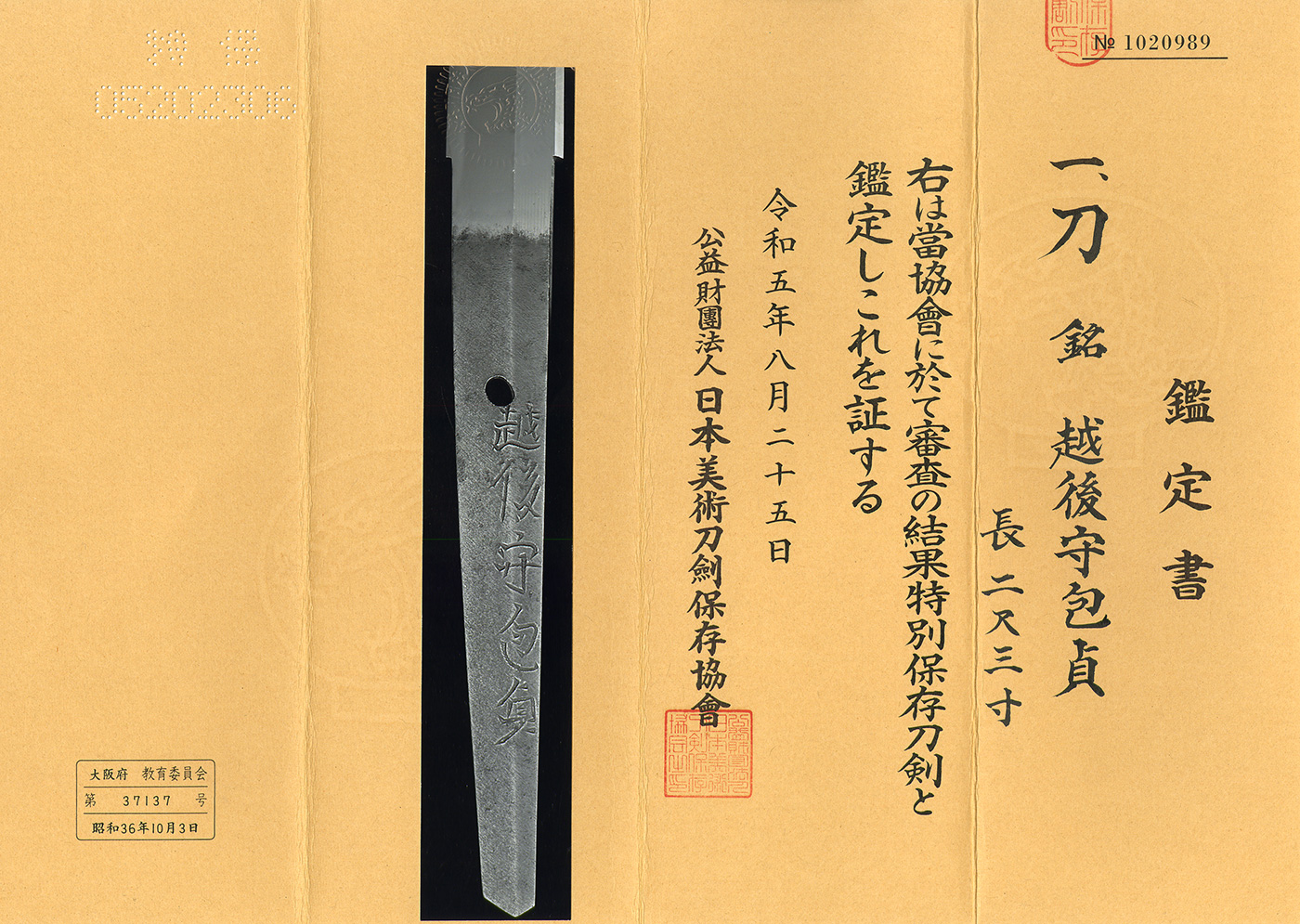
NBTHK Tokubetsu Hozon Certificate
NBTHK Tokubetsu Kicho Certificate
NBTHK Tokubetsu Kicho Kodogu Certificate for Koshirae, Tsuba, Fuchikashira and Menuki
Aoi Art estimation paper: Whole Oshigata




Auction Expired
Auction Expired because there were no bids
Auction has expired
Auction Expired because there were no bids|
Auction started
2025/12/10 (Wed) 11:13 |
※ = Auto