
 日本語
Bid History
|
mrtierney50
2026/11/15 (Sun) 11:21 |
¥2,800,000 |
|
Auction started
2026/11/15 (Sun) 09:41 |
|
※ = Auto
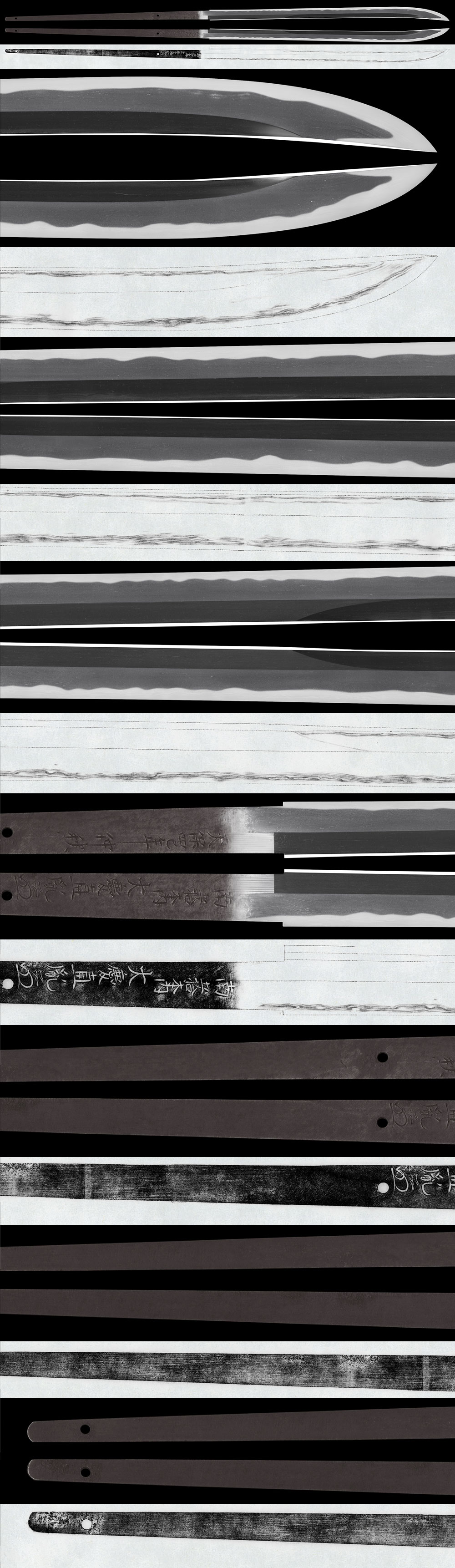
Naginata in Shirasaya with Koshirae (NBTHK Tokubetsu Hozon Token)
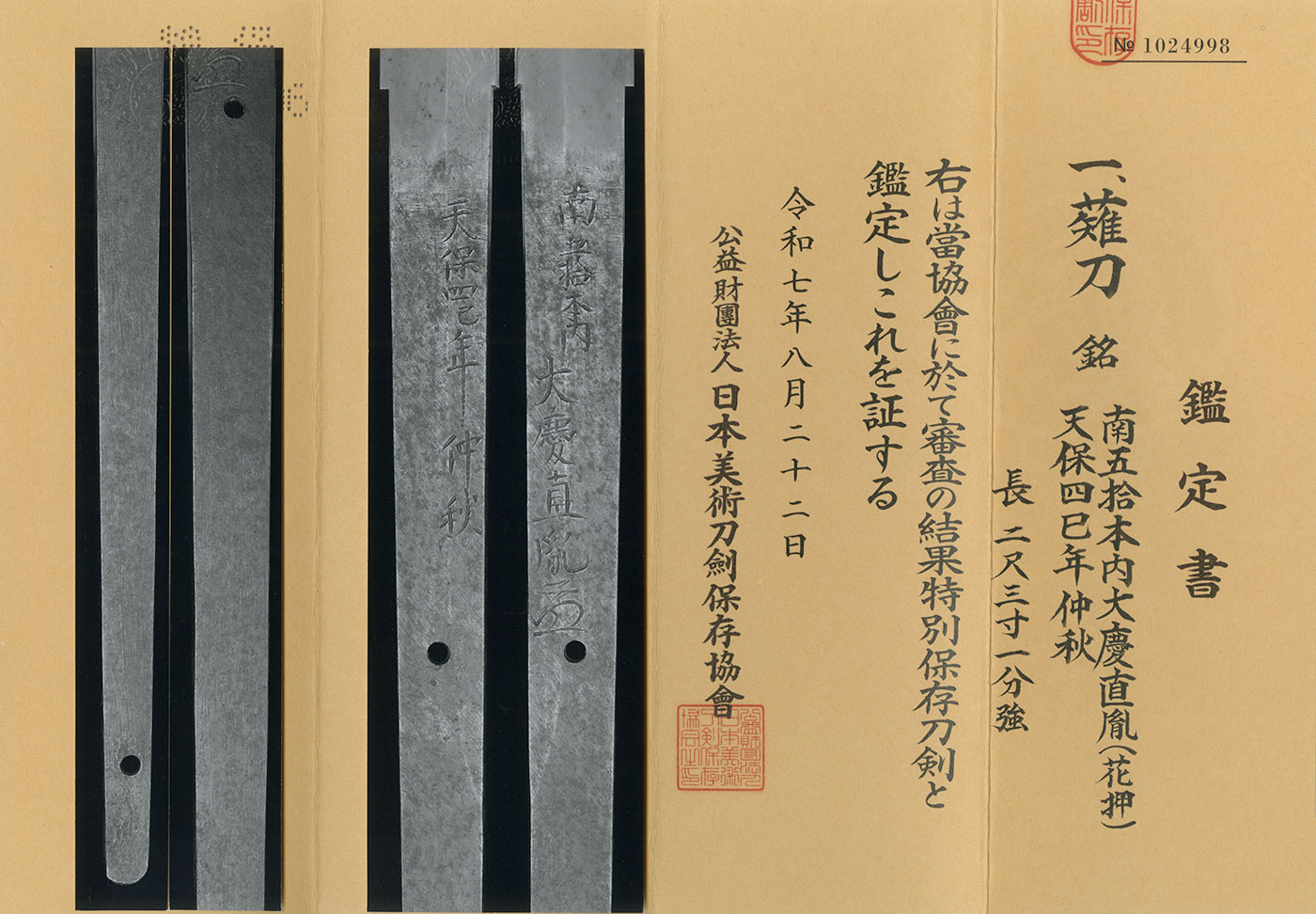
Signature: Minami Gojippon no Uchi Taikei Naotane (Kao).
Dated mid-autumn 1833.
南五拾本内大慶直胤(花押)
天保四巳年仲秋
Shinshinto: Saijyo Saku: Musashi Province
(We divide 4 sections for each sword as Saijyo Saku, Jyojyo Saku, Jyo Saku and Regular Saku).
This blade is ranked as Jyojyo Saku among the works of Minami Gojippon no Uchi Taikei Naotane.
Habaki: Single copper habaki.
Blade Length: 66.4 cm (26.14 in).
Curvature: 2.1 cm (0.83 in).
Mekugi Hole: 2.
Width at Base (Motohaba): 3.09 cm (1.22 in).
Width at Tip: 3.17 cm (1.25 in).
Thickness of rim (Kasane): 0.76 cm (0.30 in).
Sword Weight: 1,240 g.
Overall Length of Shirasaya: Approximately 136 cm (53.54 in).
Era: Edo period, 1833.
Shape: A naginata with a particularly long blade.
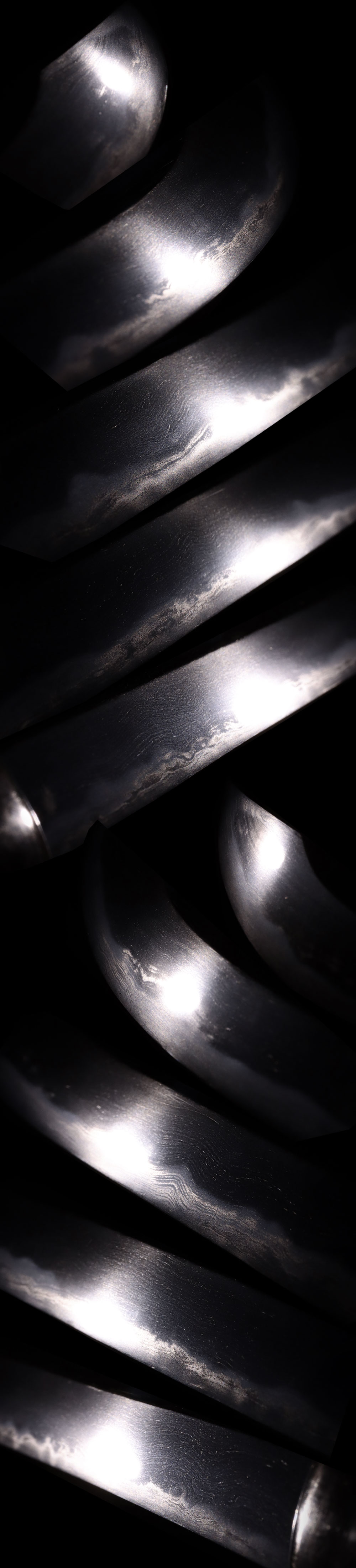
Jigane: Beautifully refined and tightly forged masame hada, displaying exceptionally fine-quality steel.
Hamon: Notare mixed with gunome-midare, featuring abundant sunagashi and kinsuji activity.
The boshi extends toward the tip and displays a hakikake pattern.
Features: Taikei Naotane was born in Dewa Province and was also known as Shoji Minohyoe.
He became a disciple of Suishinshi Masahide and later served Lord Akimoto alongside his teacher.
In 1821, he received the honorary title of Chikuzen Daijo.
He subsequently went to Edo and studied under Suishinshi Masahide.
There, he mastered the Bizen-den and Soshu-den traditions, developing exceptional swordmaking skills that were said to surpass those of his teacher.
Naotane passed away on May 7, 1857, at the age of 79.
This particular naginata is an impressive example with a substantial blade length, described as 2 shaku 3 sun 1 bu, approximately 70.00 cm (27.56 in).
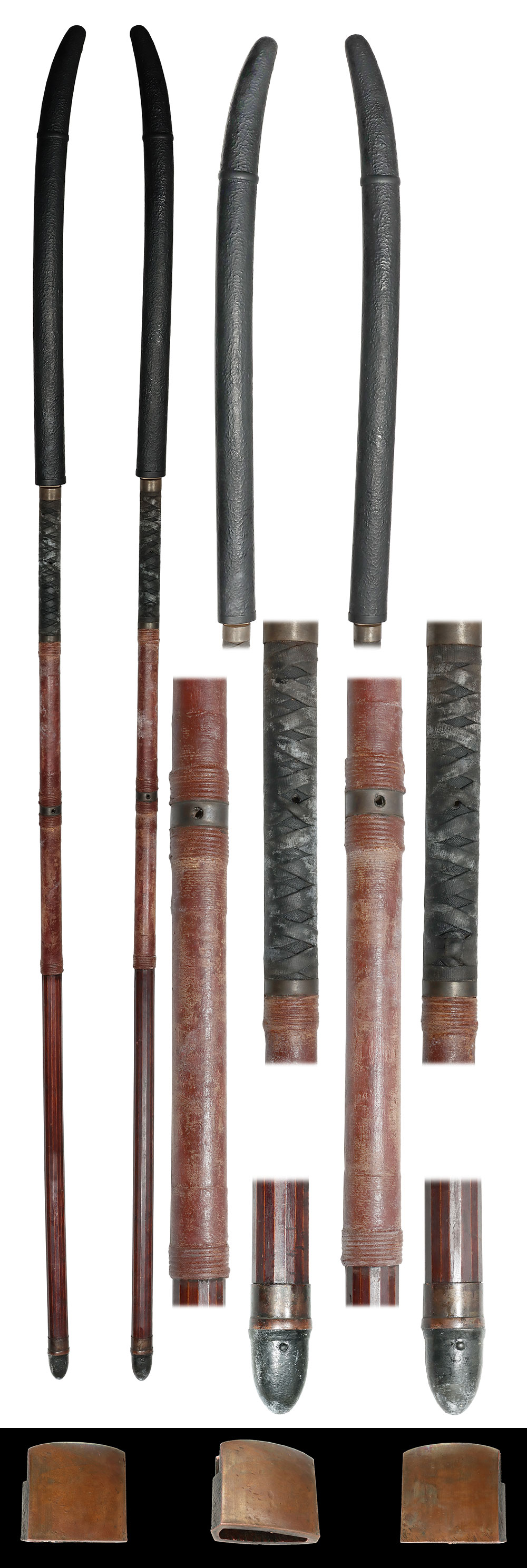
Koshirae:
Overall Length: Approximately 231 cm (90.94 in).
Saya (Scabbard): Approximately 77 cm (30.31 in).
Tsuka (Pole): Approximately 154 cm (60.63 in).
Historical Background: In 1833, Japan began experiencing the Tenpo Great Famine, a devastating period marked by abnormal weather conditions and natural disasters.
The famine eventually contributed to widespread social unrest and became one of the factors leading to Oshio Heihachiro’s Rebellion, which shook the Tokugawa shogunate.
Following water shortages in early spring, Japan experienced an unusually cold summer, with temperatures remaining low.
Prolonged heavy rainfall lasting more than 30 days, along with severe flooding, affected many regions throughout the country.
Unprecedented Crop Failures: The Tohoku region, particularly Mutsu and Dewa Provinces, suffered especially severe damage.
More than 30% of rice fields could not be planted, and harvest yields fell to approximately 30% of normal levels.
In September, an extraordinary weather event occurred when snow accumulated on fields before the crops could be harvested.
In April of the same year, a major earthquake also struck the area around present-day Gifu Prefecture.
The Activities of Katsushika Hokusai and Utagawa Hiroshige: During this period, renowned ukiyo-e artists Katsushika Hokusai and Utagawa Hiroshige were active.
Hiroshige’s celebrated series, The Fifty-three Stations of the Tokaido, began publication through publishers including Hoeido and became an enormous success.
NBTHK Tokubetsu Hozon Token Certificate.
AoiArt estimation paper: Whole Oshigata.
*Please note: The price does not include shipping fees.



Current bid: ¥2,800,000
|
mrtierney50
2026/11/15 (Sun) 11:21 |
¥2,800,000 |
|
Auction started
2026/11/15 (Sun) 09:41 |
|
※ = Auto