
 日本語
Bid History
|
Auction started
2026/11/11 (Wed) 11:02 |
※ = Auto
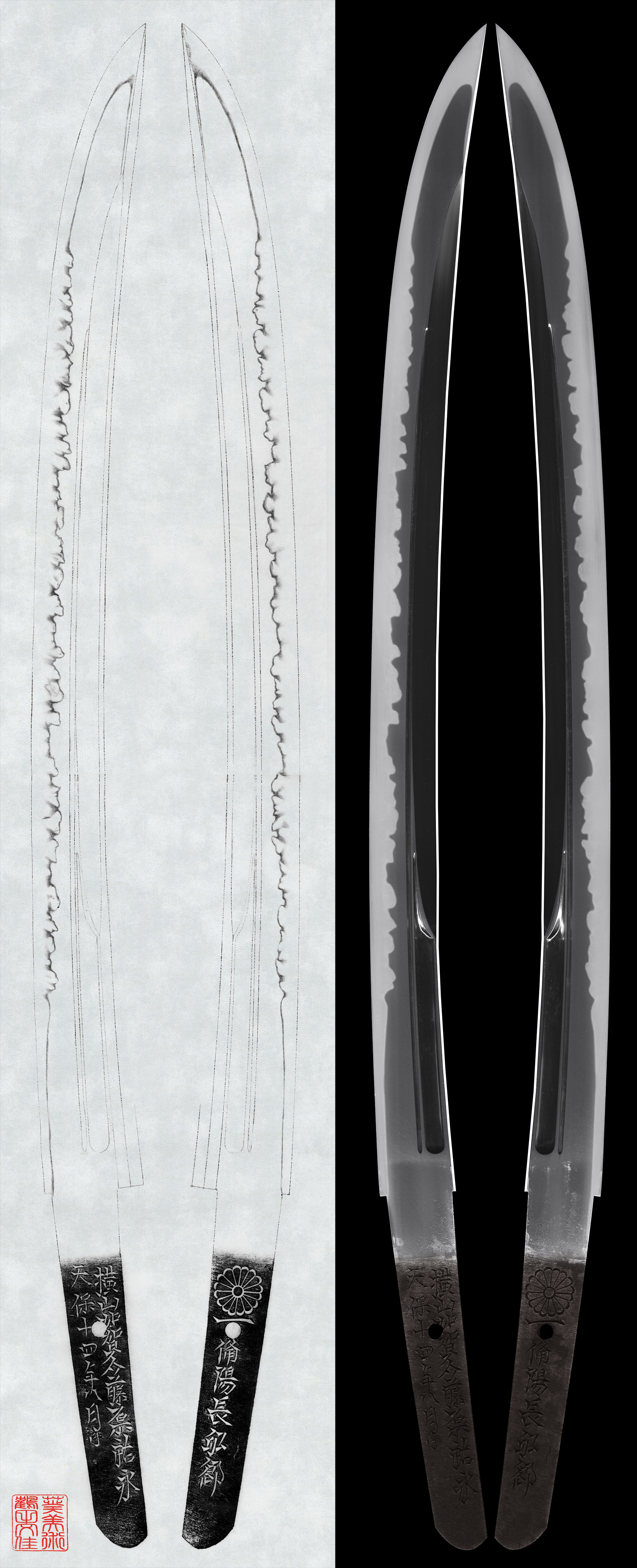
Wakizashi in Koshirae (NBTHK Hozon Token)
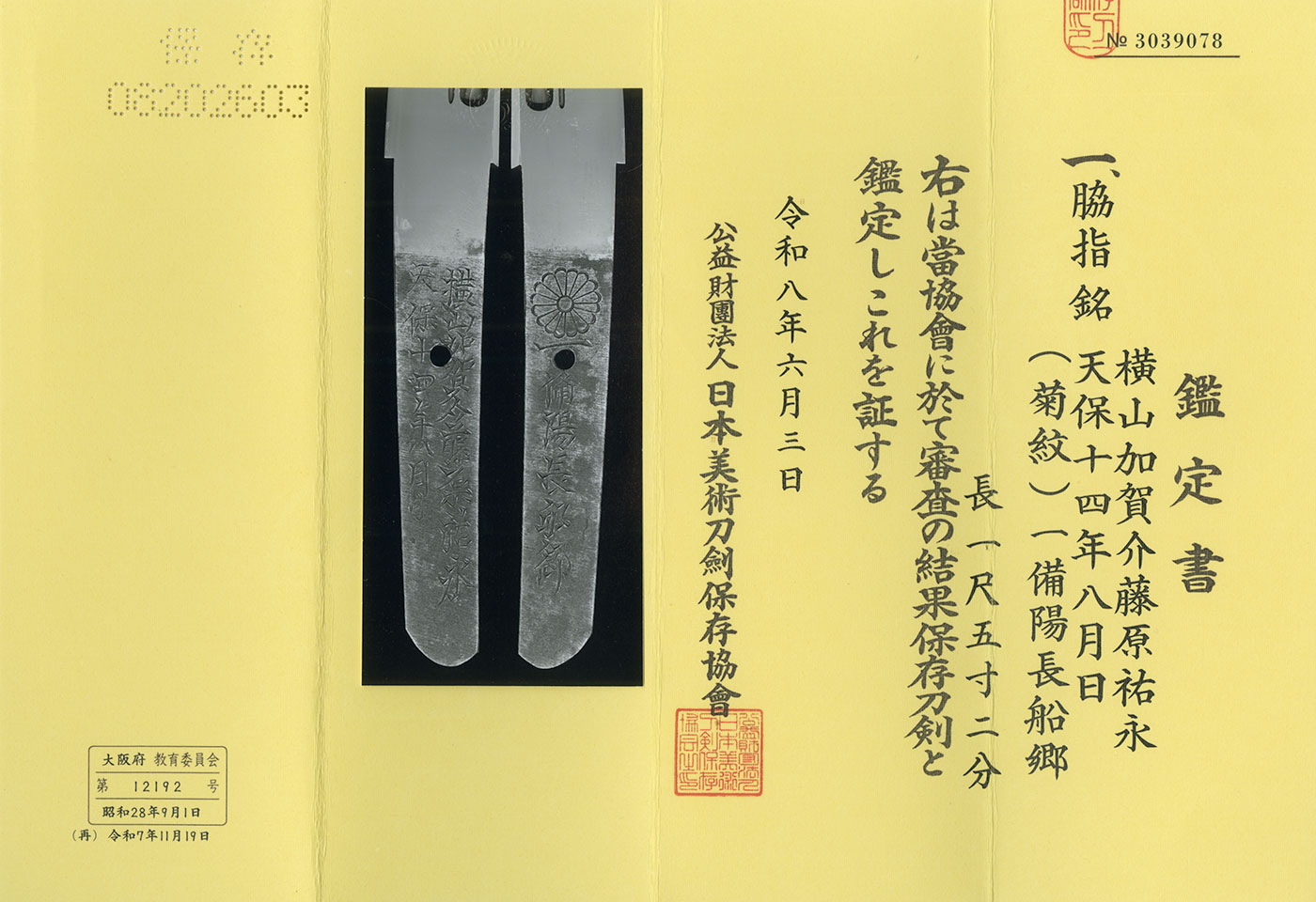
Signature: Yokoyama Kaga no Suke Fujiwara Sukenaga.
Dated August 1843.
(Kiku-mon) Ichi Biyo Osafune Go.
横山加賀介藤原祐永
天保十四年八月日
(菊紋)一備陽長船郷
Shinshinto: Jyo Saku: Tenpo Era: Bizen Province
(We divide 4 sections for each sword as Saijyo Saku, Jyojyo Saku, Jyo Saku and Regular Saku).
This blade is ranked as Jyojyo Saku among the works of Yokoyama Kaga no Suke Fujiwara Sukenaga.
Habaki: Single gold-foiled habaki.
Blade Length: 46.1 cm (18.15 in).
Curvature: 1.5 cm (0.59 in).
Mekugi Hole: 1.
Width at Base (Motohaba): 3.11 cm (1.22 in).
Thickness of rim (Kasane): 0.83 cm (0.33 in).
Sword Weight: 495 g.
Era: Edo period, around the Tenpo era (1830–1844).
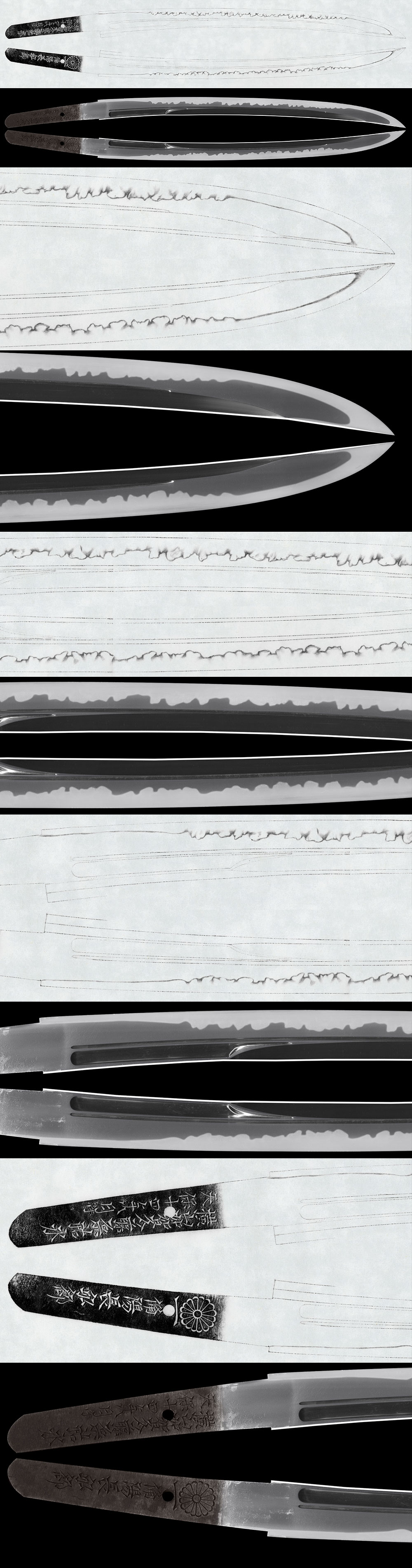
Shape: A curved wakizashi with a distinctive shape reminiscent of a naginata.
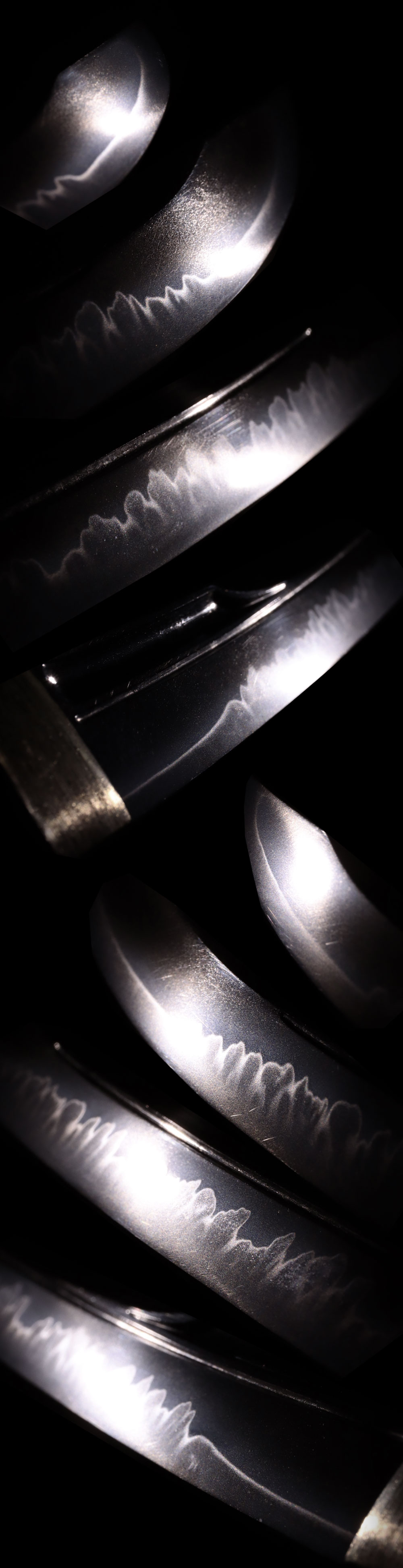
Jigane: Beautifully refined jigane.
Hamon: The hamon begins with suguha near the base, transitions into gunome-choji-midare, and then returns to suguha.
The boshi forms a rounded tip with a turnback.
This is a gorgeous and elaborate hamon style that swordsmiths such as Yokoyama Sukenaga and Sukekane were among the first to attempt.
Features: Yokoyama Kaga no Suke Fujiwara Sukenaga was a swordsmith active during the late Edo period.
Sukenaga was born as the second son of Sukehiro.
When his elder brother Sukemori was adopted by Shichibei Sukesada, Sukenaga succeeded to the family lineage.
In 1833, he received the honorary title of Kaga no Suke.
He subsequently began engraving the chrysanthemum crest (Kiku-mon) and the character “Ichi” on his nakago, along with an inscription identifying himself as a 56th-generation descendant of Tomonari.
His workmanship is characterized by beautifully refined, tightly forged ko-itame hada.
He was particularly skilled at producing a brilliant nioi-deki choji-midare hamon known as “Sukenaga Choji.”
Koshirae:
Tsuba: Shakudo nanako tsuba carved with a pine tree motif and decorated with gold iroe.
Signature: Muneharu Saku.
Fuchikashira: Shibuichi fittings carved with human figures and decorated with gold iroe.
Saya (Scabbard): Kawari-nuri saya (decorative lacquered scabbard).
Menuki: Dragon motifs carved in high relief and decorated with gold iroe.
Kozuka: Copper kozuka carved with a horse motif and decorated with gold iroe.
Kogatana: Included.
Historical Background: Major events in August 1843, during the Tenpo era.
– Failure of the Tenpo Reforms and the Downfall of Mizuno Tadakuni: The controversial Agechi-rei (land confiscation order) and strict sumptuary regulations provoked strong opposition from daimyo and hatamoto (direct retainers of the shogunate).
As a result, Mizuno Tadakuni lost his political position around this time.
– Frugality Orders Issued Across Various Domains: Numerous feudal domains and regional authorities issued directives encouraging simplicity and frugality.
– Regulations in Villages and Feudal Territories: In response to the shogunate’s policies, local authorities issued official notices to villages and administrative districts, enforcing frugality and regulating public morals and customs.
NBTHK Hozon Token.
AoiArt estimation paper: Whole Oshigata.
Overseas shipping is charged separately.



Starting bid: ¥580,000
|
Auction started
2026/11/11 (Wed) 11:02 |
※ = Auto