
 日本語
Bid History
|
Auction started
2026/11/08 (Sun) 16:38 |
※ = Auto
Ordering Number: 26479
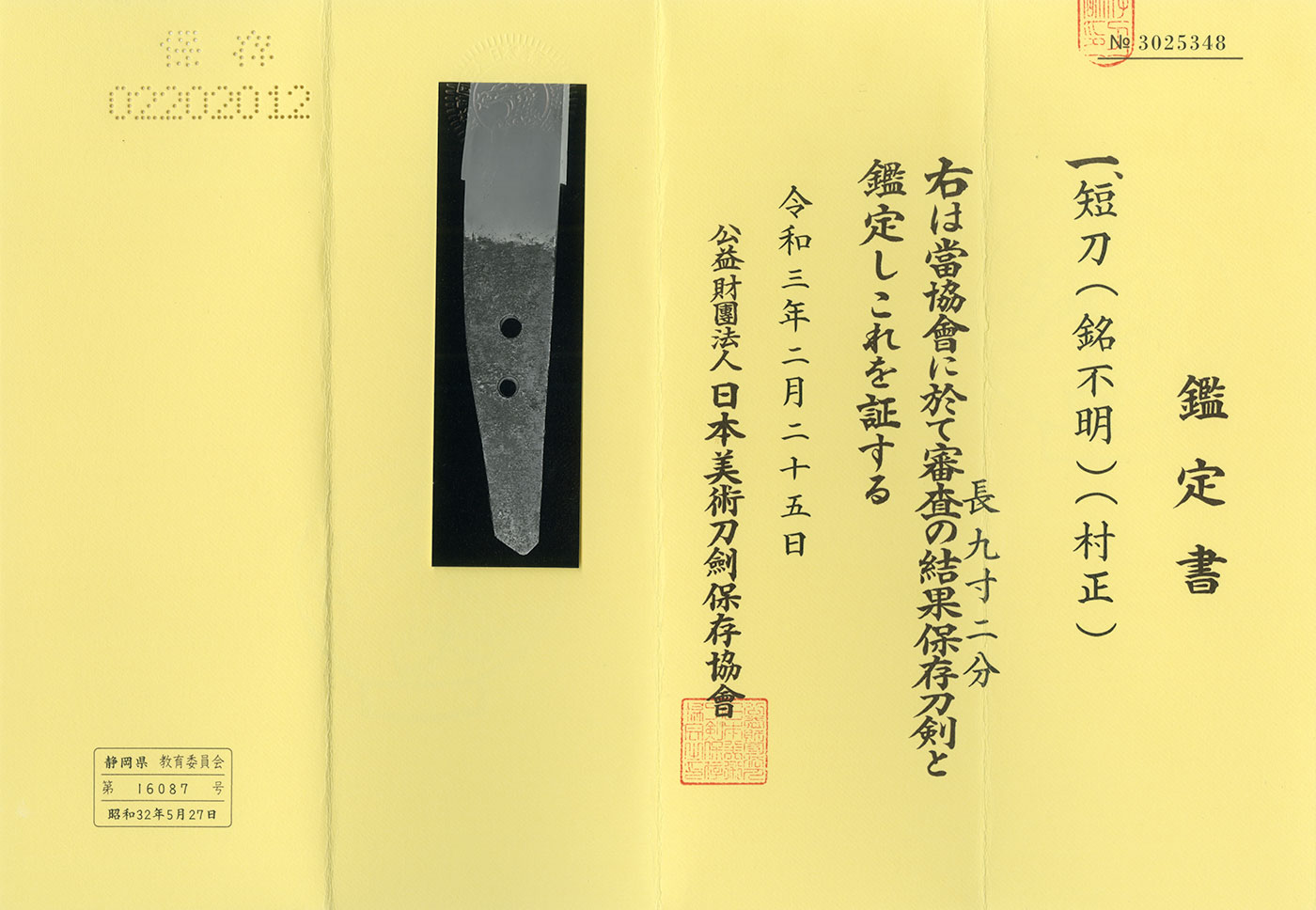
Tanto in Shirasaya (NBTHK Hozon Token) with Koshirae (Kozuka: NBTHK Hozon Tosogu)
Inscription: Mumei(Unsigned)(Muramasa 村正)
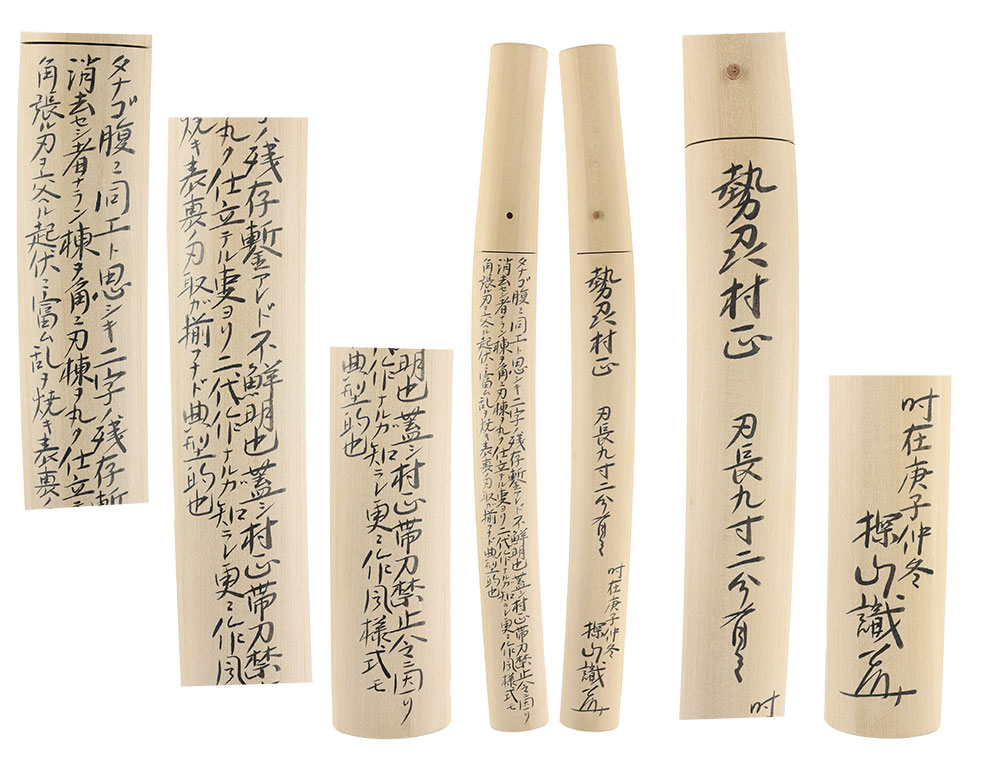
Sayagaki: written by Tanobe Tanzan
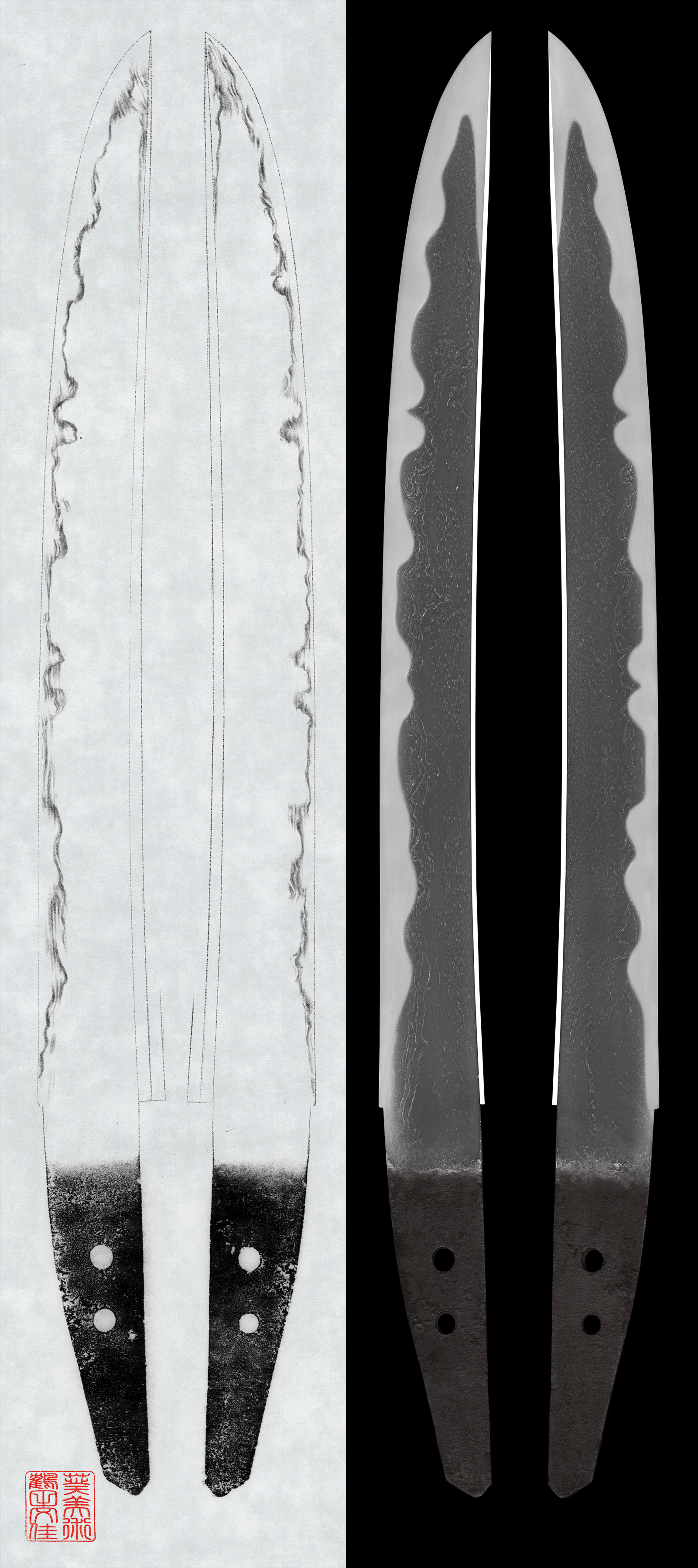
The nakago is tanagobara (fish belly) form, and traces of two characters, believed to be the signature of Muramasa, remain, although they are unclear. It is presumed that the signature was erased due to the prohibition against wearing Muramasa swords.
The angular shape of the mune and the rounded finish of the ha-mune indicate that this blade was made by the second-generation Muramasa.
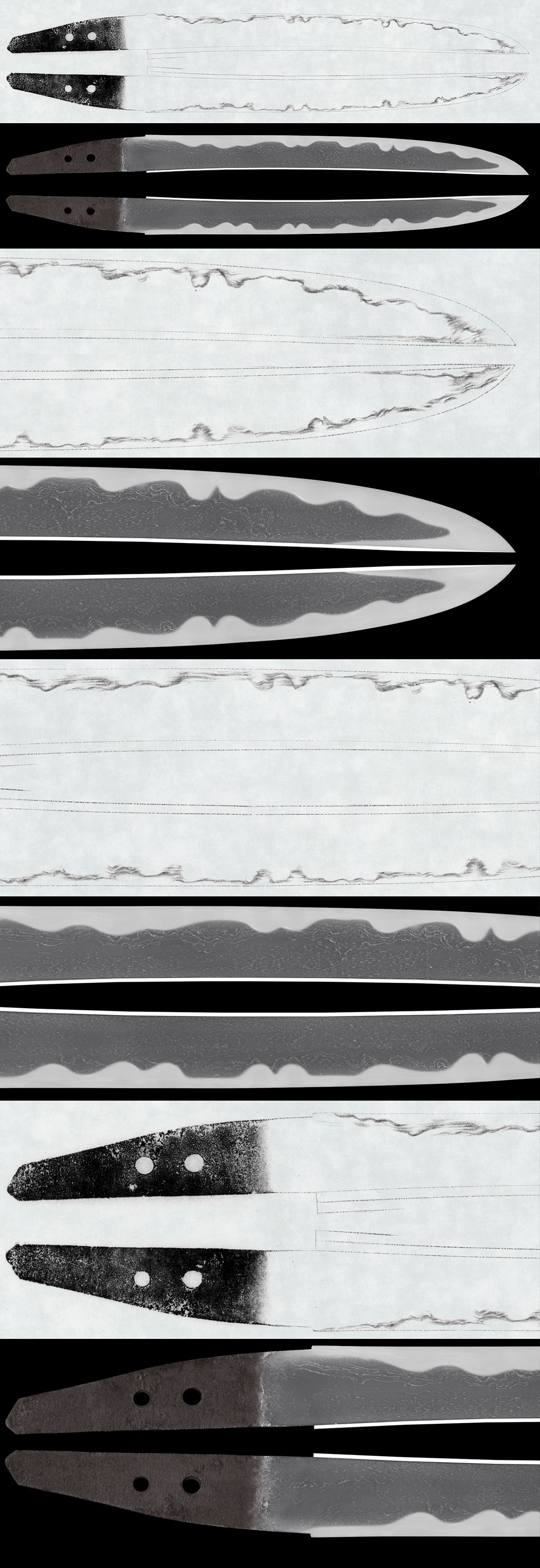
Furthermore, the workmanship displays the typical characteristics of Muramasa, including a highly varied midare hamon with angular elements and matching hamon patterns on both sides of the blade.
We divide works in to Saijo Saku, Jyojyo Saku, Jyo Saku,and Regular Saku.
This piece is ranked as Jyojyo Saku for Muramasa.
Habaki: copper base
Blade Length: 27.9 cm
Curvature (Sori): 0.30 cm
Mekugi-ana: 2
Width at Base (Motohaba): 2.79 cm
Thickness (Kasane): 0.57 cm
Sword Weight: 180 g
Era: late Muromachi period, 16th century
Shape: slightly thick Tanto with shallow curvature. The form of nakago is called Tanago-bara (Fish belly).
Jigane: Itame mixed with Mokume and Masame with chikei making intense grain patterns.
Hamon: Nie-deki gunome-midare, with a matching pattern on both sides of the blade. Strong nie, with sunagashi and kinsuji activities.
Features:
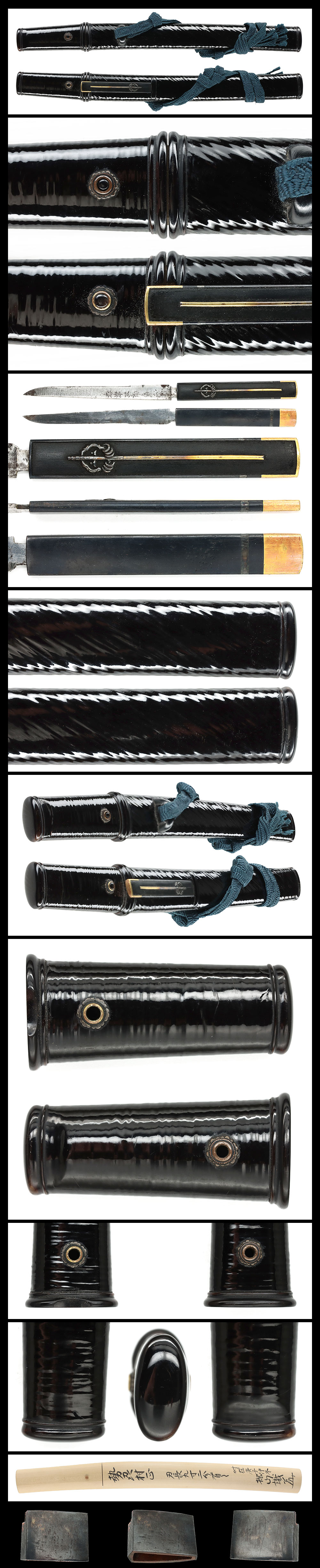
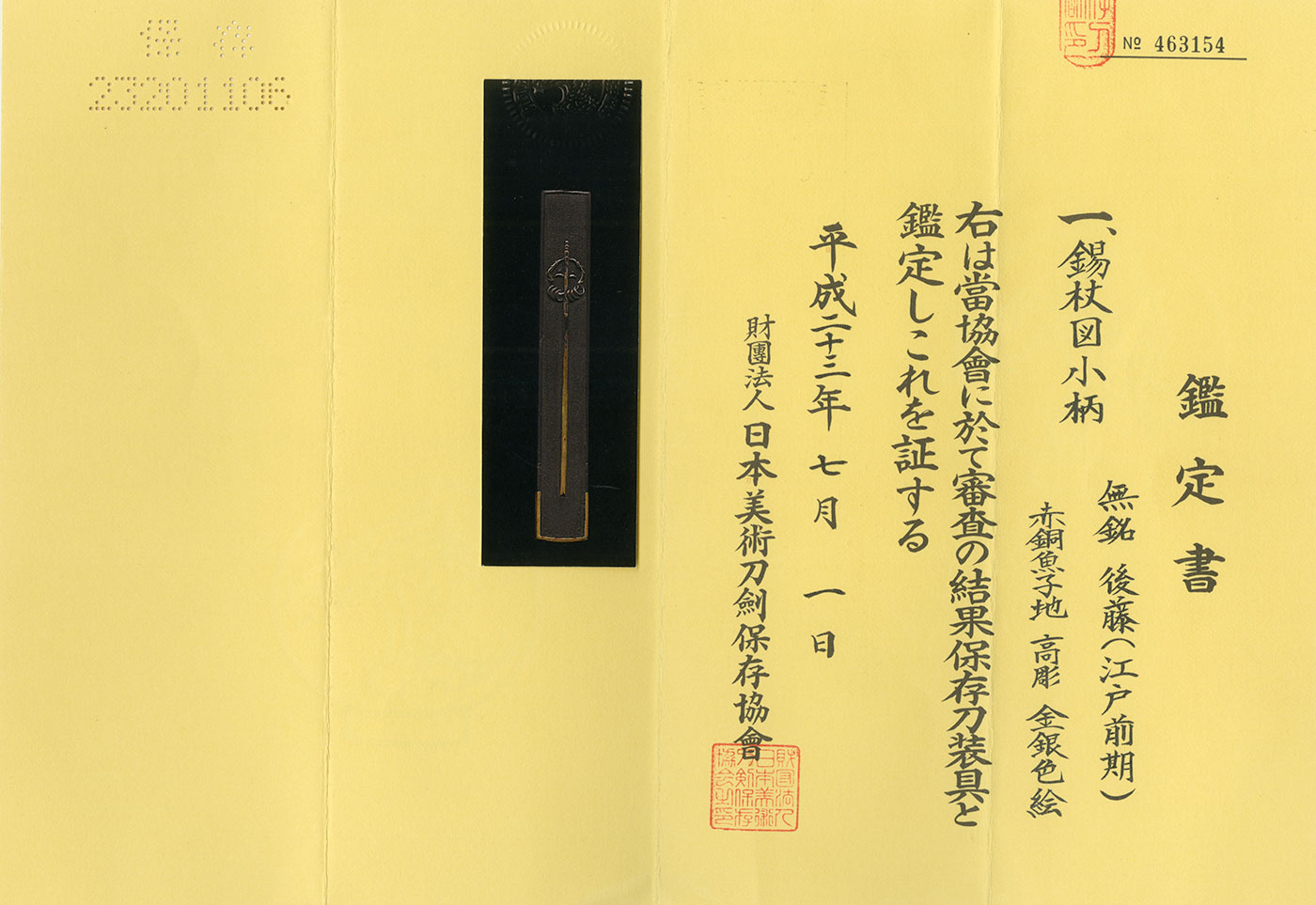
Muramasa was a school of swordsmiths active in Kuwana, Ise Province, founded by Sengo Muramasa. Their swords were highly regarded even at the time for their exceptional sharpness and distinctive hamon patterns that matched on both sides of the blade. During the Edo period, Muramasa swords came to be regarded as unlucky by the Tokugawa family because they were reportedly involved in the assassinations of Tokugawa Ieyasu’s grandfather, Kiyoyasu, and his father, Hirotada, as well as in the execution of his eldest son, Nobuyasu, who was ordered to commit seppuku. As a result, it is said that many Muramasa signatures were deliberately erased. This blade displays the characteristic features of Muramasa, including prominent chikei in the jigane, abundant nie in the hamon, and matching hamon patterns on both sides of the blade. Although the koshirae is rather plain, the kozuka has been attributed to the Goto school of the early Edo period. It depicts a shakujō, a Buddhist monk’s staff fitted with metal rings that produce a sound and is traditionally used to ward off evil.
Koshirae: black lacquered
Kozuka(NBTHK Hozon): Unsinged(Goto school, early Edo period)
NBTHK Hozon Certificate (Tanto)
NBTHK Hozon Certificate (Kozuka)
Aoi-Art estimation Paper
whole Oshigata
Please note: the price does not include the shipping fees.

Starting bid: ¥5,350,000
|
Auction started
2026/11/08 (Sun) 16:38 |
※ = Auto