
 日本語
Bid History
|
Auction started
2026/10/23 (Fri) 10:14 |
※ = Auto
Ordering Number: AS26492
Tanto in Shirasaya with Koshirae (NBTHK Tokubetsu Hozon Token)
Inscription: Mumei(Unsigned)(judged as Rai Kunitoshi 来国俊)
We divide works in to Saijo Saku, Jyojyo Saku, Jyo Saku,and Regular Saku.
This piece is ranked as Saijo Saku for Rai Kunitoshi.
Habaki: Single gold-foiled habaki.
Blade Length: 24.4 cm (9.61 in).
Curvature: 0.0 cm (0.00 in).
Mekugi Hole: 2.
Width at Base (Motohaba): 2.08 cm (0.82 in).
Thickness of rim (Kasane): 0.54 cm (0.21 in).
Sword Weight: 135 g.
Era: Around the middle Kamakura period.
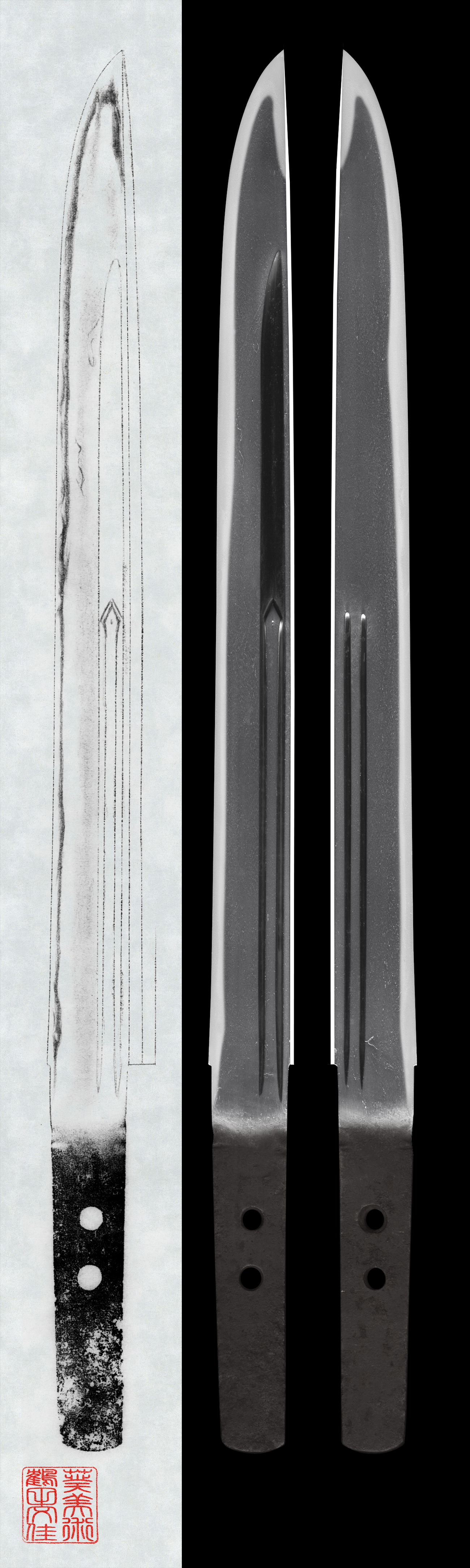
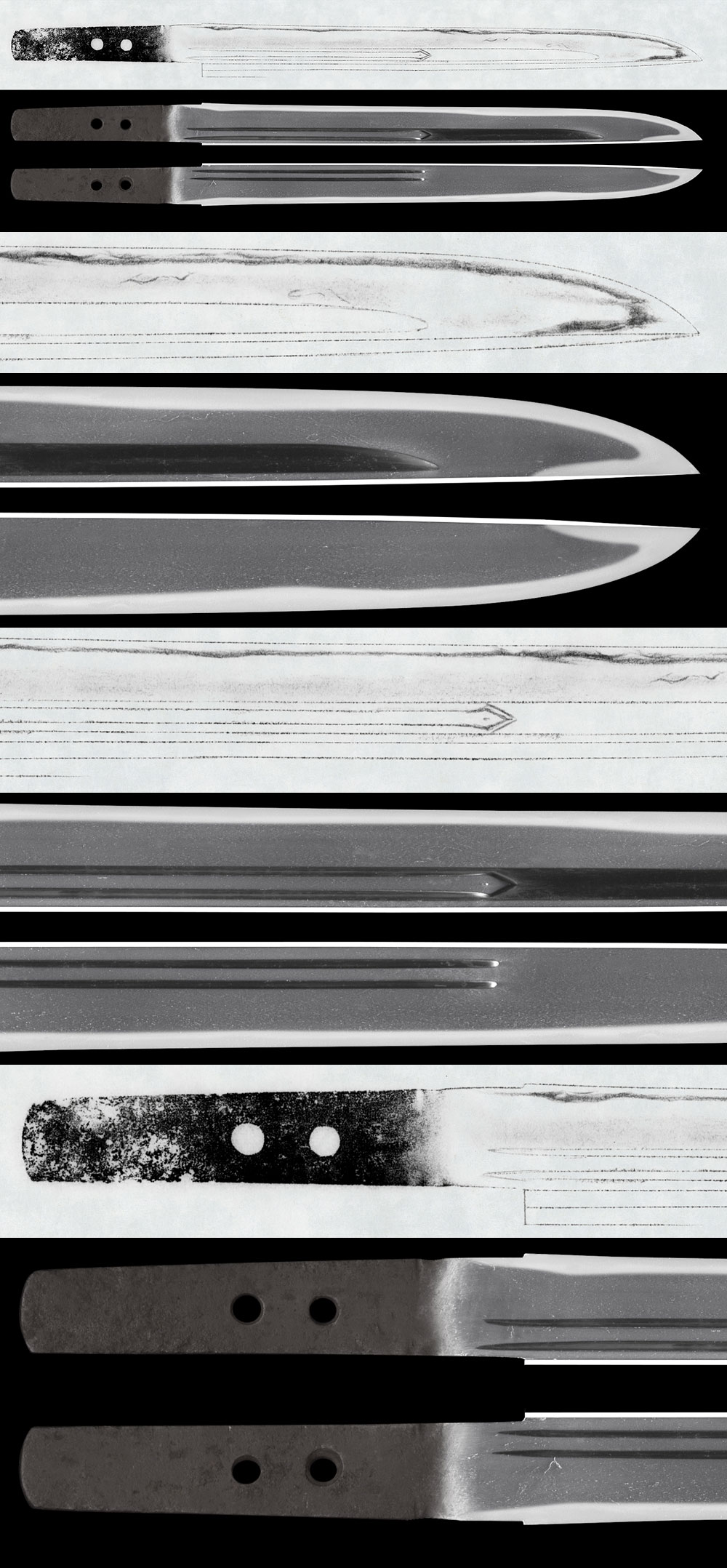
Shape: A tanto featuring futasuji-hi (double grooves) carved on the front side.
The reverse side is carved with futasuji-hi, a ken (sword), and a further hi extending toward the tip.
Jigane: Exceptionally well-forged ko-itame hada with prominent utsuri.
Hamon: Suguha with a deep, soft nioiguchi.
Kinsuji can be observed within the hamon.
The boshi is gently rounded with a deep turnback.
Features: Rai Kunitoshi was a renowned swordsmith of the Rai school in Yamashiro Province who flourished during the late Kamakura period.
Dated examples of his work are known from 1278 (Koan 1) through 1321 (Genko 1).
He was the son of Rai Kuniyuki and was also known as Rai Magotaro.
Although unsigned, this blade has been attributed to Rai Kunitoshi.
It is a healthy and well-preserved tanto displaying a calm and elegant hamon.
Koshirae:
Tsuba: Shakudo hamidashi tsuba with a gold-decorated rim.
Fuchikashira and Kojiri: Shakudo nanako fittings carved with peony motifs and decorated with gold iroe.
Menuki: Integrated into the tsuka (handle), featuring a lion and peony design carved in silver.
Saya (Scabbard): Black polished lacquer saya.
Kozuka: Shakudo nanako kozuka carved with a lion motif and decorated with gold iroe.
Kogatana: Included.
Historical Background: One of the most significant events of 1299 (Shoan 1), during the Kamakura period, was the arrival in Japan of the distinguished Zen Buddhist monk and Yuan envoy Issan Ichinei.
At that time, relations between Japan, governed by the Kamakura shogunate, and the Yuan dynasty (Mongol Empire) remained tense following the 2 Mongol invasions of Japan in 1274 and 1281.
Against this background, Issan Ichinei arrived in Japan in October 1299, carrying a diplomatic letter proposing peaceful relations on behalf of Emperor Chengzong (Temur), the successor to Kublai Khan.
The Aftermath of the Einin Tokuseirei (Debt Relief Edict):
In 1297, the Kamakura shogunate had issued the Einin Tokuseirei to provide financial relief to its retainers (gokenin), many of whom had fallen into financial difficulties due to the costs of defending Japan against the Mongol invasions.
By 1299, the social and economic disruption caused by this decree, including a decline in lending and borrowing activities, was still being felt throughout society.
NBTHK Tokubetsu Hozon Certificate
Aoi-Art estimation Paper
whole Oshigata
Please note: the price does not include the shipping fees.




Starting bid: ¥4,000,000
|
Auction started
2026/10/23 (Fri) 10:14 |
※ = Auto