
 日本語
日本語Bid History
Auction has expired
Auction Expired because there were no bids|
Auction started
2026/08/01 (Sat) 10:23 |
※ = Auto
Ordering Number: AS25665
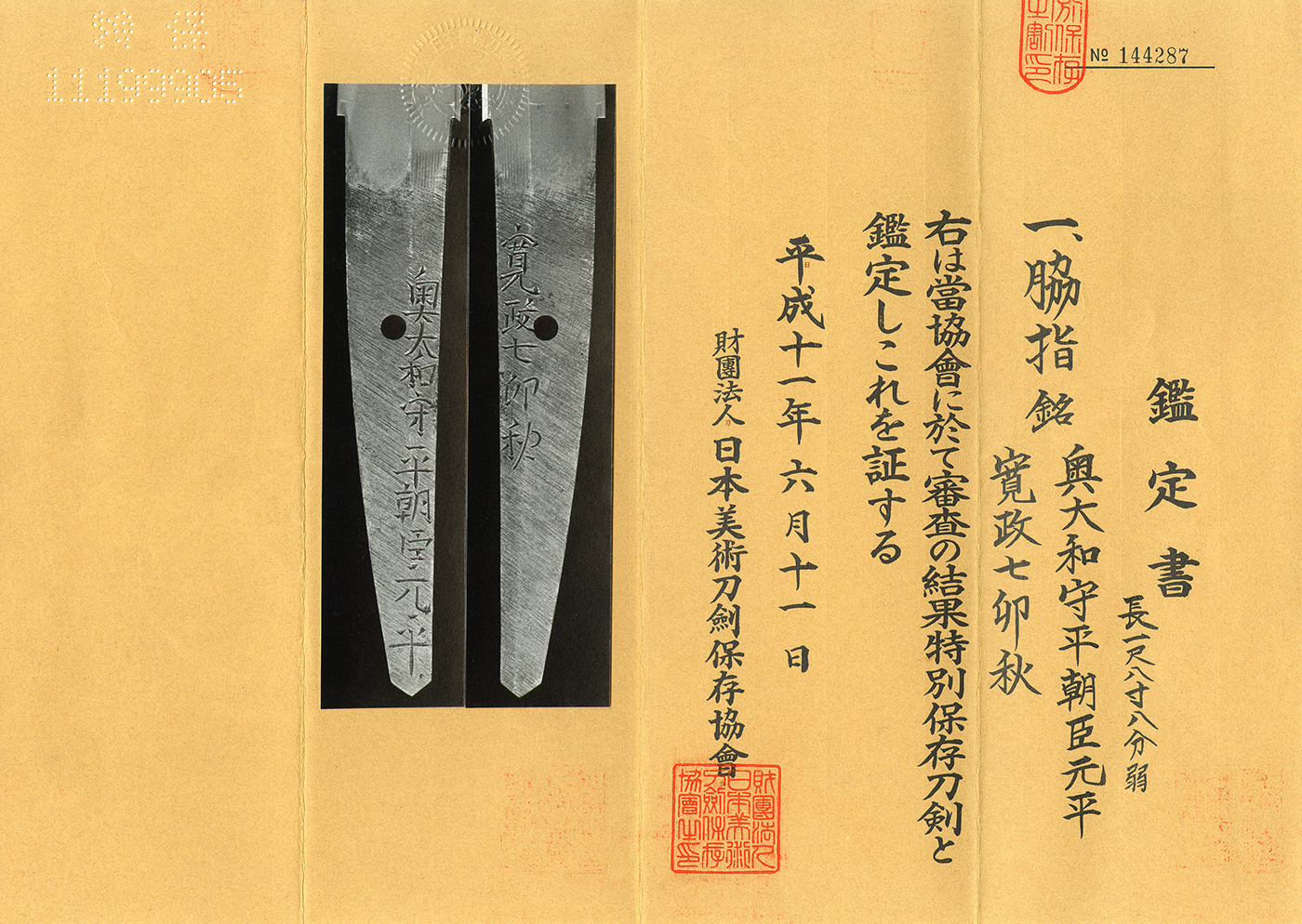
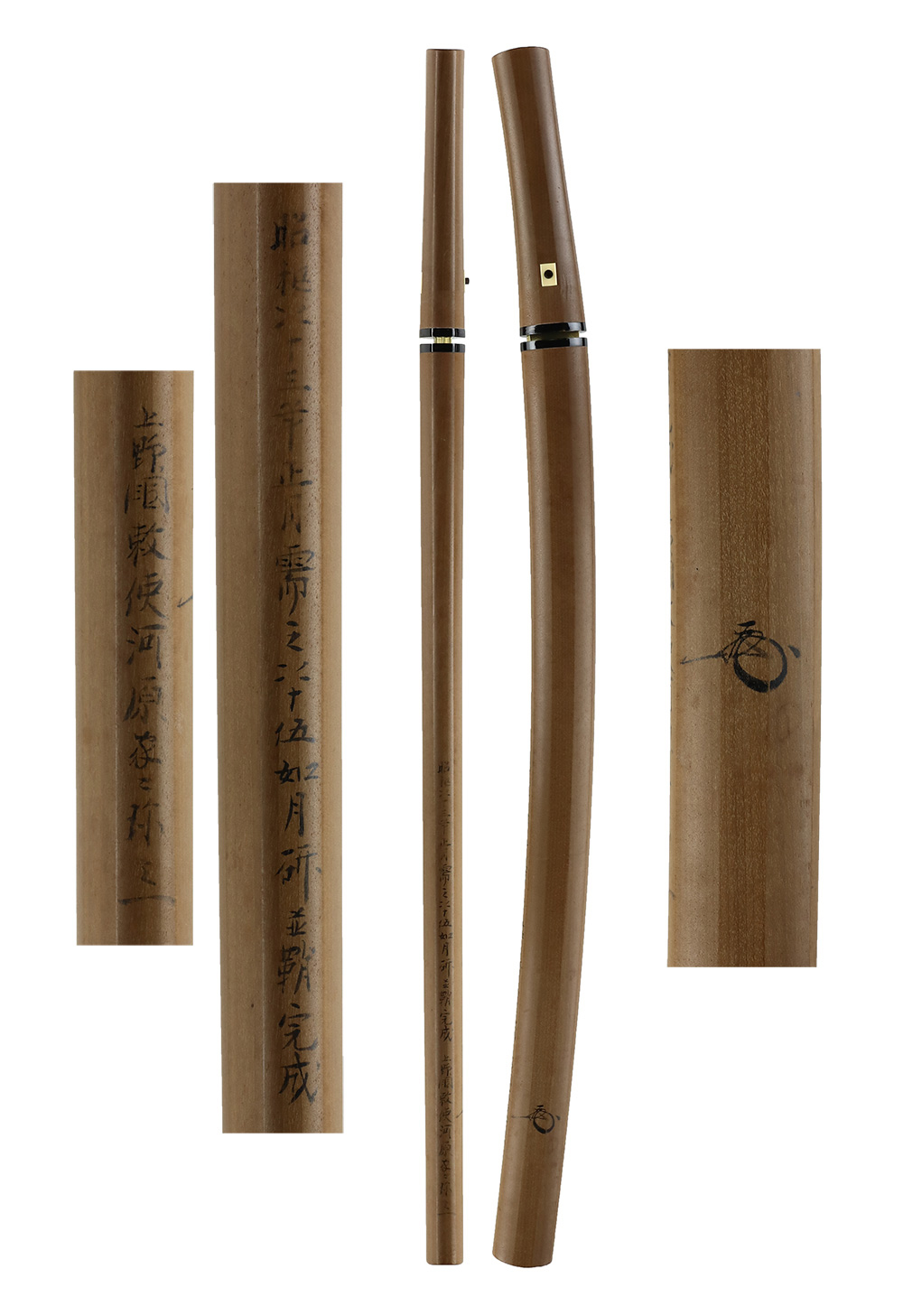
Wakizashi in Shirasaya (NBTHK Tokubetsu Hozon Token)
Signature: Oku Yamato no Kami Taira Ason Motohira (First Generation)
Autumn of Kansei 7, Year of the Hare (1795)
奥大和守平朝臣元平(初代)
寛政七卯秋
Shinshinto: Jyojyo Saku: Satsuma.
(We divide 4 sections for each sword as Saijyo Saku, Jyojyo Saku, Jyo Saku and Regular Saku).
This blade is ranked as Jyojyo Saku among the works of Oku Yamato no Kami Taira Ason Motohira.
Habaki: Double gold-foiled habaki.
Blade Length: 57.0 cm (22.44 in).
Curvature: 1.3 cm (0.51 in).
Mekugi Hole: 1.
Width at Base (Motohaba): 3.33 cm (1.31 in).
Width at Yokote: 2.58 cm (1.02 in).
Thickness of rim (Kasane): 0.74 cm (0.29 in).
Sword Weight: 715 g.
Era: Late Edo period. (1795)
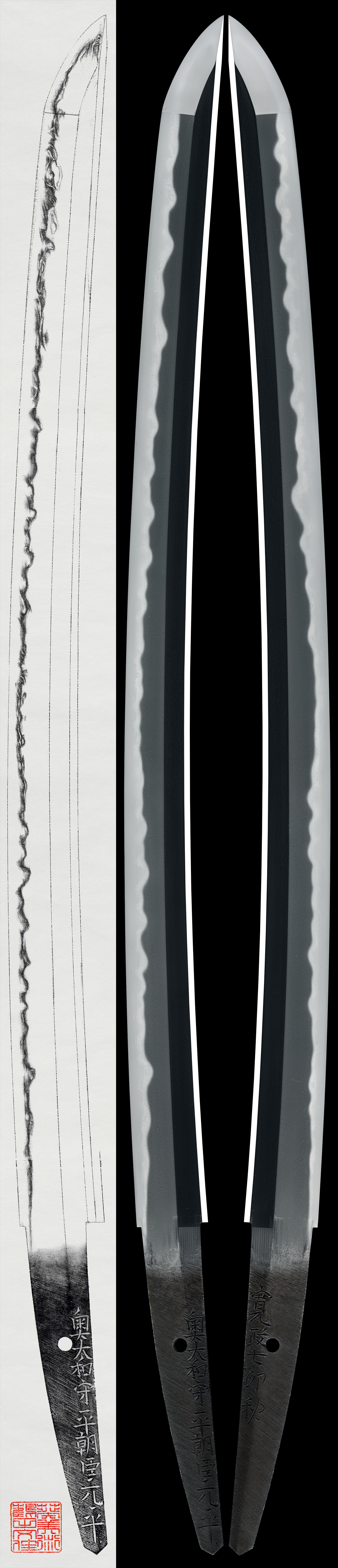
Shape: A robust wakizashi with substantial mihaba and thick kasane. It has relatively deep curvature and an elongated kissaki, giving the blade an imposing appearance.
Jigane: A slightly dark steel surface with active chikei. Sunagashi and kinsuji are visible within the hardened edge.
Hamon: Nie-deki gunome-midare with a deep nioiguchi. Sunagashi and kinsuji are active throughout, and the boshi droops before returning in a rounded form.
Features: The Shimazu family of Satsuma generously patronized many swordsmiths and produced outstanding masters, among whom Motohira was one of the finest. He was one of the leading swordsmiths of the early Shinshinto period in Satsuma. Born in Enkyo 1 (1744) as the son of the Satsuma domain swordsmith Oku Motonao, he succeeded to the family profession after his father’s death in An’ei 6 (1777). He studied sword forging under his father, and in Tenmei 5 (1785) was permitted to sign his works “Satsuhan-shin Oku Motohira.” In the 12th month of Kansei 1 (1789), he received the honorary title of Yamato no Kami at the same time as Hoki no Kami Masayuki, and from Kansei 2 (1790) onward he signed “Oku Yamato no Kami Taira Ason Motohira.” He passed away in Bunsei 9 (1826) at the age of 83. This blade, dated Kansei 7 (1795), is an excellent example with a wide mihaba and thick kasane.
Aoi Art’s Comment: Oku Yamato no Kami Taira Ason Motohira had the habit of dating many of his own works in order to discourage forgeries. He also intentionally cut one or two file marks on the final yasurime of the tang, and the last file mark is deliberately offset slightly from the pointed end of the nakago. If this characteristic offset is absent or executed differently, the signature is highly likely to be false. Please examine both sides of the tang carefully.
The shinogi-ji consists of itame mixed with mokume and masame, with the masame not overly prominent, giving many of his works an appearance reminiscent of Soshu-den Koto blades. Moreover, this characteristic is not unique to Motohira; many Satsuma and Kyushu swords also exhibit a similar offset from the centerline of the tang, so careful examination is essential.
Historical Background: During the Kansei era, Japan experienced repeated natural disasters and famines from the very beginning of the period. Even in Edo, shortages of rice caused widespread hardship among the people.
NBTHK Tokubetsu Hozon Token.
AoiArt estimation paper: Whole Oshigata.
Please note: The price does not include the international shipping fees.




Auction Expired
Auction Expired because there were no bids
Auction has expired
Auction Expired because there were no bids|
Auction started
2026/08/01 (Sat) 10:23 |
※ = Auto