
 日本語
日本語Bid History
Auction has expired
Auction Expired because there were no bids|
Auction started
2026/07/08 (Wed) 10:42 |
※ = Auto
Order No. AS26199
Wakizashi in Shirasaya with Koshirae (NBTHK Tokubetsu Hozon Token)
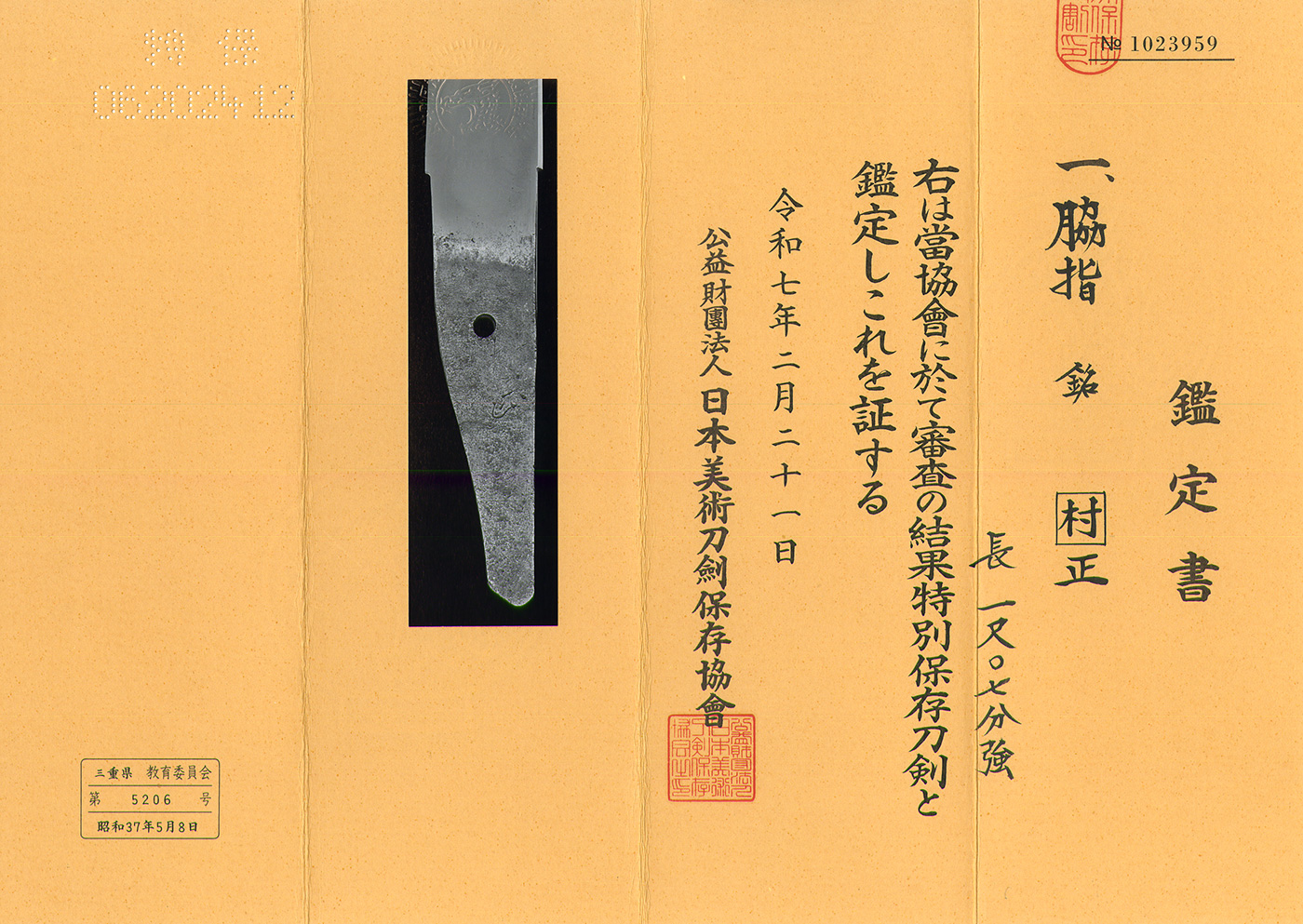
Signature: Muramasa
村正
Late Koto period: Supreme Sharpness (Saijo-saku): Muramasa (Ise, Sengo School)
At Aoi Art, we classify each sword according to its individual workmanship as Saijo-saku (Superior Masterpiece), Jojo-saku (Excellent), Josaku (Very Good), or Standard. This blade is ranked as Jojo-saku (Excellent) among works attributed to Muramasa.
Habaki: Double-layer gold-foiled habaki
Nagasa: 32.6 cm (1 shaku 0 sun 7 bu 5 rin)
Sori: 0.6 cm (2 bu)
Mekugi-ana: 1
Motohaba: 3.03 cm
Kasane: 0.60 cm
Blade weight: 265 g
Period: Muromachi period
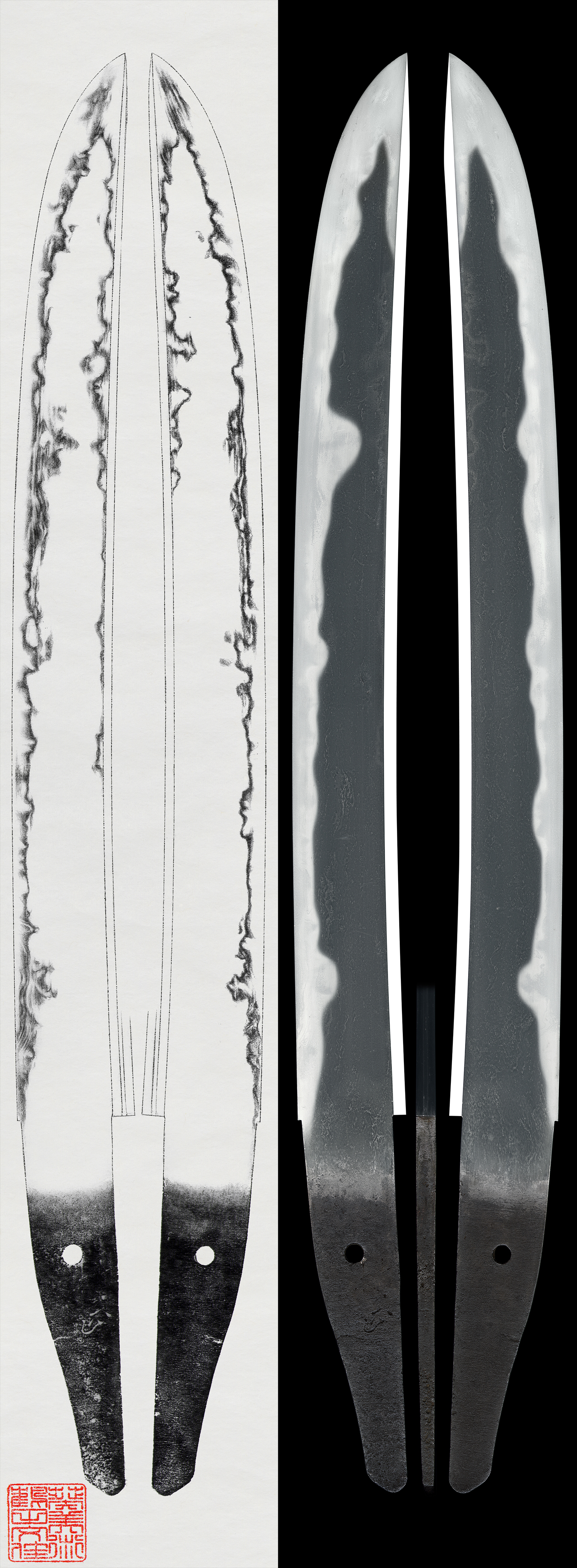
Shape: A robust wakizashi with a wide mihaba, thick kasane, and a distinctive mitsu-mune (three-sided ridge) construction. The tang exhibits the characteristic tanago-bara (fish-belly) profile.
Jigane: Well-forged ko-itame hada with a slightly dark appearance.
Hamon: The hamon on both sides matches perfectly, forming a gently undulating gunome-midare over a ko-itame surface. The boshi continues in a midare pattern, and the hamon on the omote and ura corresponds exactly. Kinsuji activity is visible within the temper.
Features: Muramasa was a group of swordsmiths active in Kuwana, Ise Province, from the Muromachi period through the early Edo period. Compared with most surviving Muramasa works, this wakizashi is unusually large and powerfully constructed, making it an especially attractive example.
Koshirae:An elegant mounting harmoniously decorated with the auspicious motifs of pine, bamboo, and plum (Sho-Chiku-Bai).
Tsuba: Shibuichi plate carved with a bird and plum tree, highlighted with gold and silver iroe.
Fuchi-Kashira: Shibuichi, carved with a plum tree and decorated with silver iroe.
Saya: Black roiro lacquer with a bamboo design; signed Minamoto Nakayasu.
Menuki: Pine tree motif, possibly made of solid gold.
Kozuka: Shakudo nanako ground with bamboo and plum tree in gold iroe.
Kogatana: Bamboo blade.
Aoi Art’s Comment: Muramasa blades were regarded as inauspicious by the Tokugawa shogunate, and as a result many owners altered or removed the signature to avoid association with the smith. On this blade, the first character “Mura (村)” has been intentionally removed.
Compared with ordinary Muramasa works, this piece is broader and more robustly forged. One of the defining characteristics of Muramasa is that the hamon on both sides of the blade corresponds exactly, and this blade clearly exhibits that feature. It also possesses two additional hallmarks associated with Muramasa: the mitsu-mune construction and the tanago-bara tang shape.
This is a highly recommended and impressive work, accompanied by an outstanding koshirae.
NBTHK Tokubetsu Hozon Token
Aoi Art estimation paper: Whole Oshigata
*Please note: The price does not include shipping fees.
Please note: the price does not include the shipping fees.





Auction Expired
Auction Expired because there were no bids
Auction has expired
Auction Expired because there were no bids|
Auction started
2026/07/08 (Wed) 10:42 |
※ = Auto