
 日本語
日本語Bid History
Auction has expired
Highest bidder was: paulusfaciebat
|
paulusfaciebat
2026/07/09 (Thu) 07:36 |
¥850,000 |
|
Auction started
2026/07/02 (Thu) 11:50 |
|
※ = Auto
Ordering Number: AS25725
Tanto in Shirasaya, with Koshirae (NBTHK Tokubetsu Hozon Token)
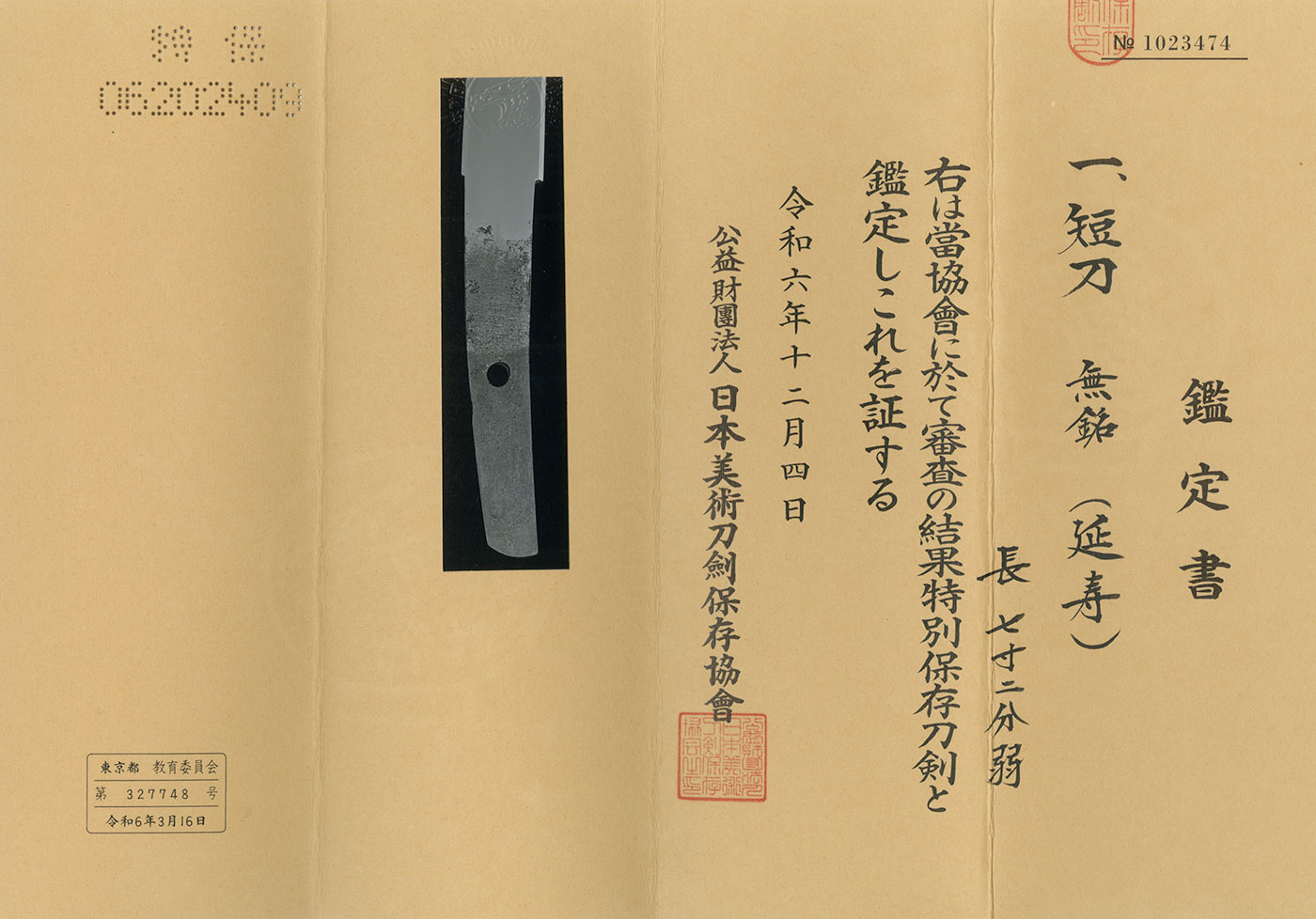
Signature: Mumei (Unsigned) (Enju)
無銘(延寿)
(We divide 4 sections for each sword as Saijyo Saku, Jyojyo Saku, Jyo Saku and Regular Saku).
This blade is ranked as Jyojyo Saku among works attributed to Mumei (Enju).
Habaki: Single-layer gold-covered habaki.
Blade Length: 21.7 cm (8.54 in).
Curvature: 0.0 cm (0.00 in).
Mekugi Hole: 1.
Width at Base (Motohaba): 2.13 cm (0.84 in).
Thickness of rim (Kasane): 0.54 cm (0.21 in).
Sword Weight: 115 g.
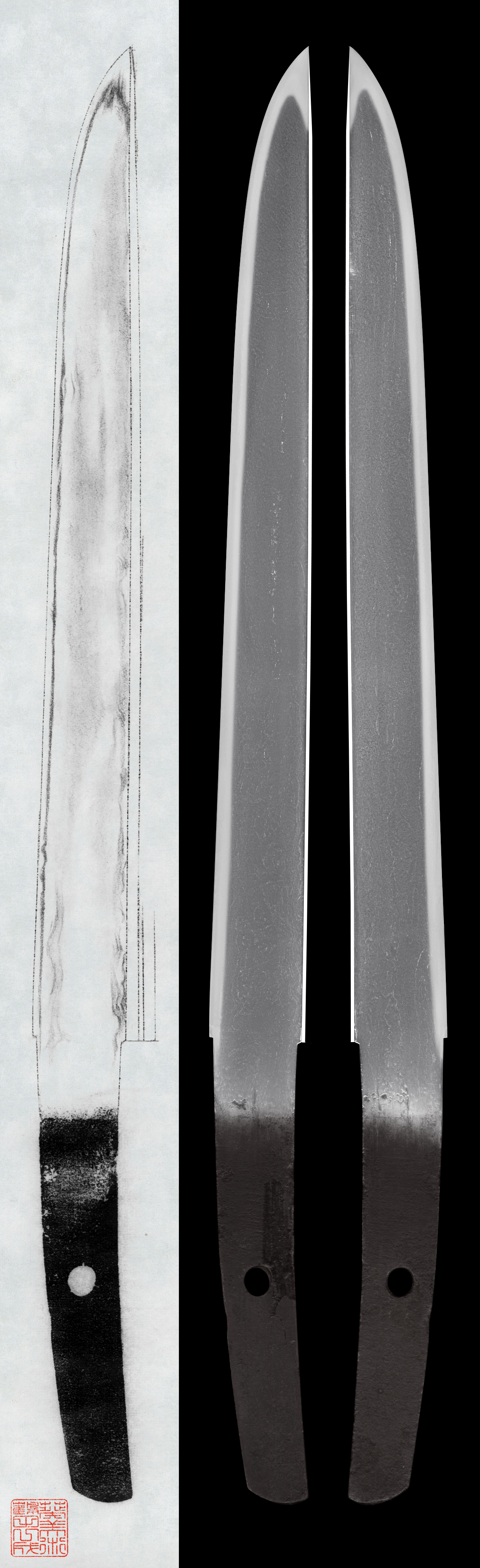
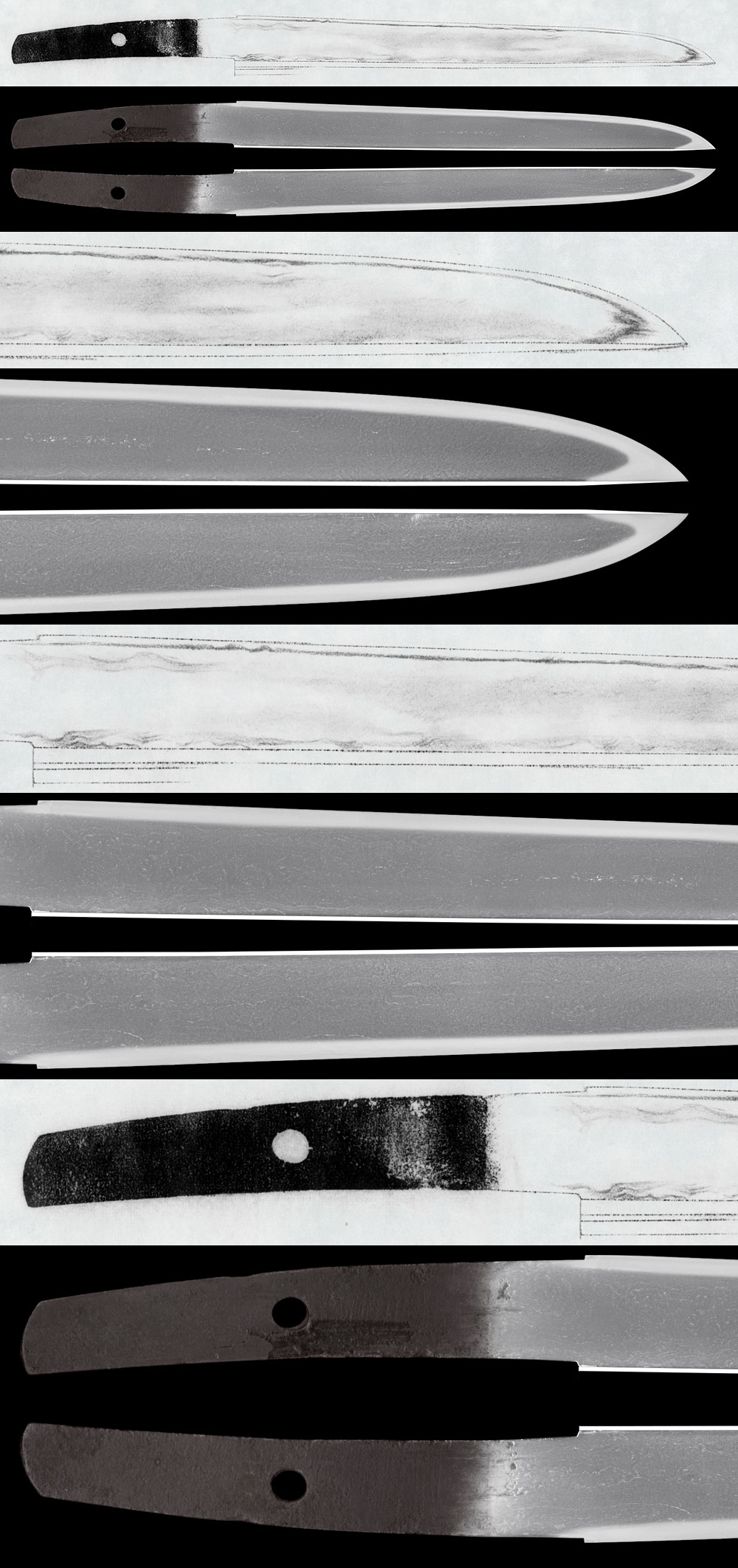
Shape: A slightly small-sized tanto with a tang that appears somewhat elongated.
Jigane: Well-forged ko-itame hada with visible utsuri.
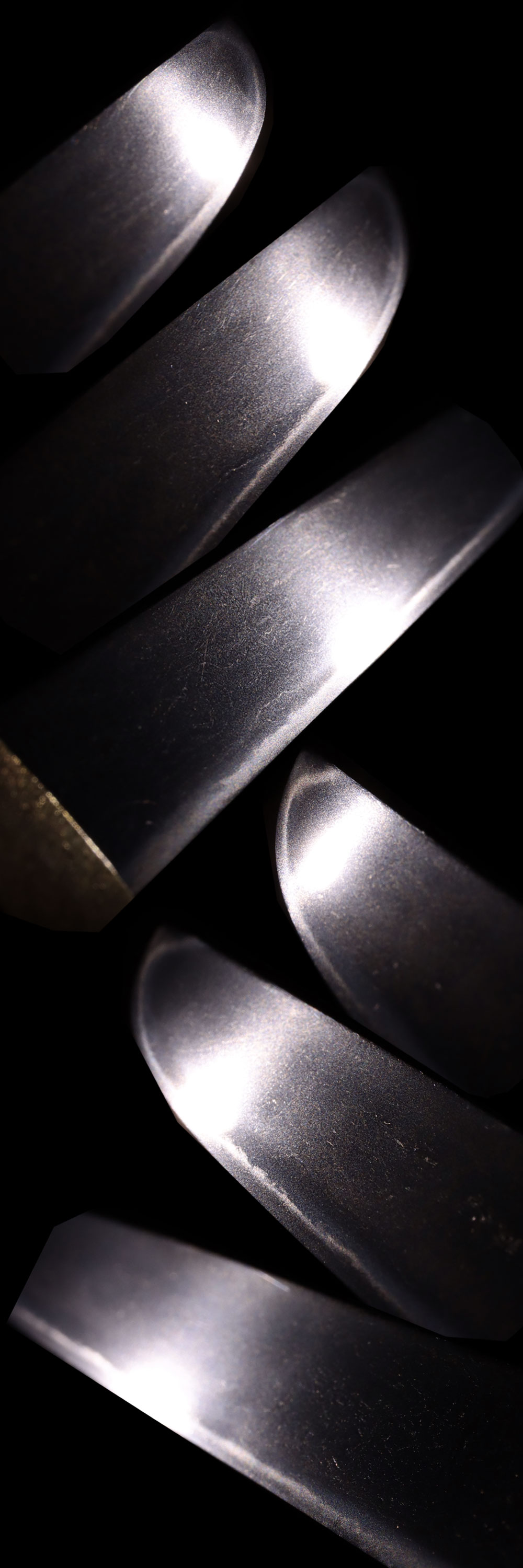
Hamon: Beautiful suguha.
Features: The Enju school was a group of swordsmiths active in Higo Province from the late Kamakura period through the Nanbokucho period, founded by Enju Taro Kunimura.
Among its notable smiths were Kunimura and Kunitoki.
Although many Enju swords survive, tanto by the school are said to be comparatively rare.
This example displays tightly forged jigane with delicate utsuri, resulting in an outstanding work.
Koshirae:
Tsuba: Vertically oval iron tsuba carved with a saya-pattern design, with the rim highlighted in gold iroe.
Menuki: None.
Mekugi: Silver, wrapped with a cord for easy removal.
Fuchikashira and Kojiri: Carved with chrysanthemum motifs and highlighted with gold iroe.
Saya (Scabbard): Black ishimeji lacquered saya decorated with the Aoi crest, the Paulownia crest, and the Dakizawagemon (embracing omodaka crest), fitted with a frog-shaped metal fitting.
Kozuka: Carved with a depiction of Fudo Myoo.
Including kogatana.
Warikogai: Dokko motif.
NBTHK Tokubetsu Hozon Token.
AoiArt estimation paper: Whole Oshigata.
Please note: the price does not include the shippi



Winning Bid: ¥850,000
Auction has expired
Highest bidder was: paulusfaciebat
|
paulusfaciebat
2026/07/09 (Thu) 07:36 |
¥850,000 |
|
Auction started
2026/07/02 (Thu) 11:50 |
|
※ = Auto