
 日本語
日本語Bid History
Auction has expired
Highest bidder was: mrtierney50
|
mrtierney50
2026/05/29 (Fri) 11:57 |
¥500,000 |
|
Auction started
2026/05/29 (Fri) 10:55 |
|
※ = Auto
Ordering Number: AS26022
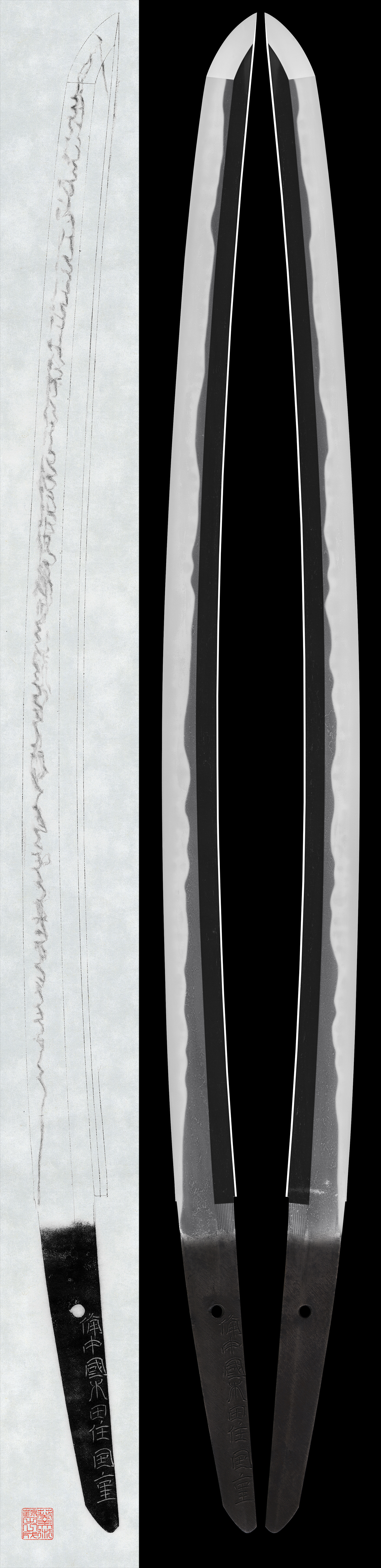
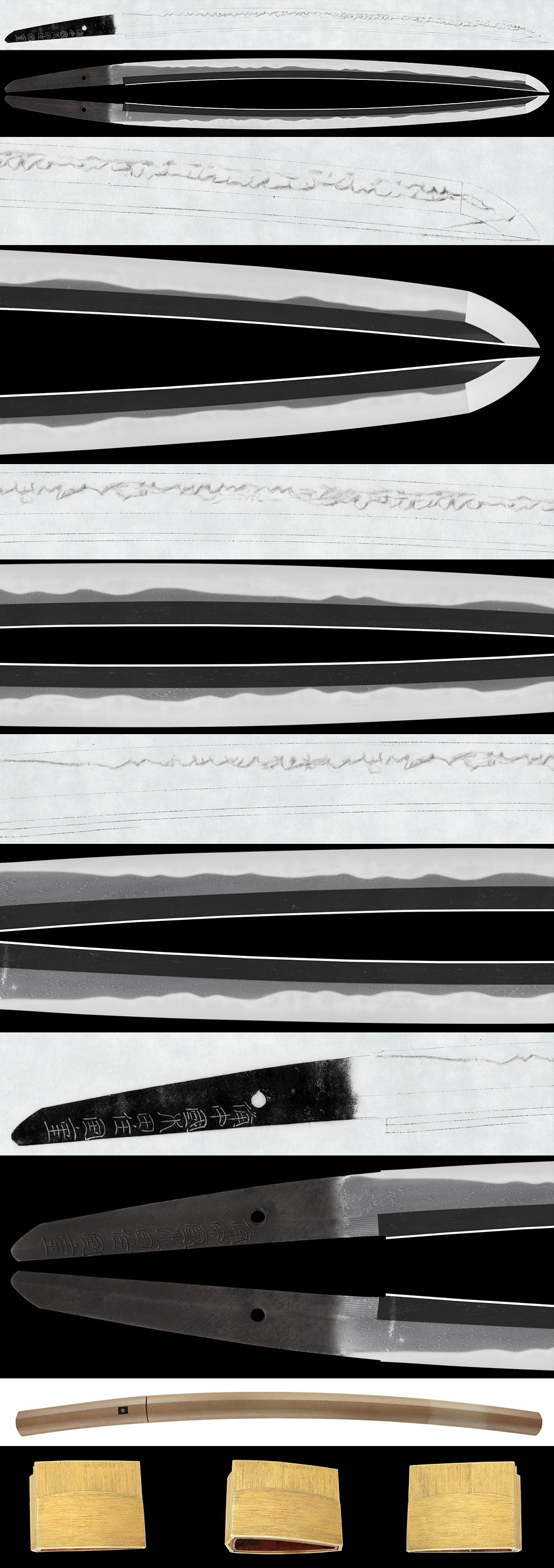
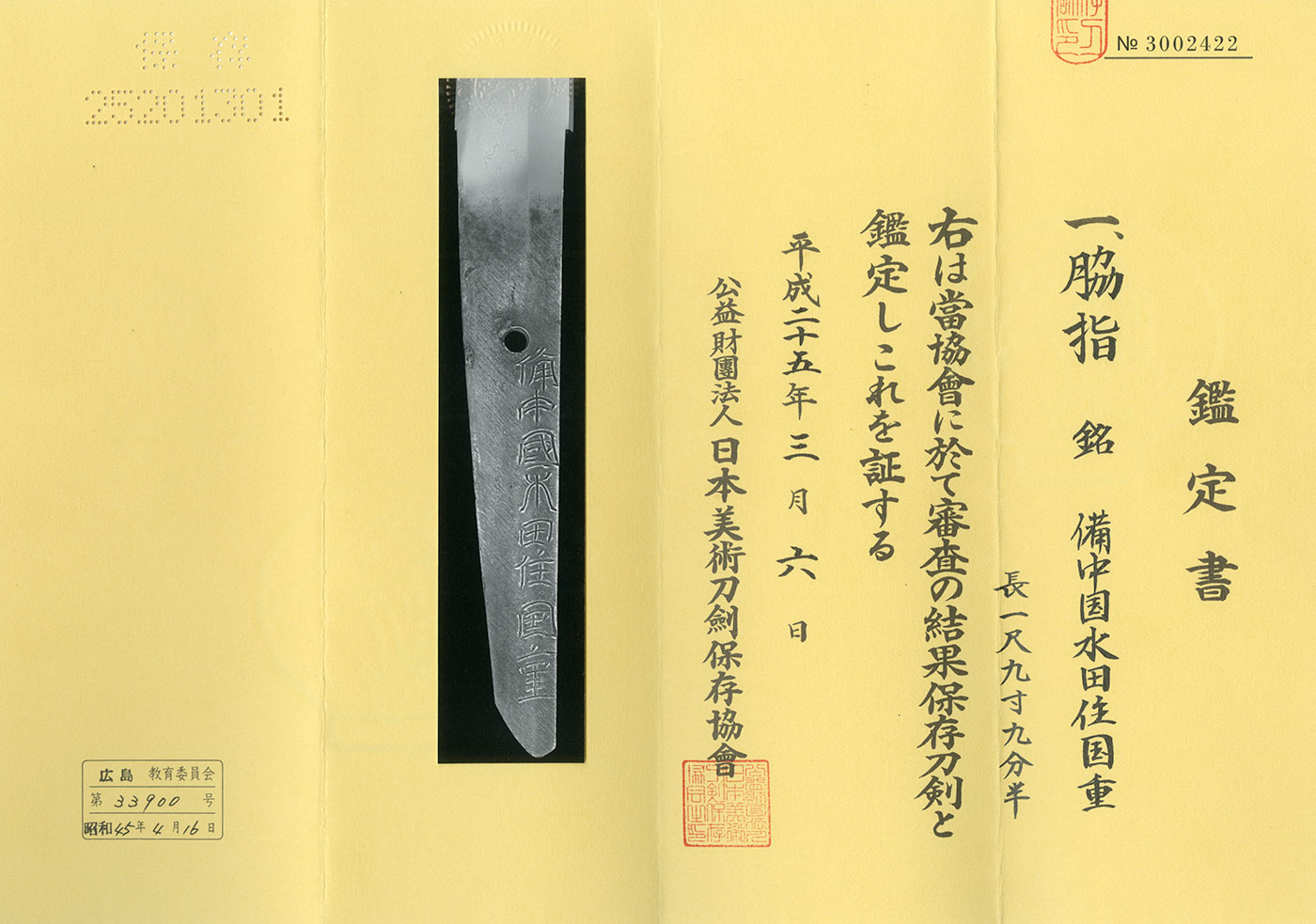
Wakizashi in Shirasaya (NBTHK Hozon Token).
Signature: Bitchu no Kuni Mizuta Ju Kunishige.
備中国水田住国重
Shinto:Chujojyo-saku: Musashi: Jokyo 1684 (342 years ago).
(We divide 4 sections for each sword as Saijyo Saku, Jyojyo Saku, Jyo Saku and Regular Saku).
This work ranks as Jyojyo Saku among the works of Bitchu no Kuni Mizuta Ju Kunishige.
Habaki: Double gold-plated Habaki.
Blade Length: 60.4 cm (23.78 in).
Curvature: 1.4 cm (0.55 in).
Mekugi Hole: 1.
Width at Base (Motohaba): 3.21 cm (1.26 in).
Width at Yokote: 2.32 cm (0.91 in).
Thickness of rim (Kasane): 0.69 cm (0.27 in).
Sword Weight: 660 g.
Era: Edo period.
Shape: A solid work with a wide mihaba, deep curvature, and a slightly wide kissaki.
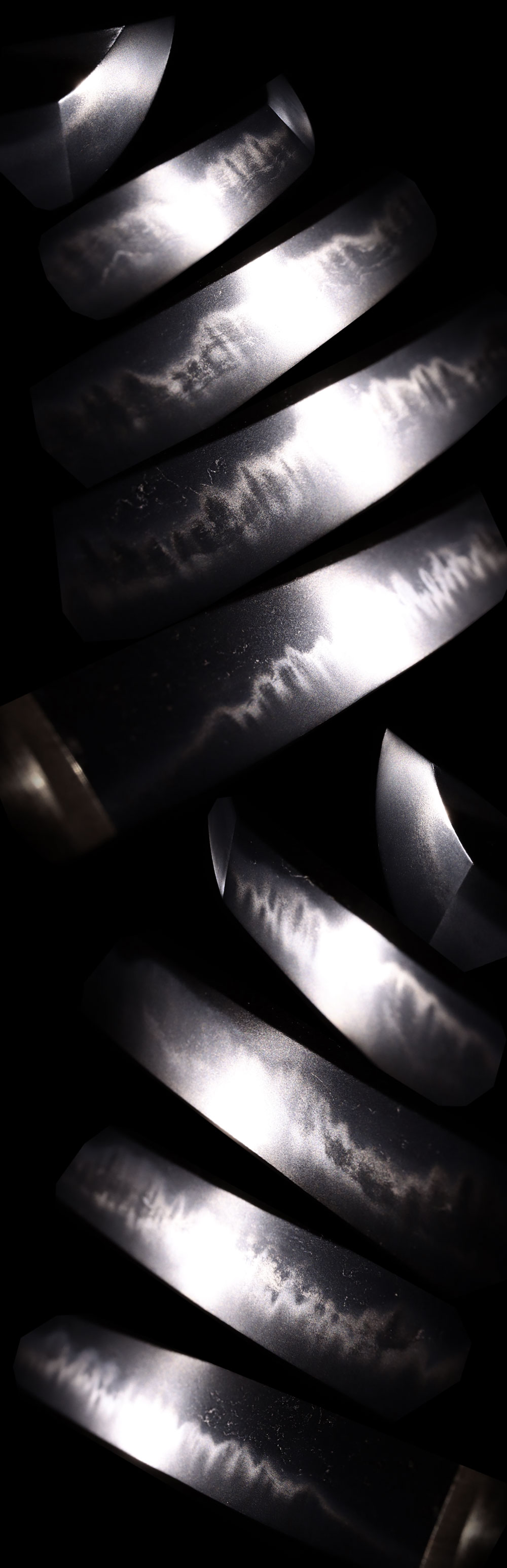
Jigane: Well-forged itame-hada with the grain clearly visible.
Hamon: Nie-deki, featuring double temper lines and a large gunome-midare pattern.
The boshi is round and turns back deeply.
Features: The Kunishige school produced a considerable number of works.
In particular, many of their blades display strong nie, somewhat open temper patterns, and prominent ara-nie, resulting in excellent workmanship.
However, this piece exhibits a more restrained style.
It has the length of a katana and a robust mihaba.
Historical Background: Jokyo was one of the Japanese era names, following Tenna and preceding Genroku, spanning from 1684 to 1688.
The emperors during this period were Emperor Reigen and Emperor Higashiyama.
The shogun of the Edo Bakufu was Tokugawa Tsunayoshi.
Kunishige produced a great many works during this era.
NBTHK Hozon Token.
AoiArt estimation paper: Whole Oshigata.
Please note: The price does not include the international shipping fees.


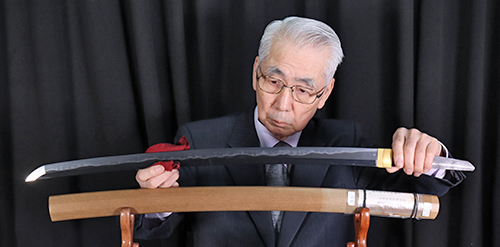
Winning Bid: ¥500,000
Auction has expired
Highest bidder was: mrtierney50
|
mrtierney50
2026/05/29 (Fri) 11:57 |
¥500,000 |
|
Auction started
2026/05/29 (Fri) 10:55 |
|
※ = Auto