
 日本語
日本語Bid History
Auction has expired
Auction Expired because there were no bids|
Auction started
2026/05/12 (Tue) 11:19 |
※ = Auto
Ordering Number: AS25656
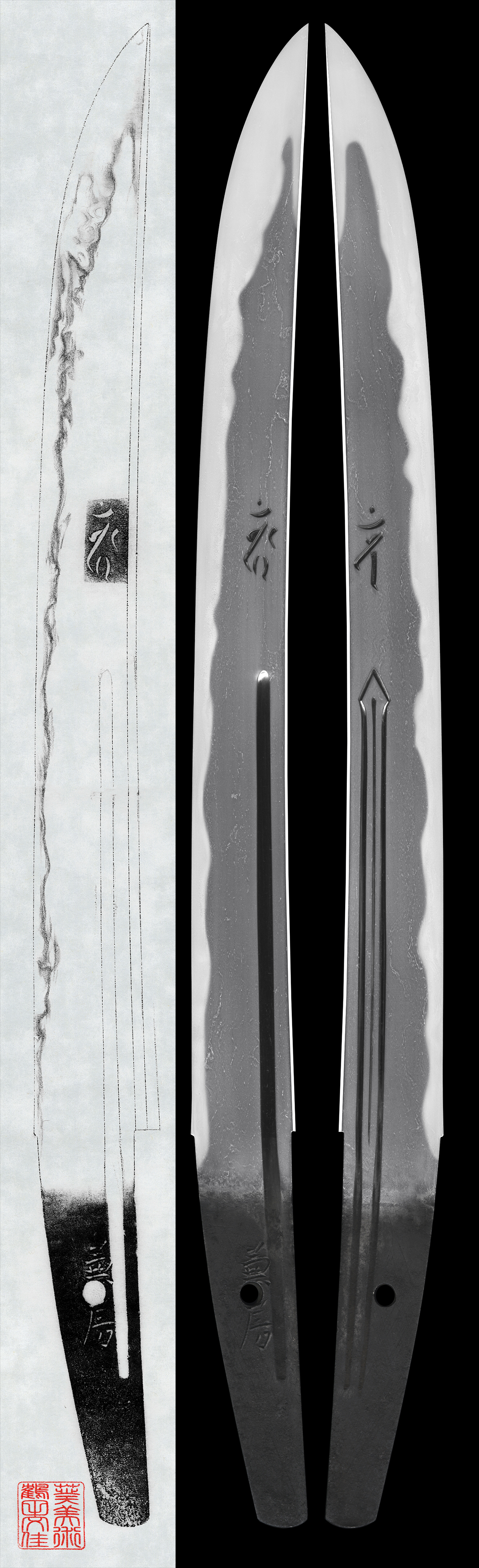
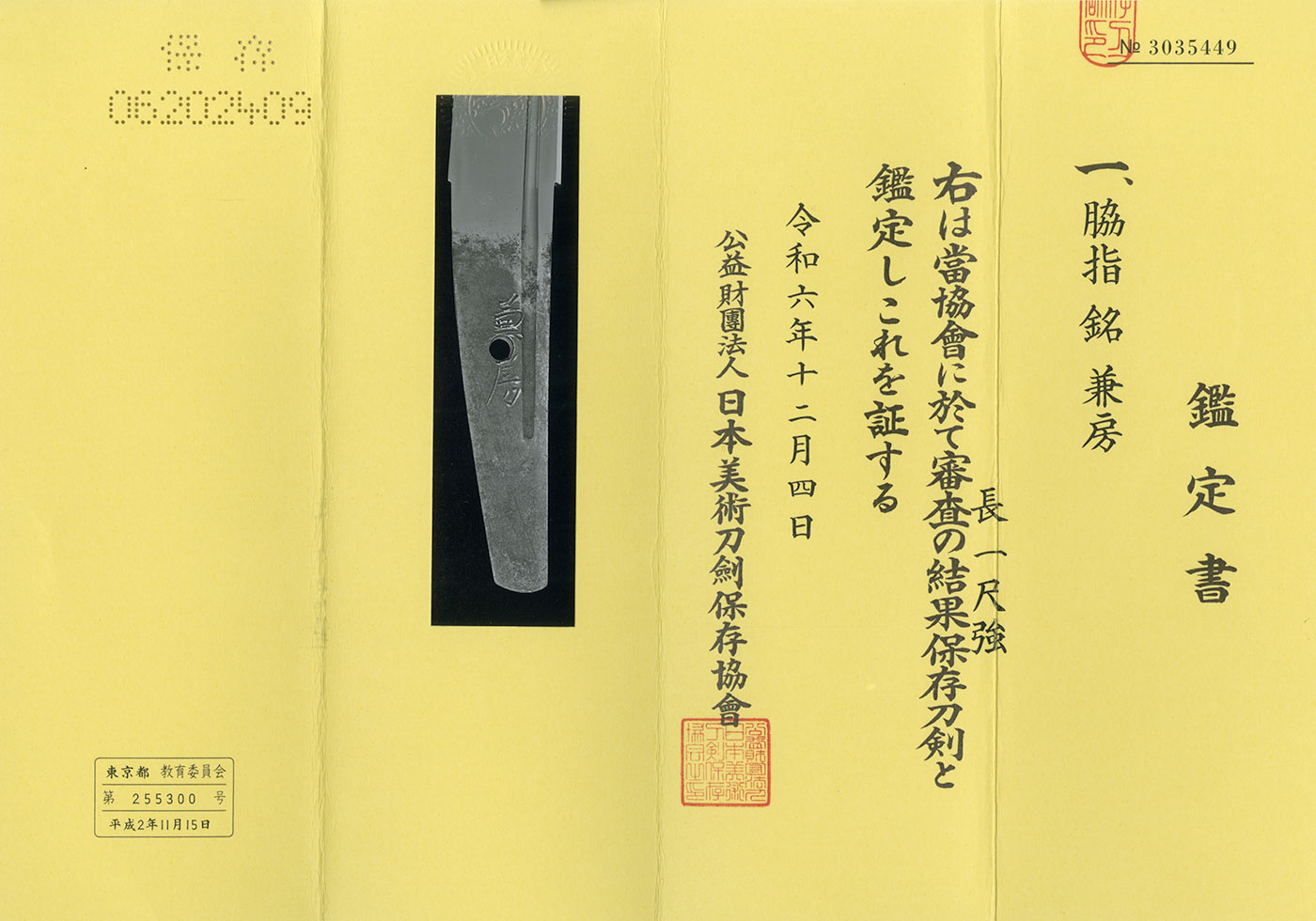
Wakizashi (Sun-nobi Tanto) in Shirasaya with Koshirae, with box (NBTHK Hozon Token)
Signature: Kanefusa
兼房
(We divide 4 sections for each sword as Saijyo Saku, Jyojyo Saku, Jyo Saku and Regular Saku).
This work ranks as Jyojyo Saku for Kanefusa.
Habaki: Gold-plated double Habaki.
Blade Length: 30.5 cm (12.01 in).
Curvature: 0.3 cm (0.12 in).
Mekugi Hole: 1.
Width at Base (Motohaba): 2.91 cm (1.15 in).
Thickness of rim (Kasane): 0.59 cm (0.23 in).
Sword Weight: 225 grams.
Era: Around the Eiroku era of the Muromachi period (1558-1570).
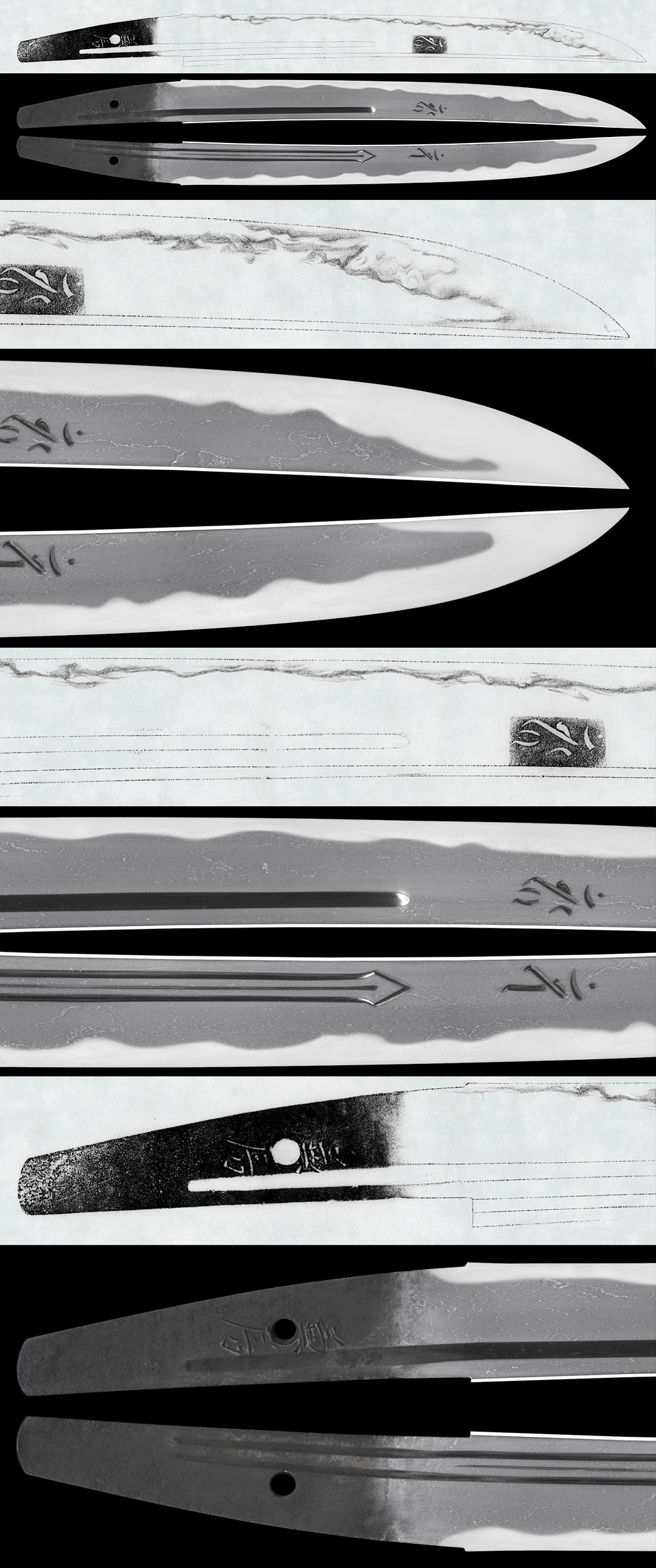
Shape: A well-proportioned Sun-nobi Tanto with substantial width and thickness, and a slightly wide Kissaki.
One side is carved with a Bo-hi and Bonji, while the other side has double grooves, a ken carving, and Bonji.
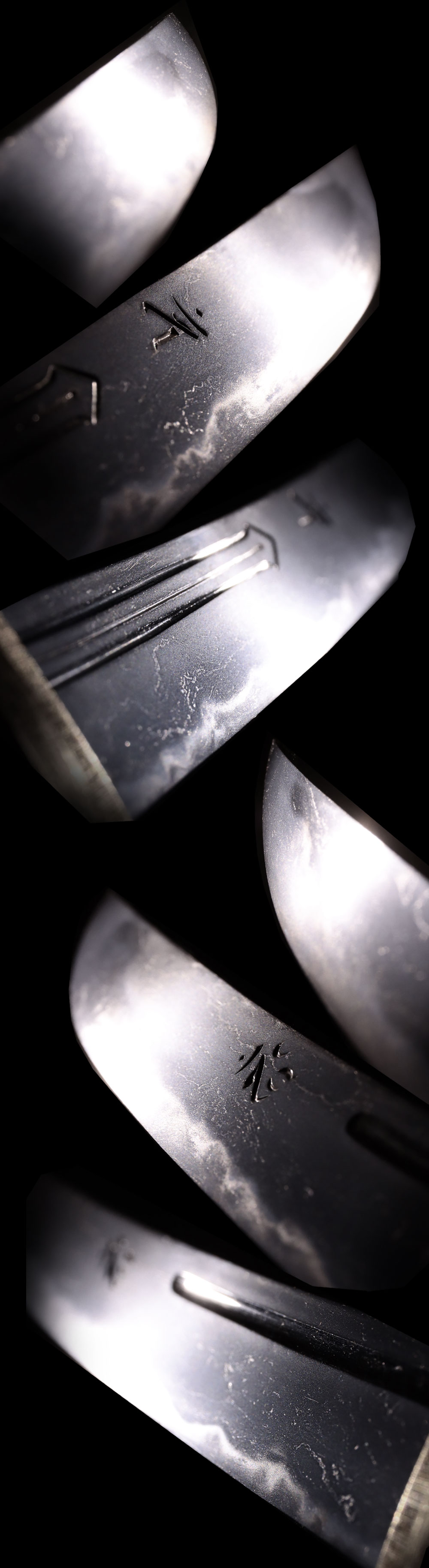
Jigane: Fine Koitame-hada well forged with the grain clearly visible.
Hamon: Nioi-deki, with rounded gunome-midare mixed with notare.
Features: This is a well-known Kanefusa work from Mino province made in the late Muromachi period.
Kanefusa was a student of Kanetsune, and it is believed that there were several swordsmiths using the same name.
Because the signatures are similar, precise identification is difficult.
The hamon is commonly referred to as “Kanefusa-midare,” displaying a unique atmosphere.
This is a Mino Kanefusa mounted in extremely luxurious Koshirae.
Such Koshirae were owned by daimyo families and chief retainers, or by samurai receiving considerable stipends.
Koshirae:
Tsuba: Round shakudo nanako-ji tsuba.
Fuchikashira: Shakudo nanako-ji engraved with paulownia crests and decorated with gold highlights.
Saya (Scabbard): Black roiro lacquer saya with tiered carved design.
Menuki: Shakudo nanako-ji engraved with paulownia crests and decorated with gold highlights.
Mekugi: Paulownia crest drawn in gold.
Kojiri: Shakudo ground engraved with paulownia crests and decorated with gold highlights.
Kozuka: Shakudo nanako-ji engraved with paulownia crests and decorated with gold highlights.
Kogatana included.
Kogai: Wooden, decorated with a paulownia crest in gold.
Historical Background: In the late Muromachi period, warfare frequently broke out throughout Japan, and Tanto became popular.
They were especially widely used in Mino and Bizen.
Practical swords that could be handled easily with one hand became fashionable.
With box.
NBTHK Tokubetsu Hozon Token.
AoiArt estimation paper.
Whole Oshigata.
Please note: the price does not include the shipping fees.



Auction Expired
Auction Expired because there were no bids
Auction has expired
Auction Expired because there were no bids|
Auction started
2026/05/12 (Tue) 11:19 |
※ = Auto