
 日本語
日本語Bid History
Auction has expired
Highest bidder was: mrtierney50
|
mrtierney50
2026/01/06 (Tue) 09:33 |
¥950,000 |
|
Auction started
2025/12/23 (Tue) 13:23 |
|
※ = Auto
Ordering Number: AS25646
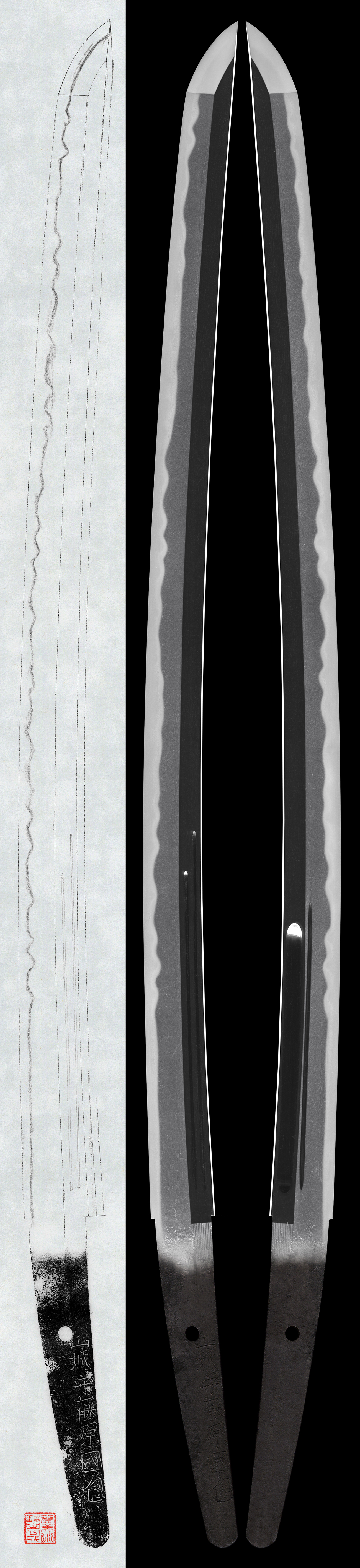
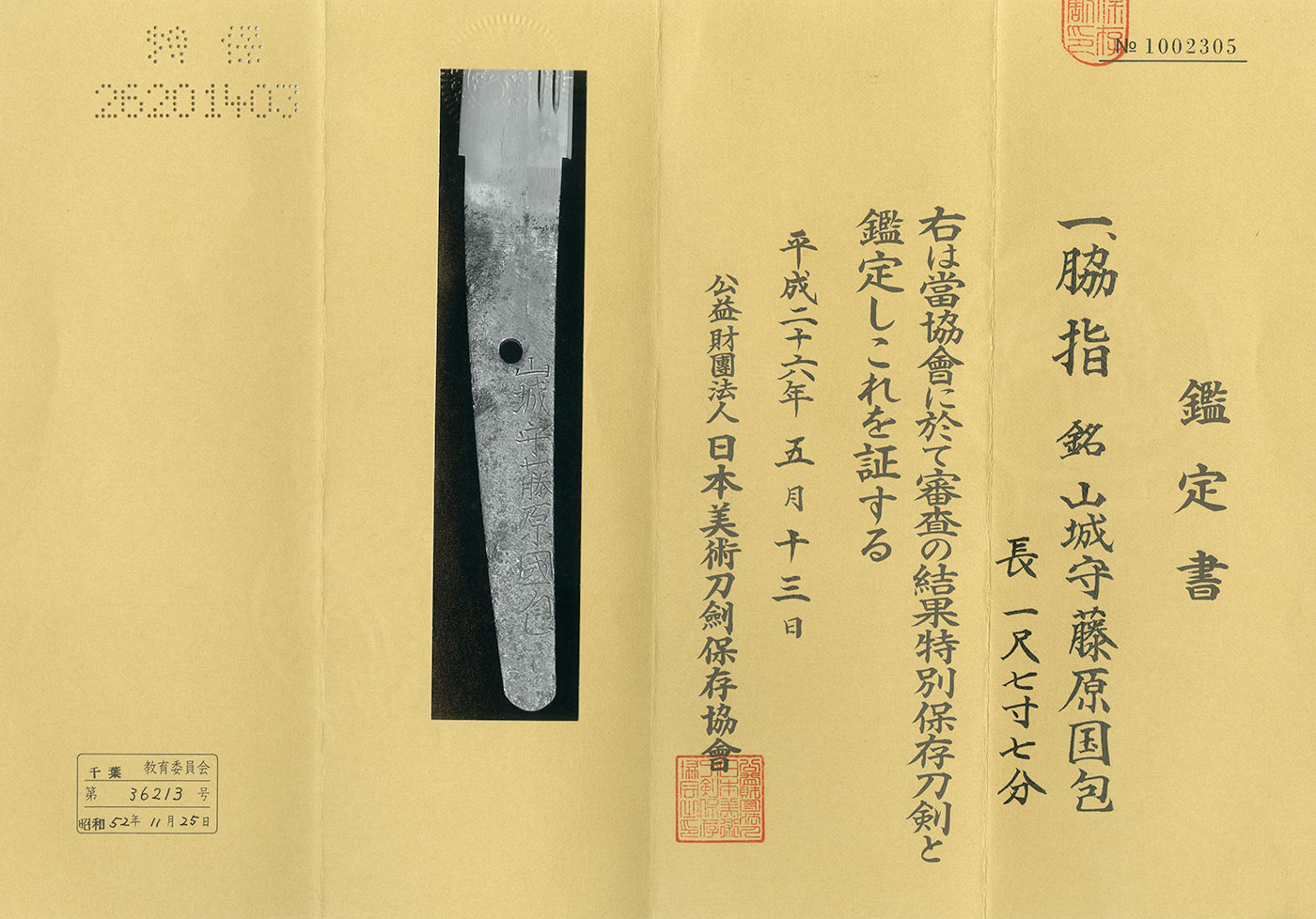
Wakizashi in Shirasaya (NBTHK Tokubetsu Hozon Token)
Inscription: Yamashiro no Kami Fujiwara Kunikane
山城守藤原国包
We divide works in to Saijo Saku, Jyojyo Saku, Jyo Saku,and Regular Saku.
This piece is ranked as Jyo Saku for Yamashiro no Kami Fujiwara Kunikane.
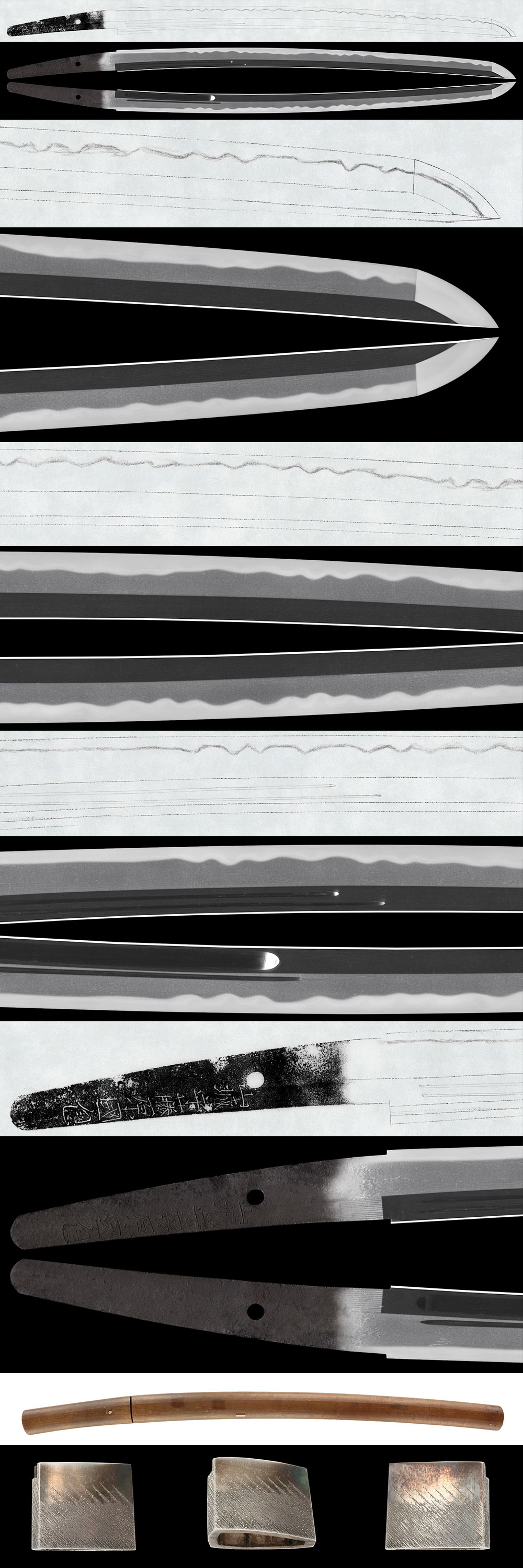
Habaki: Silver single
Blade Length: 53.6 cm (21.10 in)
Curvature: 1.1 cm (0.43 in)
Width at Base(Motohaba): 2.99 cm (1.18 in)
Width at tip(Sakihaba): 2.16 cm (0.85 in)
Thickness: 0.70 cm (0.28 in)
Blade Weight: 570g
Era: the Edo period
Shape: A wide blade with a thick kasane, featuring an extended kissaki.
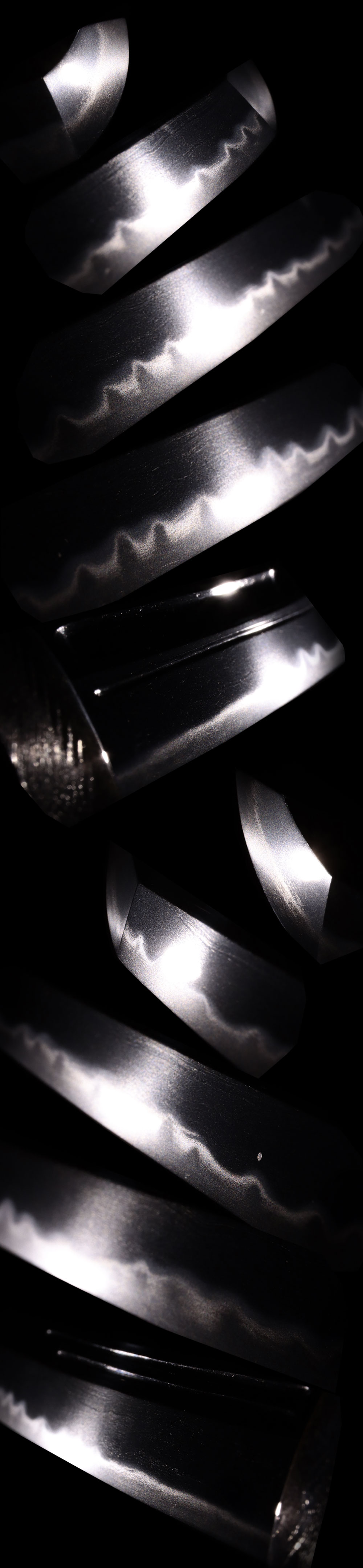
Jigane:Well-forged masame-hada with ji-nie and prominent chikei.
Hamon:Starts with a straight hamon from the hamachi, then changes into a gunome-midare pattern with pointed gunome, displaying a bright and clear temper. The boshi is yakitsume (ends abruptly).
Features: Kunika’s father is said to be a descendant of Hojo Sadamune and was a master of masame-hada. The works of the second generation are nearly identical to those of the first. Under the order of Date Masamune, he moved to study under Ecchu no Kami Masatoshi and trained for five years. In 1627, he received the title “Yamashiro Daijo”. The second generation is said to be identified by writing the kanji for “Kuni” (包) with two dots.
Aoi Art’s Comment: Yamashiro no Kami Fujiwara Kunika was regarded as a master of masame-hada, and many swordsmiths later imitated his style. Especially in the Tohoku region, the influence of Kunika is believed to be the reason for the popularity of masame-hada. This blade features strong activity in the hamon, such as kinsuji and chikei, making it a piece that does not lose its appeal. He active around the Kanbun era.
Received the title Yamashiro no Kami on November 12, 1667.
Passed away on July 2, 1672 at the age of 61.
NBTHK Tokubetsu Hozon Paper
Aoi-Art estimation Paper
whole Oshigata


Winning Bid: ¥950,000
Auction has expired
Highest bidder was: mrtierney50
|
mrtierney50
2026/01/06 (Tue) 09:33 |
¥950,000 |
|
Auction started
2025/12/23 (Tue) 13:23 |
|
※ = Auto