
 日本語
日本語Bid History
Auction has expired
Auction Expired because there were no bids|
Auction started
2025/12/10 (Wed) 12:04 |
※ = Auto
Ordering Number: AS25630-1
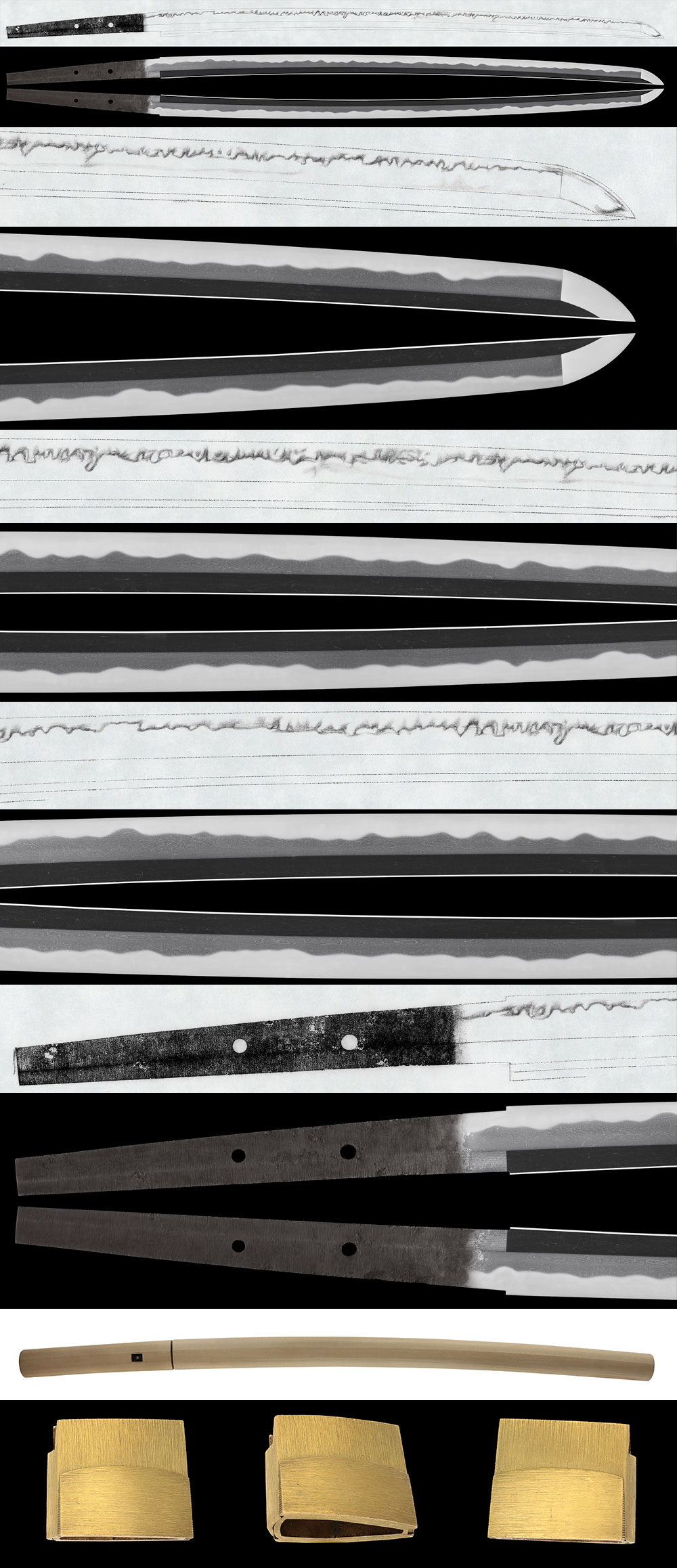
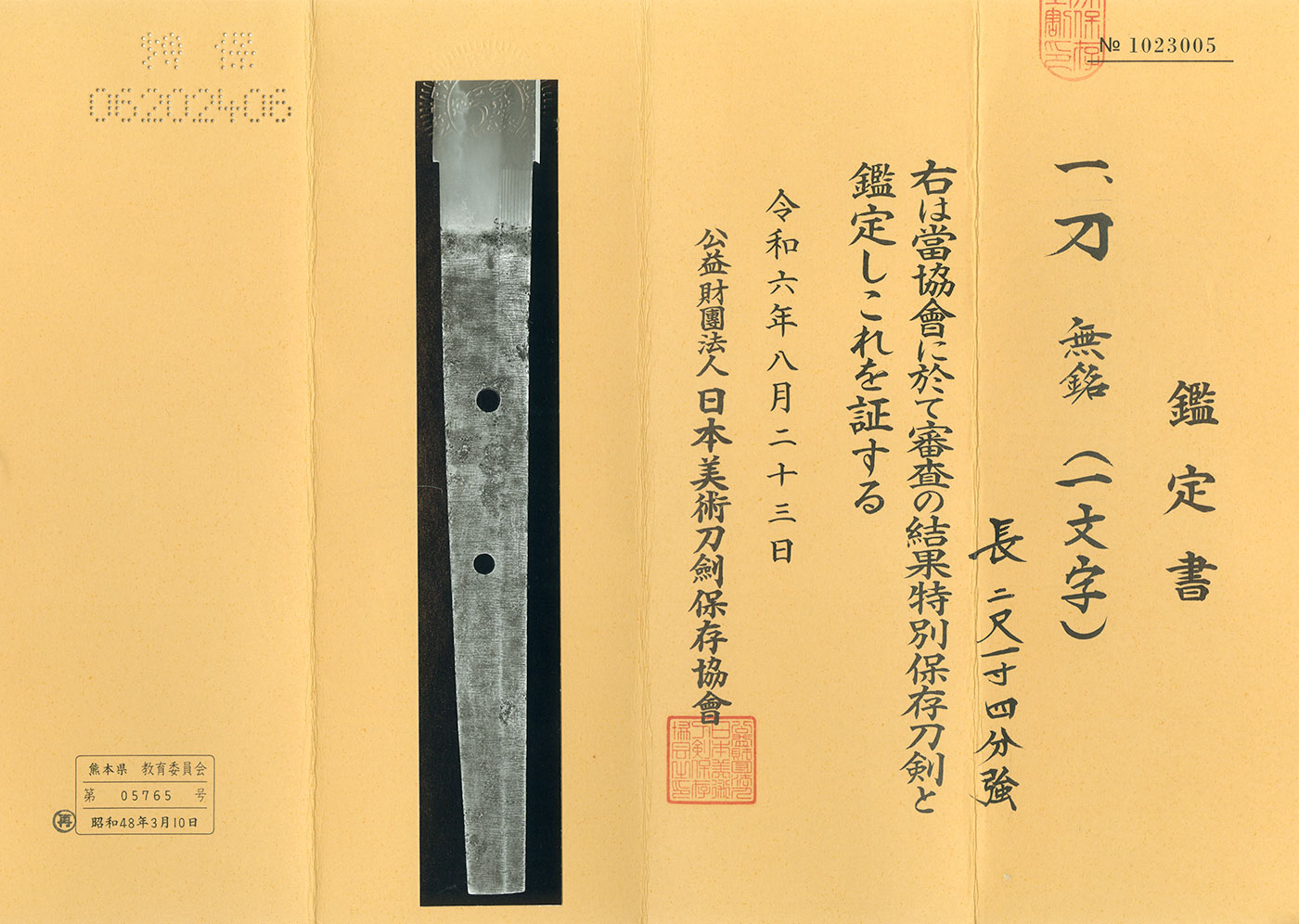
Katana in Shirasaya (NBTHK Tokubetsu Hozon Token)
Signature: Mumei (Ichimonji)
無銘(一文字)
We divide 4 sections for each sword as Saijyo Saku, Jyojyo Saku, Jyo Saku and Regular Saku.
This piece is ranked as Jyojyo Saku.
Habaki: Double-layered with gold foil
Blade Length: 65.2 cm (25.67 in)
Curvature: 1.1 cm (0.43 in)
Mekugi Hole: 2
Width at Base (Motohaba): 2.84 cm (1.12 in)
Width at Tip (Sakihaba): 1.96 cm (0.77 in)
Thickness of Rim (Kasane): 0.61 cm (0.24 in)
Sword Weight: 635 g
Shape:An o-suriage mumei blade with normal thickness and an extended kissaki.
Jigane:Ko-nie appears, with a faint utsuri visible.
Hamon:A flamboyant choji-midare pattern with frequent ko-ashi activity.While the hamon appears slightly dark, the choji pattern is active and dynamic, and the boshi slightly midare with return.
Features:Although the NBTHK Tokubetsu Hozon Token certificate lists this blade as Mumei (Ichimonji), it is considered a typical work of Fukuoka Ichimonji.
The shinogi-ji shows a mix of itame, mokume, and masame, well representing the characteristics of the late Kamakura period.
Aoi Art’s Comment:
After Fukuoka Ichimonji, smiths such as Katayama and Yoshioka Ichimonji emerged.
This blade, with its refined Ichimonji form and well-ordered hamon, is an excellent work.
During the late Kamakura period, many renowned swordsmiths gathered and produced outstanding works.
Fukuoka Ichimonji was among them and represents one of the finest schools from Bizen.
The Kamakura period began when Minamoto no Yoritomo, after overthrowing the Taira clan, established the shogunate in Kamakura in 1192, marking the end of aristocratic rule from the late Heian period.
Yoritomo united the local samurai and brought the entire country under military rule, ushering in the age of the warrior government.
This era also witnessed major events such as the Jokyu Disturbance and the Mongol Invasions, which had significant impacts on the governance and culture of the time.
The “Mongol Invasions” refer to two attempted invasions of Japan by Mongol forces from China, both of which were thwarted by timely typhoons that destroyed much of their fleets




Auction Expired
Auction Expired because there were no bids
Auction has expired
Auction Expired because there were no bids|
Auction started
2025/12/10 (Wed) 12:04 |
※ = Auto