
Bid History
|
Auction started
2025/11/29 (Sat) 11:18 |
※ = Auto
Ordeirng number:AS25620
Katana in Koshirae (NBTHK Hozon Token)
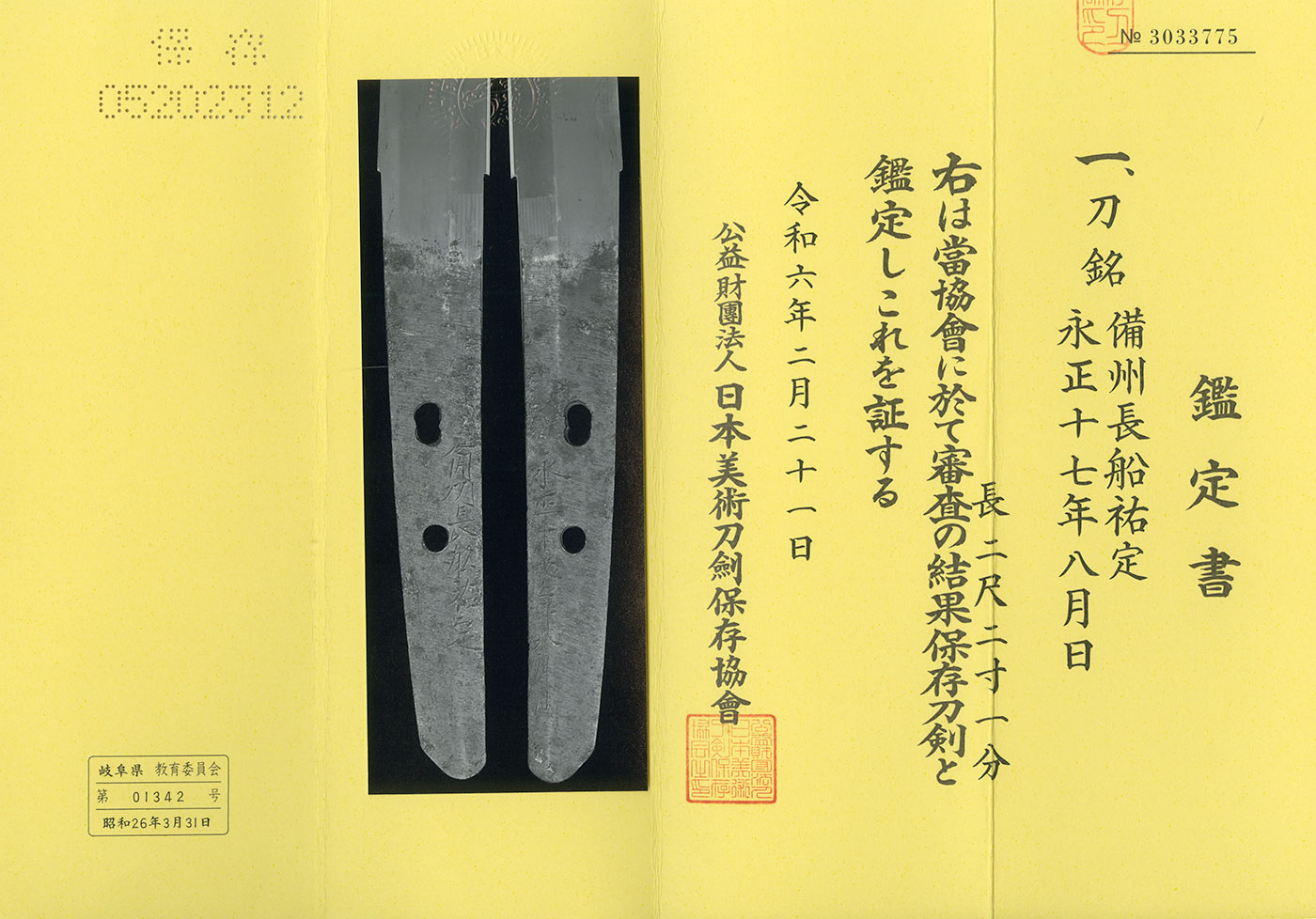
Signature: Bishu Osafune Sukesada
Eisho 17 Nen 8 Gatsu Hi (August 1520)
備州長船祐定
永正十七年八月日
We divide 4 sections for each sword as Saijyo Saku, Jyojyo Saku, Jyo Saku and Regular Saku.
This work is ranked as Jyo Saku for Bishu Osafune Sukesada.
Habaki: Single-layered suaka (copper) with gold detailing
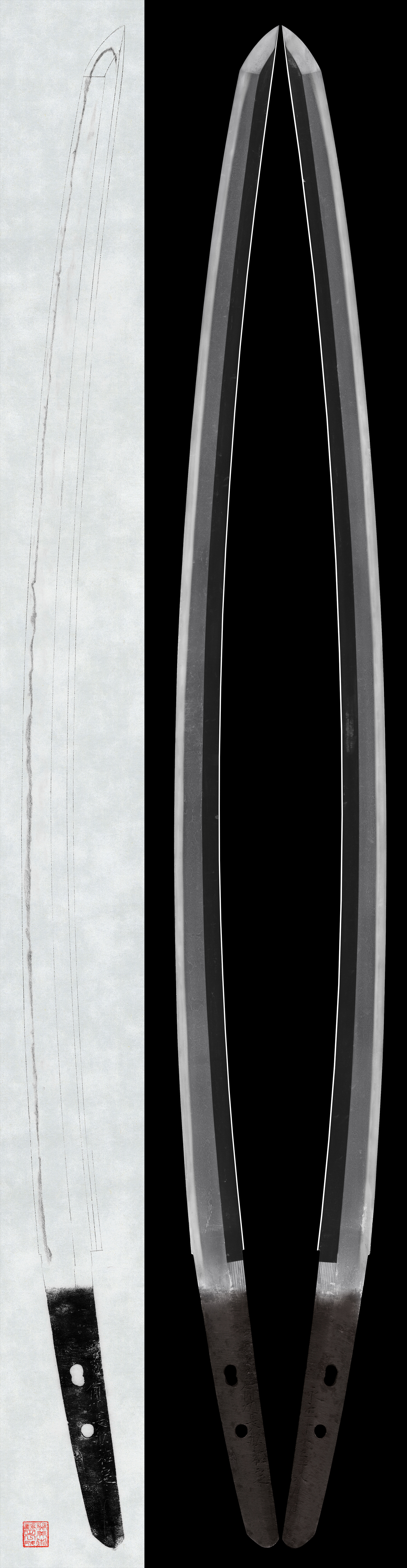
Blade Length: 2 shaku 2 sun – 66.7 cm (26.26 in)
Curvature: 7 bu – 2.12 cm (0.83 in)
Mekugi Hole: 2
Width at Base (Motohaba): 2.95 cm (1.16 in)
Width at Tip (Sakihaba): 1.86 cm (0.73 in)
Thickness of rim (Kasane): 0.67 cm (0.26 in)
Sword Weight: 600 g
Era: Around Eisho era, Muromachi period (early 16th century)
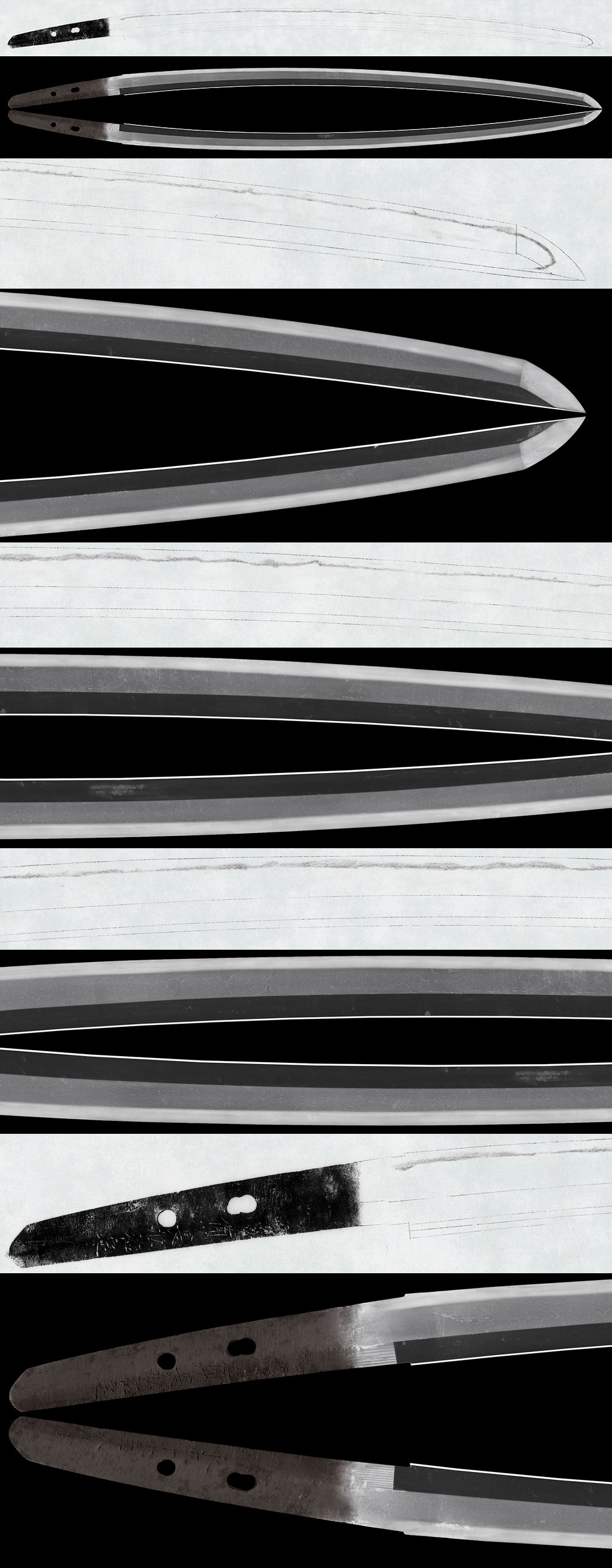
Shape: A well-balanced blade with standard width and thickness, deep curvature, and a slightly extended kissaki.
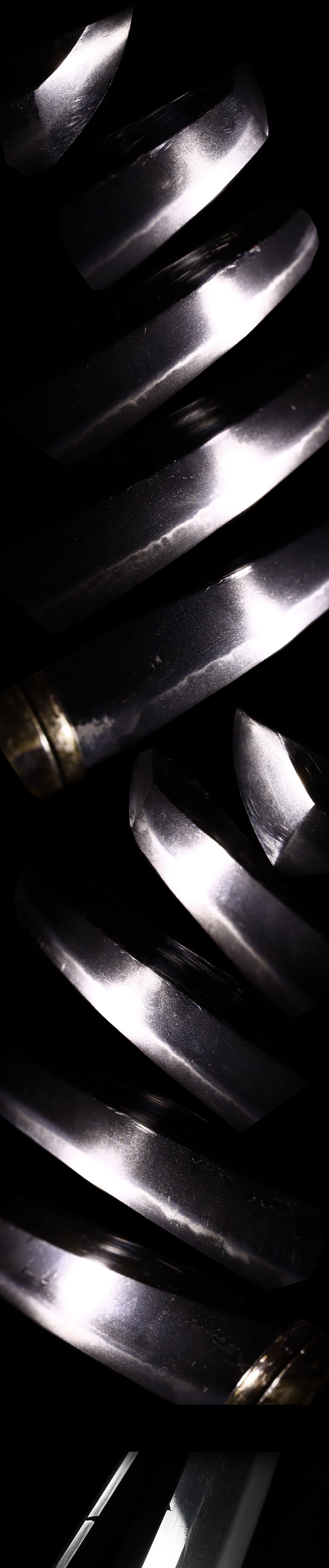
Jigane: Well-forged small itame-hada with visible texture and grain.
A faint utsuri appears in the jigane.
The boshi returns in a round shape.
Hamon: Nioi-deki with a straight suguha and well-formed ashi.
Features:This is a work by Sukesada dated Eisho 17 (1520).
During the Eisho period, Sukesada still used high-quality tamahagane, which can be seen in the well-forged jigane of this piece.
However, from this period onward, Sukesada and Kiyomitsu gradually shifted toward mass production.
Well-forged blades like this became less common after this transition.
Koshirae:
Tsuba: Round iron tsuba with plant motifs and gold highlights
Fuchi: Shakudō nanako base with high-relief sakura blossoms, accented in gold
Kashira: Made of horn
Saya (Scabbard): Black lacquered saya (kuro roiro saya)
Menuki: Bouquet motif in high relief on shakudō base
NBTHK Hozon Token Certificate
Aoi Art Estimation Paper: Whole Oshigata
Starting bid: ¥450,000
|
Auction started
2025/11/29 (Sat) 11:18 |
※ = Auto